
Projection systems are taking a cautious view of the 2026 Twins. Both FanGraphs and Baseball Prospectus peg Minnesota as a 78-win team, a number that reflects tempered expectations and lingering questions about the roster. It’s the worst preseason outlook those outlets have given the organization since 2017, when the club was trying to recover from a 103-loss season.
That comparison is not as discouraging as it might sound. In fact, it might be the most optimistic signal available. The 2017 Twins entered the year with little momentum and even less outside belief, after a disappointing 2016 that triggered major organizational change. A new front office group took over, expectations were reset, and most assumed a lengthy rebuild was ahead.
Instead, that team flipped the narrative almost immediately. Minnesota improved by 26 games, finishing 85-77 and securing a Wild Card berth in a season that reshaped the trajectory of the franchise. It was not supposed to happen that quickly, but a combination of internal growth, timely performances, and a few unexpected breakouts made it possible.
Turnarounds like that are rare and difficult to predict. However, the current version of the Twins is navigating a similarly uncertain moment. With changes in leadership and questions about how the roster will come together, there’s plenty of room for skepticism. There is also, as 2017 showed, a clear path for a team to outperform expectations if the right pieces click at the right time.
A Rotation Anchor at the Top
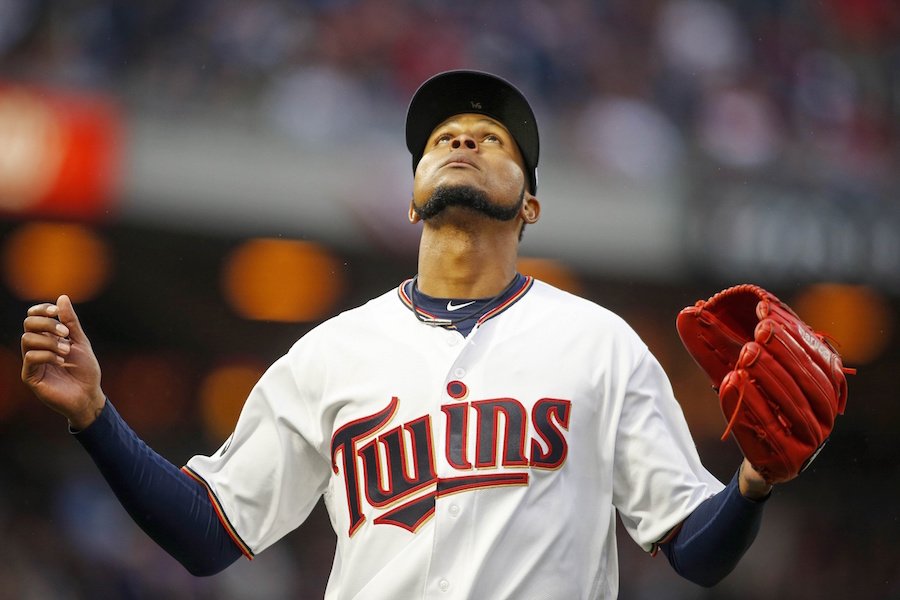
One of the biggest reasons the 2017 Twins exceeded expectations was the stability provided by their ace. Ervin Santana delivered one of the best seasons of his career that year, taking the ball every fifth day and giving the team a chance to win. Across 33 starts, he posted a 3.28 ERA and racked up an MLB-leading five complete games and three shutouts, with 167 strikeouts. In an era when pitchers rarely finish what they start, Santana was a throwback presence who set the tone for the staff.
The 2026 Twins need a similar impact from Joe Ryan. Last season, he produced a strong overall campaign worth 4.6 rWAR, although his performance dipped in the second half. Minnesota does not necessarily need complete games or shutouts to match Santana’s influence. What they do need is consistency at the top of the rotation and the kind of reliability that allows the rest of the staff to fall into place.
If Ryan can take another step forward and remain a steady force, the Twins’ rotation suddenly looks far more capable than the projections suggest.
Byron Buxton, Then and Now
The 2017 season also marked a breakout year for Buxton, though it looked very different from the version fans saw in 2025. At age 23, Buxton was still developing as a hitter, finishing with a 93 OPS+. However, his value came from elite defense and game-changing speed in center field. Over 140 games, he accumulated 5.0 rWAR and established himself as arguably the best defender in baseball, earning both a Gold Glove and the American League Platinum Glove Award.
Fast-forward to 2026, and Buxton is no longer just a defensive standout. He’s coming off one of the most impressive seasons of his career. In 2025, he posted 4.9 rWAR, while slashing .264/.327/.551 with 35 home runs and 24 stolen bases. The Twins are hoping that version of Buxton continues to show up on the field regularly.
In 2017, Buxton’s emergence gave the team energy and identity. In 2026, his leadership and star-level production could play the same role.
Veterans Stepping Up
Another underrated part of the 2017 turnaround was the performance of the established players. Brian Dozier and Joe Mauer both produced more than 4.0 rWAR that season, giving the Twins a strong veteran foundation around their younger players.
That level of production was harder to find on the 2025 roster. Buxton was the only Twins position player to clear the 4.0 rWAR mark, with Harrison Bader finishing next at 2.7. For Minnesota to exceed expectations this year, a few experienced hitters will likely need to deliver standout seasons.
Josh Bell was brought in to add power to the middle of the lineup, even if his defensive limitations cap his overall value. Ryan Jeffers is another player who could take a step forward, especially if he receives a heavier workload behind the plate. Matt Wallner also has the kind of power that can change games quickly, and a big home run total could elevate his impact across the season.
The 2017 team showed that a few strong veteran performances can stabilize a roster that is still finding its identity.
Young Talent Emerging
The final piece of the puzzle in 2017 was a wave of younger players beginning to establish themselves. José Berríos provided a boost in the rotation behind Santana, with the rotation’s second-highest WAR (1.9 rWAR). Miguel Sanó delivered power with 28 home runs and 3.0 rWAR. Jorge Polanco and Max Kepler both hit over 30 doubles and combined for 3.4 rWAR. Together, they signaled that the next core of Twins baseball was arriving.
The 2026 Twins are hoping to see a similar trend. Mick Abel already forced the team’s hand this spring by earning a rotation spot after an impressive camp. If he performs well during the season, he could provide the same kind of lift Berrios offered that year.
On the offensive side, Luke Keaschall will be asked to build on the momentum from his rookie breakout. Meanwhile, the organization has several high-end prospects pushing toward the big leagues, including Emmanuel Rodriguez, Gabriel Gonzalez, and Walker Jenkins. If even one or two of those players make an impact during the summer months, Minnesota’s lineup could look very different by the end of the season.
No two seasons unfold the same way, and expecting a repeat of the 2017 turnaround would be a tall order. Still, that year proved that projections are not destiny. A strong ace, a star player leading the way, productive veterans, and young talent emerging at the right time can quickly change the outlook of a season.
The 2026 Twins may start the year with modest expectations, but the organization has seen firsthand how quickly things can flip. If the right pieces fall into place, Minnesota could once again turn skepticism into a playoff chase.
Do you see connections between the 2017 Twins and the current roster? Leave a comment and start the discussion.