
This time a year ago, the sport already felt like it was slipping its script. Preseason No. 1 Texas A&M was in free fall before the calendar had even fully turned to conference play, the top of the rankings churned almost weekly and the national picture carried a far greater sense of instability.
So far in 2026, the opposite has largely been true. The upper tier of the Baseball America Top 25 has been comparatively settled, with fewer dramatic swings and less week-to-week volatility than what defined the early portion of last season.
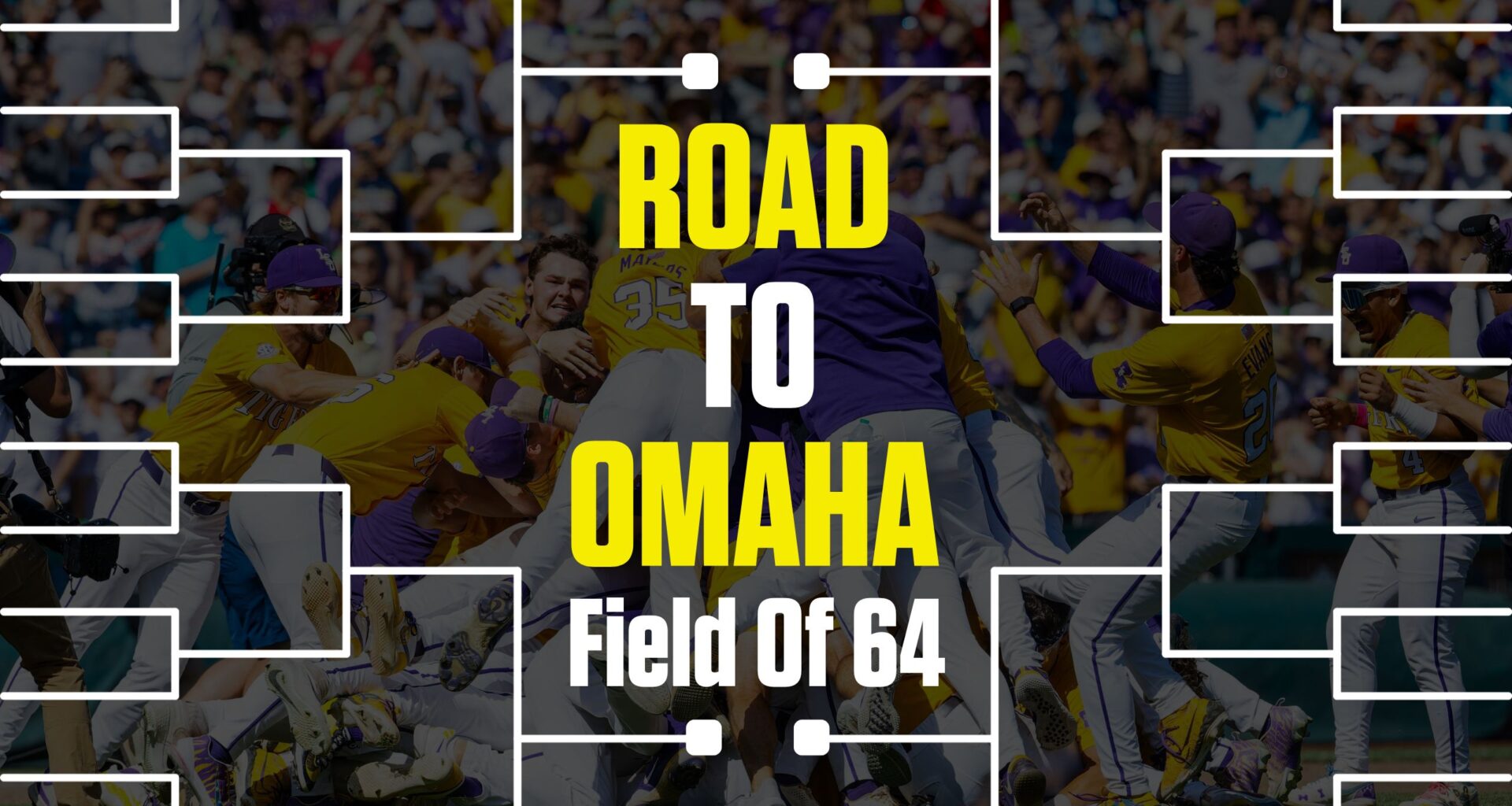
That context is important as Baseball America unveils its first in-season projected Field of 64, which is also the product of a slightly adjusted process from 2025.
This year, BA is not using its Top 25 rankings to determine a projected national seed order. Instead, the goal is to project what the field could look like on Selection Monday, rather than present a live snapshot of the current hierarchy.
The most significant tweak comes in response to the NCAA selection committee’s updated seeding format. Beginning this season, the committee will rank the top 32 teams, not just the 16 regional hosts. Seeds one through 16 will still host regionals, while seeds 17 through 32 will be slotted into brackets based on that ranking: teams 29-32 will be paired with the top four national seeds, 25-28 with seeds 5-8, 21-24 with seeds 9-12 and 17-20 with seeds 13-16. The projected bracket below is designed to reflect how that structure will work, even if the committee ultimately does not make its full two-seed rankings public.
The SEC leads our first in-season projection with 13 total bids followed by the ACC (10), Big 12 (6), Big Ten (4), Sun Belt (4), Conference USA (2) and the American (2).
Westwood, Calif.
Los Angeles, Calif.
1. (1) UCLA^* (Big Ten)
1. (16) Southern California^ (Big Ten)
2. (32) Kansas State (Big 12)
2. (17) Arizona State (Big 12)
3. Cal Baptist* (WAC)
3. LSU (SEC)
4. Nevada* (Mountain West)
4. Lamar* (Southland)
Austin, Tex.
Oxford, Miss.
1. (2) Texas^* (SEC)
1. (15) Ole Miss^ (SEC)
2. (31) Missouri State* (CUSA)
2. (18) NC State (ACC)
3. Louisville (ACC)
3. Kansas (Big 12)
4. Oral Roberts* (Summit)
4. Fairleigh Dickinson* (NEC)
Atlanta, Ga.
Corvallis, Ore.
1. (3) Georgia Tech^* (ACC)
1. (14) Oregon State^ (Independent)
2. (30) Nebraska (Big Ten)
2. (20) Coastal Carolina (Sun Belt)
3. Texas A&M (SEC)
3. UC Santa Barbara* (Big West)
4. Bethune-Cookman* (SWAC)
4. Portland* (WCC)
Auburn, Ala.
Morgantown, WV.
1. (4) Auburn^ (SEC)
1. (13) West Virginia^* (Big 12)
2. (29) South Florida* (AAC)
2. (19) Kentucky (SEC)
3. Pitt (ACC)
3. Kent State* (MAC)
4. Bryant* (America East)
4. Penn* (Ivy)
Charlottesville, Va.
Norman, Okla.
1. (5) Virginia^ (ACC)
1. (12) Oklahoma^ (SEC)
2. (26) Florida (SEC)
2. (21) Oregon (Big Ten)
3. Louisiana (Sun Belt)
3. UTSA (AAC)
4. Illinois State* (MVC)
4. Wright State* (Horizon)
Starkville, Miss.
Chapel Hill, NC
1. (6) Mississippi State^ (SEC)
1. (11) North Carolina^ (ACC)
2. (28) Notre Dame (ACC)
2. (22) Alabama (SEC)
3. Central Florida (Big 12)
3. UNC Wilmington* (CAA)
4. High Point* (Big South)
4. Fairfield* (MAAC)
Athens, Ga.
Hattiesburg, Miss.
1. (7) Georgia^ (SEC)
1. (10) Southern Miss^* (Sun Belt)
2. (27) Wake Forest (ACC)
2. (23) Cincinnati (Big 12)
3. Mercer* (Southern)
3. Creighton* (Big East)
4. Holy Cross* (Patriot)
4. Little Rock* (OVC)
Tallahassee, Fla.
Fayetteville, Ark.
1. (8) Florida State^ (ACC)
1. (9) Arkansas^ (SEC)
2. (25) Tennessee (SEC)
2. (24) Clemson (ACC)
3. Arkansas State (Sun Belt)
3. Jacksonville State (CUSA)
4. Florida Gulf Coast* (ASUN
4. VCU* (A10)
* denotes automatic bid
^ denotes regional host
Last Four In
Arkansas State (Sun Belt)
Jacksonville State (CUSA)
Pitt (ACC)
UTSA (AAC)
First Four Out
Miami (ACC)
Oklahoma State (Big 12)
Vanderbilt (SEC)
Virginia Tech (ACC)
Next Four Out
TCU (Big 12)
Southeast Missouri (OVC)
Baylor (Big 12)
East Carolina (AAC)