
Watch “Homecoming: The Tokyo Series,” on the CNN app. Subscribe to All Access here.
Major League Baseball’s history is littered with “next big thing” players who amounted to virtually nothing.
For every Ken Griffey Jr. or Chipper Jones who went from No. 1 overall draft pick to the Hall of Fame, there are a handful of Mark Appels and Danny Goodwins who were colossal disappointments.
As a result, the average baseball fan sometimes has as much skepticism as excitement when a top prospect finally gets the call.
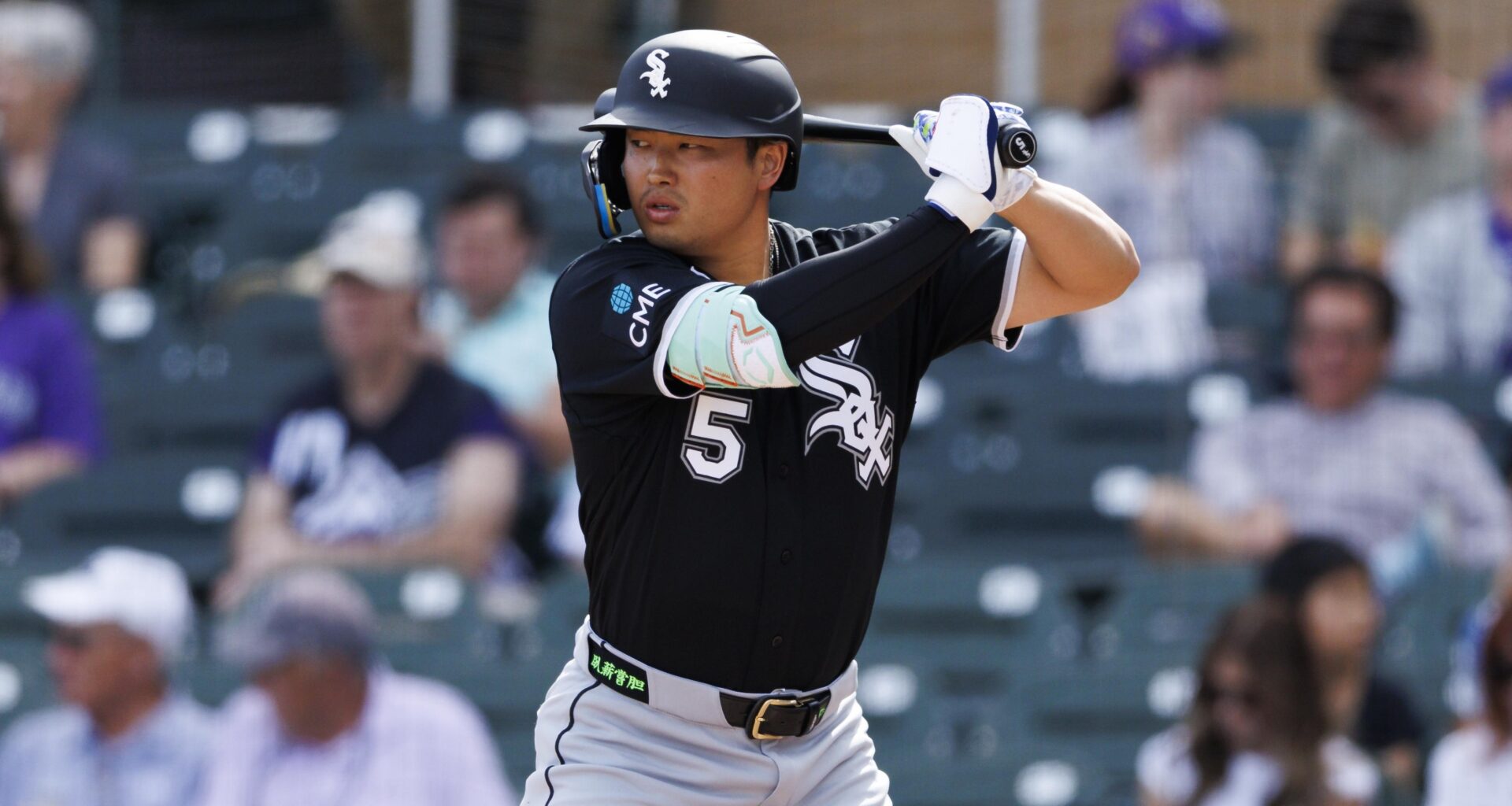
However, when Munetaka Murakami, known as the “Japanese Babe Ruth,” was posted by Nippon Professional Baseball’s Yakult Swallows this winter, the buzz was immediately palpable.
Buzz that certainly wasn’t diminished by MLB Trade Rumors projecting Murakami to sign an eight-year, $180M deal.
The Next Ohtani at the Plate?
Hold up a second, though…
Don’t we already have the Japanese Babe Ruth?
We’ve seen plenty of “first player since Babe Ruth” graphics over the past eight years, comparing Shohei Ohtani’s latest unicorn achievement to something the Great Bambino did more than a century ago.
Well, Murakami got his nickname—which was actually “Babe Ruth of Higo,” prior to getting a bit lost in translation—while he was still in high school. That was before he was taken first overall in the 2017 NPB draft, and before Ohtani made his move to Anaheim in 2018.
Back then, he was just a teenager who hit moonshots.
Now, he’s a four-time All-Star and two-time Central League MVP who broke the single-season home run record for a Japanese-born player that had been set by the O.G. Japanese Babe Ruth, Sadaharu Oh.
Murakami swatted 265 home runs over the past eight years with Yakult, averaging one for every 16.0 plate appearances.
While that rate isn’t quite Aaron Judge-like, it’s not far off from what Kyle Schwarber did over the past four seasons with the Phillies, which was enough for him to get a five-year, $150M deal this winter in advance of his age-33 season.
The Babe Ruth of Strikeouts
Considering we’re talking about that type of tape-measure power in a slugger who is merely entering his age-26 season—in an offseason where the expectation had been that Kyle Tucker might fetch $500M, no less—it’s not hard to see why many anticipated a nine-figure deal for Murakami.
There were question marks, though.
Could Murakami possibly play third base in the majors after spending most of his NPB career there? With more than 700 professional games played at the hot corner, let’s just say there’s a reason he wasn’t dubbed the “Brooks Robinson of Higo.”
The bigger question, though, pertains to whether Murakami can handle MLB pitching after leading his league in strikeouts in both 2023 and 2024.
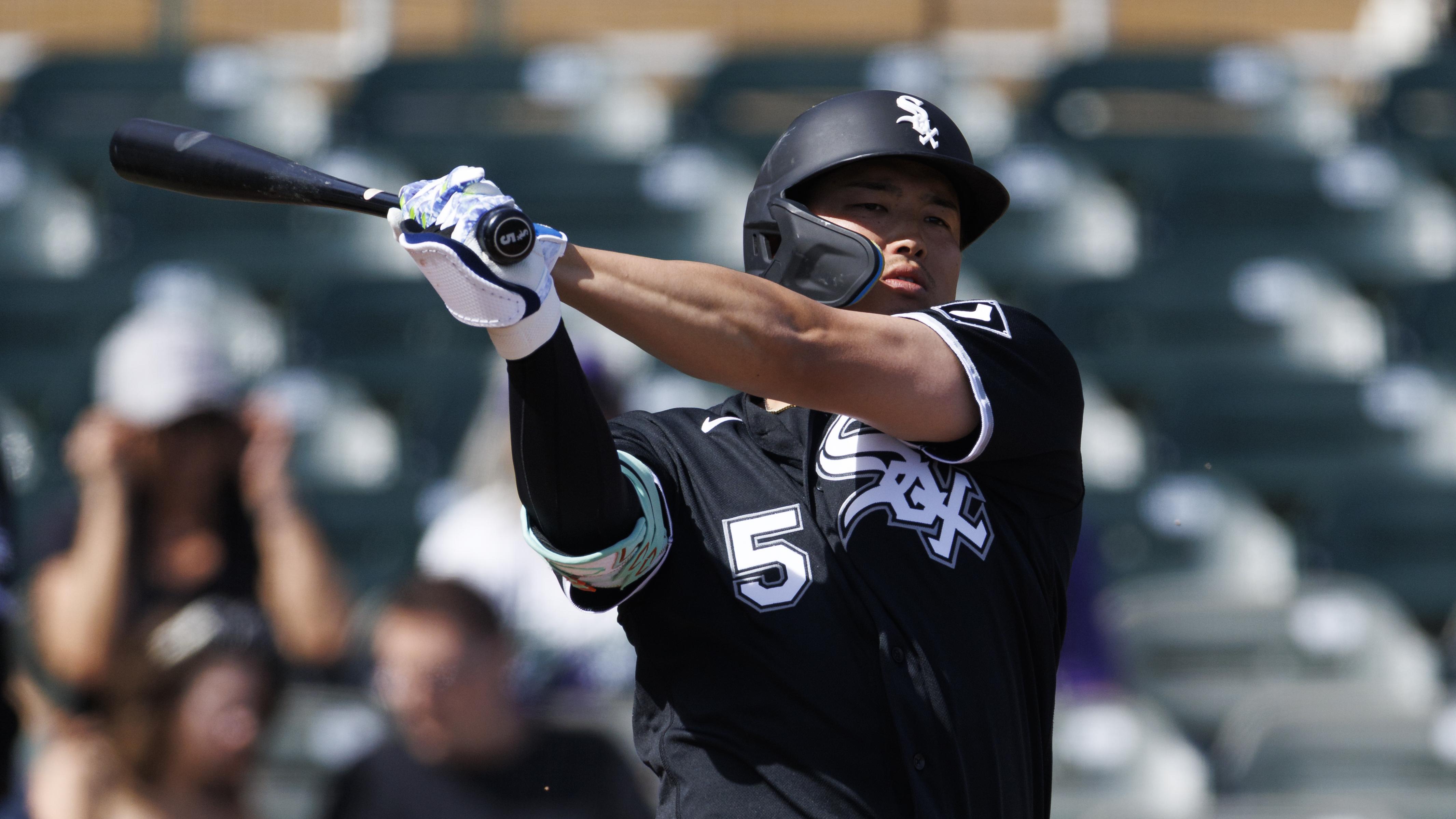
Ric Tapia/Getty Images
If you don’t bother to do any sort of translating between leagues, Murakami’s career K% of 25.2 is a nothing burger compared to MLB standards. At any rate, all five MLB sluggers who hit at least 49 home runs in 2025 also struck out at least 160 times, collectively whiffing in 26.6 percent of their trips to the plate.
However, in Japan’s Central League, the average strikeout rate between 2023 and 2024 was 19.2 percent, compared to 22.6 percent in the majors.
And if Murakami was flailing like that in a league where strikeouts aren’t nearly as prevalent, how much worse might things get for him against MLB pitching?
Teams wanted to sign the Japanese Babe Ruth, sure, but they were leery about shelling out the big bucks and getting Japanese Joey Gallo instead.
Thus, instead of something like an eight-year, $180M contract with a World Series contender in a massive market, Murakami settled for a two-year, $34M deal with a Chicago White Sox team that has lost at least 101 games in three consecutive years.
It was truly stunning news that dropped on a Sunday morning, which I’ll forever remember because I was in church when that notification hit my phone and was unable to verbalize some of the words that sprang to mind.
Now the big question is: Which way does his story go from here?
Averaging Murakami’s ZiPS, Steamer, ATC, The Bat, OOPSY and Depth Charts projections available on FanGraphs, the consensus expectation is that he’ll bat .223 with 29 home runs, 78 RBI, nine stolen bases and 185 strikeouts for a WAR of 2.0.
Aside from the WAR, those projections are mighty close to what Willy Adames did last season for the San Francisco Giants — .225 AVG, 30 HR, 87 RBI, 12 SB, 179 K. Because he plays shortstop, he was worth 4.0 WAR.
If Murakami does that, he probably wouldn’t win Rookie of the Year, but there wouldn’t be any complaints about his production, either.
Though it’s the only MLB-ish data we have on Murakami, we would implore you not to put any stock into his spring training numbers.
For starters, he only appeared in nine games with the White Sox because of the World Baseball Classic, going 8-for-33 with one HR and eight strikeouts for the Southsiders. Even by spring training standards, that’s a small sample size.
(He did, however, obliterate a grand slam in the WBC.)
More so, though, spring training numbers are almost always worthless information. Judge went 4-for-33 with 18 strikeouts last spring and ended up winning another AL MVP. Oscar González went 22-for-55 and ended up signing a two-year deal in Japan less than two months later.
In other words, Opening Day in Milwaukee on Thursday is where the MLB Chronicles of Murakami truly begin.
Will he join the likes of Ohtani, Ichiro Suzuki, Hideki Matsui and Seiya Suzuki on the list of Japanese-born players to amass at least 50 career home runs in the majors?
Could he reach that plateau in 2026 alone, winning AL Rookie of the Year while possibly bringing the White Sox back from the dead and into a playoff race?
Or will we be spending this summer on “Mark Reynolds Watch,” with Murakami threatening to break the dubious single-season record of 223 strikeouts while the White Sox wallow in the American League basement yet again?
Will his legacy with Chicago be the bidets in the clubhouse?
Either option is on the table, as are about a million in between. However, the dream scenario for the ol’ content machine would be a combination of the two: Murakami thriving while the White Sox flounder yet again, resulting in a Rookie of the Year frontrunner becoming the crown jewel of the trade block.
After all, one of the biggest chapters of Babe Ruth’s story was getting traded from a bottom-feeder to an up-and-coming powerhouse.