
WASHINGTON, D.C. – The Washington Nationals 2026 season is underway. Hope springs eternal, as they say in April. The Nationals beat the Cubs in Chicago 10-4 on Opening Day, getting homers from third baseman Brady House and right fielder Joey Weimer. They open at home against the Dodgers, most everyone’s pick to again win the World Series, on April 3.
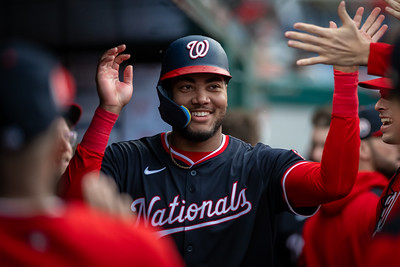 Washington Nationals left fielder James Woods. Photo: John Canery/Coalmine Photography
Left fielder James Wood should be the Nationals’ best player again. For the first three months of 2025, he was one of the top ten hitters in the major leagues. He dropped off in the second half, but he showed how good he can be. Wood is just 23, so he should only get better.
Dylan Crews was the second player taken in the 2023 draft, meaning he has enormous potential. Last year, he missed half the season with an injury, slowing his development. He’s starting the season with the AAA team, but he will be back in the outfield soon. When Crews was out last year, Daylen Lile showed over 90 games that he can be an excellent hitter for the Nats. He should get plenty of playing time in the outfield and at DH.
CJ Abrams is back at shortstop. He’s been a reliable 20-homer, 30-steal guy who, like Wood, needs to play as well in the second half of the season as in the first. Cade Cavalli, a first-round pick from 2020, could be the Nationals’ best pitcher. He returned last August after two years of arm problems and showed he still has the talent. The Nats did trade starter McKenzie Gore for five prospects over the winter and brought in some veteran starters, so the rotation looks different.
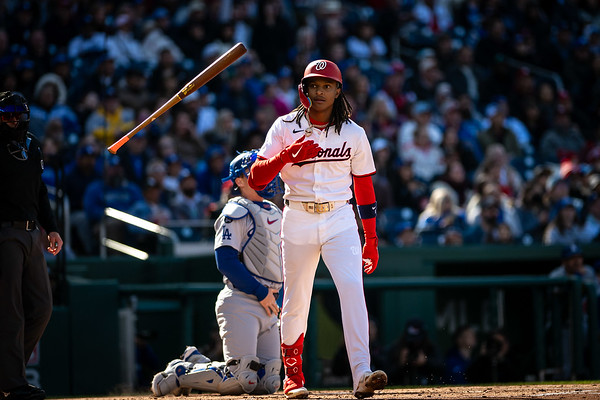 Washington Nationals shortstop C.J. Abrams tosses the bat. Photo: John Canery/Coalmine Photography
Under New Management
The biggest change from 2025 is the change in the dugout and in the front office. The team ownership let long-time team president Mike Rizzo go in hopes of improving on the results from the last few seasons. A rebuild was probably inevitable after some of the stalwarts of the 2019 championship team reached free agency and signed elsewhere, or in Stephen Strasburg’s case developed a career-ending arm injury. But rebuilds eventually need to show some progress.
The Nationals decided to go in another direction and brought in Paul Toboni to replace Rizzo. Toboni came from 12 years in scouting and the front office for the Red Sox. One of his first decisions was who his manager would be. He picked Blake Butera who comes from the Tampa Bay organization. Butera is the youngest major league manager in five decades; he’s 33. He’s also three years younger than his boss. Toboni is 36. Combined they are just four years older than Rizzo.
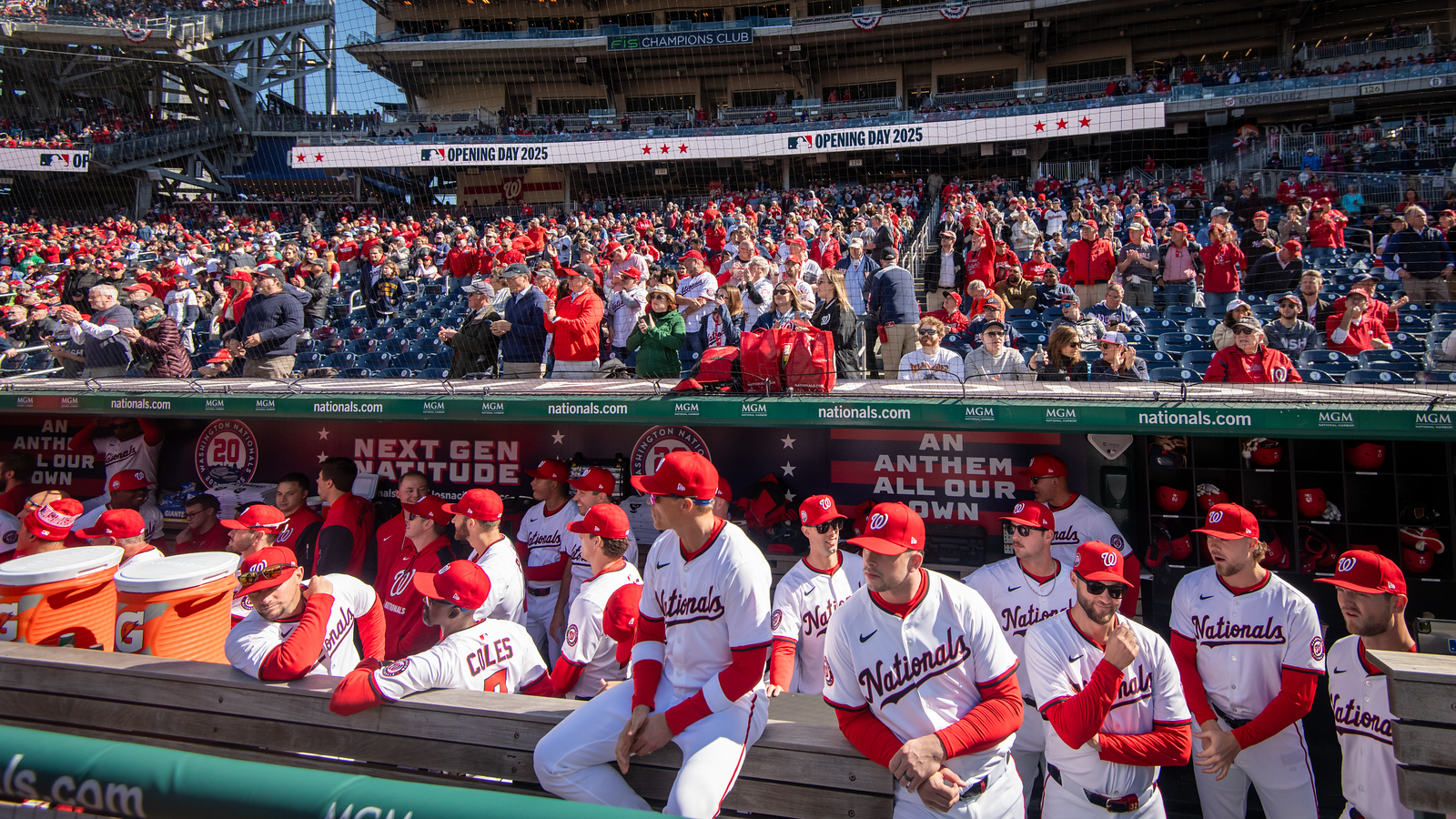 Washington Nationals on the bench. Photo: John Canery/Coalmine Photography
The hope, or the plan, is that their familiarity with the latest technology and player development strategies will help the Nats catch up with other teams who have already adopted them. They are investing in the latest tech to help players understand which pitches or swings work for them and which don’t. Tech some players had in college but not with the Nationals until now.
Robot Umps Are Here
Another change for the Nationals and every other team in 2026 is the arrival of robot umpires. Sort of. Every batter now has an official strike zone based on a percentage of his height. Every pitch is analyzed by the League as a ball or strike. The umpires still call every pitch but each team gets two challenges per game. If a batter, pitcher, or catcher thinks the ump got it wrong, they can challenge. If they’re right and the ump got it wrong, the team gets to keep the challenge. Get it wrong and the team loses it.
This challenge system brings a whole new range of decisions. Which players will prove to be good or bad at challenging? Do you let the pitcher challenge or only the catcher? How early in the game do you risk a challenge?
The strike zone will change too. It will probably be a little lower at the top and a true rectangle, not the slightly rounded zone that pitch data shows it has been, based on the analysis of thousands of pitches using, to oversimplify it, radar. There will be a lot of strategy involved that wasn’t there last season. You can find out more about the new ABS challenge system here.
Team Building
The Nationals postseason teams of 2012-2019 were built around a nucleus of young, home-grown, affordable, talented players: Ryan Zimmerman, Bryce Harper, Stephen Strasburg, Anthony Rendon, and Danny Espinoza to name some. Trades brought Trea Turner and Wilson Ramos while they were still in the minors (hat-tip to Rizzo). These guys on affordable contracts allowed the team to sign free agents who put them into contention for years, such as Jason Werth and Max Scherzer.
The job of developing the young guys and deciding when to spend on more talent now lies with Toboni and Butera. Progress in 2026 will likely be determined by how fast the young players turn into useful major leaguers and All-Stars. That doesn’t mean they aren’t fun to watch now. Let’s Go Nats!
Photos by John Canery, Coalmine Photography
Post Views: 88