
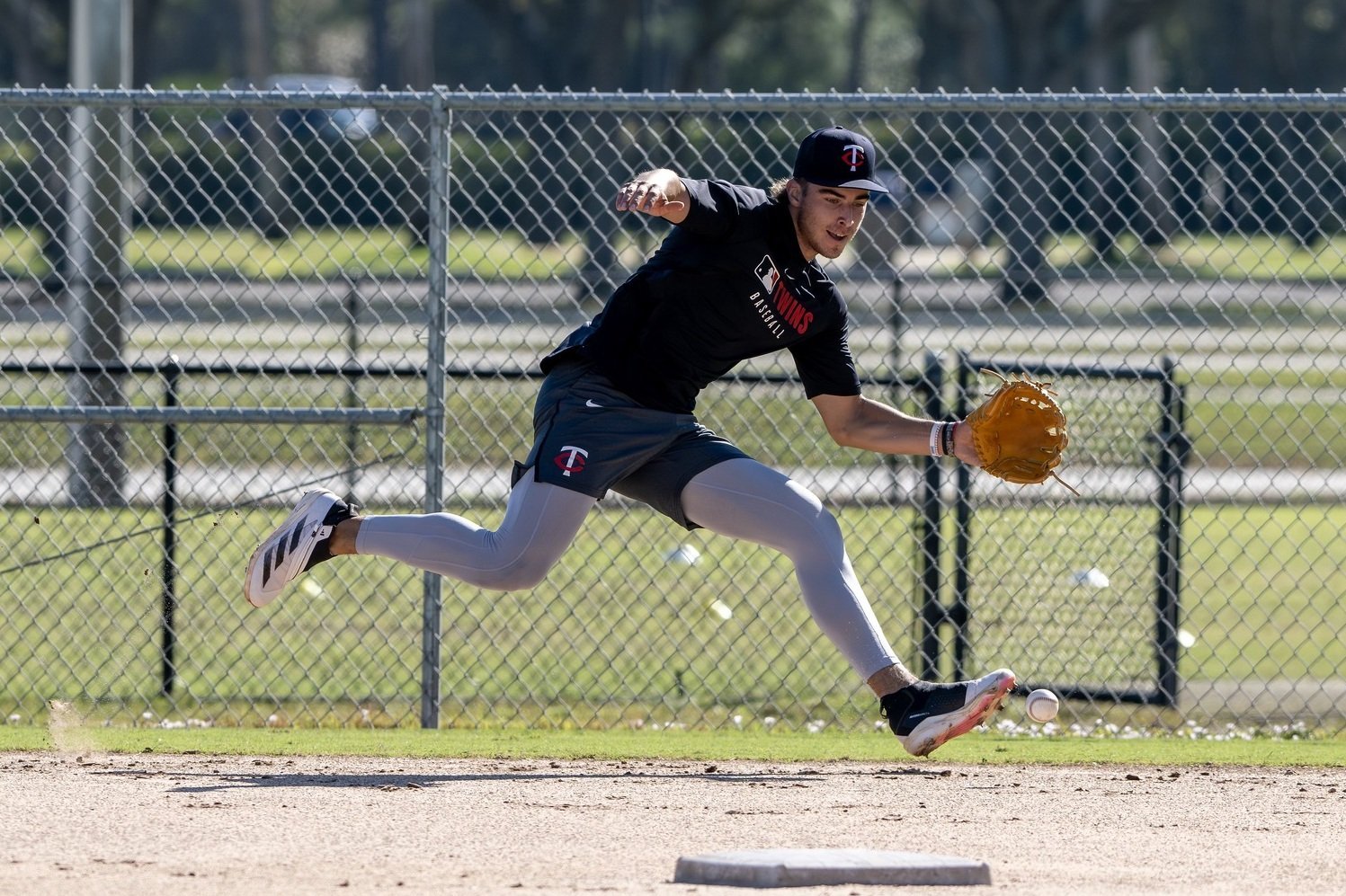
Prospect evaluation is not just about what happens in the batter’s box. As organizations continue to emphasize run prevention, defensive ability has become just as important when projecting future big leaguers. With updated rankings rolling out across the industry, it is a good time to take stock of which Twins prospects bring the most value in the field.
Defense can often be the separator for players working their way through the system. A strong glove can keep a prospect in the lineup during offensive struggles and open the door to multiple roles at the next level. For Minnesota, that versatility and reliability in the field has become a noticeable theme throughout the farm system, especially among players up the middle.
The tools below are graded on the traditional 20 to 80 scouting scale, where 50 represents the big league average. Every player listed appears on MLB Pipeline’s Top 30 Twins prospects, with a focus here on those who stand out most for their defensive ability.
Fielding Tool Rankings
Honorable mentions go to Quentin Young, Brandon Winokur, and Enrique Jimenez. Each of these players is still developing in the lower levels of the minors, but all three already show an average defensive profile that could improve as they gain experience.
5. SS Kaelen Culpepper: 50-grade field tool
Current Position: SS, Future Position: 3B
Culpepper remains an interesting case when it comes to defensive projection. He has spent most of his time at shortstop and has the arm strength needed for the position, but there are still questions about whether he will stick there long term. His reactions and range are not elite, which could push him to a different spot on the infield as he climbs the ladder.
The Twins have already started to test that versatility, giving him opportunities at second and third base. That flexibility could ultimately become a strength, even if shortstop is not his permanent home.
4. OF Emmanuel Rodriguez: 50-grade field tool
Current Position: CF, Future Position: LF/RF
Rodriguez brings athleticism to the outfield and has shown he can handle center field at a solid level. His speed allows him to cover ground, and his arm strength stands out as a clear asset no matter where he plays.
That said, there is a growing sense that his best long-term fit could come in a corner role. He has seen time in right field recently, and that transition would allow his arm to play up while still providing above-average defense. His offensive skillset is also more closely aligned with a corner outfield role, making the defensive downgrade easier to accept.
3. OF Walker Jenkins: 55-grade field tool
Current Position: CF, Future Position: LF/RF
Jenkins is known for his bat, but his defense should not be overlooked. He moves well in the outfield and reads the ball off the bat with confidence, traits that have allowed him to handle center field during his development.
As he fills out, a shift to right field could make even more sense. His arm strength fits the profile there, and his instincts would still allow him to be an above-average defender. A healthy season in the upper minors should give a clearer picture of just how impactful he can be on that side of the ball.
2. INF Kyle DeBarge: 55-grade field tool
Current Position: UTL, Future Position: UTL
DeBarge plays with energy that shows up in every phase of the game, especially defensively. He has already been recognized for his work in the field, earning a Minor League Gold Glove at second base while also showing the ability to slide over to shortstop when needed.
What makes him particularly valuable is his versatility. He has even logged time in center field, giving the Twins multiple ways to deploy him. That kind of defensive flexibility raises his floor and could make him a valuable piece at the next level.
1. SS Marek Houston: 60-grade field tool
Current Position: SS, Future Position: SS
Houston stands out as the best defensive prospect in the system. He looks the part of a long-term shortstop, combining smooth actions with excellent range to both sides. His ability to make difficult plays look routine separates him from others in the organization.
His arm strength is more than enough for the position, and his overall defensive consistency gives him a strong foundation. Even if his bat develops into something closer to average, his glove alone could carry him to the big leagues and keep him there for a long time.
While much of the attention in prospect circles tends to focus on offense, the Twins have quietly built a group of players who can impact the game defensively. From up the middle infielders to athletic outfielders, there is no shortage of players who can save runs and provide stability behind the pitching staff.
The next step for many of these prospects will be proving they can pair that defensive value with enough offensive production to carve out everyday roles. If they do, Minnesota could have a wave of well-rounded players ready to contribute in the coming seasons.
Other rankings in the series:
Do you agree with the rankings above? Who else should make the list? Leave a comment and start the discussion.
Interested in learning more about the Minnesota Twins’ top prospects? Check out our comprehensive top prospects list that includes up-to-date stats, articles and videos about every prospect, scouting reports, and more!