
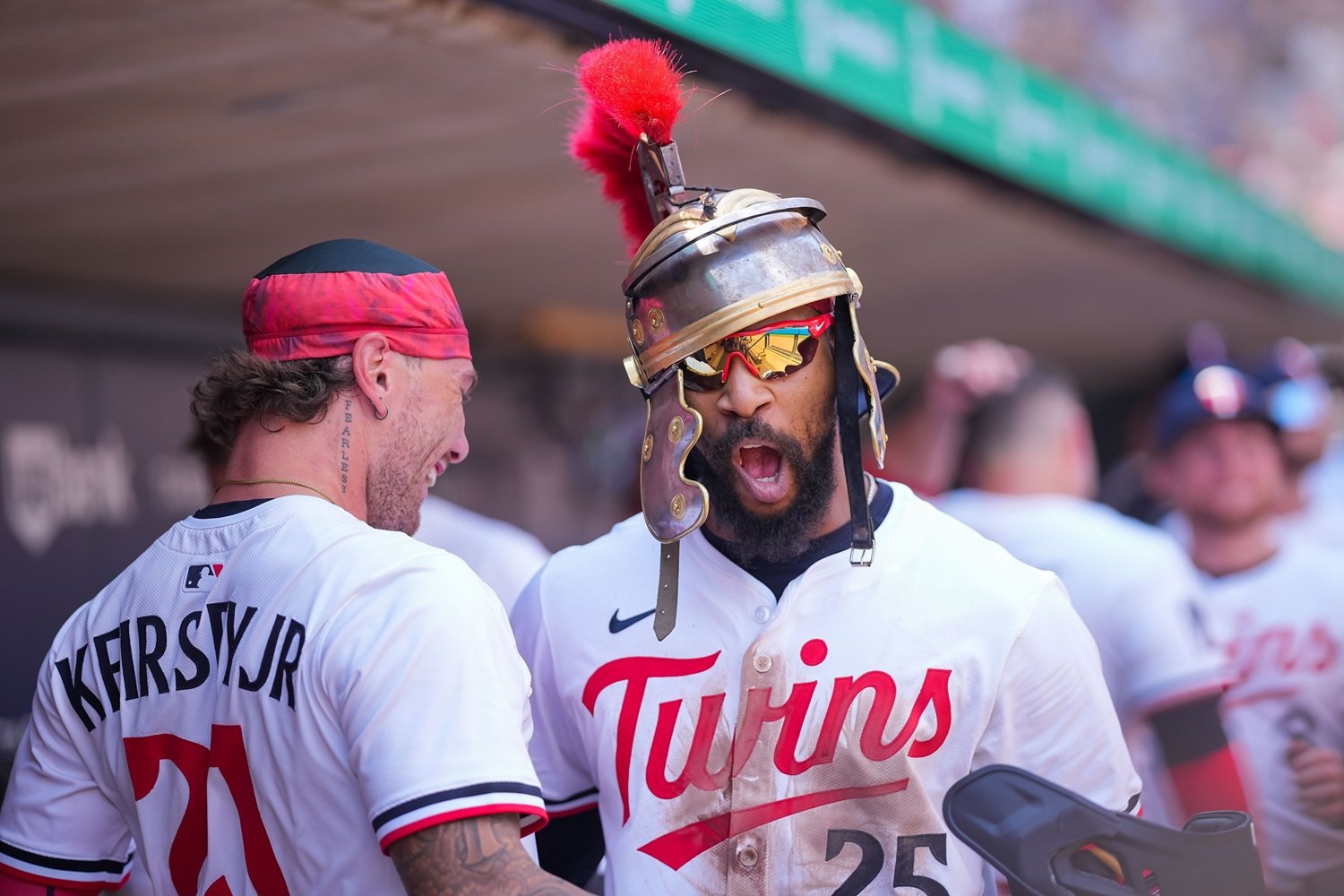
The 2025 season was a downer for Minnesota Twins fans. The losses piled up, the roster was stripped down at the trade deadline, and the club limped to the finish line as one of baseball’s worst teams over the final two months.
Somewhere in that mess, Byron Buxton put together one of the most impressive seasons of his career. As the 2026 season begins, it is worth revisiting his 2025 campaign and highlighting a few things that may have flown under the radar.
1. His Speed Was All the Way Back (No, Really)
It’s easy to assume that Buxton’s elite speed had faded. Injuries have a way of chipping away at explosiveness, and for a player whose game is built on athleticism, that decline can come quickly.
That was not the case. Buxton posted a 30.2 mph sprint speed, virtually the best in baseball. He was tied for the second fastest mark in the sport alongside Bobby Witt Jr. and Victor Scott II. Only Trea Turner came in higher, at 30.3.
For a player who has battled leg and lower body injuries throughout his career, that number matters. It’s not just about stolen bases or highlight plays in center field; it’s also about getting to a few more balls without diving or going first-to-home on a double. That part of Buxton’s game remains intact.
2. September Surge
By September, the Twins were playing out the string. The games had little meaning in the standings, and the focus had already shifted to the future. Buxton never let up.
Over his final four games, he collected five hits—four of them home runs—to finish the year on a tear. His final stat line told the story of a complete and dominant season: 126 games, 542 plate appearances, 97 runs, 35 home runs, 83 RBIs, 24 stolen bases, a .264 average, an .878 OPS, and 4.9 WAR.
That combination of power and speed placed him in rare company in franchise history. The only other player in Twins history to post a 30 home run and 20 stolen base season is Kirby Puckett. Even in games that no longer mattered, Buxton played like they did.
3. Rare Air Among the Game’s Best
The American League MVP conversation was dominated by Aaron Judge and Cal Raleigh, and rightfully so. Both delivered massive offensive seasons that carried their teams. Buxton didn’t receive the same level of recognition. He finished outside the top 10 in MVP voting and missed out on a $3 million bonus tied to his placement.
Still, his production stacked up with the very best hitters in the league. Buxton ranked fifth in the American League in OPS+, trailing Judge, Raleigh, George Springer, and José Ramírez. That’s elite company, and it becomes even more impressive when considering defensive value.
Among that group, Buxton and Raleigh are the only players who regularly man premium up-the-middle positions. Buxton wasn’t just hitting like a superstar. He was doing it while playing a demanding defensive role.
Other Moments That Defined the Season
Beyond the numbers, Buxton delivered a collection of highlight reel moments that reminded everyone just how unique his skill set is. He recorded the first cycle in Target Field history, a milestone that felt almost inevitable for a player capable of impacting the game in every possible way. From stretching hits into extra bases to launching balls into the seats, it was a single-game snapshot of his full offensive arsenal.
He also provided one of the most jaw-dropping defensive plays of the season against the Chicago White Sox, making a walk-off catch in the gap to secure a victory. It was vintage Buxton, gliding into position before timing his leap perfectly. Few players in baseball can end a game with their glove in that fashion, and it served as another reminder of the value he brings beyond the batter’s box.
Buxton’s performance earned him a spot on the national stage as well. He represented the Twins in the MLB All-Star Game and participated in the Home Run Derby in his home state of Georgia, showcasing his power and athleticism to a broader audience. For a player whose career has often been interrupted by injuries, it was a well-deserved opportunity to display his talents among the game’s brightest stars.
Buxton’s career has always lived in the space between what is and what could have been. Since debuting in 2015, he has shown flashes of being one of the most electrifying players in baseball, only for injuries to interrupt the momentum.
The 2025 season offered a glimpse of what a more complete version of Buxton looks like. The speed was there. The power was undeniable. The production placed him among the league’s elite.
If he can carry that version of himself into 2026, the Twins may finally have the consistent superstar they have been waiting for. And after everything the organization endured last season, that might be the most important development of all.
What are your expectations for Buxton in 2026? What will you remember about 2025? Leave a comment and start the discussion.