
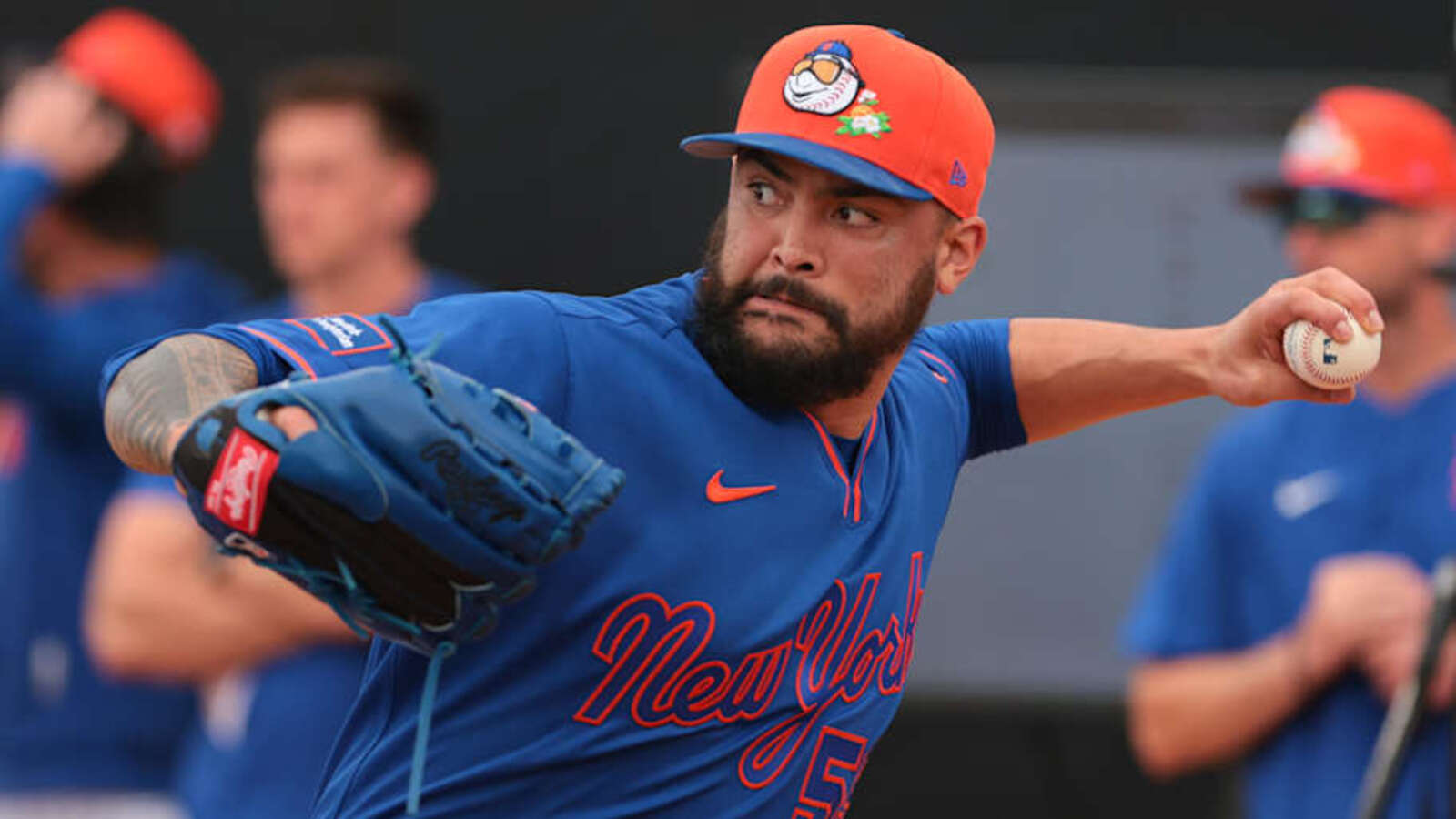
After the game, which ended in a 4-3 extra-inning defeat, Manaea was asked by the media about how he felt during his outing and his expectations in a relief role.
“Still got some things to work on, but overall it felt really good,” Manaea said. “At the end of the day, I’m just going to pitch when they need me to. Whatever that case may be, I’ll be ready.”
How Sean Manaea Could Be Utilized This Season
It wasn’t a particularly encouraging outing for Manaea, as his velocity remained down at 88.7 MPH on his fastball. Additionally, all three balls the Pirates put in play had exit velocities over 100 mph, with the last batter (Nick Gonzalez) recording a 108.6 mph exit velocity on a groundout. Nonetheless, it still gave the Mets the chance to win a game that manager Carlos Mendoza later admitted was limited in bullpen usage.
The intent of moving Manaea to the bullpen was to use him as a piggyback pitcher in relief of a starter (in today’s case, Nolan McLean). However, he was used later in the game than what would normally be expected from a piggyback pitcher, replacing Huascar Brazoban (who took over for McLean in the sixth inning) in the seventh in a higher-leverage appearance.
Leadoff batter Oneil Cruz was the first Pirate to face Manaea on the afternoon, which indicates that Mendoza waited to deploy him once Pittsburgh’s lineup flipped to the top of the order. The top four of the Pirates’ order (Cruz, Brandon Lowe, Bryan Reynolds and Ryan O’Hearn) featured three lefties and a switch-hitter, which further made it an optimal lane to use Manaea.
With the eventual intent for Manaea to start games, his next relief appearance will likely be over the course of more innings and see him throw more pitches to build himself up. He could also be used in long-relief alongside Tobias Myers, creating a lefty-righty platoon role there until he is re-slotted back into the rotation.
If you like our content, choose Sports Illustrated as a preferred source on Google.