
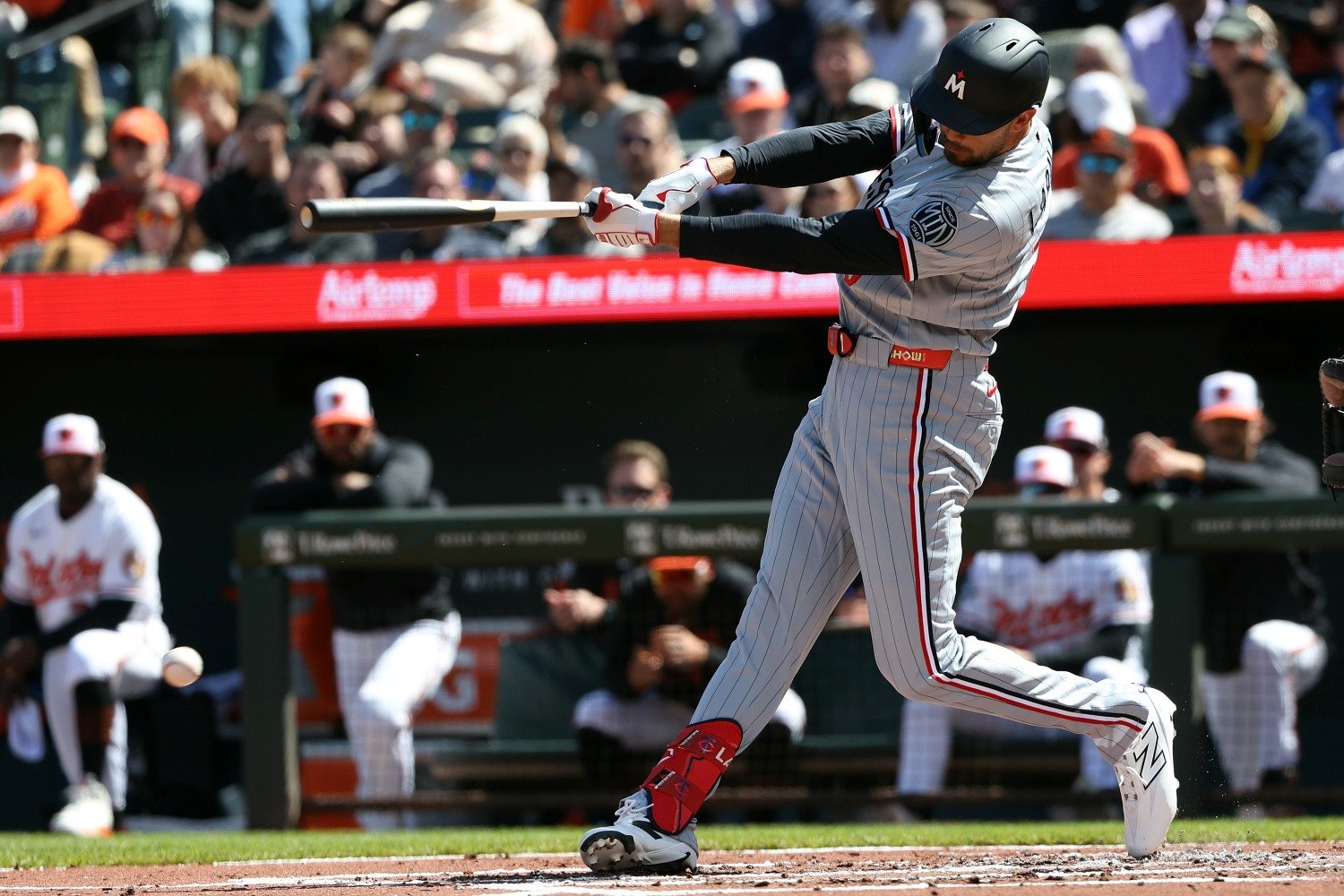
The season opened with the Twins on the road in Baltimore, and while the results were mixed, the early days of a new year often reveal more about process than outcome. There is a different voice in the dugout now, and with Derek Shelton taking over for Rocco Baldelli, every lineup card and late-inning decision is being examined through a new lens.
Shelton’s arrival brings a natural curiosity. Baldelli’s tenure was defined by structure, matchup optimization, and an often deliberate deployment of players based on handedness and rest. Shelton, at least early on, appears more willing to lean into everyday roles, even if it means living with some of the trade-offs that come with them. That shift may not define every aspect of the 2026 Twins, but it’s already surfacing in one of the more interesting roster decisions: how the team plans to use Trevor Larnach.
A Spring Plan That Never Materialized
For much of the spring, it seemed that the Twins would have a platoon in left field, with Austin Martin starting against left-handed pitchers and either James Outman or Alan Roden playing against right-handed pitchers. Outman beat out Roden for the backup outfielder job, but that might have been because Outman was out of options and Roden still had an option year remaining. One apparent consequence of that choice would be to put stronger defensive options in left and allow Larnach to DH more regularly. Instead, though, it looks like Larnach will get a good bit of time there more than Outman.
“He’s going to have to play the outfield,” Shelton said of Larnach. “I know he DH’d 81 games last year and played the outfield early. The way the function of our roster is, he’s going to have to play the field. Because we do have [Josh Bell], we do have [Victor Caratini]. … And if you ask Trevor, he would prefer to play the outfield. So it’s just going to be trying to manage the volume and how long it actually happens in the game.”
That quote does more than explain a single decision. It outlines a philosophical shift. The Twins aren’t simply optimizing for defense late in games or protecting Larnach from exposure in the field. They’re prioritizing getting as many bats into the lineup as possible, even if it creates defensive compromises along the way.
A Roster Built Around Bats
The reality of this roster is that Josh Bell and Victor Caratini are going to be in the lineup regularly, just like Ryan Jeffers and Kody Clemens. There are simply too many hitters the Twins want to play on a given night, and not enough defensive utility among them to make it all fit cleanly.
As a result, the designated hitter spot becomes a rotation, rather than a fixed role. When that spot is occupied, it leaves Larnach without an easy landing place, forcing him back into left field more often than originally anticipated. That, in turn, shifts Outman into a more limited role that leans on late-game defense, pinch-hitting and pinch-running opportunities, and occasional work in center field.
It’s a domino effect that starts with roster construction. Under Baldelli, that may have resulted in more rigid platoons or defensive substitutions earlier in games. Under Shelton, at least for now, it looks like they’re willing to stretch the defensive alignment to keep the offense intact.
Larnach’s Defensive Issues
During the 2025 season, Larnach didn’t play enough in the outfield to qualify for leaderboards, but his totals were poor even in limited action. He cost the team 7 runs, according to Statcast. His expected catch percentage was 91%; his actual catch percentage was 87%.
Those gaps matter. They point to both range limitations and inefficiency in converting balls that should be outs. Over a full season, that kind of defensive profile can quietly cost a team many runs and potentially games.
His arm strength has also become more of an issue in recent seasons. In 2021 and 2022, he was above the league average, including an 87.0 MPH mark in 2022. He’s dropped to 84.0 MPH or less over the last three seasons, which ranks below average among outfielders.
Put simply, Larnach isn’t an average defender in left field. He’s a bat-first player being asked to take on a role that exposes one of his weaknesses. Also, his bat hasn’t been strong enough in recent years to make up for his defensive flaws.
The Trade-Off the Twins Are Willing to Make
This is where Shelton’s approach becomes clear. The Twins are betting that Larnach’s offensive contributions outweigh the defensive cost. There’s logic to that. Run prevention is critical, but so is run creation, and Minnesota’s roster leans heavily toward offense. If Larnach produces at the plate, the defensive shortcomings can be managed through positioning, late-game substitutions, and selective rest.
The real question is not whether Larnach can survive in left field on a given night. It’s whether the cumulative impact over a full season is something the Twins can absorb while still competing. So far, the plan seems to be to start Larnach against right-handed pitchers, but aggressively deploy Martin and Outman defensively.
If Shelton continues down this path, it will mark one of the clearest differences from the Baldelli era. Less rigidity. More emphasis on everyday roles. And a greater willingness to live with imperfection in one area to maximize strength in another. Whether that balance holds could go a long way in defining the Twins’ 2026 season.
Can the Twins continue to play Larnach regularly in left? Leave a comment and start the discussion.