
As most of you know, I was lucky enough to be invited to attend Winter Warmup as a reporter. Last year, I used that experience to write several season previews. Due to the late start of the top 20 prospect series (caused by waiting for Brendan Donovan to be traded), my Winter Warmup stories have been pushed to now instead of at the beginning of spring training. Thus technically, these could also be called season previews, but there’s a good chance I write a couple of these after the season has already started. I’ll try to pick stories that are not outdated for the ones during the season.
Last year, entering the start of the season, the Cardinals’ starting rotation featured a 35-year-old, a 36-year-old, a 32-year-old, and the next man up if anyone got injured was a 33-year-old. Appropriate for the sort of youth movement that the Cardinals are doing, the only two members actually returning are under 30-years-old.
Advertisement
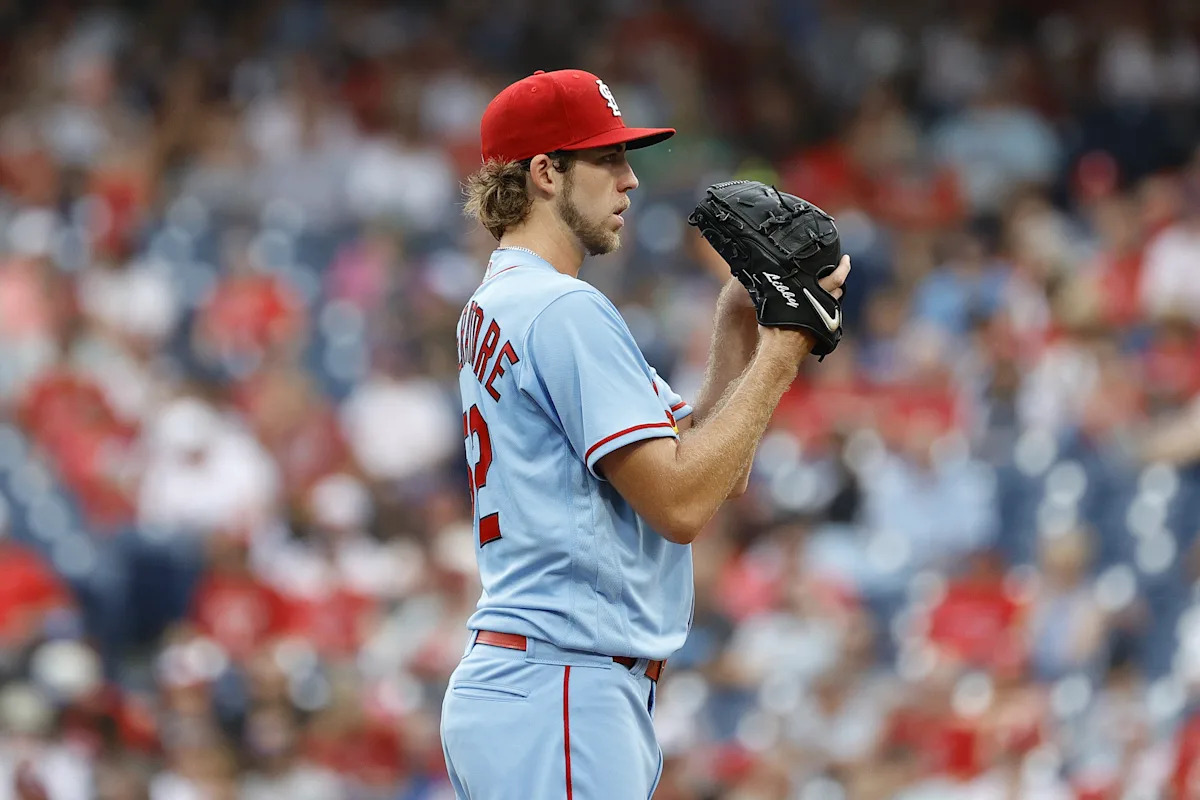
It’s the kind of thing that allows Matthew Liberatore to be the Opening Day starter, who has had one solid season in the rotation under his belt. Now, he had been with the MLB club for parts of four seasons, by far longer than any other starter, on par with only a few hitters, and the only player who has been with the club longer was Lars Nootbaar. So it’s very deserved.
Also call me optimistic, but Liberatore may look like an actual Opening Day quality starter at the end of the season. He certainly showed flashes of it last year. Even though he had thrown 149 innings before (2022 between AAA and the majors), he only threw 86 in 2024. And when that jump began to affect Liberatore in the middle of the season, it was a new experience for him.
“Having been something that I’ve never been through before, there was a lot of trial and error,” Liberatore said. “I didn’t know what would work and what wouldn’t work. I kind of had to do things and test it and see if it would work and go back and either re-try it or do something different.”
He learned he could still compete without his best stuff. That he could work with whatever he had that given day and have success.
Advertisement
“Hitters smell blood in the water if you don’t believe in yourself and what you’re doing and your ability to get outs at this level,” Liberatore said. “Plenty of guys go through what I’ve gone through on some level and still find a way to have success.”
It kind of sounds like he would self-diagnose that as one of his problems in his first couple seasons, when he pitched like he was afraid of hitters. He also knows now that he can get it back if he has to battle through a few starts.
“I kind of wish that we had an extra month there at the end,“ Liberatore said. ”I felt like I started to pick things back up and find my delivery again. The ball started to come out of my hand much better again so I felt like if we had to play another month of baseball, I probably would have hit my stride again during that month. I think that’s a great place to be. Now moving into the season, looking to make those adjustments to be a little more stable during the middle half.”
While he said he’s working on everything all of the time, he said he added a few pounds over the offseason to help durability and one of his statistical hopes is to throw 170-180 innings. But he doesn’t really set goals like others do. Or rather, he doesn’t have stats in mind when he’s setting goals.
Advertisement
“I do what’s called an execution journal after my outings, where I go in and I judge the quality of each pitch based off of what my intentions are of that pitch before I threw it,” Liberatore said. “For me, if I can execute at a 70% clip or better every outing, I think we look up at the end of the season and see the numbers are right where we want them to be.”
Durability is not something only Liberatore is worried about. Dustin May signed with the Cardinals in part because they didn’t really have injuries last year and in general, their rotation hasn’t been hit like most teams in recent years. The Cardinals made it a selling point in their pitch to May. One of the strategies might frustrate fans at points.
“We used a couple weeks in April to continue that build-up, which I think was smart,” manager Oliver Marmol said. ”At times frustrating if you’re on the other side of it from a fan, because why is Sonny coming out after 83 pitches. We try to be really smart about that build-up and the most injuries are right in that window, so we want to be smart about how we build into that window. And even the rest of April, just using that sixth man to give that guy an extra day. We’ll use kind of the same kind of process to give ourselves the best shot and go from there.”
Marmol also said while you can do everything right, what happened last season required a degree of luck. Nonetheless, the pitch worked. And while May was technically healthy last spring training, he had diminished stuff. So one could argue this is his first healthy spring training since 2023. He only made 9 starts that year of course, and he spent most of 2022 injured until the end of the season.
Advertisement
“It’s been a grind over the last five years, I’m not going to lie,” May said. “But I’m very excited to go into spring training fully healthy, fully ready to go, being fully built up, having a full healthy offseason has been great for sure.”
For his part, although he’s been injured for most of his MLB career, he has over six years of MLB experience and is 28-years-old. That’s practically ancient on this team. He knew he would be an older guy when signing, but didn’t know he would be THE old guy.
“It’s gonna be fun to be able to use my experiences and try to talk with some of the young guys,” May said. “I mean I feel like I’m a young guy still, but I’m not on this team. I think it’ll be fun to be able to use some of my experiences and explain some of the nuances of the game and the ins and outs, the dos and don’ts.”
Actually, Kyle Leahy is slightly older, but Leahy also just got here. Liberatore and Leahy had sat down an hour and a half at dinner discussing pitch grips and what they had been working on.
Advertisement
“He’s probably the most similarly minded pitcher to myself I think that we have, so that makes it really fun for us to connect and bounce ideas off each other and be a sounding board for one another,” Liberatore said.
While we haven’t see Leahy pitch yet (he’s throwing tonight), he certainly has the mix of pitches to start, having many different options to confuse hitters. Fangraphs has him throwing five different pitches (slider, fastball, curve, change, and sinker) and none more than 35% of the time. In theory, there’s no reason it can’t work.
But also in theory, there’s no reason Andre Pallante the starter can’t work either. He doesn’t strike hitters out much, but he does get groundballs 60% of the time and has an average-ish walk rate. Yes, he doesn’t especially walk hitters believe it or not (9.1% career rate is not that high and it was 8.7% last season). But it might be noticeable because he doesn’t have the greatest command, which is reflective of Pallante’s intentions this season.
“Eliminating the home runs and striking guys out more, the basics of pitching,” Pallante. “Letting guys get back into at-bats when I have them 0-2, 1-2 and throwing really uncompetitive waste pitches and when I’m behind in the count, how do I limit that damage and that’s where we talk about the unpredictability.”
Advertisement
By unpredictability, Pallante is referring essentially to what I said above about Leahy, confusing hitters. If you throw a pitch that hitters won’t see coming, you’re probably going to get a good result. The location of a Pallante pitch might be unpredictable, the pitch itself probably isn’t.
“It’s hard to beat them by pure stuff when they can see your stuff so much and they get used to before the game starts, so really you have to play more of the ‘I’ve got different ways of getting you out,” Pallante said.
In that respect, his number one goal is to throw strikes that aren’t his fastball. You can get pretty predictable if you only throw fastballs in the strike zone. But he also worked on other pitches during spring training, which was another goal of his.
“Goal #2 was development of an off-speed pitch, whether be a change or splitter,” Pallante said. “I’ve been working on the ‘social media’ kick change up and that’s been coming along really well. Last thing I’ve been working on is a little bit of a carry fastball.”
Advertisement
He’s been trying to throw a changeup since college and has always had consistency issues, so I wouldn’t be that optimistic about that one, but you may be wondering why he is trying to throw another fastball. It would work differently than his other fastball.
“What I naturally do is I don’t carry a fastball, I kind of cut it,” Pallante said. “Really the goal is finding a grip or mental cue on how to throw so I can stay behind it better and develop a better 4-seam spin.”
We should see soon enough if he has a different pitch mix, because even if it’s not a big difference, it could matter a lot. Just the possibility that his fastball might carry instead of cut affects things.
A pitcher who has no issues with unpredictability and many different options to confuse hitters is Michael McGreevy.
Advertisement
“I got so many pitches right now that it seems like the pitch com is going to run out of buttons,” McGreevy said.
Obviously, in a weekend where just about nobody pitched good (even Libby didn’t really pitch very well despite only one earned run), McGreevy nearly stood alone. He actually hasn’t allowed a hit yet this year. He was mostly working on refining stuff he already had and not new stuff.
“Over the offseason, refining everything, it’s good to have the data there,“ McGreevy said. ”You can’t dive too deep into it, because then you’ll just become a slave to the game, slave to the numbers. Making sure that stuff can be as sharp as possible so there’s no time in spring training that you’re losing.”
As someone who recently experienced it and who joked that being a vet came quick, he views success this season two ways. One is the obvious: winning games.
Advertisement
“But I think if we can walk away from next season with a clear defined culture and clubhouse that is opening to all the young guys – there’s going to be plenty of guys making their debut this year – if they can come up day one and not feel uncomfortable and the only thing that is put on them is to perform, I think that’s success to me,” McGreevy said.
I think collectively, this could be a good rotation. There are reasons for optimism for all of them, and if there are no weak links, and of course the necessary supplements from Memphis, you give yourself a chance to win every game.
“It’s a good group and there’s some depth there.” Marmol said. “When you look at May, but you also look at McGreevy taking that next step in his career, you look at Libby take that next step in his career, the excitement of seeing what a Leahy can do. There’s just some moving parts there where every day you can get excited about who is on the bump and what you’re going to see. It’s one of the things I’m most excited about is that rotation and what’s possible for them.”
Don’t worry. Three games is nothing. The underwhelming performance by the pitching does not guarantee a season of bad pitching. Keep that optimism from spring training going and be glad they picked up two wins when the pitching was this bad.