
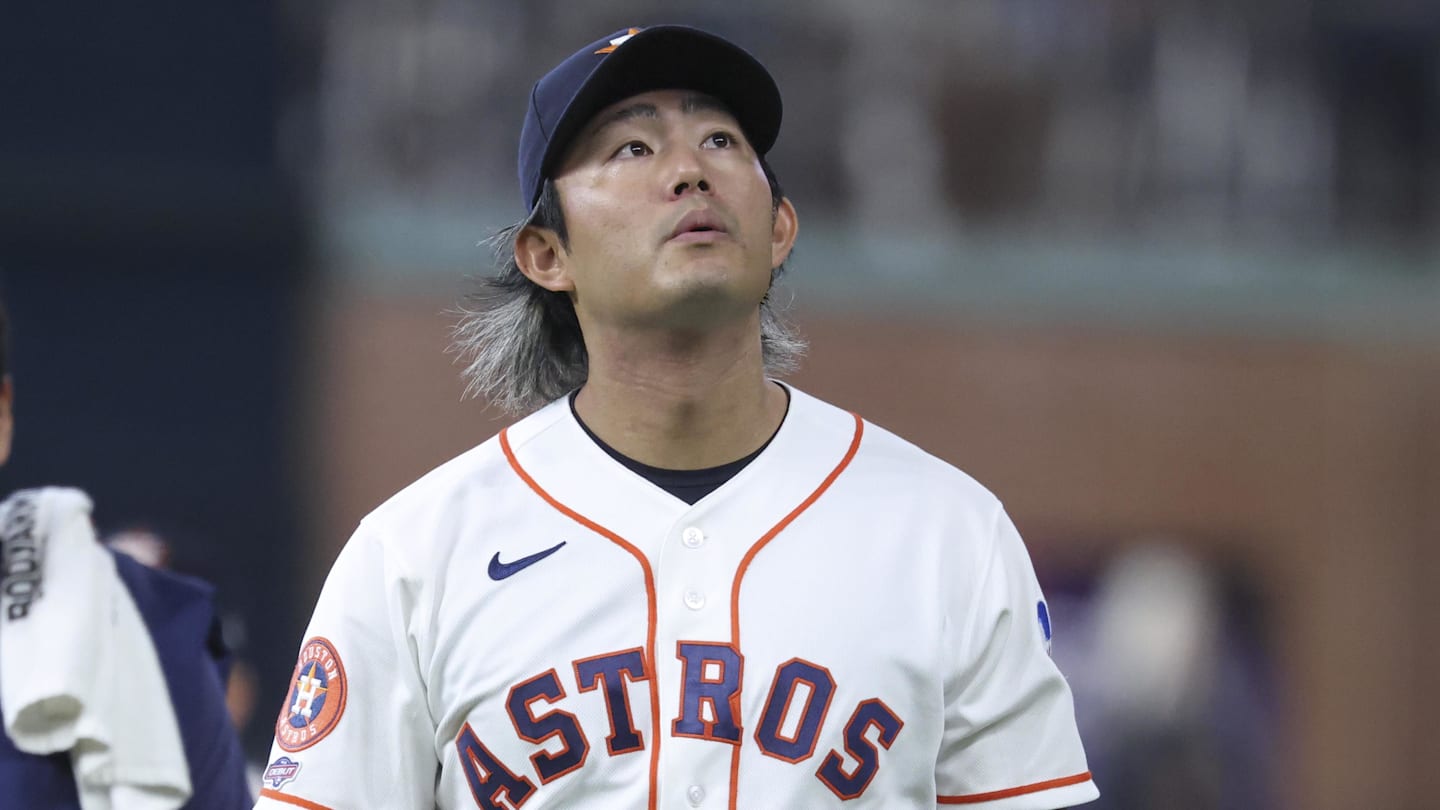
Tatsuya Imai’s debut wasn’t the spectacle that Houston Astros fans may have been expecting. The 27-year-old starting pitcher didn’t make it out of the third inning, giving up four runs on three hits and four walks. Imai’s command was all over the place, only throwing 36 strikes of his 74 total pitches.
Beyond the command, Imai will certainly need to improve his efficiency. 70+ pitches in less than three innings of work is not sustainable and could be why Houston is already going back to the drawing board on their big offseason gamble.
No, the Astros aren’t overly concerned. It was Imai’s first career start after making the jump from Japan, and if anything, it sounds like the team may just need to remind the starting pitcher that there’s a way of easing into his regular-season throwing program.
If there is an adjustment to be made, Imai highlighted the difference in slope between the pitching mounds in Major League Baseball and the pitching mounds in Japan.
“There’s a difference in the slope of the mound compared to Japan, so I’ve definitely felt that,” Imai told reporters. “I want to get on that as soon as possible and make adjustments so the next time I go on the mound and deal with the slope again, I can adjust to it better.”
Tatsuya Imai is going to be a work in progress, and that’s an important reminder for the Astros
Imai also suggested that his pitch-mix still needs work, emphasizing the need to work on his changeup and splitter.
After losing Framber Valdez in free agency and not pursuing the starting pitchers at the top of the free-agent market, the Astros are quietly banking a lot on Imai during his first year stateside. If the Astros’ starting rotation is truly going to be better this season, it will be tied to Imai’s development.
It speaks to the reason why Imai’s market may have faded during the offseason. Initially viewed as a top-of-the-rotation arm, as teams looked under the hood, there was a belief that Imai would need some alterations before reaching his potential. It’s the reason why there weren’t long-term deals on the table for Imai this offseason, and also the reason why the Astros took a risk in giving him a player option in each of the next two years.
Time isn’t on the Astros’ side when it comes to Imai. They need him to be a frontline starter soon; otherwise, the experiment may prove to be a failure.