
The Colorado Rockies are turning the clock back to 1993.
That’s when they assembled a group of players in the expansion draft and through trades and signings that were all on the fringes of being good major leaguers. Some, like Alex Cole, Jerald Clark and Freddie Benavides were just adequate. Others actually became stars. Those stars formed the foundation of the team that went to the playoffs in only their third season of existence.
Colorado is hoping that they can find a Vinny Castilla, a Dante Bichette and an Eric Young from the current group.
They’ve got plenty of applicants. To the previous core of Ezequiel Tovar, Brenton Doyle and promising catcher Hunter Goodman, Colorado brought in TJ Rumfield, Troy Johnston and Jake McCarthy.
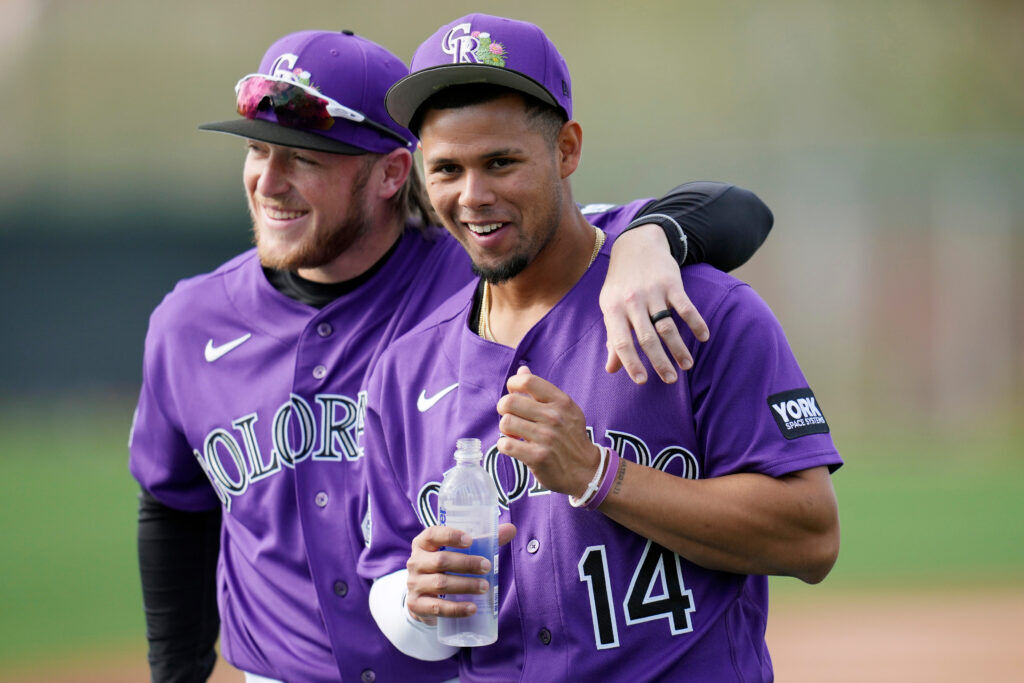 Colorado Rockies’ Ezequiel Tovar (14) and Hunter Goodman laugh together as they gather with teammates on a practice field prior to workouts during spring training baseball Tuesday, Feb. 17, 2026, in Scottsdale, Ariz. (AP Photo/Ross D. Franklin)
Only time will tell if they become Dante, Vinny or Jerald.
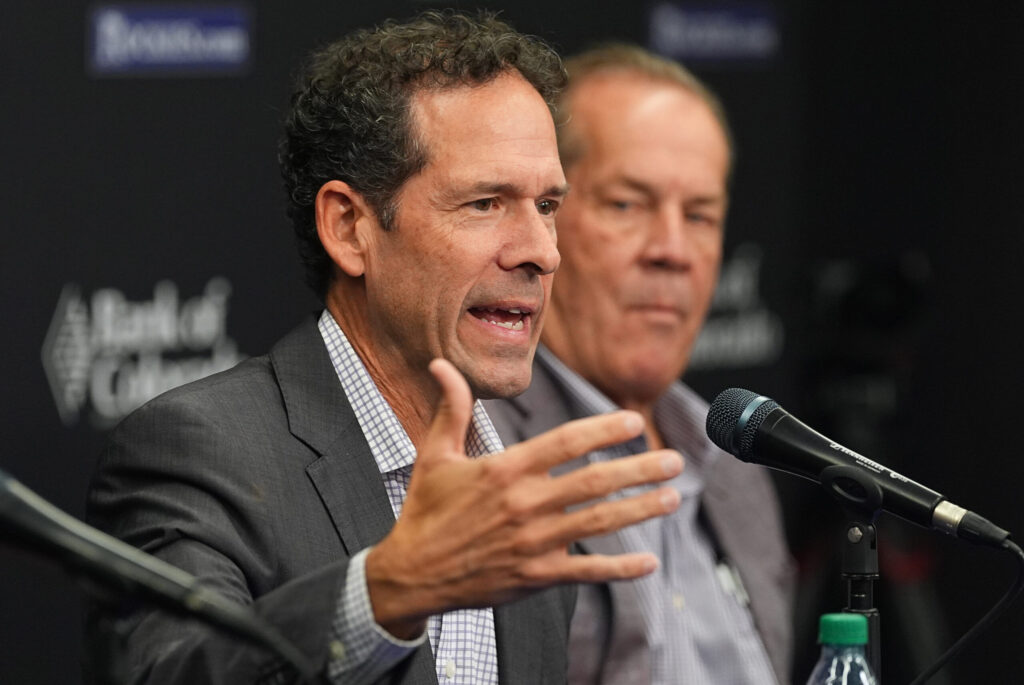
This new, old path comes at the direction of the team’s new brain trust. Colorado hired Paul DePodesta (the real-life version of the Jonah Hill character in the movie “Moneyball”) as president of baseball operations. He hired well-regarded Josh Byrnes as general manager. That duo brought in an innovative group of forward-thinkers to the front office and the coaching staff.
The Rockies needed to clean house. The old guard had become so focused on what you can’t do while playing half your games at altitude that they had stopped looking for the things you can do.
The team has also, at least for this season, returned to its roots with the pitchers. Original GM Bob Gebhart had a plan to draft and develop pitchers while filling out the staff with veteran journeymen.
That approach had its share of one-and-dones like Kent Bottenfield, Mark Knudson and Bryn Smith. It also had successes like Marvin Freeman, Pedro Astacio and Josh Fogg.
The Rockies added veterans Michael Lorenzen, Jose Quintana and Tomoyuki Sugano to stabilize the starting rotation while relying on hard-throwing homegrown youngsters in the bullpen.
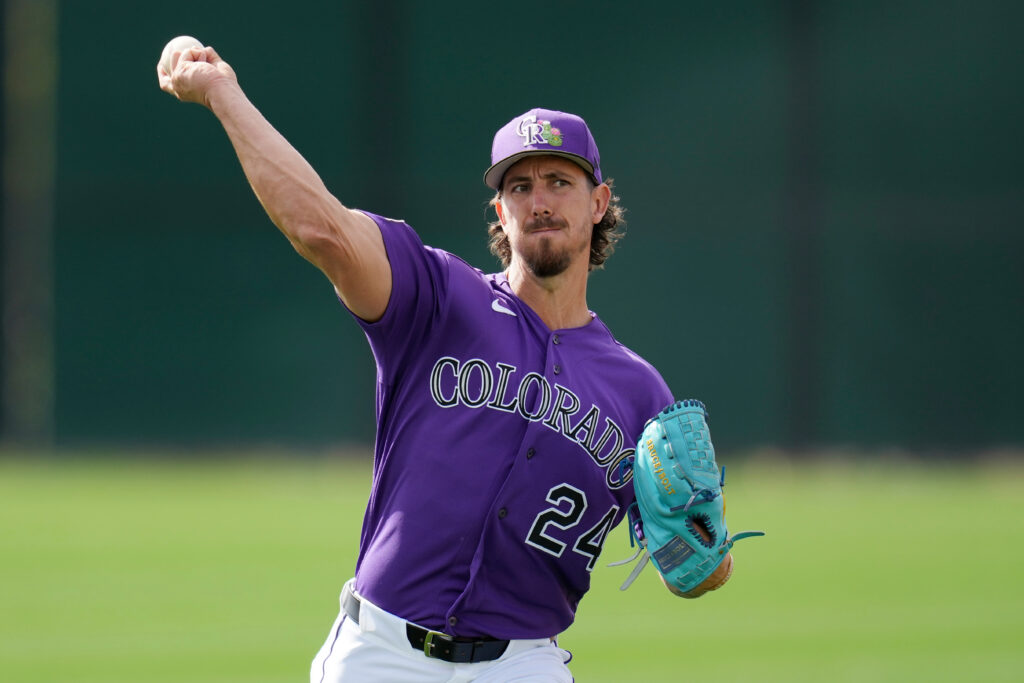 Colorado Rockies pitcher Michael Lorenzen works out during spring training baseball Tuesday, Feb. 17, 2026, in Scottsdale, Ariz. (AP Photo/Ross D. Franklin)
At this time a year ago, the Colorado Rockies looked to be on the right path.
They had abandoned the middle road, committing to a youth movement that promised short-term angst in return for long-term promise.
Instead, the youngsters proved unready, unhealthy or untalented. As a result, Colorado flirted with the worst record in baseball history before settling on an unsettling 43-119 mark.
Yuck.
What went wrong? Pretty much everything. Eternally injured outfielder Kris Bryant provided 41 bad plate appearances for his $26 million salary. Promising youngsters were in over their heads. The culture crashed as the team won just nine of their first 59 games.
Players coming up from the minors didn’t walk into a clubhouse. They found instead a dumpster fire of despair.
Team had a .237 batting average and scored only 597 runs, which was better than only the Pittsburgh Pirates. The Rockies allowed 1,021 runs, which was better than … nobody. In fact, it was 122 runs worse than their nearest rival for pitching futility.
Even in fielding metrics, which should have been a team strength with the presence of gold glovers Tovar and Doyle, the Rockies ranked last or close to it.
To sum it up, Colorado couldn’t hit, pitch or field. It’s a trifecta of wretchedness.
This year? We’ll see. Anything short of 100 losses would have to be considered a success.
“I’ve loved every minute this spring, trying to put a new culture in place. The boys have done a fantastic job of buying in,” Manager Warren Schaeffer told Gazette beat writer Kevin Henry.
That new culture feels a lot like 1993.