
The first week of baseball has come and gone. Almost everyone had a good time, except for the umpires. For this week’s mailbag, I asked our readers to overreact to the opening weekend. And the people delivered. Let’s get to it.
The questions have been edited for clarity.
I’m McGonigled! Greatest rookie season ever? — Christopher V.
With Carson Benge hitting a home run and stealing a base in his debut, what’s the highest threshold a rookie has reached? Have any gone 30/30? 40/40? — Brendan S.
Chase DeLauter, 324 home runs: over or under? — Steve M.
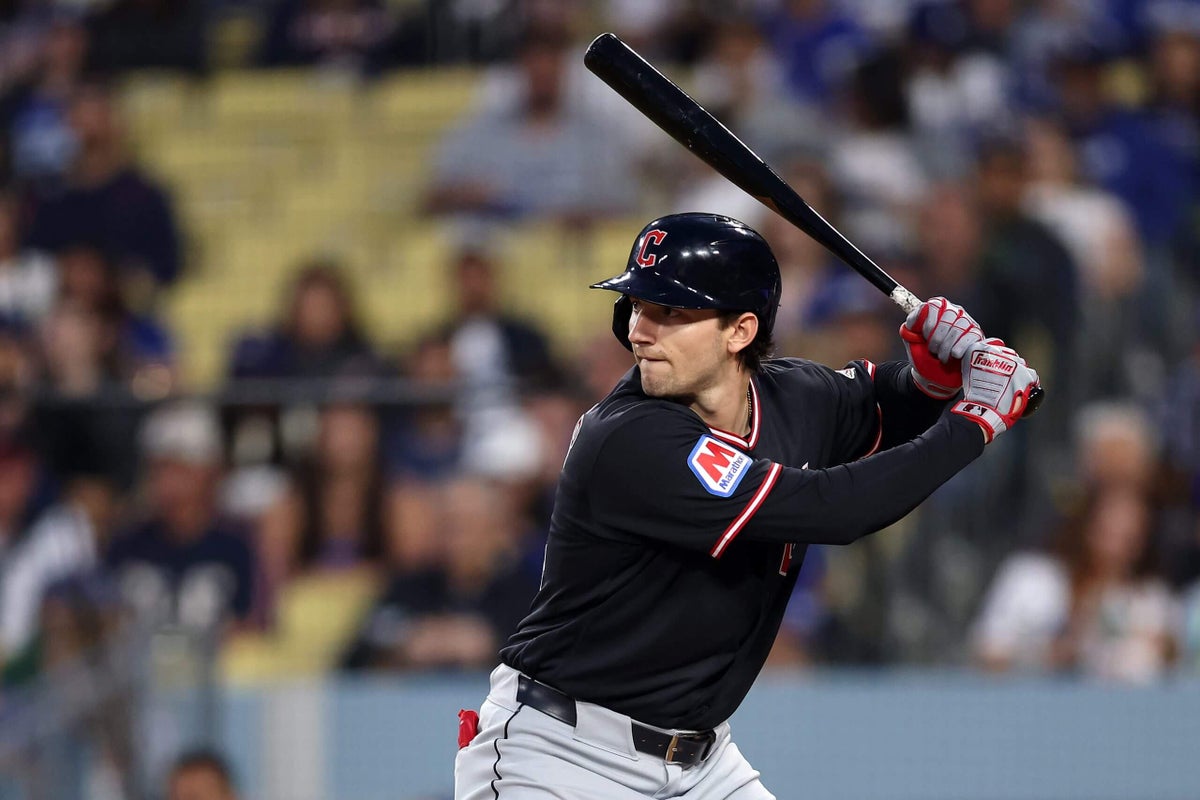
It was a memorable weekend of debuts across the sport. Kevin McGonigle collected four hits on Opening Day. Carson Benge supplied some power and speed. Chase DeLauter could not stop going deep, and neither could Munetaka Murakami. JJ Wetherholt offered hope for a brighter future in St. Louis. Baseball is a hard game, and it tends to humble just about everyone who participates. There will be comeuppance from the Gods for this early success. And DeLauter may have, unfortunately, suffered some when he injured his foot on Tuesday night at Dodger Stadium. But it was nice, for a day or two, to see things start off well for so many young players. Hope springs eternal, and all that.
As for the rookie milestones worth chasing:
Home runs: 53, Pete Alonso in 2019.
Stolen bases: 110, Vince Coleman in 1985.
The 40-40 club is an exclusive one. Only six players — Jose Canseco, Barry Bonds, Alex Rodriguez, Alfonso Soriano, Ronald Acuña Jr. and Shohei Ohtani — have earned admittance. (Juan Soto finished last season on the doorstep with 43 homers and 38 stolen bases.) But a rookie has gone 30-30 before, and it wasn’t that long ago. Mike Trout debuted in 2011, but maintained his rookie status through 2012, when he put together the first year of his remarkable peak. He homered 30 times and stole 49 bases for the Angels. He was worth 10.5 wins above replacement, according to Baseball-Reference. Based on my rudimentary fiddling on Stathead, I believe that is the most valuable rookie season in the modern era.
Some other notable rookie campaigns from this century:
Aaron Judge, 2017: 8.1 bWAR, 171 OPS+, 52 HR, 114 RBI.
Ichiro Suzuki, 2001: 7.7 bWAR, 126 OPS+, .350 BA, 56 SB.
Troy Tulowitzki, 2007: 6.8 bWAR, 109 OPS+, 24 HR, 99 RBI.
Albert Pujols, 2001: 6.6 bWAR, 157 OPS+, 37 HR, 130 RBI.
Jason Heyward, 2010: 6.4 bWAR, 131 OPS+, 18 HR, 72 RBI.
Julio Rodriguez, 2022: 6.2 bWAR, 147 OPS+, 28 HR, 75 RBI.
(One note: Like Trout, both Judge and Tulowitzki debuted the year prior, but maintained rookie status through those seasons. Ichiro, of course, came to MLB after a storied career in Nippon Professional Baseball.)
Can we fire Rob Thompson now? I know it’s early but . . . — PhillyExp
The Phillies! They are never boring.
(I think the Phillies will be just fine, especially if Zack Wheeler makes it back healthy.)
All offseason, it seemed like the only thing that could hold Chase DeLauter back was the injury concerns, but we’ve also seen this overlooked for other top prospects. (Andrew Painter comes to mind this year: No. 22 in Keith Law’s ranking compared to DeLauter barely being in the top 100.) Why wasn’t DeLauter rated higher on prospect lists? He seems to be a five-tool player, with an elite hit tool. — Max R.
Guardians fans who stayed up late on Tuesday evening got to experience the nightmare of watching DeLauter foul a ball off his foot in the first inning at Dodger Stadium. He finished the at-bat, but nearly collapsed trying to break out of the box. Cleveland removed him from the lineup when the team took the field for defense in the bottom of the inning.
The timing was brutal for DeLauter, who had been named American League Player of the Week for his performance in Seattle. To answer your question: I think you are understating the level about concern about the injuries. Health is a skill, and up to this point, DeLauter has not been able to display that skill as a professional. That is not a character flaw, but it does dampen hopes for his future. He certainly could turn the corner this season, but up until now, he has not yet done so.
I suppose the difference between DeLauter and Phillies pitcher Andrew Painter is that Painter is working his way back from Tommy John surgery, which has a relatively predictable recovery process, whereas DeLauter has been dogged by a variety of injuries. Now, again, you can raise the valid point that Painter took quite a while to make it back, and he has not looked like the same guy who wowed Phillies officials back in 2023. Again: take it up with Keith.
But I do think the injury concerns with DeLauter were reasonable to suppress his prospect hype. He broke his foot during his last season at James Madison. He appeared in 57 games in 2023 while recovering from the broken foot and toe surgery. He played 39 games in 2024 and 42 games in 2025. Last season, he required surgery to repair a sports hernia and an additional procedure to fix a broken hamate bone. For the past four years, he has, unfortunately, basically been a guy who gets hurt. During three seasons in the minors, he took the equivalent of one season’s worth of at-bats.
That does not mean he will be a guy who gets hurt for the entirety of his career, and his first weekend with Cleveland demonstrated why the club remains optimistic about his future. Facing Seattle, he homered off Logan Gilbert, George Kirby and Andrés Muñoz (and Cooper Criswell). That’s pretty impressive. When he’s been able to stay on the field, DeLauter has always hit. The power is real. He has some holes in his swing, which the Guardians theoretically would have liked to have patched up during his minor-league career. That development will now need to take place in the majors. He will also need to avoid the operating table. It’s a tall task, as Tuesday evening demonstrated.
The Guardians so desperately need some right-handed pop in this lineup. Do you think we’ll get the Philly or the Milwaukee version of Rhys Hoskins this year? — Michael J.
Would you settle for a version of Hoskins who split the difference?
The Brewers rarely venture into the deep free-agent waters, and were hoping to find a bargain when they signed Hoskins after he missed the entirety of 2023 with a torn ACL. Instead, Milwaukee paid $34 million for two seasons of a 102 OPS+ and 0.8 bWAR. After Hoskins hurt his thumb last summer, Andrew Vaughn replaced him and rendered him redundant as a right-handed-hitting first baseman. Milwaukee left Hoskins off the postseason roster this past October.
Even so, I was a tad surprised Hoskins could not find a big-league deal this winter. He hit 26 home runs in 2024 and posted a 108 OPS+ last season, with relatively cheery underlying numbers on his ability to control the strike zone and make solid contact. He tends to do more damage against lefties than righties, but in Philadelphia he was good enough to avoid a platoon. And the Guardians, as you mentioned, have so much of their offensive talent concentrated in left-handed hitters like Steven Kwan, Kyle Manzardo and DeLauter. Hoskins is unlikely to win any awards for his glove, but if he can put up an OPS better than .750, that might be a sacrifice the run-starved Guardians are willing to accept.
Speaking of Andrew Vaughn …
What do you make of Jake Bauers? — Gary D.
Bauers profiles as the relatively serviceable, left-handed-hitting half of a first-base platoon, with the ability to make the occasional start in an outfield corner. As Vaughn recovers from a broken hamate bone, Milwaukee will likely utilize Bauers and Gary Sánchez to handle first base. (Sánchez, by the way, is only 33, but he’s been a part of my baseball writing consciousness for 15 years now, since first achieving prospect status as a teenager in the Yankees organization. Where does the time go?)
Bauers has had a peripatetic professional career. He was traded three times by the time he turned 25. He received lengthy runways to establish himself in Tampa Bay, Cleveland and Seattle, but didn’t find a foothold until last season in Milwaukee. He put together the best season of his career, with a .353 OBP and a 111 OPS+ in 85 games. This year, he’ll get more chances against right-handed pitchers with Vaughn down.
In a small way, Bauers represents both the gift and the curse of how the Brewers construct a roster. The team excels at finding players like Bauers, who have been cast off elsewhere, and maximizing their ability. It’s not hard to envision a world in which Bauers and Sánchez form a platoon that combines to put up slightly above-average league production, in a year in which their salaries combine to total $4.2 million. That surplus value plays across the 162-game season. But in October, as the Brewers know all too well, you’d rather just have a star like Pete Alonso at first base.
Can George Springer (and the Blue Jays, in general) deliver the same over-performance in 2026 as he/they did in 2025? — Terence H.
I am glad you intertwined those questions. I can understand the optimism surrounding Toronto heading into 2026, and while I think they will be a strong club, I do wonder if the team can bank on a similar output from George Springer. In his age-35 season last year, he posted a career-best 161 OPS+. He was worth 4.8 bWAR, which was his most productive season since 2019 with Houston. He rode some good batted-ball luck to a career-high .309 batting average, but the numbers were not a fluke. His 2025 Baseball Savant page looks like a crime scene: 94th percentile in barrel rate, 96th percentile in launch angle sweet spot, etc. He made consistent, solid contact and he maintained his usual skill not chasing pitches outside the strike zone.
But there is a difference between doing that at 25 and doing that at 35. It’s hard to know if 2025 was Springer’s gateway to a late-career renaissance, or the last gasp of greatness from one of the most accomplished hitters of this era. Remember, in 2023 and 2024, he hit .240 with a 96 OPS+, grading out as a below league-average hitter at a time when his defensive utility dried up. Up until 2023, Springer had remained a strong hitter, one dogged more by injury than ineffectiveness. So if he can avoid major physical calamity, I think it is reasonable he settles somewhere closer to his career norms, around a 115-125 OPS+.
As for the gap in production, Vladimir Guerrero Jr. demonstrated an elevated gear last October. A full season of slugging from outfielder Daulton Varsho should also help. Alejandro Kirk is still only 27. The team has the talent to make up for some regression from Springer. The question is whether that will be enough to hold off the Yankees and the Red Sox and the Orioles in the division. It might! I suppose, as they say, that’s why they play the games.
Does Warren Schaeffer have any chance to help the Rockies move the boulder at least somewhat up the hill at Coors Field? — Anonymous
Sure, why not?
Part of the task for president of baseball operations Paul DePodesta is identifying how the organization fell so far behind the rest of the industry. So it helps to have a Rockies lifer like Schaeffer around, someone who played in the team’s minor-league system and managed his way up the chain to the big-league club. DePodesta also noted that Schaeffer had forged good relationships with his players and was open-minded about collaborating with the new brass.
The reason the Rockies became a laughingstock had little to do with the managing at the big-league level. There were far greater problems within player acquisition and player development. The team was considered well behind its peers in terms of technology and infrastructure. DePodesta needs to revitalize those areas, which has been the focus in his first few months on the job.
Did the Royals somehow make their outfield worse? — Jeff M.
So much depends on how Jac Caglianone performs. He struggled mightily during a 62-game sample last season. He struck out in 22.4 percent of his at-bats and did not hit for much power. But he only turned 23 this February, and his slugging ability is significant. I thought it was interesting that the Royals let him play for Team Italy during the World Baseball Classic this spring, which I asked president of baseball operations J.J. Picollo about a few weeks ago.
“Initially, I was thinking that our staff was going to say that he needs to be here,” Picollo said. “But to my surprise, they were like, ‘You know what, when you really break this down, we can get a week out of him on the front end and a week out of him on the back end. But he’s going to play in bigger games, against better competition, than the Double A pitchers he may face in two at-bats early in spring.’ And that’s exactly how it worked out. It turned out to be really good him. I was glad our coaching staff felt that way.”
Caglianone played well for the Azzurri, which led to some optimism heading into 2026. If he can cut down his strikeouts, he has the sort of raw power that scouts grade as an 80. They will need his bat to play, because I’m not sure there will be much more offensive production coming out of the current outfield group.
Only one day of action but the ball certainly seems a little extra bouncy. Wetherholt hit a ball more than 420 feet when it was barely going more than 100 mph. — Charles C.
How early before we know if the balls are juiced again this year? — Jon P.
One reasonable critique of commissioner Rob Manfred’s tenure is that the sport’s struggle to police varying scandals — the sign-stealing systems of the late 2010s and the sticky stuff epidemic of the early 2020s come to mind — has let fans become accustomed to questioning the things they see on the field and wondering if there is something nefarious afoot. Sports are fun; discussing the equipment used to play sports is not. I am sure there will be more reporting to come on this as the season progresses. There usually is.
The bargaining corner
If and when realignment comes to MLB, which of these three scenarios would you like to see:
1. Eastern and Western conferences with two divisions in each conference.
2. Minor tweaks to what we have, fueled by a possible relocation of the Rays if they can’t work out a new stadium in Tampa.
Or my nuclear idea:
3. Six rolling divisions of five teams each, with divisions set on Feb. 1st based on payroll. Something like Dodgers/Yankees/Blue Jays/Mets/Phillies in Division A, all the way down to Marlins/Rays/A’s/Pirates/White Sox in Division F. Six division winners and six Wild Cards make the playoffs. — Kyle S.
When you say “my nuclear idea,” I assume you mean “my plan for mutually assured destruction, leaving only devastation in its wake.” Even with the wild cards operating as a carrot, you are punishing the owners who are willing to spend by pitting them against each other, and incentivizing the rest to race to the bottom in hopes of sneaking into the postseason. I mean this kindly: I hate it.
My opinion doesn’t really matter here. But it is hard to fathom a world in which the MLBPA would agree to a division alignment such as this. And realignment would involve collectively bargaining.
One last point of clarification: the realignment of divisions will come when MLB expands and adds two more franchise. The early favorites are Nashville and Utah. Our man Stephen J. Nesbitt laid out last year a pretty tidy map of eight four-team divisions. I like Nez’s idea. No need to get nuclear.