
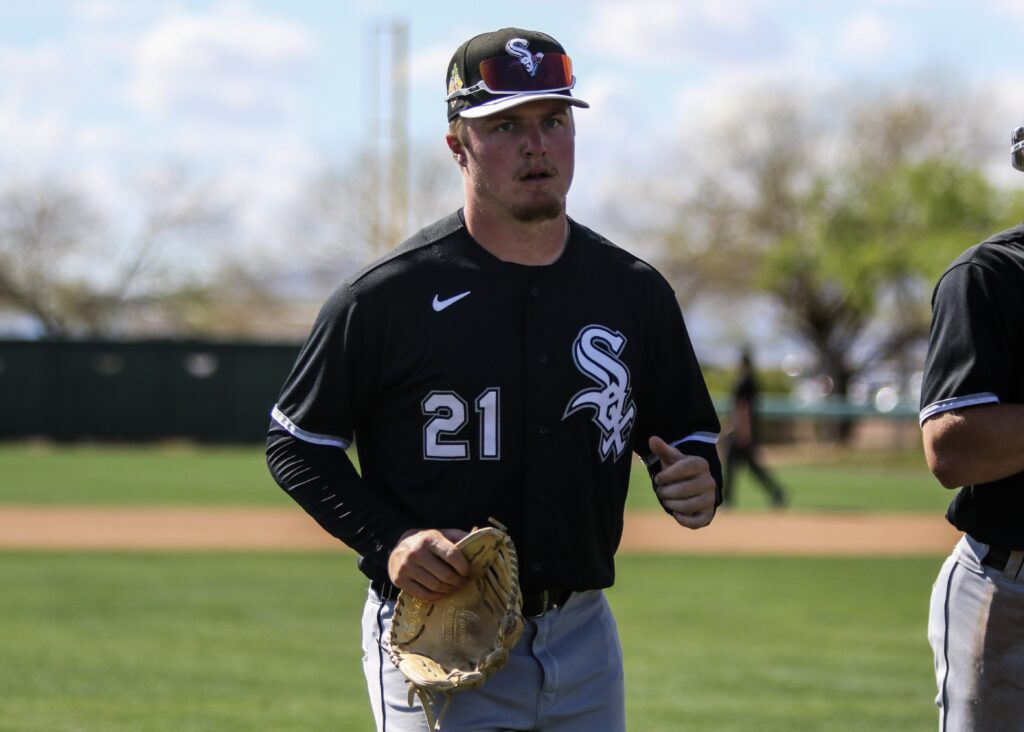
The FutureSox 2025 mid-season Chicago White Sox top 30 prospect list was derived from the top 30 lists compiled by writers and staff members here at FutureSox. Each prospect was assigned a number from 1-30 based on their spot on each individual top 30, and then added up to come to the ranking they got on the collective list. Noah Schultz received 180 points and was the #1 prospect on that list. We will follow the same process for the pre-season list below. The White Sox have added talent throughout the offseason, including via trades and the international market. We have eight writers contributing to this version of the list.
Players who have exceeded rookie status will not be present on this list. 50 innings pitched, 130 at-bats, or 45 days on an active, big league roster is the exclusionary criteria for rookie status in Major League Baseball. Colson Montgomery made his big league debut and exceeded prospect status in 2025, in addition to the names who previously departed as well. Right-handed pitcher Gage Ziehl and infielder Bryan Ramos were traded from the organization.
1. Noah Schultz, LHP, (No Change)
Drafted 1st Round (26th overall) in 2022
Schultz is still ranked as the#1 prospect in the system at Baseball America, and the publication slotted him as #26 overall in the sport despite some of the struggles in 2025. The lefty is fully healthy after spending the majority of last season dealing with patellar tendinitis in his plant leg throughout. The 6-10 southpaw is expected to anchor the rotation in Triple-A with Charlotte, and he should make his major league debut with the White Sox at some point in 2026.
The 22-year-old threw just 73 innings last year in the high minors while posting a 4.17 xFIP with 76 strikeouts and 41 walks on the season. Schultz throws a four-seam fastball and a two-seam sinker with both pitches reaching the mid 90’s regularly. He possesses a plus-plus slider and has worked on his changeup as well. A cutter has been deployed at times as well, but data suggested to the organization that the pitch was actually working inversely to the rest of his arsenal at times.
The White Sox selected the lefty out of Oswego East High School in Illinois in 2022, and they paid him $2.8 million in the first round to forego his scholarship to Vanderbilt. Schultz shows stellar body control and he repeats his delivery well. He still has one of the best arms in the minors and possesses the highest upside in the system. The White Sox believe that the local product still has the ceiling to front future rotations in Chicago.
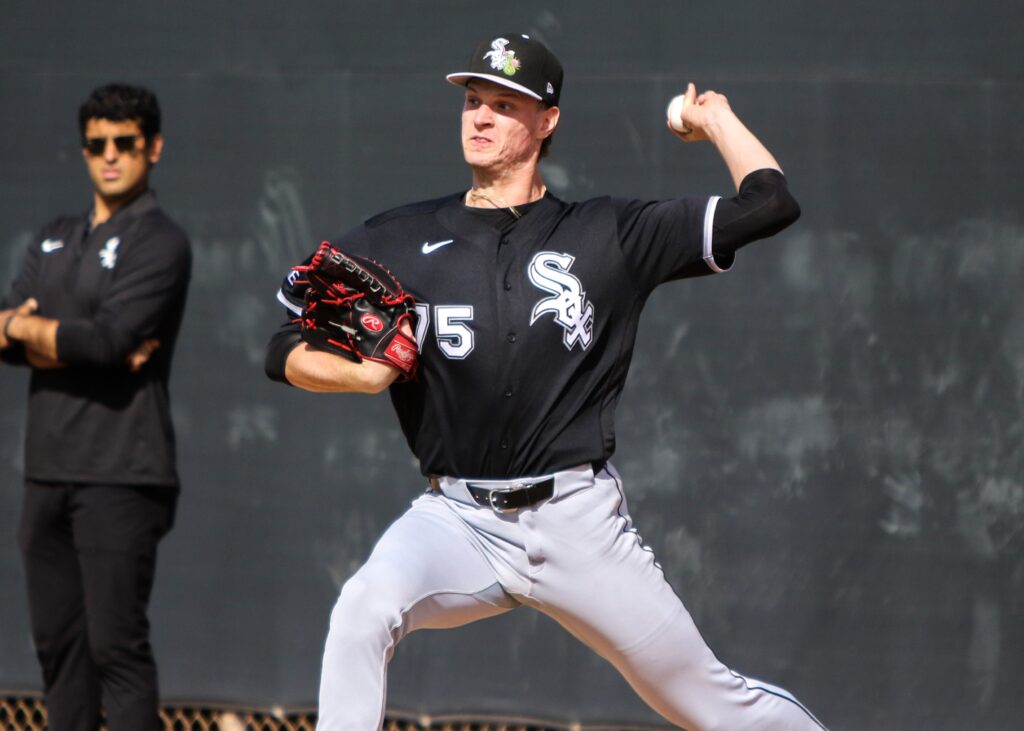 Noah Schultz | Credit: Jerry Espinoza
2. Caleb Bonemer, SS, (Previous: 6, +4)
Drafted 2nd round (43rd overall) in 2024
The White Sox selected Caleb Bonemer in the second round of the 2024 draft and paid him $3 million to add him to the fold. The former Michigan prep was a divisive prospect who performed well on the showcase circuit but played high school games in the midwest. The organization knew him well, as he played on their Area Codes Team previously. The 20-year-old infielder is a top 50 prospect in the sport for some publications after his breakout season.
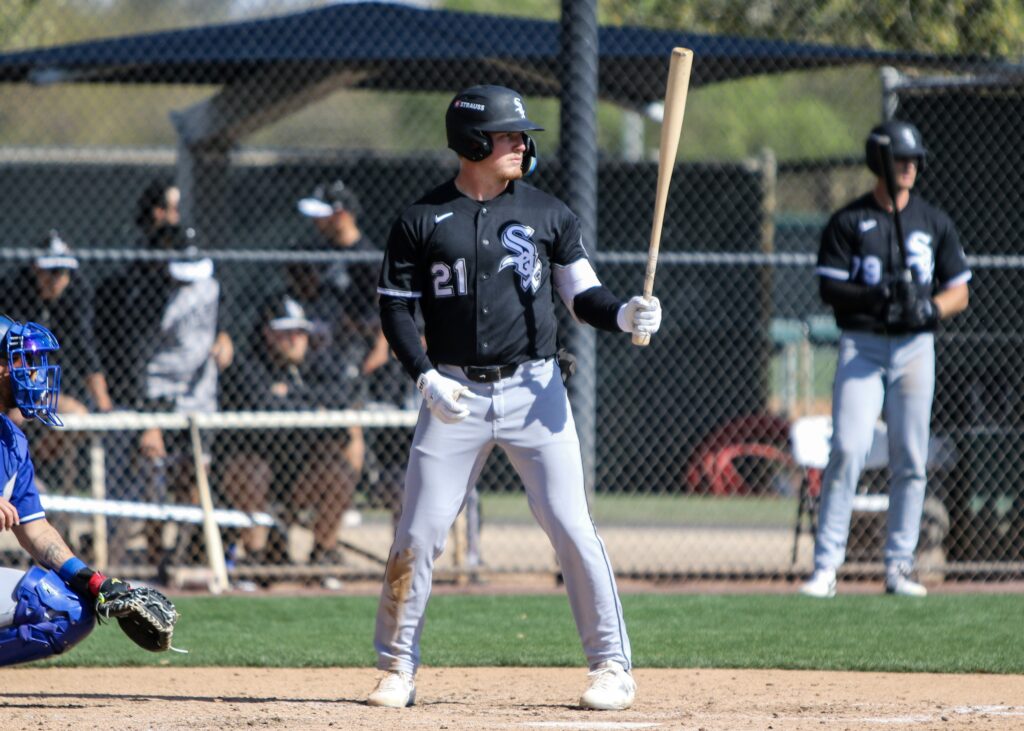 Caleb Bonemer | Credit: Jerry Espinoza
The 6-1, 195-pounder hit .281/.401/.473 in his first full season while posting a 151 wRC+ with 12 homers and a 15% walk rate. In nearly 500 plate appearances, the right-handed hitter showed his quiet setup in the box with almost no pre-pitch movement. The unorthodox swing didn’t stop him from displaying consistent hard contact with pull-side power due to advanced pitch recognition skills as well. Bonemer was also named the Carolina League MVP in his maiden voyage to professional baseball.
Bonemer’s defense at shortstop was better than anticipated, but he likely moves to third base, where he could be a plus defender, but some in the organization also believe there’s plenty of offensive upside for an outfield corner as well. The infielder crushed fastballs last year, and he’ll need to improve his contact quality against secondary offerings to keep moving up the prospect ranks, but he should spend the majority of the 2026 season in Double-A with the Birmingham Barons.
3. Braden Montgomery, OF, (Previous: 2, -1)
Acquired from Boston Red Sox in 2024
Braden Montgomery will return to Double-A to start the year after slashing .272/.364/.416 with a 133 wRC+ in 34 games with the Barons. The 6-2, 220-pound outfielder only hit one homer with Birmingham while clubbing 12 on the season in total, while posting an 11% walk rate and 25% strikeout rate in 517 minor league plate appearances. The 22-year-old could quickly move to Triple-A if organizational benchmarks are achieved at the initial assignment.
Montgomery was one of the headliners, along with catcher Kyle Teel, in the trade that sent star lefty Garrett Crochet to the Boston Red Sox back in December of 2024. The White Sox considered the outfielder with the 5th overall pick in the 2024 draft as well. The switch-hitter belted over 60 homers in three college seasons, and he fell to 12th overall in his draft year due to a fractured ankle that shelved him for the draft process and rookie ball. MLB Pipeline has projected the former Aggie as the top prospect in the Pale Hose system.
Some evaluators see an athletic, middle-of-the-order regular, while others fear that swing and miss tendencies could be what prevents the slugger from unlocking his premium offensive upside. The White Sox have played Montgomery in center field pretty consistently, but he profiles as a right fielder who should be above-average with a plus-plus arm. The outfielder posted an .875 OPS vs lefties last year and possesses double-plus raw power. He must improve upon his contact quality and become more selective to reach the ceiling as a power-hitting corner outfielder.
4. Hagen Smith, LHP, (Previous: 6; +2)
Drafted 1st round (5th overall) in 2024
Smith was given the largest draft bonus in franchise history by the White Sox, and $8 million broke the bonus slot record for a left-handed pitcher as well, with the 5th overall pick in 2024. The 22-year-old entered last season as one of the top lefty pitching prospects in the sport, but he struggled some in his first full professional season. Smith’s stuff and control regressed during a hectic year where he accumulated 75.2 innings before finishing in the Arizona Fall League.
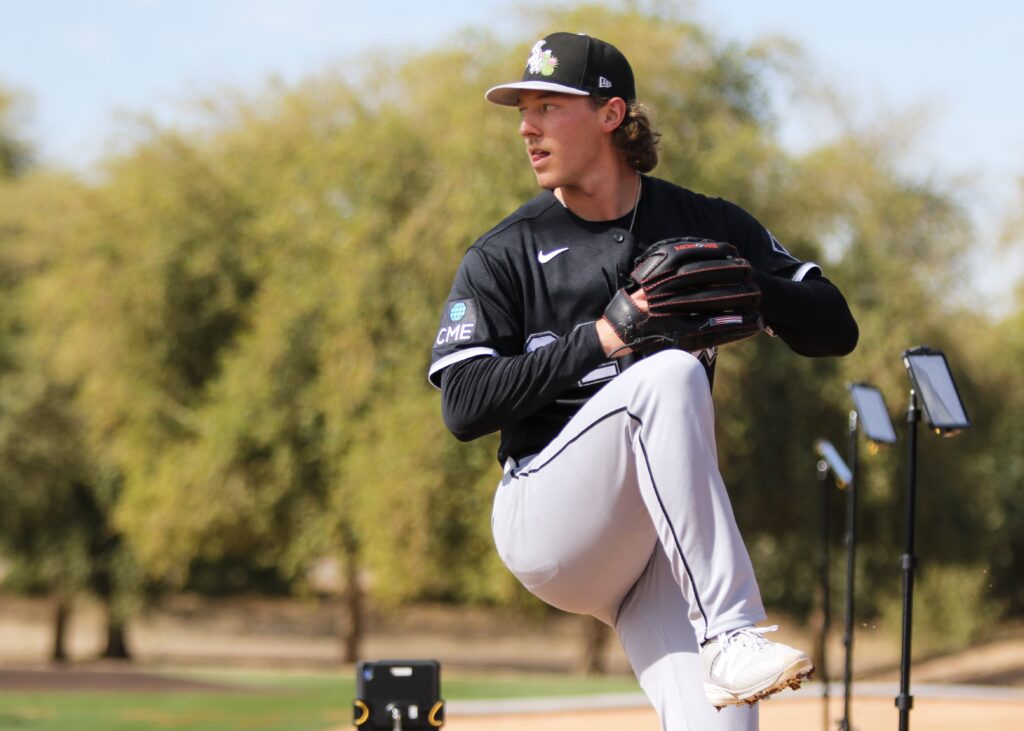 Hagen Smith | Credit: Jerry Espinoza
The 6-3, 235-pounder went on a bit of a hiatus in the season so that the organization could reset Smith’s mechanics and deal with some elbow soreness due to the mechanics. The lefty did finish the year strong and looked pretty much back to his anticipated form late in the season. Smith displays a plus fastball that touches 99 mph with carry and deception, with a wipeout sweeping slider in the 83-86 range as well.
It’s a quick arm with a low slot and a crossfire delivery that has drawn comparisons to Carlos Rodon. He also has a flat approach angle with the look of a frontline starter at his peak. Smith has incorporated a cutter this spring, and developing a third offering to throw comfortably would be a benefit. The southpaw posted a 3.59 xFIP in Birmingham with 108 strikeouts and 56 walks on the year. The former Razorback will begin the 2026 campaign in Triple-A, and abbreviated outings will let him finish in Chicago down the stretch.
5. Tanner McDougal, RHP, (Previous: 7; +2)
Drafted 5th round in 2021
Tanner McDougal has been a fringe top 100 prospect at multiple publications, and he made the pre-season list at Baseball America. The 22-year-old is expected to start the season with the Charlotte Knights in the rotation at Triple-A. The big righty should also make his major league debut at some point during the 2026 season. McDougal profiles as a mid-rotation starter with a high floor of leverage relief if there are hiccups involved with starting down the line.
The White Sox took the 6-5, 185-pounder in the fifth round of the 2021 draft out of Silverado High School in Nevada. He inked for $850K after a standout performance at the first draft combine. Some struggles and Tommy John surgery hurt McDougal’s stock prior to a breakout 2025 season. He made 28 starts last year while posting a 3.26 ERA with 136 strikeouts and 49 walks in 113.1 innings.
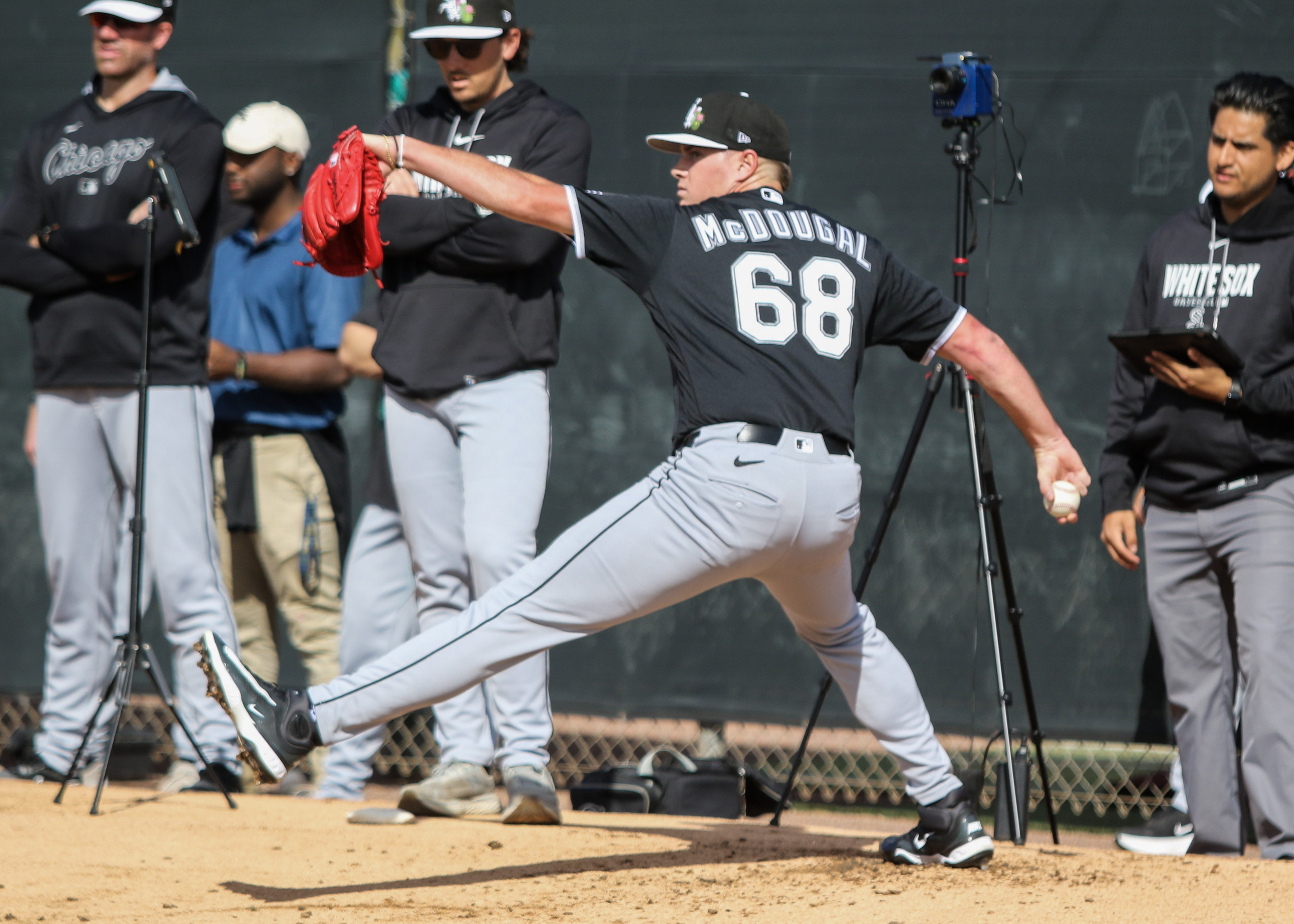 Tanner McDougal | Credit: Jerry Espinoza
McDougal is unique because he possesses elite spin rates and premium velocity, but the upper 90’s fastball is hittable with downhill plane if it’s commanded consistently. There’s a high spin curveball in the arsenal as well, and it’s also an above-average pitch. The right-hander’s best secondary offering is a plus slider with huge depth. The Las Vegas native is the top right-handed pitcher in the system, and he’s knocking on the door to Chicago.
6. Christian Oppor, LHP, (Previous: 9; +3)
Drafted 5th round in 2024
Oppor is another former member of the White Sox’s Area Codes Team. The club wanted to draft the 6-2, 175-pounder in 2022 out of a Wisconsin High School, but the Oakland Athletics took him instead and couldn’t sign him. The southpaw signed with the Sox for $550K in 2023 after being selected in the fifth round out of Gulf Coast Community College, however. The southpaw ranked #4 overall on the club’s prospect list at FanGraphs earlier this offseason.
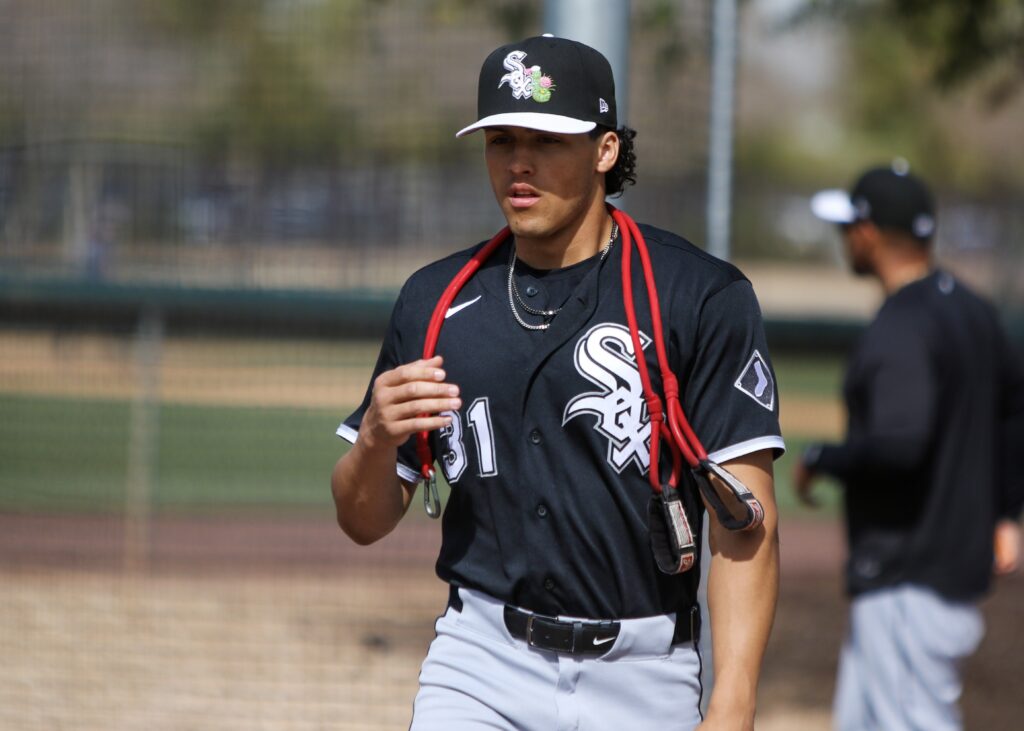 Christian Oppor | Credit: Jerry Espinoza
The 21-year-old southpaw made 22 starts last year with a 3.08 ERA over 87.2 innings in two levels of A ball. The lefty struck out 116 hitters while walking 42 and held opponents to an average of .199. The walk rate spiked a bit in the second half, but he was also hitting 100 mph with his fastball in High-A. Oppor is one of the highest upside starters in the minors, especially from the left side.
Oppor is a former basketball player with a high waist and athletic frame. There’s potential for three plus pitches in his arsenal with a fastball that hits triple digits. Oppor also has a low 80’s slider and a reliable changeup to combat right-handed hitters. He’s the most athletic pitcher in the system with a low three-quarters slot, deceptive delivery, and low release height. Oppor’s ceiling is that of a frontline starter, and he could be a top 50 prospect in the sport soon if things go accordingly.
7. Billy Carlson, SS, (Previous: 4; -3)
Drafted 1st round (10th overall) in 2025
Billy Carlson spent the fall in Arizona playing in bridge league games and instructional league after being selected with the 10th overall pick in the 2025 draft out of Corona High School in California. The 6-1, 185-pounder was one of the top prep players available in the class, and many scouts and analysts have noted that he might be the best defensive shortstop ever from the prep ranks.
The 19-year-old is a plus-plus defender at shortstop with smooth actions and a plus arm. He’s a Gold Glove-level defender who also would’ve made a lot of money as a pitcher if he had committed to that long-term instead. The right-handed hitter presently has some concerns related to his offensive prowess. Carlson’s swing gets long at times, and he’s known for being someone who tinkers with his stance and stroke often.
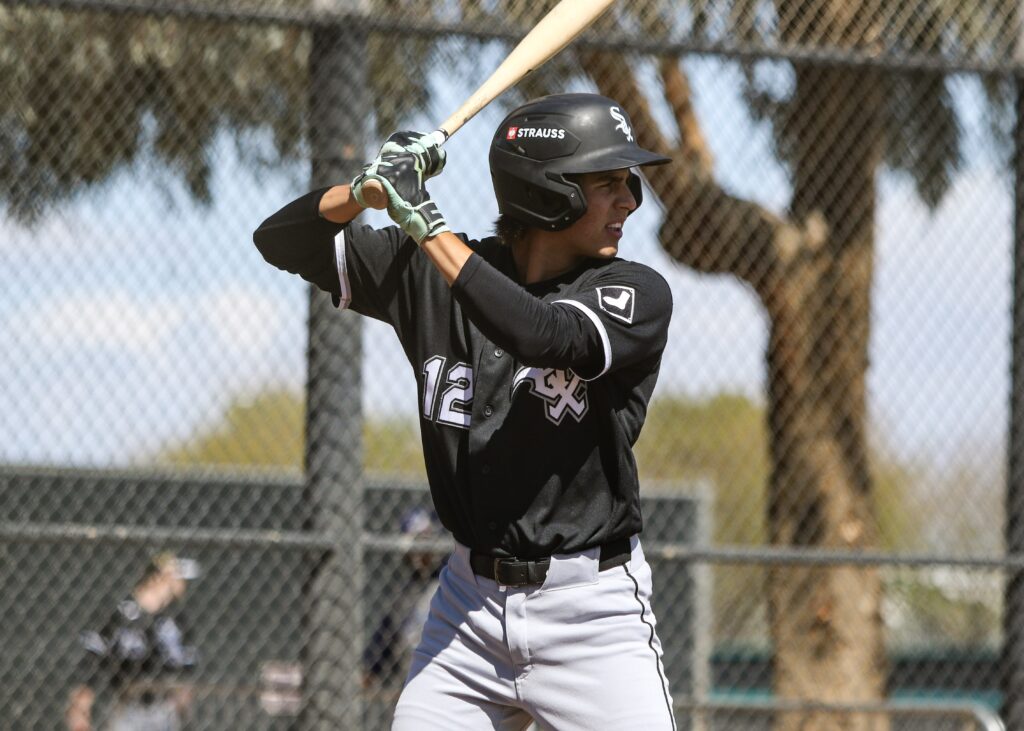 Billy Carlson | Credit: Jerry Espinoza
The White Sox have attempted to add strength to the 19-year-old’s frame, and the organization believes that he has 20-homer upside. The swing simplification is well underway, and the arm bar that was previously present has already significantly changed. Carlson possesses bat speed and hand-eye coordination as well. He’ll spend the season in Low-A with the Kannapolis Cannon Ballers, and his defense is so stellar that he could be a top 50 prospect in the sport if the bat plays in an average way.
8. Jaden Fauske, OF, (No Change)
Drafted 2nd round (44th overall) in 2025
The White Sox paid Fauske $3 million in the second round of the 2025 draft, and he immediately began to impress evaluators and team personnel in Arizona. The 19-year-old has also drawn rave reviews from Sox’s personnel this spring. The 6-3, 200-pound left-handed hitter has transitioned to the outfield after playing catcher on the amateur circuit.
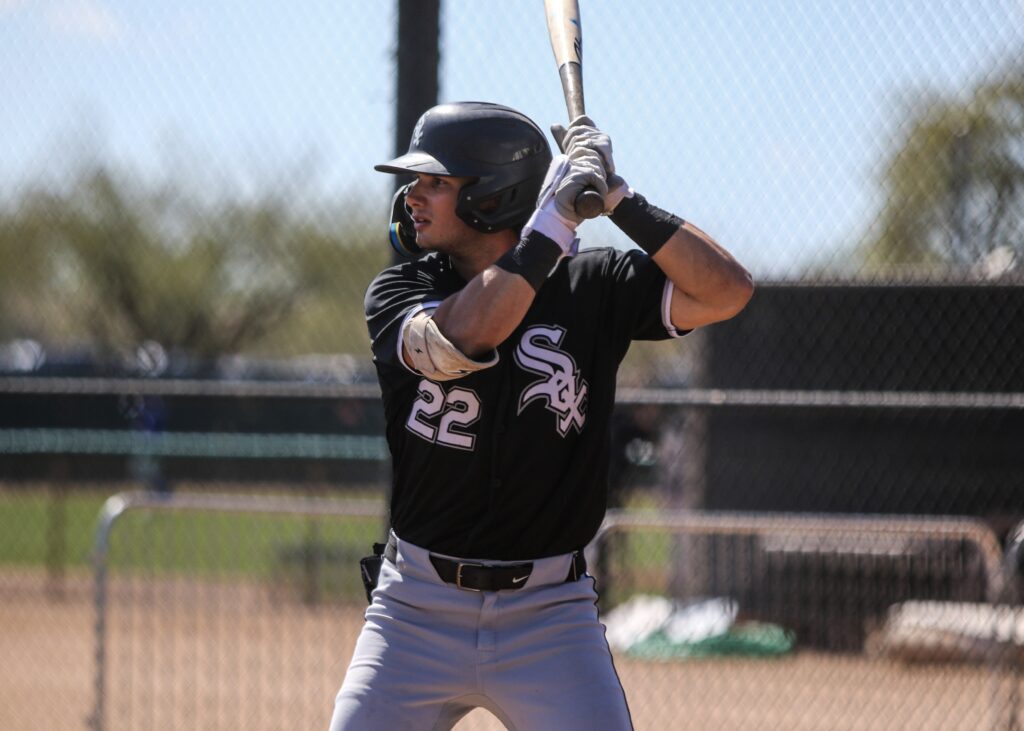 Jaden Fauske | Credit: Jerry Espinoza
Fauske also played football at Nazareth Academy, and Jim Thome was an assistant coach on the baseball staff in La Grange, Illinois, as well. Another former member of the club’s Area Codes Team, Fauske, was seen as one of the best hitters in the prep class last year. He employs a smooth left-handed swing with a disciplined approach.
He doesn’t chase a ton, and his athleticism has earned him some Grady Sizemore comps at a similar age. The White Sox are focused on Fauske’s bat and athleticism, as they immediately shifted him to center field as a professional. The club is trying to improve his arm strength with a throwing program. The club believes that there’s 20 homer potential here, and he’ll spend most of the season in Low-A with Kannapolis.
9. Sam Antonacci, 2B, (Previous: 10; +1)
Drafted 5th round in 2024
Antonacci has really burst onto the scene, playing in the World Baseball Classic with Team Italy. The 5-11, 193-pounder plays mostly second and third base, but the White Sox have begun to give him time in left field in anticipation of a short stay in the minors to start the 2026 season. The 23-year-old also impressed in the Arizona Fall League, and his energy and skills standout over his actual tools.
The White Sox selected the Illinois native in the 5th round of the 2024 draft and paid him $575K after a standout season with Coastal Carolina. Antonacci was one of the best junior college players in the country at Heartland prior to his stint with the Chanticleers. The left-handed hitter doesn’t chase pitches out of the zone, and while power hasn’t been a huge part of his profile, he’s increased the exit velocity this spring.
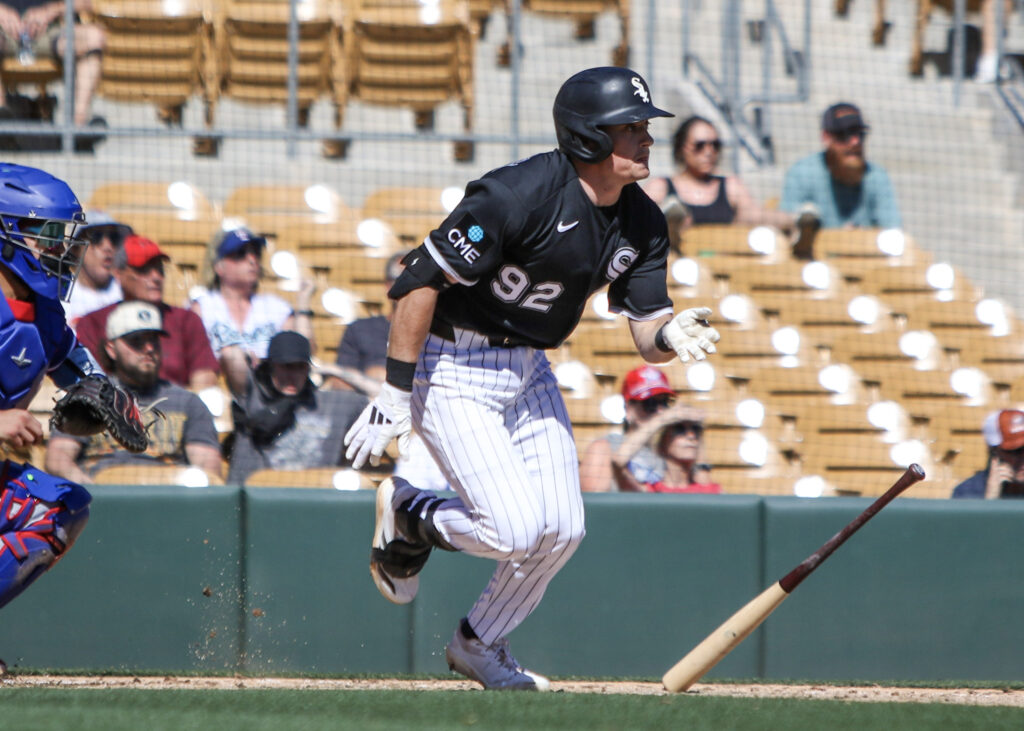 Sam Antonacci | Credit: Jerry Espinoza
Antonacci takes professional at-bats, and he’s an aggressive base runner with decent range, an average arm, and premium instincts defensively. Across three minor league levels in 2025, the infielder hit .291/.433.409 with a 156 wRC+ and five homers. The lefty accumulated 519 plate appearances in 116 games with 48 stolen bases, and he reached base via hit by pitch 35 times. With a 13% walk rate and 14% strikeout rate, Antonacci has the most helium in the White Sox’s system right now. He’s expected to be a factor in Chicago sooner rather than later.
10. David Sandlin, RHP, (New)
Acquired from Boston Red Sox in 2026
The White Sox acquired David Sandlin from Boston as part of the trade that sent righty Jordan Hicks to Chicago earlier this year. Originally drafted by the Kansas City Royals out of Oklahoma in the 11th round of the 2022 draft, the big righty was trending toward being a mid-rotation starter option. The 6-4, 215-pounder was solid in Double-A last year with a 3.61 ERA and 107 strikeouts in 106 innings. The struggles came with a move to relief in Triple-A.
After shifting to the bullpen, the 25-year-old posted a 7.61 ERA (5.27 FIP), and command issues were prevalent. Boston tinkered with Sandlin’s pitch mix as well. The right-hander shows a fastball that sits in the 95-97 mph range and touches 100 mph. If the pitch isn’t commanded consistently, though, it gets hit due to a lack of run and carry. Sandlin has displayed a four-pitch mix in the past with an upper 80’s cutter, splitter, and changeup.
Sandlin was sidelined for periods of 2023 and 2024 with injuries, and he’s been on the shelf throughout the spring as well with elbow soreness and a back injury. He’s throwing bullpens, and he’ll be delayed at an affiliate. The White Sox took on Jordan Hicks because they believe in Sandlin’s profile as a potential mid-rotation power arm, though and he should join the rotation in Charlotte once he’s ready.
11. Jedixson Paez, RHP, (New)
Acquired from Boston Red Sox via 2025 Rule 5 Draft
A Rule 5 selection being asked to jump straight into a major league role, Paez brings one of the more unusual profiles in the system. Working from a lower slot with a deep mix, the 22-year-old stands out for how consistently he fills the zone and sequences hitters despite not pitching above High-A. The 6-1, 170 pound righty has kept walk rates around four percent throughout his career and showed a jump in strikeout ability in 2024 before an injury held him to just 19.1 innings in 2025. That limited track record at higher levels makes this an aggressive assignment, but the strike-throwing gives him a real chance to hold his own.
A late spring injury to the bullpen opened the door for him to stick, and he now projects into a multi-inning role early, where he can cover length or serve as an opener. The mix plays best in shorter bursts where he can lean on feel and pitchability to navigate lineups once through. Long-term, there is still starter upside, but the focus this year will be on showing he can translate his command against major league hitters while adjusting to the jump in competition.
12. William Bergolla Jr., SS, (Previous: 15, +3)
Acquired from Philadelphia Phillies in 2024
Bergolla stands out for elite bat-to-ball ability that consistently puts him among the lowest strikeout rates in baseball, with projections just behind Luis Arraez and ahead of Steven Kwan and Nico Hoerner. He produced a 104 wRC+ in Double-A while being significantly younger than the level, and has yet to hit a professional home run, but still impacts games through constant contact and pressure on defenses. The question is how much extra impact comes as he moves up. National outlets have taken notice with a top 200 ranking from Kiley McDaniel and comparisons to Arraez.
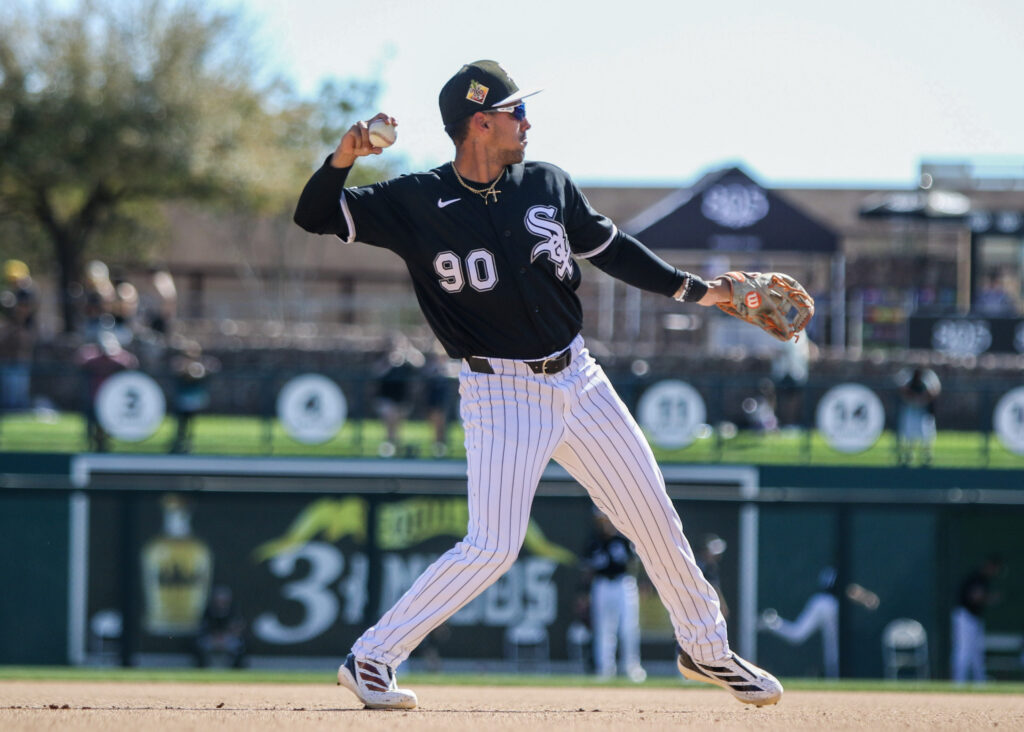 William Bergolla Jr. | Credit: Jerry Espinoza
The 21-year-old Venezuelan has shown he can handle shortstop and projects to settle at second base as he moves forward. That flexibility should allow him to share the middle infield in Charlotte, depending on usage, especially when Sam Antonacci shifts around the diamond or into the outfield. The 5-9, 165 pound infielder could be up in Chicago to replace an infielder if needed and projects as a contact-driven option who will find his way to the big leagues.
13. Javier Mogollon, INF, (Previous: 24; +11)
Signed out of Venezuela in 2023
Mogollon was the talk of minor league camp as our writers filtered in to see players this spring. The 20-year-old packs huge raw power from a 5-8, 160-pound frame, and he’s emerged as the clear best player from their 2023 international crop. The infielder signed out of Venezuela and posted a 147 wRC+ in the Dominican Summer League with 10 homers in his debut. He went on to post a 132 wRC+ with 8 homers in the Arizona Complex League in 2024 as well.
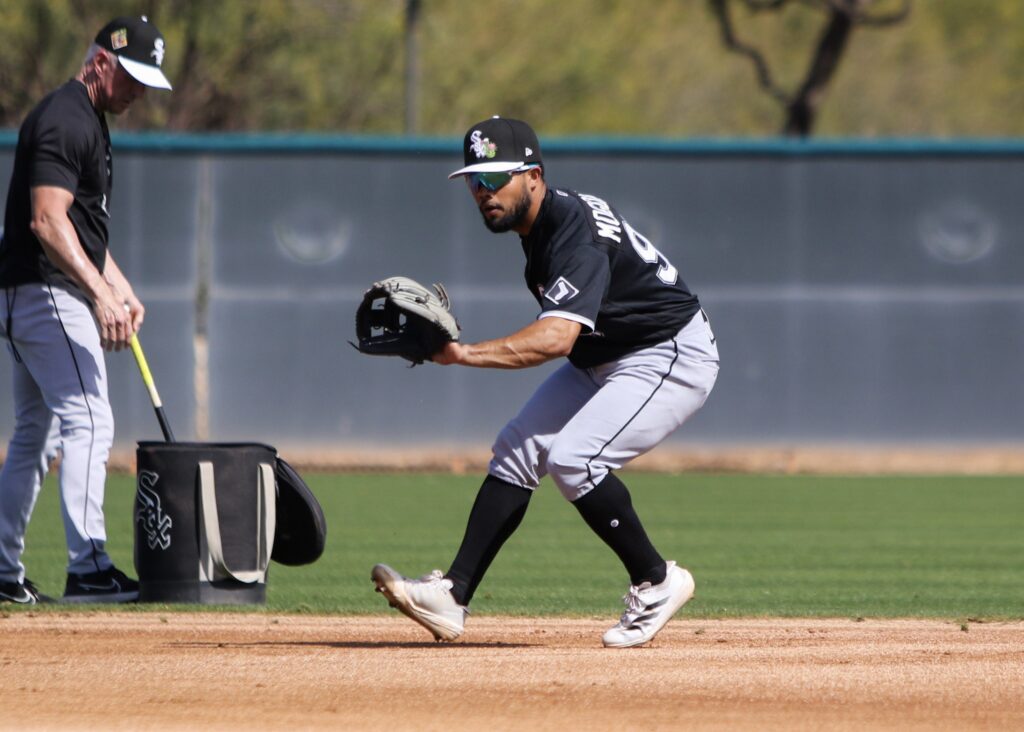 Javier Mogollon | Credit: Jerry Espinoza
The infielder struggled with a hamstring injury last year that sidelined him from June on, but he did smack five homers with a 116 wRC+ in 51 games in Low-A. Mogollon significantly dropped his strikeout rate in his first full season taste as well. He’s very tools but likely fits best at second base, and he produces loud contact and impressive exit velocities, but he displays a max effort right-handed swing that could be troublesome in higher levels. There’s plus speed here as well, and the infielder has executed 85% of his stolen base attempts.
14. Mason Adams, RHP, (Previous: 11; -3)
Drafted 13th round in 2022
A polished right-hander with a deep arsenal and advanced feel for pitching, Adams was trending toward a major league look before losing his 2025 season to Tommy John surgery. Now 26, he built his rise on command and sequencing, posting a 3.09 career ERA across 233 innings with a walk rate around six percent while moving quickly through multiple levels. He posted a 2.92 ERA in the minors in 2024. The 6-1, 190 pounder operates with a low-90s fastball and mixes in a full complement of secondaries, leaning on his ability to change speeds and locations rather than overpower hitters. That approach was on display again in camp before the injury, where he looked sharp before being shut down.
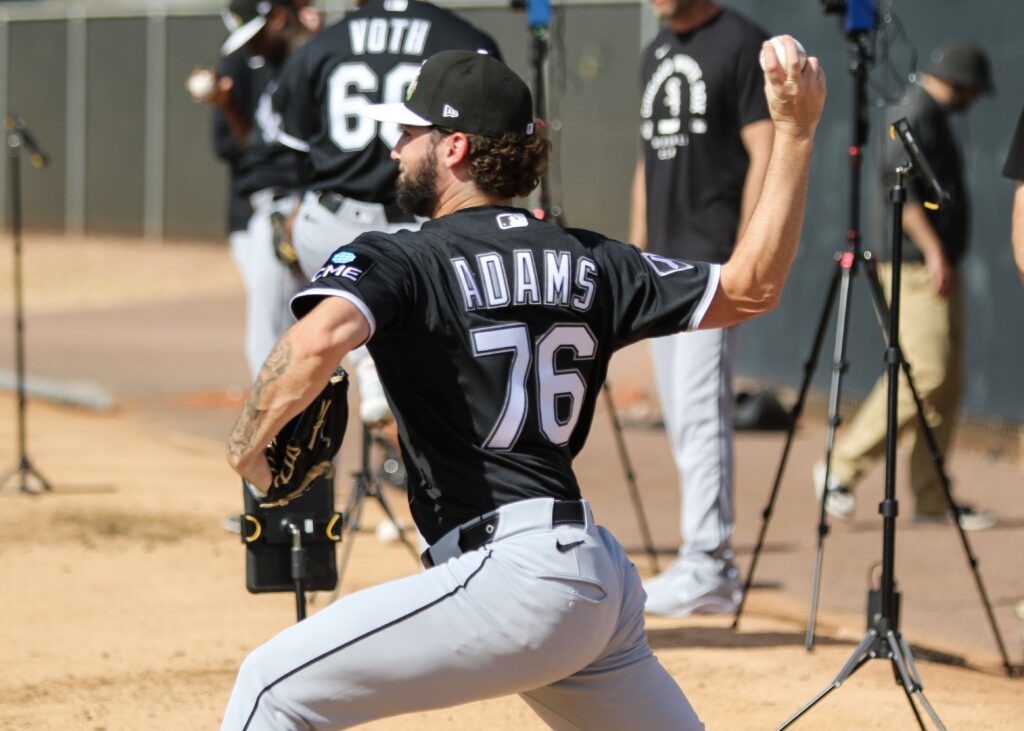 Mason Adams | Credit: Jerry Espinoza
The missed year resets some of that momentum, and he now returns in a group alongside Drew Thorpe, working back from similar setbacks, both looking to reestablish themselves as viable back-end rotation options. There’s a path here if the command and feel return intact, especially with how well his mix plays when he’s locating, but he will need to show he hasn’t lost a step. If that holds, Adams profiles as valuable back-end depth who can move shuttle between Charlotte and Chicago, capable of handling spot starts or providing multi-inning coverage while the organization sorts out its next wave of pitching.
15. George Wolkow, OF, (Previous: 12; -3)
Drafted 7th round in 2023
Entering his age-20 season with a jump to Winston-Salem, Wolkow remains the most physically imposing offensive player in the system and one of the toughest to project. The 6-foot-7 outfielder made measurable strides with his contact rate and overall approach during his second run through Kannapolis, even if the surface production did not fully reflect the progress. His raw power remains the best in the organization, backed by elite bat speed that has reached into the 80+ mph range, which would place him in that same tier as the top MLB hitters, along with exit velocities that push into that same tier. There are still questions around how consistently he will get to that power in games, especially against spin, but the underlying traits continue to give him a chance to develop into a middle-of-the-order threat if things click.
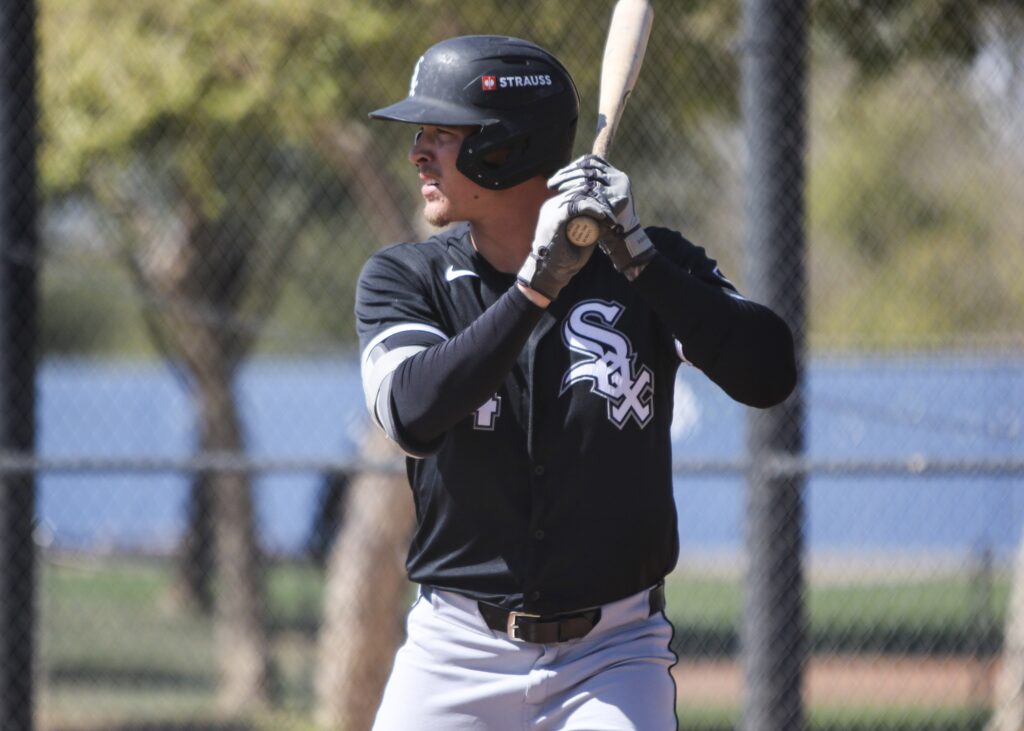 George Wolkow | Credit: Jerry Espinoza
Wolkow also showed a surprising impact on the basepaths, taking advantage of his athleticism and instincts to create value, though that element may level out as he faces more advanced competition. Defensively, he profiles on the corners with a strong arm and enough mobility to handle multiple spots when needed. The next step will be translating improved swing decisions into more consistent damage against better pitching, which makes this a pivotal year in his development as he moves beyond his teenage seasons. The range of outcomes remains wide, but the combination of size and athleticism, translating to his raw power, still gives him one of the highest ceilings in the system.
16. Kyle Lodise, SS, (Previous: 13; -3)
Drafted 3rd round in 2025
Coming out of the college ranks with a strong offensive track record, Lodise brought a polished approach after breaking out at Georgia Tech following his time at the Division II level. He showed the ability to impact the baseball while maintaining a disciplined approach, carrying that profile into an aggressive assignment to High-A to begin his professional career. The early results were uneven, but the approach remained intact, and he flashed his ability during stretches where the timing clicked. The 5-11, 180 pounder has shown he can handle velocity and use the entire field, though adjusting to more consistent secondary pitching will be an area to watch as he settles into pro ball.
Defensively, the 22-year-old has the instincts and actions to remain on the dirt, with the ability to handle shortstop while also offering flexibility across the infield. He’ll split time with Caleb Bonemer at third and short. His overall profile points toward a steady contributor rather than a tools-driven player, with value tied to his feel for the game and ability to impact at-bats. He could follow a similar trajectory to Sam Antonacci entering the system, with a chance to move quickly if the bat translates. A return to High-A or an early move to Double-A will give a better indication of how his offensive profile holds up against more advanced pitching.
17. Mathias LaCombe, RHP, (No Change)
Drafted 12th round in 2023
LaCombe is someone who could be much higher on this list at mid-season. The 23-year-old posted a 2.52 ERA in 35.2 innings in the ACL last year and followed that up with a 4.08 ERA in Low-A. The 6-2, 185-pounder compiled 73 strikeouts with 24 walks in 53 total innings last season. The former 12th-rounder is expected to be in the starting rotation for the Winston-Salem Dash in High-A. An interesting case could be made to shift the righty to relief in anticipation of Rule Five protection in December, but we’re not at that decision point yet.
Perhaps the most intriguing White Sox prospect is Mathias LaCombe.
Grew up playing baseball in France, and played at Cochise (Ariz.) Junior College, where the Sox selected him in the 12th round in 2023 for an overslot $450,000.
FB sat 95, also threw slider, sweeper and changeup pic.twitter.com/c4UPr1a8IM
— Jesús Cano (@Jesus_Cano88) March 18, 2026
The White Sox signed LaCombe for $450K (5th round money) after he struck out 97 hitters in 67.1 innings for Cochise Community College in 2023. The French native missed most of his first two seasons as a professional, but there’s a giant up arrow next to his name. LaCombe’s fastball sits 93-95 mph and touches 98 with carry and armside run. He also shows a low-80s sweeping slider and a mid-80s splitter. He uses a low arm slot and low release angle, which makes him tough to hit as well.
18. Jeral Perez, 2B, (Previous: 16; -2)
Acquired from Los Angeles Dodgers in 2024
Perez has quickly carved out a clear offensive identity built around power production. Playing the entire season in High-A at age 20, he posted a 124 wRC+ while emerging as one of the more consistent power bats in the system. The right-handed hitter generates strong bat speed and looks to do damage to the pull side, showing the ability to leave the yard despite a smaller frame. There is an aggressive element to the approach that can impact his on-base numbers, but he has shown the ability to adjust within at-bats and make enough contact to keep the profile afloat.
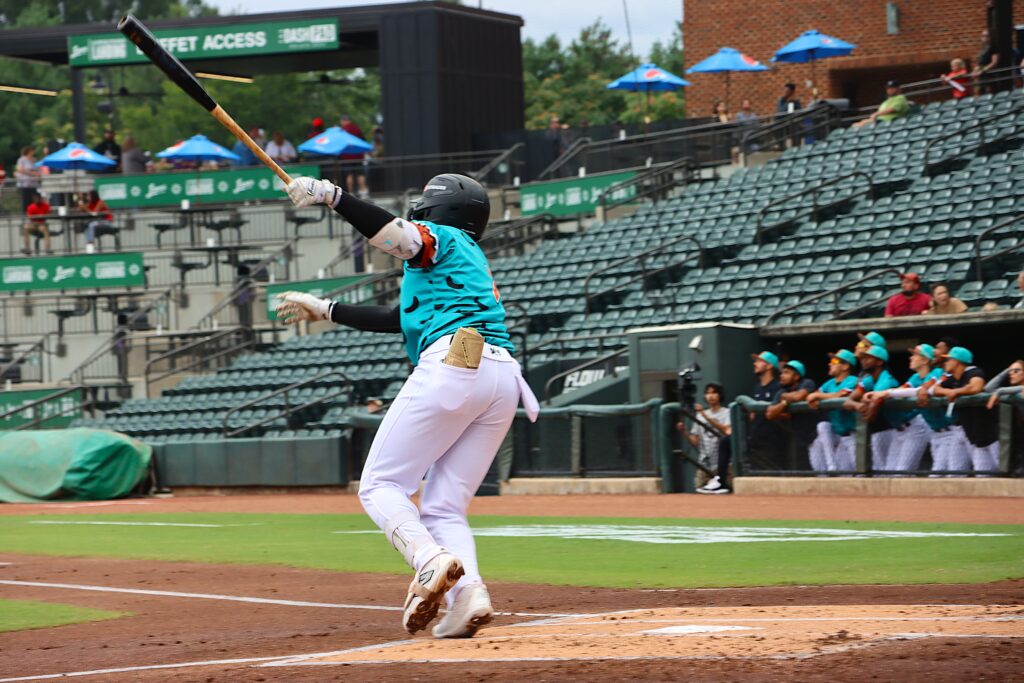 Jeral Perez | Credit: Ian Eskridge
Defensively, Perez has settled in more comfortably on the infield dirt, with second base looking like the most natural fit moving forward. The overall profile points toward a bat-driven role, with the offensive output carrying the value as he climbs the ladder. If the power continues to translate against better pitching, there is a path to everyday at-bats, though a more realistic outcome could mirror a Lenyn Sosa-type profile with offensive impact from a utility role. Coming off an impressive second half, a move to Double-A should be next, where his approach and power will be tested against more advanced arms.
19. Blake Larson, LHP, (Previous: 18; -1)
Drafted 2nd round (Competitive Balance B) in 2024
Larson is another former member of the franchise’s Area Code Teams that has gone on to sign with the White Sox. The 20-year-old inked for $1.4 million as a competitive balance round B selection in 2024, and he pitched in fall instructional league in that same year. The 6-2, 180-pounder is a former Iowa prepster who transferred to Florida powerhouse IMG Academy for his senior season.
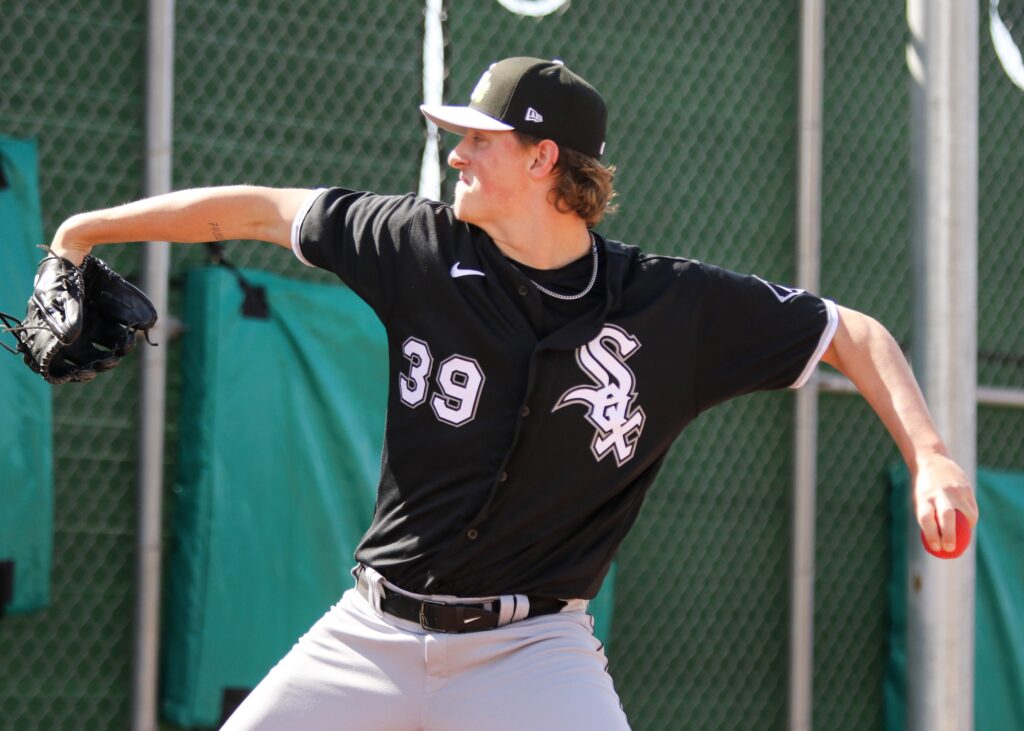 Blake Larson | Credit: Jerry Espinoza
The southpaw missed the 2025 season while recovering from Tommy John surgery, but he has the potential for two plus pitches with a fastball up to 96 mph that shows run and sink and a high-spin, low-80s slider to go with it. Larson has to develop his changeup to use as a third pitch, and he has a history of command and control struggles due to an extreme low slot delivery. He has added significant strength while he’s been out, and the White Sox are excited about his progress. He should finish the season in Low-A.
20. Landon Hodge, C, (Previous: 19; -1)
Drafted 4th round in 2025
Another high school commit pulled away from LSU in the 2025 class alongside Jaden Fauske. Hodge represents the type of up-the-middle athlete the organization has prioritized under the current regime. The left-handed-hitting catcher brings a strong athletic base with the ability to remain behind the plate, supported by a solid arm and natural feel for the position. He moves well for a catcher and shows the traits needed to handle a pitching staff, while his offensive profile is built more around contact and approach than present power. There is still some swing-and-miss in the profile, but the foundation gives him a chance to develop into a more complete hitter over time.
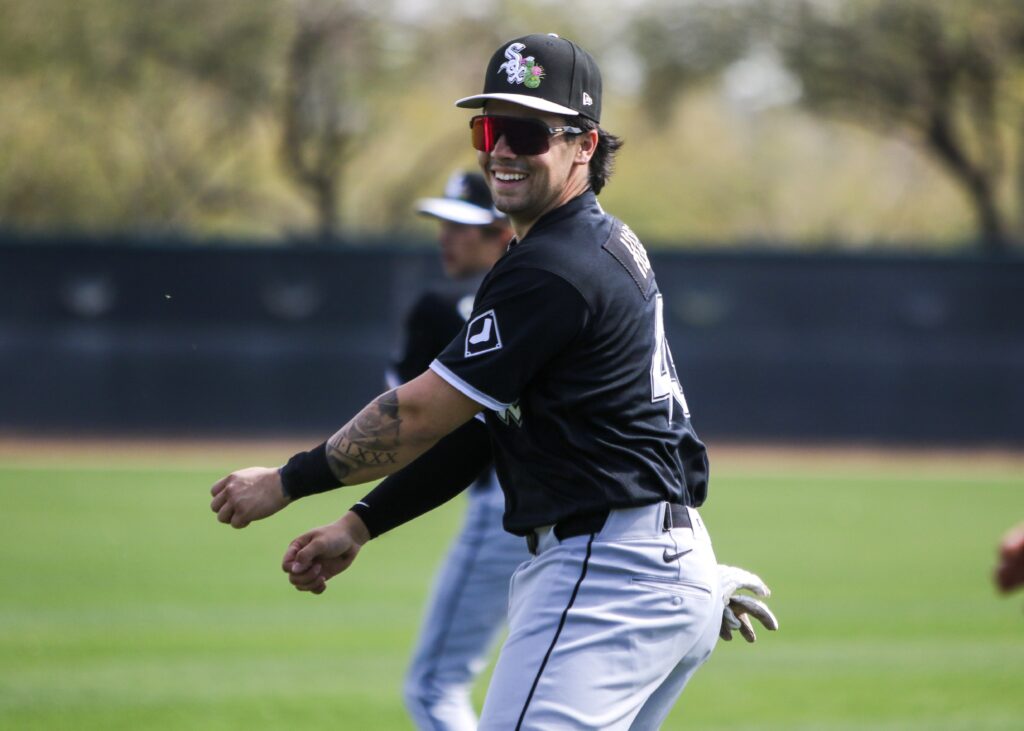 Landon Hodge | Credit: Jerry Espinoza
Physically, Hodge has already begun to add strength since the draft, which will be key to unlocking more impact at the plate as he continues to develop and refine his swing. He is expected to split time behind the plate at the complex, and his progression will depend on how quickly both sides of the game come together against professional pitching. Catchers typically require a longer timeline, but the combination of athleticism and defensive ability gives him a stable floor. If the bat continues to trend in the right direction, Hodge has a chance to grow into a valuable piece within the system.
21. Aldrin Batista, RHP, (Previous: 14; -7)
Acquired from Los Angeles Dodgers in 2023
Working from a lower arm slot that whips through release, Batista creates a deceptive look that helped drive his success before an early-season stress fracture in his throwing elbow. When healthy, the 22-year-old has shown the ability to hold a rotation spot and consistently miss bats while limiting damage across multiple levels. The right-hander operates in the mid 90’s and leans on a quality changeup, with a slider that gives him another option to disrupt timing. The delivery adds a unique element to his profile and allows the entire mix to play up against hitters. There is still a path to remain in a starting role, but a move to the bullpen could be in play if the organization looks to accelerate his timeline, where his velocity and overall stuff may take a step forward in shorter outings. If healthy, the 6-2, 185 pounder still has the traits to emerge as one of the more intriguing arms in the system.
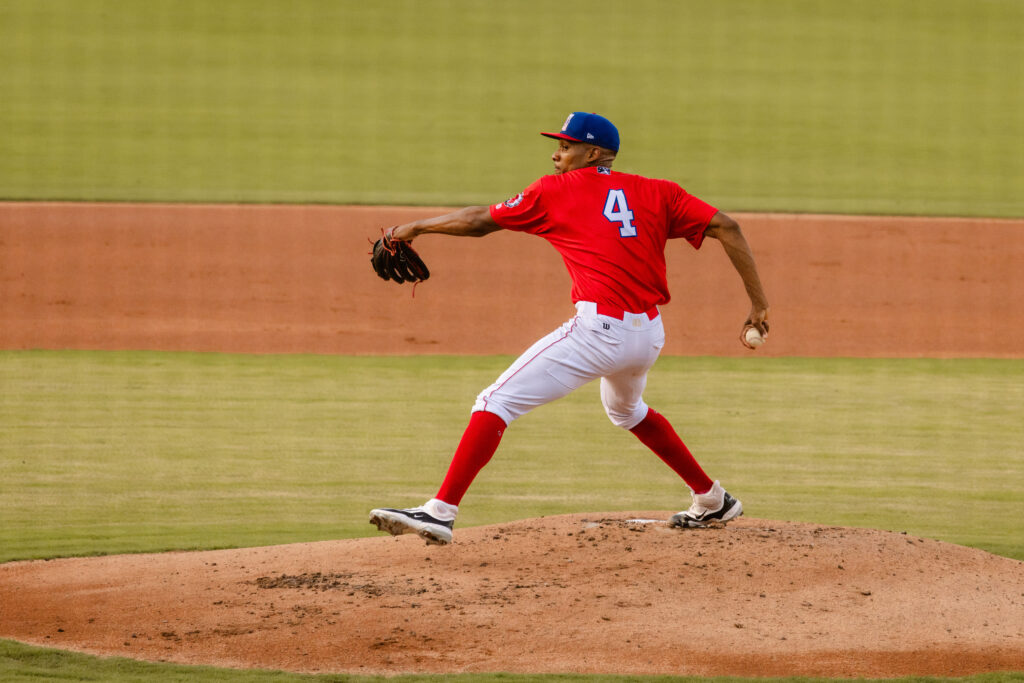 Aldrin Batista | Credit: Joni Eskridge
22. Shane Murphy, LHP, (Previous: 25; +3)
Drafted 14th round in 2022
Murphy put together one of the most effective seasons in the system last year and forced his way into the conversation as upper-level depth. The left-hander logged a heavy workload across multiple levels and consistently limited damage, finishing with a 1.66 ERA and one of the lowest WHIP marks in the minors. The 6-5, 210 pounder does not overpower hitters, working around 90 mph with his fastball, but he succeeds by filling the zone and keeping hitters off balance with a deep mix. The 25-year-old carried that approach into Triple-A, where his ERA remained strong at 2.45 despite a higher FIP, pointing to a profile that relies on execution more than pure stuff. Murphy is expected to begin the year in Birmingham and could work his way back to Triple-A, with a chance to reach Chicago as a bullpen option in the mold of a Tanner Banks-type arm if the results hold.
23. Juan Carela, RHP, (Previous: 29; +6)
Acquired from New York Yankees in 2023
After missing the 2025 season while recovering from Tommy John surgery, Carela enters the year looking to pick up where he left off as a reliable upper-minors arm. Before the injury, he handled a full workload across High-A and Double-A and showed the ability to miss bats while keeping runs in check. His arsenal is built around a fastball that plays in the low to mid-90s and a slider that serves as his most effective weapon, with additional offerings that give him a workable mix. The overall profile leans more toward pitchability than overpowering stuff, and his long-term role will depend on how well he can locate and sequence coming off the layoff. Carela is expected to return to Double-A once healthy, with a chance to move quickly, in multiple roles if he regains form.
24. Gabe Davis, RHP, (Previous: 28; +4)
Drafted 5th round in 2025
Standing at 6-foot-9, Davis is one of the more physically imposing arms in the system and brings a power profile the organization is willing to bet on. Injuries and inconsistency limited his workload in college, but the raw traits remain enticing with a fastball that sits in the mid 90’s and has reached triple digits. The slider flashes as a true swing-and-miss pitch when he is in sync, while the changeup remains a work in progress. The challenge will be repeating his delivery and throwing enough strikes to allow the stuff to play consistently. There is still a path to starting if things come together, though the most realistic outcome may come in a relief role where his velocity and breaking ball could play up in shorter outings. Davis has yet to log innings in the system, but the upside is tied to how much of the raw ability can be refined moving forward.
25. Ely Brown, OF, (New)
Drafted 12th round in 2025
One of the most underrated prospects in the system currently, Brown signed for $175K after being selected in the 12th round as a draft-eligible sophomore last July out of Mercer. The 21-year-old is a table setter type who hits left-handed and plays center field. The 6-0, 180-pounder hit .317/.417/.347 in Kannapolis with a 130 wRC+ in 27 games. The White Sox were attracted to the speed, contact rates, and in-zone decision-making with advanced zone control as well, but Brown has added mass and has launched some balls on the back fields this spring as well.
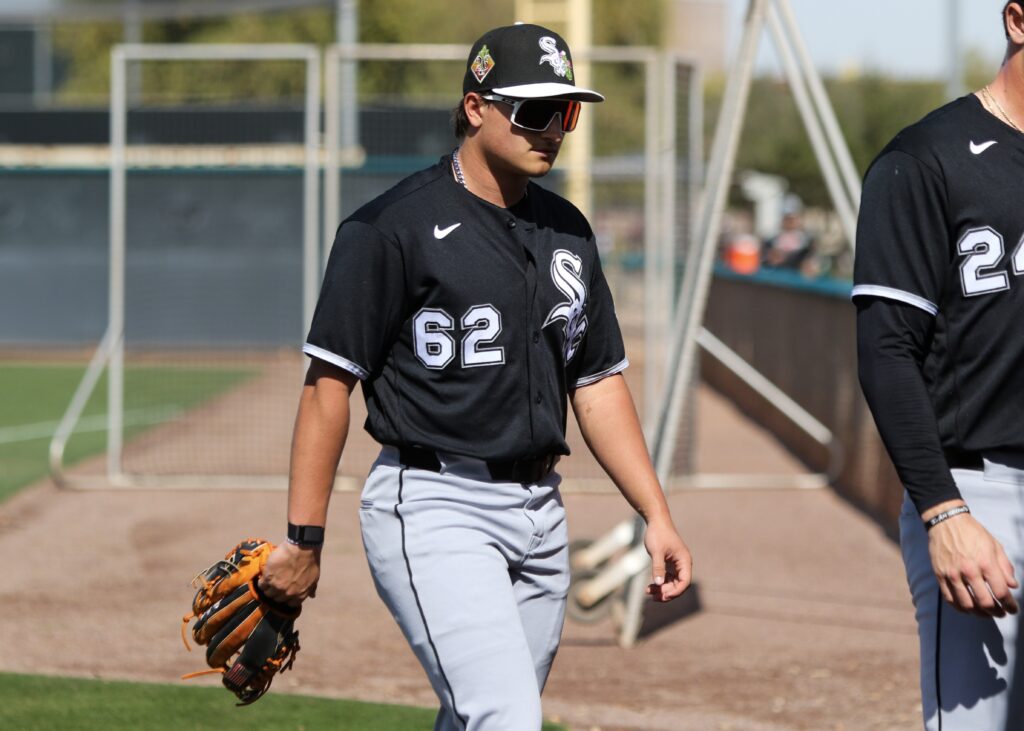 Ely Brown | Credit: Jerry Espinoza
26. Samuel Zavala, OF, (New)
Acquired from San Diego Padres in 2024
Still just 21-years-old, Zavala brings a more established profile than most players in this range, though there are still clear areas to refine. He spent another full season in High-A and showed signs of progress at the plate, finishing with a 122 wRC+ as a 20-year-old while trending in the right direction over the second half. He shows a strong feel for the strike zone and is comfortable working counts, but at times that approach can become too passive and limit his ability to impact pitches early. The swing can get long, which has led to issues with velocity, and the power has yet to consistently show up in games. Defensively, he is a reliable presence in the outfield and can handle center field, though a corner role may be a more natural fit long term. Zavala has time on his side, but his next step will be finding more consistent impact at the plate as he pushes toward Double-A.
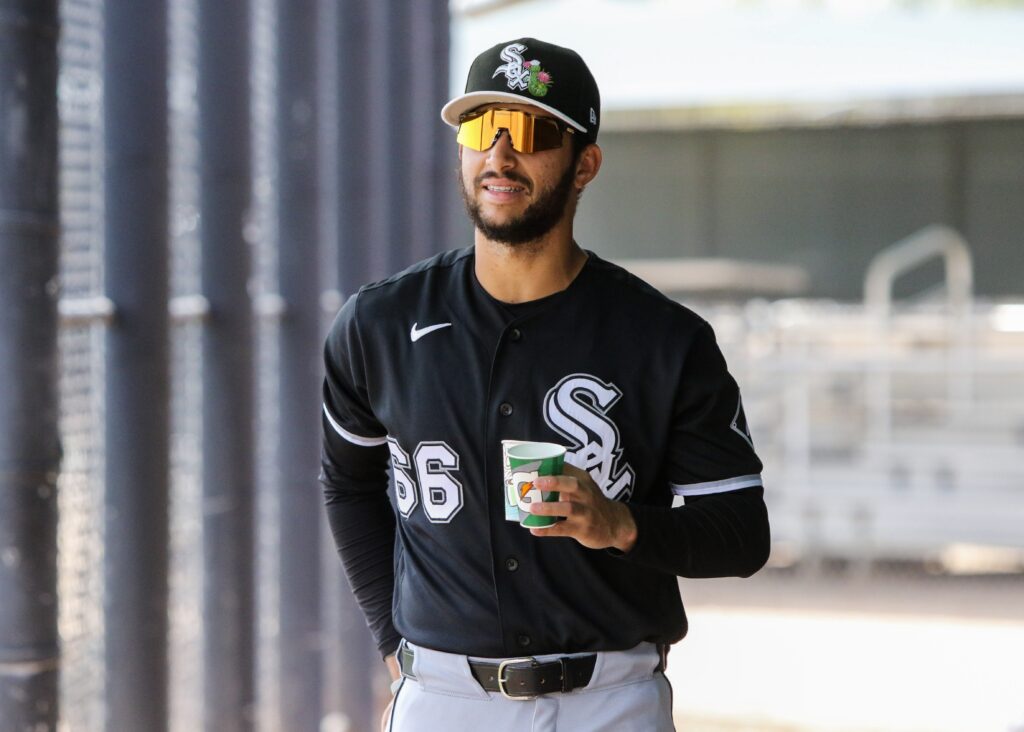 Samuel Zavala | Credit: Jerry Espinoza
27. Jose Mendoza, C, (New)
Signed out of Venezuela in 2025
The White Sox signed Mendoza out of Venezuela in 2025, and he impressed right away in the Dominican Summer League. Sox officials believe he could emerge as the top defensive catcher in the system, and the 18-year-old posted a 116 wRC+ last year while hitting .333/.410/.407. He received high praise for his work on the back fields at Camelback Ranch this spring, and the 6-3, 210-pounder consistently showed all fields power with his right-handed swing. He’s expected to split time behind the dish with Landon Hodge in the Arizona Complex League this season.
28. Matthew Boughton, SS, (New)
Drafted 11th round in 2025
Boughton is a longer-term development play with an athletic foundation that gives him multiple paths to value. He signed for just under $200K out of the 2025 class and enters pro ball as a strong defender with real speed. He can handle shortstop now and can move around the field as needed. The offensive side is still developing and will need to adjust against better pitching, but there is room for growth as he continues to add strength to his frame. He has already started to draw attention from national outlets as an early sleeper, and the underlying tools give the organization something to build on. Boughton fits as a projection-based profile whose long-term outlook will be determined by how much the bat develops.
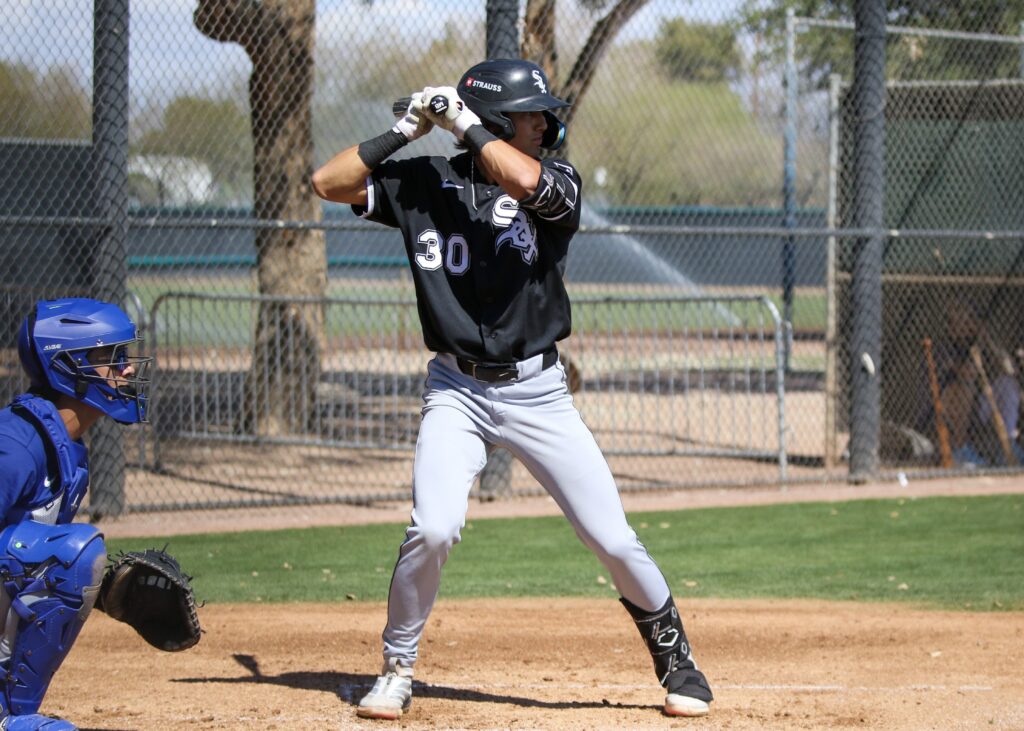 Matthew Boughton | Credit: Jerry Espinoza
29. Yobal Rodriguez, RHP, (New)
Signed out of Cuba in 2025
Turning 18 this season, Rodriguez is still in the early stages of his development, but he showed enough in his professional debut to stand out among the organization’s younger arms. The right-hander opened his career with 18.2 consecutive scoreless innings in the Dominican Summer League, flashing a feel for pitching and the ability to miss bats, though his workload was limited as he only worked into the fourth inning twice. The $230K signing from the 2025 international class operates with a fastball that has reached the low 90’s and should continue to gain velocity as his frame fills out, while his changeup already shows advanced traits for his age and projects as a potential out pitch. A breaking ball is still developing, and overall consistency will need to follow as he builds experience. With a small sample but encouraging underlying traits, Rodriguez is a long-term development arm who could begin his stateside progression in 2026.
30. Colby Shelton, 2B, (Previous: 23; -7)
Shelton enters 2026 as one of the more difficult evaluations in the system after an underwhelming introduction to pro ball. The left-handed hitter built his reputation on producing against SEC pitching and later showed an adjusted, more contact-oriented approach in his draft year, but neither version fully translated during his time in Low-A. While the overall results were poor in a limited sample, the bigger concern was the lack of consistent hard contact and difficulty handling velocity, which will need to improve as he faces better pitching. There is still some offensive upside here if he can combine his strength-based power with improved swing decisions, but the profile will ultimately be driven by how much impact he can generate at the plate. Defensively, he projects to move around the infield with second or third base as the most likely long-term fits, placing additional pressure on the bat. Shelton is expected to return to A-ball, with a chance to move up if the offensive adjustments begin to take hold.
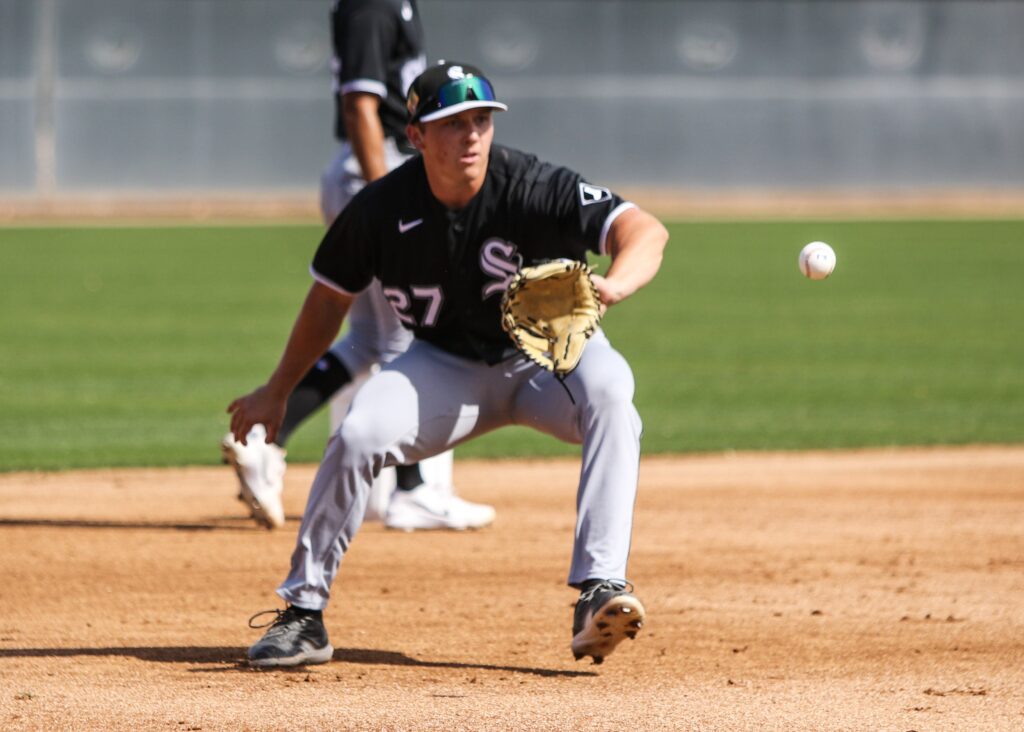 Colby Shelton | Credit: Jerry Espinoza
Post Navigation