

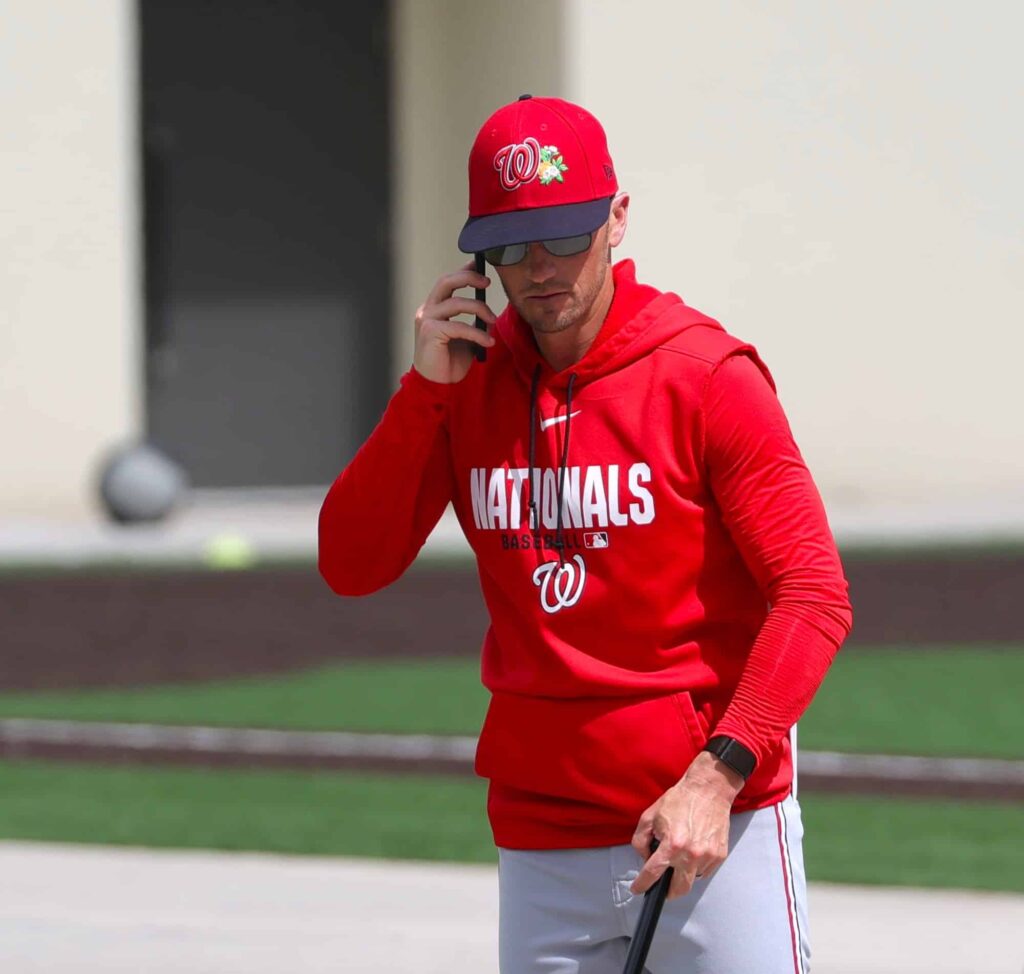
The timing of this article would have been better if the Nats held onto their 5-3 lead today in Philadelphia and won the game. That would have put the Nats in a great spot. But it’s baseball. It didn’t happen. Learn from it. Early games rarely reveal the full story, but they leave an impression. The Washington Nationals’ opening series win over the Chicago Cubs at Wrigley Field felt less like a headline and more like a quiet signal of something shifting beneath the surface.
A 2–1 start promises little in April. A 3-3 start, even less. It never does. But for this team, .500 is better than a losing record. Still, the Nationals played with an easy confidence and youthful urgency. Under new leadership and with a renewed philosophy, Washington is no longer focused on the past; they have their eyes firmly on growth and possibility. Going into this evening, the team is at .500 against two of the big budget playoff teams from last year. Two 1-run losses against the Phillies. A series win against the Cubs. With a series coming up starting on Friday against the mighty Dodgers, the Nats first nine games on the schedule feels like playoff baseball.
What We’re Seeing Early On: Themes and Trends
Early baseball invites interpretation, not conclusions. Youth leads the way as manager Blake Butera ushers in a shift toward development, speed, and adaptability. The roster feels looser and more experimental, free to grow rather than bound by rigid expectations.
There’s also an edge to the offense. At times, it’s raw and uneven. At others, it’s electric. Multi-hit performances and aggressive baserunning hint at a lineup still discovering its rhythm. Confidence, like timing, often arrives in waves.
On the mound, patience prevails. Pitchers are being guided with care, workloads managed with an eye on tomorrow rather than tonight. Wins matter, of course, but not at the expense of sustainability. The tone suggests restraint. A long game, played deliberately.
Standing Out in the First Games
A few names have already begun to echo. Joey Wiemer’s head-turning start, reaching base in his first 10 plate appearances to tie an MLB record, felt startling, a reminder that preparation and opportunity sometimes collide in spectacular fashion. Daylen Lile has been consistently good. Others are chipping in at the right time.
Cade Cavalli’s return carried a quieter weight. Opening Day belonged to him, even if his command is still sharpening around the edges. His presence alone felt symbolic. Recovery, resilience, renewal. Not everything shows up in a stat line. Today’s start was finished very strong in 6.0 innings of work.
Elsewhere, the details lingered. Smart at-bats. A stolen base at just the right moment. A runner advancing on a ground ball. Small things, easily overlooked, but they accumulate. Culture often reveals itself that way, especially in tightly contested games.
Perspective arrives quickly in modern baseball. A single series can recalibrate expectations across the league. Another can shift momentum before a homestand even begins. Standings shift daily, and narratives form just as fast.
Across the league, observers are already measuring trajectories and reassessing expectations. In that broader conversation, Washington’s early showing suggests a team still evolving, competitive in stretches, unfinished by design.
For a broader view, MLB betting odds reveal how teams are valued across the league, reflecting sentiment more than destiny and framing the Nationals as a team on the rise. However, in the NL East, the margin for error is slim.
Young Cores and Future Stars Rising
Hope in Washington has a youthful face as the rebuild gathers momentum. It reveals itself in flashes, quick, confident, and filled with possibility. The energy feels genuine, shaped by a new generation eager to define its own era.
CJ Abrams glides across the infield with effortless range, his power-speed blend hinting at something special. Luis García Jr. is learning first base, while James Wood ignites anticipation with every thunderous swing — and the hope he clicks in like his first half last year. We know that he can carry this team when he is hot.
There’s a rhythm to this emerging core, an authenticity that resonates beyond the box score. Fans seeking deeper insight can explore the top young players who could influence the Nationals’ season, where the organization’s long-term vision comes into sharper focus.
Statistics in April can be deceptive, yet they whisper truths to those willing to listen. Small sample sizes often reveal subtle shifts in approach before results fully follow.
Certain indicators already hint at meaningful progress:
Plate discipline showing subtle improvement,
More competitive at-bats and fewer empty swings,
Pitchers showing early signs of stability within carefully managed workloads,
Incremental gains that suggest growth rather than mere fluctuation.
The margins are thin but meaningful, with progress surfacing in box scores or between pitches. For a broader context, MLB team overviews highlight league trends, casting the Nationals’ rebuild as increasingly deliberate.
Early Signs of a Promising Direction
April rarely hands out verdicts. It offers hints. We will see where this goes. The Nationals look more purposeful than a year ago, more active on the bases, and guided by a clearer sense of direction. Contention may still lie farther down the road; that much is clear.
What matters now is the trajectory. Six games into the season won’t define 2026, but they left a trace, a feeling. For the first time in a while, Nationals baseball feels less like a project and more like a story beginning to unfold.
Related