
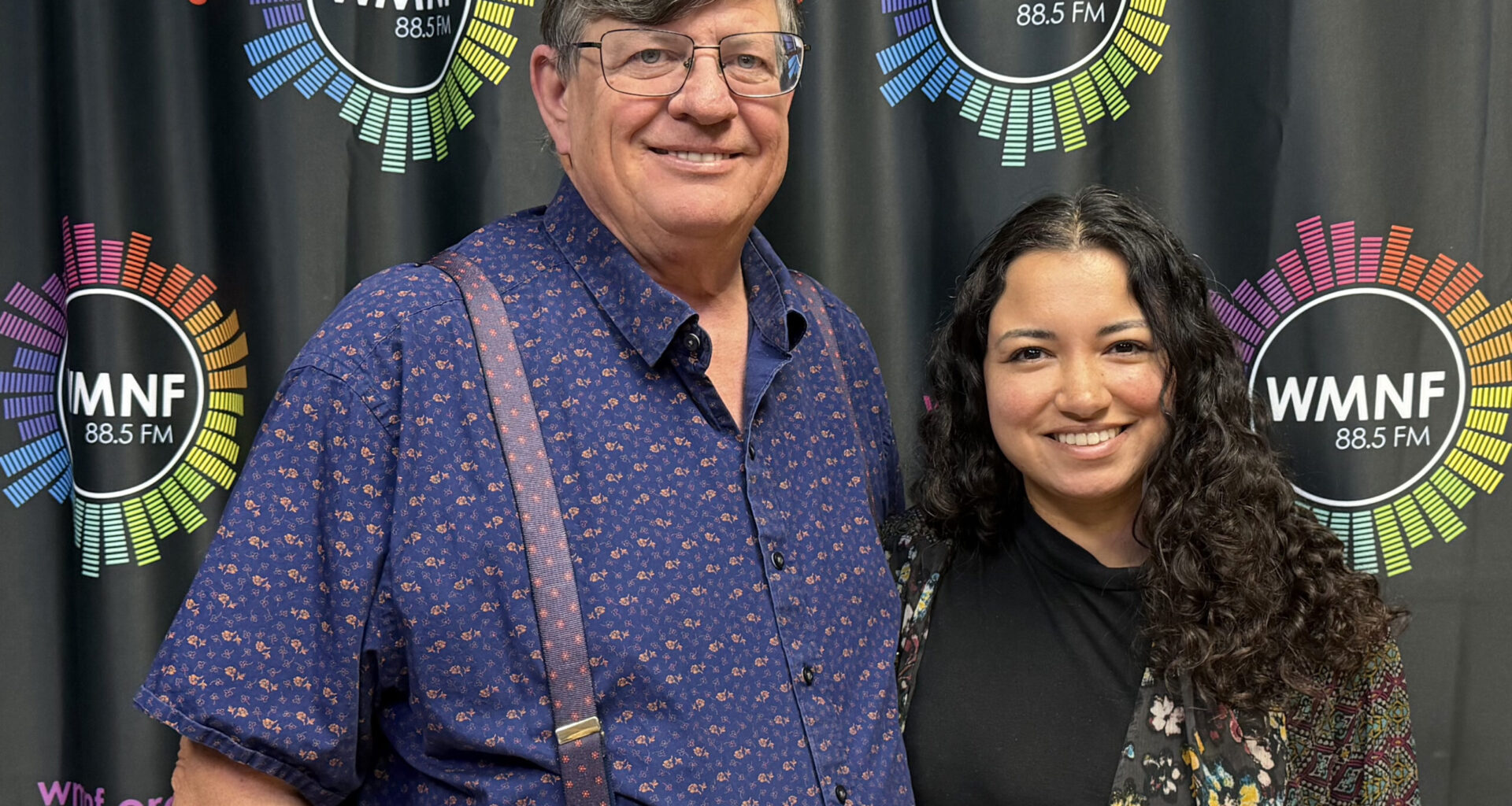
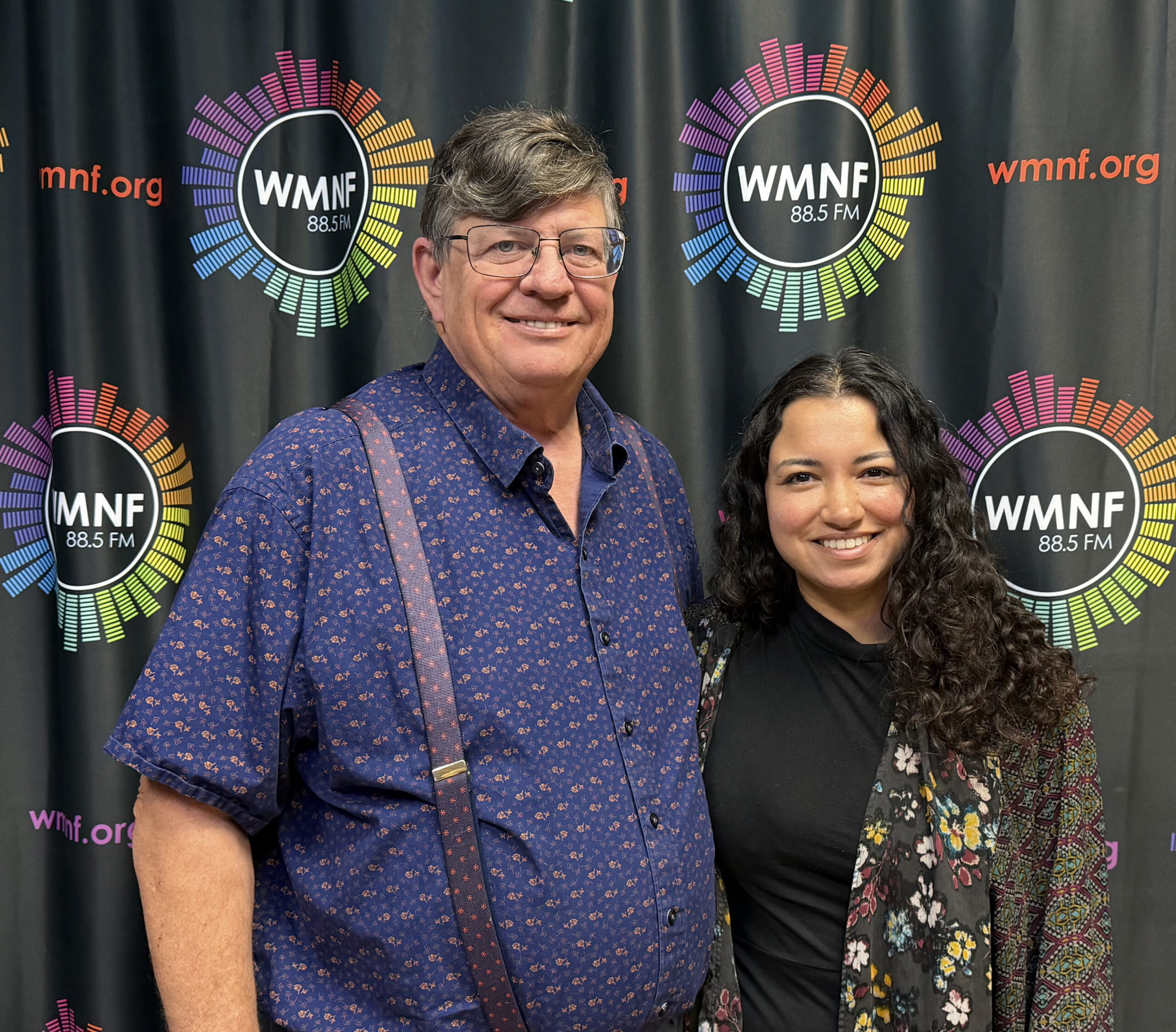
Patrick Manteiga (L) and Colleen Wright on MidPoint. Photo by Daria Mironova/WMNF.
The Tampa Bay Rays’ $2.3 billion stadium proposal is a defining issue for the region, combining sports, economics, and public policy concerns. Key stakeholders include the Rays ownership group, local government officials, and community members who would be directly affected. Questions remain: Who pays? Why move from Pinellas County? How would funding the new stadium affect other funding priorities? And what impact would a new stadium have on Hillsborough College and the surrounding neighborhoods?
On April 1, Tampa Bay Times reporter Colleen Wright, and Chair of the Tampa Hillsborough Sports Authority, and Publisher and Editor of La Gaceta, Patrick Manteiga joined MidPoint to discuss the economic, political, and community effects of the proposal for the Tampa Bay Rays’ new ballpark.
$2.3 Billion Question
In this episode, the Midpoint discussion centers on a massive $2.3 billion proposal: a new stadium on the current Hillsborough College campus in Tampa. For fans of baseball and fans of money—does this plan make sense for both?
The Rays’ ownership group, led by developer Patrick Zalupski, wants approval of the project by mid-month. The group has reportedly offered to cover 50% of the cost, leaving the remaining portion tied to public funding. If approved, the deal could ultimately be the largest taxpayer-supported project in Hillsborough County history. The devil is in the details. But, unfortunately, the details are not available. Hillsborough County Commissioner Josh Wostal has already pushed for transparency, requesting documents related to the deal be produced for public and government review. City Councilman Alan Clendinen has stated that negotiations are ongoing and the “deal” is 80% completed.
Colleen Wright noted that access to detailed financial information—including revenue projections, contractual obligations, and risk allocation—is important for both policymakers and taxpayers. Patrick Manteiga highlighted that transparency is necessary to build public trust, underscoring the media’s watchdog role and the public’s right to oversight of decision-making. If the Hillsborough County Commission votes in mid-April, the decision could trigger a series of approvals that will determine whether the project moves forward.
Timeline
November 2024: Hurricane Milton damage to Tropicana Field forces the Rays to temporarily relocate,
2025 Season: Rays play at George M. Steinbrenner Field,
September 2025: Ownership group led by Patrick Zalupski acquires the team,
April 2026: Planned return to Tropicana Field
2029: Proposed new stadium completion
Public Funding Debate
Public stadium financing has a mixed track record across the U.S. Numerous economic studies show that many publicly funded stadiums fail to meet projected financial expectations. The MLB’s Miami Marlins opened their ballpark in 2012. LoanDepot Park (formerly Marlins Park) cost $634 million to build, mostly funded by taxpayers, and could ultimately cost the public over $2.4 billion due to poor financing arrangements. Meanwhile, the neighborhood still lacks development and parking.
Just recently, after years of debate, the NFL’s Jacksonville Jaguars began a $1.4 billion stadium renovation project, forcing the team to move to Orlando for the 2027 season. The city of Jacksonville will cover $775 million, and the private contribution will cover $625 million. The development plan includes $300 million in community benefits, such as affordable housing and park improvements in the surrounding area. The Jaguars’ owner, Shad Khan, will be responsible for any overruns.
Colleen Wright noted that similar projects across the country have produced mixed results, with some generating surrounding development while others have fallen short of economic expectations. She emphasized the importance of evaluating all the details of the Tampa proposal rather than relying entirely on general assumptions. Patrick Manteiga said that while ownership groups promise economic returns, long-term success depends on factors such as project execution and changing markets.
The project’s supporters may see it as an opportunity to anchor the Rays in Tampa and stimulate development, while critics remain concerned about long-term financial obligations, limitations on public services, and the impact on surrounding neighborhoods.
Public Engagement
The proposal also carries political weight, with attention focused on the relationship between the ownership and state leadership, including their known ties to Gov. Ron DeSantis. Manteiga explained that large-scale projects involving both private developers and public funding often attract increased interest in how relationships and influence may shape outcomes. Because the State is granting the Rays public land, and public amenities will be lost in the redevelopment of the surrounding areas, the public’s interest in the project is heightened. Beyond politics, the impact on the local community is significant, involving the potential land redevelopment tied to Hillsborough College, traffic, housing, and infrastructure shifts. Currently, as Manteiga noted, the Memorandum of Understanding between the Rays and Hillsborough College states that the Rays “will cause” the state to replace the lost amenities, but there is no real explanation of how that will be implemented or enforced.
The Rays stadium proposal goes beyond sports. Wright and Manteiga both noted that public feedback and community involvement shape elected officials’ approach to major financial decisions, highlighting citizens’ influence on long-term economic commitments.
The outcome will not only affect the Rays’ and Hillsborough College’s future. The decision will also determine how billions in public and private dollars are invested, who bears the risk, and what kind of city Tampa wants to become. Will a $2.3 billion stadium build a stronger community and bring sports tourism, or will it leave taxpayers with unrealistic promises and empty pockets?
In the end, this isn’t just about baseball.
You can listen to this entire MidPoint show on demand from the archives here, on the WMNF app, or as a WMNF MidPoint podcast on Spotify or Apple Music.