
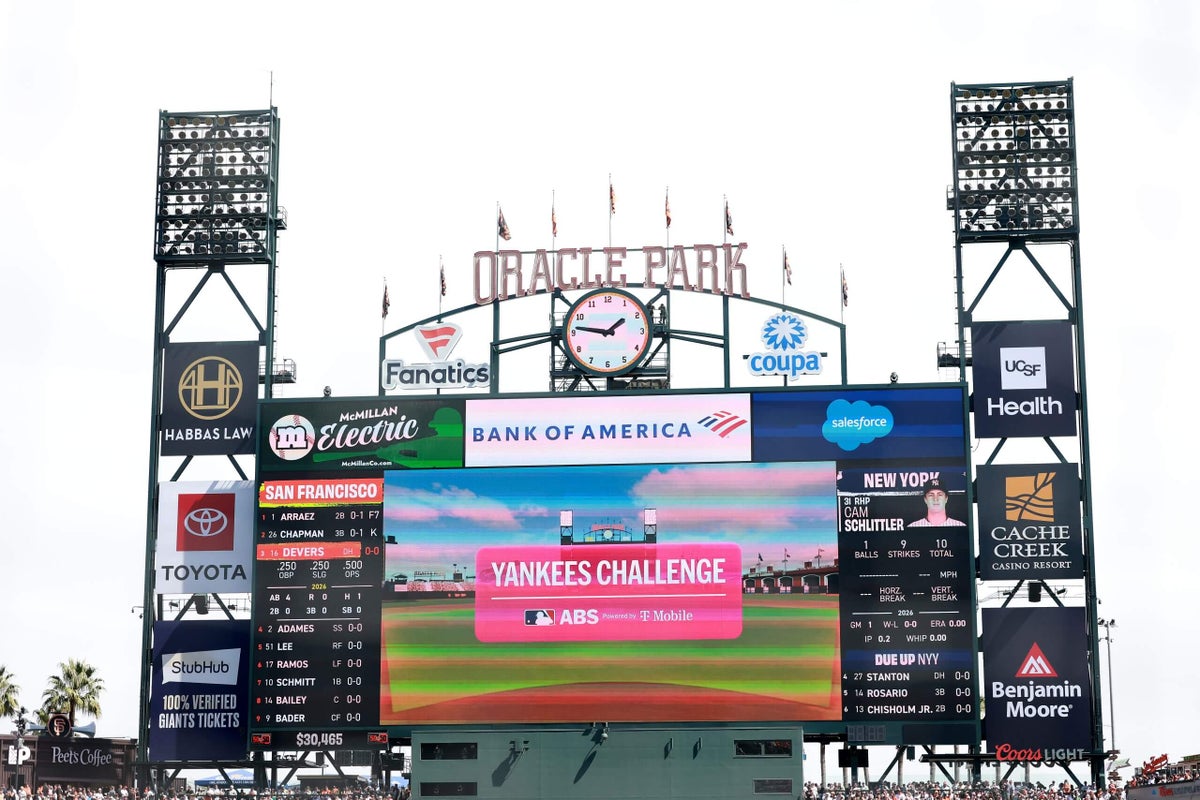
When it comes to the new Automated Ball-Strike system, New York Yankees catching coach Tanner Swanson wants players to think like it’s high-stakes poker.
The way gamblers know the percentages and the tendencies of others at the table, baseball players should understand counts and situations and the umpire behind the plate — and they should be confident to bet big.
“There are opportunities to be super aggressive,” Swanson said. “The dealer’s got 2-7? Let’s go. Let’s push our chips in here.”
So far, the general approach has served the Yankees well.
Going into Friday’s home opener, New York’s 13 successful challenges were the second-most in the majors, behind the Minnesota Twins’ 19. The Yankees’ 81.3 conversion percentage (13-for-16) was also second-best in the game, trailing just the Baltimore Orioles’ 85.7 percent (12-for-14).
Part of it is that the Yankees simply have been presented with ample chances to correct calls, and that they have smart players with keen eyes.
“Opportunity,” manager Aaron Boone said. “Our guys being, I think, good at it. I think we’ve kind of established that we want to be aggressive with it. Smartly, but aggressive.”
Another part? Constant communication.
Pitching coach Matt Blake said the Yankees have been analyzing their challenges and those made across the majors, and honing their approaches accordingly. He said talking through it all could prepare a player so that when a chance to challenge arrives, deciding whether to do so could feel more like a reflex than trying to make a fully thought-out decision within the two-second challenge time limit.
“Just bringing some attention to the types of times we would want to challenge,” Blake said, “who should be challenging, what some of the discrepancies are in calls when you might get a ball or strike called and why it might get overturned. Bringing some awareness to the group on all of the situations that might come up so that they’re more prepared.”
The Yankees also don’t want players to be “scared to use challenges early.”
“We’re definitely not saving them for situations that may never come up with an understanding that those later or high-leverage situations are worth more,” Swanson said. “But there’s a lot of value early. The first pitch of the game is one of the highest-missed pitches throughout the game, for whatever reason. We want to be willing to take a shot there if we think an umpire missed a call. We want to be good early. There’s value to be had early. There’s value in between. We’re trying to be good at both.”
But, for the Yankees, ABS is hardly new.
Their front office has been analyzing its effect on the game since it was introduced in the minor leagues during the Arizona Fall League in 2021, and using the data to try to project how it could affect the major leagues.
Yankees qualitative analysts researched the system and presented their findings to the coaching staff, which then decided how to best craft and implement strategy, and how to share the information with players, Swanson said.
It all goes back even further than that.
For years, the Yankees have been researching the strike zone and how it’s been called — particularly with the idea of how to become better pitch framers, Swanson said. He explained how it’s long been understood by the organization that the strike zone typically grows in a 3-0 count and shrinks in two-strike counts. He said an umpire’s zone also often could be dependent on less obvious factors such as where the hitter sets up in the box, his tendencies at the plate and the uniqueness of the delivery of the pitcher.
Insights gleaned pre-ABS have helped the Yankees today, Swanson said.
“They’ve (helped) arm our guys with more information about how to anticipate blind spots in the strike zone and even blind spots out of the strike zone,” he said, “and areas that we would normally get calls and we don’t. That tells us something about the confidence level of whether the umpire missed the call or not. All those things have given us a leg up in trying to be able to hit the ground running with this stuff.”
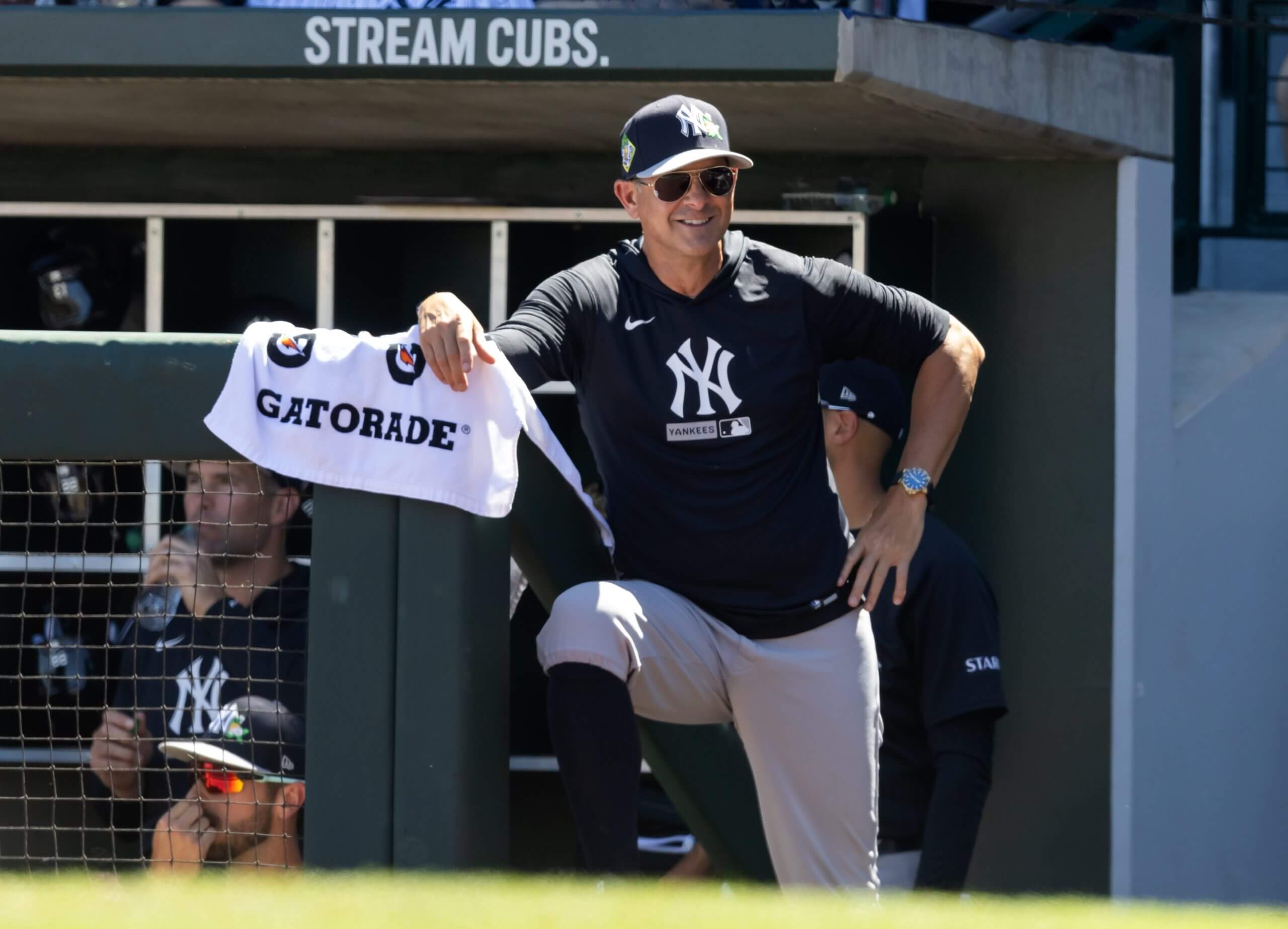
Aaron Boone manages from the dugout during spring training, when the Yankees led all teams with 24 calls overturned via ABS. (Mark J. Rebilas / Imagn Images)
Players were given their first lessons on ABS at the start of spring training, and the Yankees told them to immediately use it. One of their goals, Swanson said, was to try to be the team with the most successful challenges by the end of spring training. They accomplished that, flipping 24 calls.
Now, the Yankees want to have the most for the full season.
“We want to see how many calls we can overturn throughout the course of a season,” Swanson said, “and understand how every one of those overturns has a run value, and if you add them together, you’re talking about two, three, four or a handful of wins, which we all know how impactful that can be — the difference between winning the division and not winning the division.
“There’s definitely an edge to be had for teams that are good at this, and it could be really detrimental to teams that are maybe for the first time trying to figure it out.
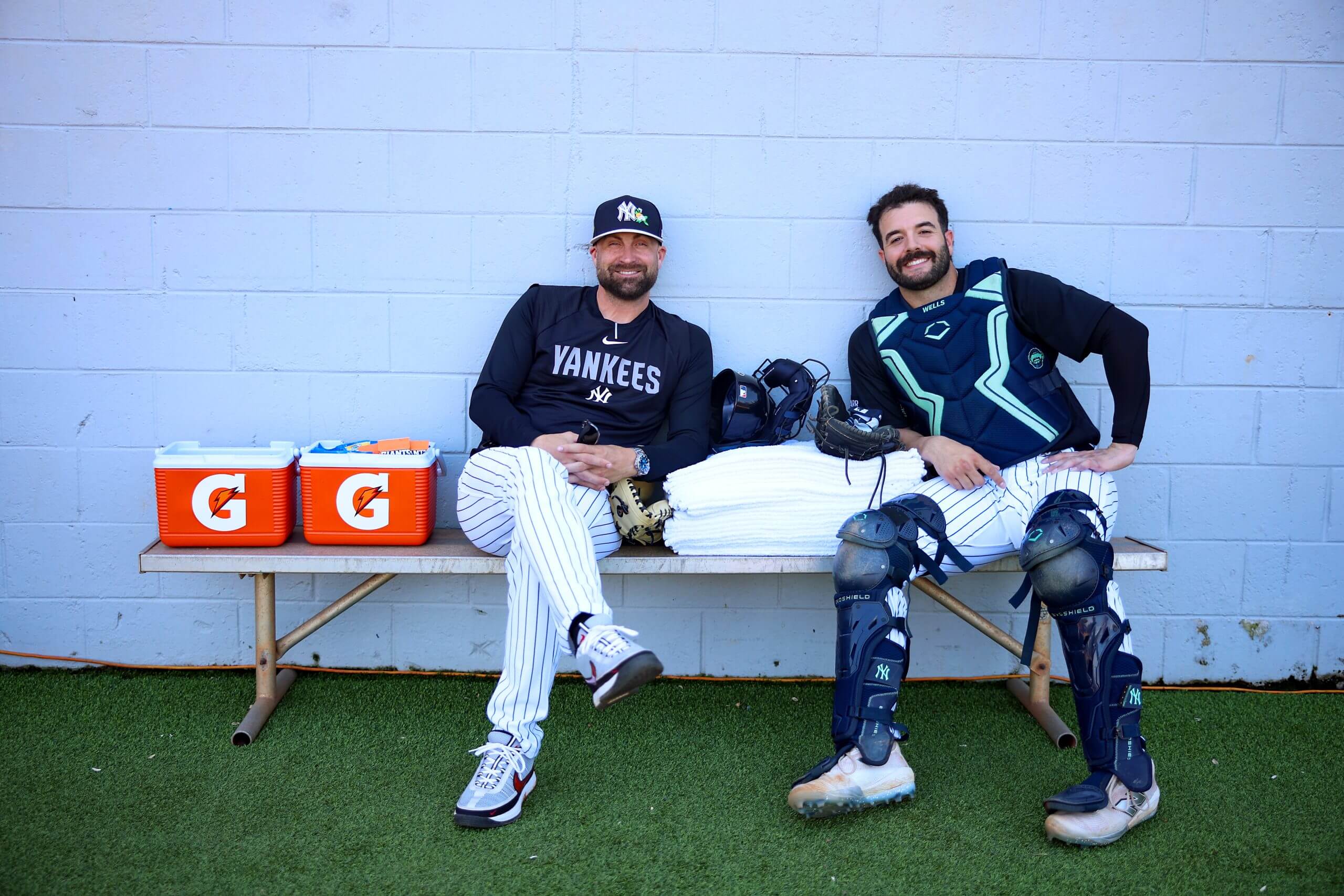
“There are opportunities to be super aggressive (in challenging),” said Yankees director of catching Tanner Swanson, pictured with catcher Austin Wells. (New York Yankees / Getty Images)
A not-so-secret weapon? Catcher Austin Wells, who finished third in the majors last year in framing runs added with 11, according to Baseball Prospectus. Wells leads the team with four successful challenges. The Yankees believe that good framing, paired with good ABS decision-making, could be a major boost.
“Our general outlook going into this is, if we can continue to be really good at receiving and be good at challenging, the net value of that might be greater than just pre-ABS receiving in itself,” Swanson said. “We’re certainly not punting on receiving and let’s just be good challengers. It’s the foundation of what we do.”
The players haven’t seemed to have trouble with it.
Trent Grisham, who is 2-for-2 on challenges, said he has thought the implementation of the system has been “fine” and “pretty self explanatory.” Aaron Judge, who is 1-for-1, has said it’s felt “weird” but that he won’t hesitate to use it “if it’s a big spot.” And the Yankees will forever be connected to the early history of ABS: On Opening Day, José Caballero became the first MLB player to use it.
“We’re going to be good at it,” Boone said. “That’s the expectation.”