
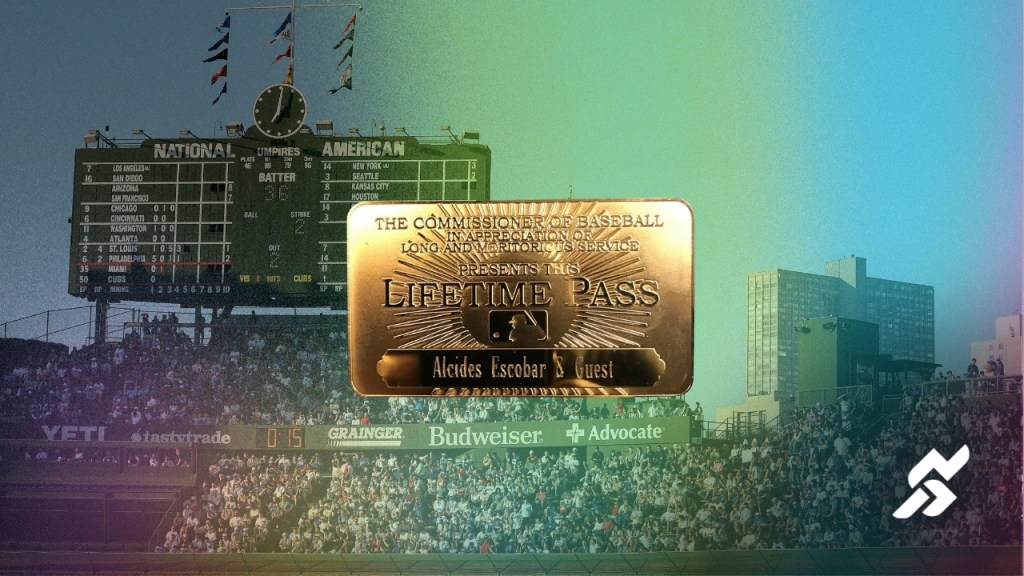
Famously, there are seven ways for a batter to reach first base. Less well studied: how many routes attendees can take to the first base grandstands.
You’ve got your season-ticket holders, obviously, plus single-game buyers, corporate groups and so on. Then there is a select class who have access to any MLB regular season game thanks to the league’s “golden ticket.” Acquiring one of those, however, can take a lifetime’s work.
MLB’s “Lifetime Pass” program is believed to be unique in established American sports, offering ballplayers with eight years of major league service time or off-field employees who’ve worked for 25 years a shining credit card-sized credential. But for as long as the offer has been available, many of the tickets have largely gone unused.
In addition to insiders, certain celebrities have been offered Lifetime Passes over the years, dating back to President Theodore Roosevelt in 1907. Roosevelt reportedly didn’t use the pass much, if at all, sticking instead to his personal pastimes of boxing and football.
More recent recipients, such as MLB Network analyst and former pitcher Jake Peavy, also are unlikely to rely on the card. Years of MLB experience come with plenty of connections throughout the league, largely eliminating the need to sidle up to a will call box office and flash a card. Peavy’s generally sits inside his office desk.
Still, in the last few years especially, the delivery of a gold card—once handled as a formality—has become an opportunity for recognition. The Lifetime Pass represents a rare award delivered on a truly individual basis and earned solely as a result of endurance rather than any short-term successes. Players also celebrate their 10-year marks, which come with fully vested pension benefits.
“It should be a trophy for anybody who has this thing and endured eight-plus years—it should be sitting up on a mantle,” Peavy said. “Longevity is greatness.”
In fact, one player—Ichiro Suzuki—requested a second Lifetime Pass solely so he could frame it as a keepsake.
Minnesota Twins senior director of team travel Mike Herman hit 25 years earlier this season. The Twins happened to be in Atlanta, where manager Rocco Baldelli spoke about Herman’s value and handed him his card in a 15-minute ceremony.
“It’s a moment in time where you just stop and celebrate,” Twins SVP of communications and public affairs Dustin Morse said. Those are rare in a sport with a season as long as baseball’s. “It is a grind, 162 games,” Morse added. “There’s really no time off. It’s not for everybody. So as you look across the league and see individuals that have done it a long time, there’s mutual respect, and you automatically understand that they’re doing something right.”
Some players have also discovered an unintentional perk of the gold card—social clout. Jonny Gomes filmed himself using his Lifetime Pass in Cleveland in 2021. In April, former Pirate pitcher Jason Grilli flashed his gold card to see Paul Skenes take the mound, earning more than 100,000 Instagram likes along the way.
Similar posts have inspired other vets.
Ryan Dempster hasn’t had a need for the Lifetime Pass, now working for Marquee Sports Network in Chicago and MLB Network after a 15-year MLB career. His golden ticket has spent most of its life in a safe. But seeing those videos—and hearing other stories of players using their rare bits of metal—has made him rethink.
“Why have it if you’re not going to use it?” Dempster said. “So I imagine it’s going to get some use this summer, for sure.”
The lifetime tickets do come with one asterisk: they won’t get you into playoff games. Still, as costs rise, the golden tickets have never been more valuable. A dedicated Lifetime Pass holder could likely grab more than $10,000 worth of tickets over a season in a top-tier market—and even more if they bounced between stadiums in a two-team town.
There’s an old saying: “It’s not the years in your life that count, it’s the life in your years.”
In this case, the years count too.