
If we’re all being honest, a 4-6 to 2026 feels like a slap in the face after an offseason full of improvement and renewed promise. This team came into the season with plenty of hope and goodwill, only for that to quickly turn to angst and a foreboding “here we go again” among much of Birdland.
Many of the Orioles games this season have followed a similar script; the matchup looks good on paper, only for the O’s to quickly find themselves in an early hole. It’s not just that the starting pitching has been disappointing (though it certainly has been, as Orioles starters sat 21st in combined ERA heading into Monday night’s game). It’s that the starting pitching has often pitched the Orioles out of games before the O’s even turn their lineup over once.
After three series this season, the Orioles have a glaring problem in the 2nd innings of games. Baltimore’s team ERA this season is 4.71 through their first nine games. Their ERA in the 2nd inning is 15.00. Opponent OPS on the season is .752. In just the 2nd inning, that number rises to 1.078.
We’ve already seen poor 2nd innings cost the O’s games. In the series opener against the Rangers, Chris Bassitt gave up three hits and two free passes as Texas took the game from tied 1-1 to up 4-1. The Orioles ultimately lost that game 5-2 with those three runs allowed in the 2nd proving to be the difference.
Three games later, in the series opener against the Pirates, Kyle Bradish saw disaster strike in the 2nd again. With one out and a runner on second, Pirates star rookie Konnor Griffin lined a double to left-center to score former Oriole Ryan O’Hearn. The first career hit from the No.1 prospect in baseball was the first of four straight hits that saw a 0-0 game get blown open as the Pirates took a 4-0 lead. The Orioles would claw back, eventually losing the game 5-4, but the whole dug in the 2nd ultimately proved too big to escape.
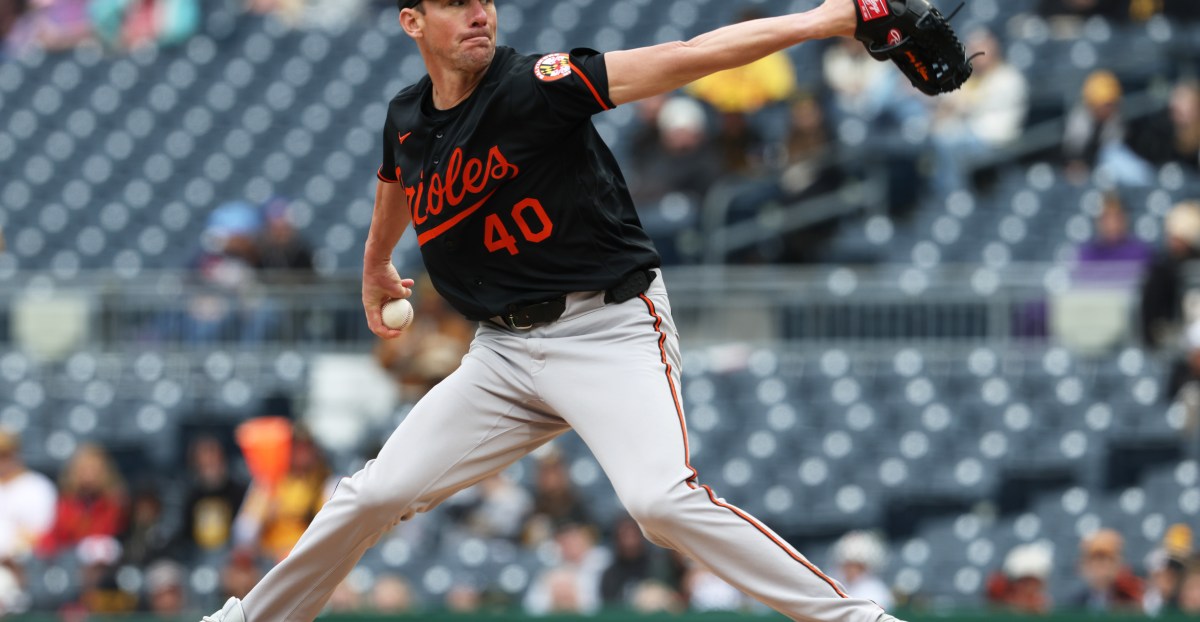
The 2nd inning blues struck again in Pittsburgh on Sunday. With Bassitt once again on the bump, he gave up a lead-off walk to kickstart a Pirates rally that saw the Buccos collect three straight singles and later a two-RBI double as Pittsburgh raced out to a 6-0 lead. Those runs allowed in the 2nd once again proved the difference in the game, as the Orioles lost 8-2.
We’ve even seen the O’s win a game where they had to overcome a disastrous 2nd inning from their starter. In their series finale of the initial series against the Twins, Shane Baz allowed four runs in the 2nd to put the O’s behind 4-0. The Baltimore bats completed the comeback that day, eventually propelling the O’s to a come-from-behind victory, 8-6.
The early inning struggles have been particularly hard to swallow for a team that has hit much better late in games than early on. Heading into the White Sox series, the O’s offense had a .200 average with a .554 OPS and six combined runs in the first three innings of games. In the last six innings of games, the Orioles’ average jumps up to .271, while their OPS rises into the .680s.
Part of this big disparity in the O’s production early in games vs. late in games likely comes down to how Orioles hitters have been pitched this season. There’s been plenty of talk this season about how pitchers are throwing the O’s more off-speed pitches than almost any other team in baseball. Whether that’s just because of pitchers hunting Colton Cowser’s weakness against non-fastballs (or because they’re also trying to avoid throwing heaters to power hitters like Pete Alonso, Taylor Ward and Gunnar Henderson), the Orioles see a disproportionately high percentage of changeups, splitters, sliders and curveballs.
We often hear analysts talk about how hitters will come into at-bats looking for a fastball and trying to make an adjustment if they’re thrown a breaking ball/offspeed pitch. Ben McDonald has talked about on numerous broadcasts about how hitters track the spin of pitches as they come out of the pitcher’s hand to determine what kind of pitch they are throwing.
We know that breaking balls and offspeed pitches tend to vary wildly from pitcher to pitcher, with the shape and spin of sliders, curveballs and changeups influenced by how the pitcher grips the ball, his arm angle and his velocity. Due to this wide variance, it stands to reason that it may take longer for hitters to download all the information they need to properly pick up opposing pitchers’ offspeed pitches—especially early in the season. And so, given the heavy diet of breaking balls and changeups Baltimore hitters have seen, perhaps it’s unsurprising that the bats usually take a couple of innings to get going.
It would be an oversimplification of the Orioles problems to say “just pitch better in the 2nd inning and you’ll win more games.” And yet, Bill James’ Pythagorean Winning Percentage formula suggests that by lowering their 2nd inning ERA from 15.00 to 5.00, they’d go from a team on pace to 72 games to a team on pace to win 88 games and be squarely in playoff contention.
The bigger point is that, over the last 171 games of Orioles baseball, too often it feels like the O’s are beating themselves instead of forcing the opposition to beat them. Giving up big innings early is proving to be a surefire way of putting undue pressure on your offense and bullpen to make up for your mistakes. If Baltimore’s rotation can figure out a way to keep things on more level terms until the 3rd, or dare I say 4th inning, I believe we’d start to see the improved Orioles team we were promised.