
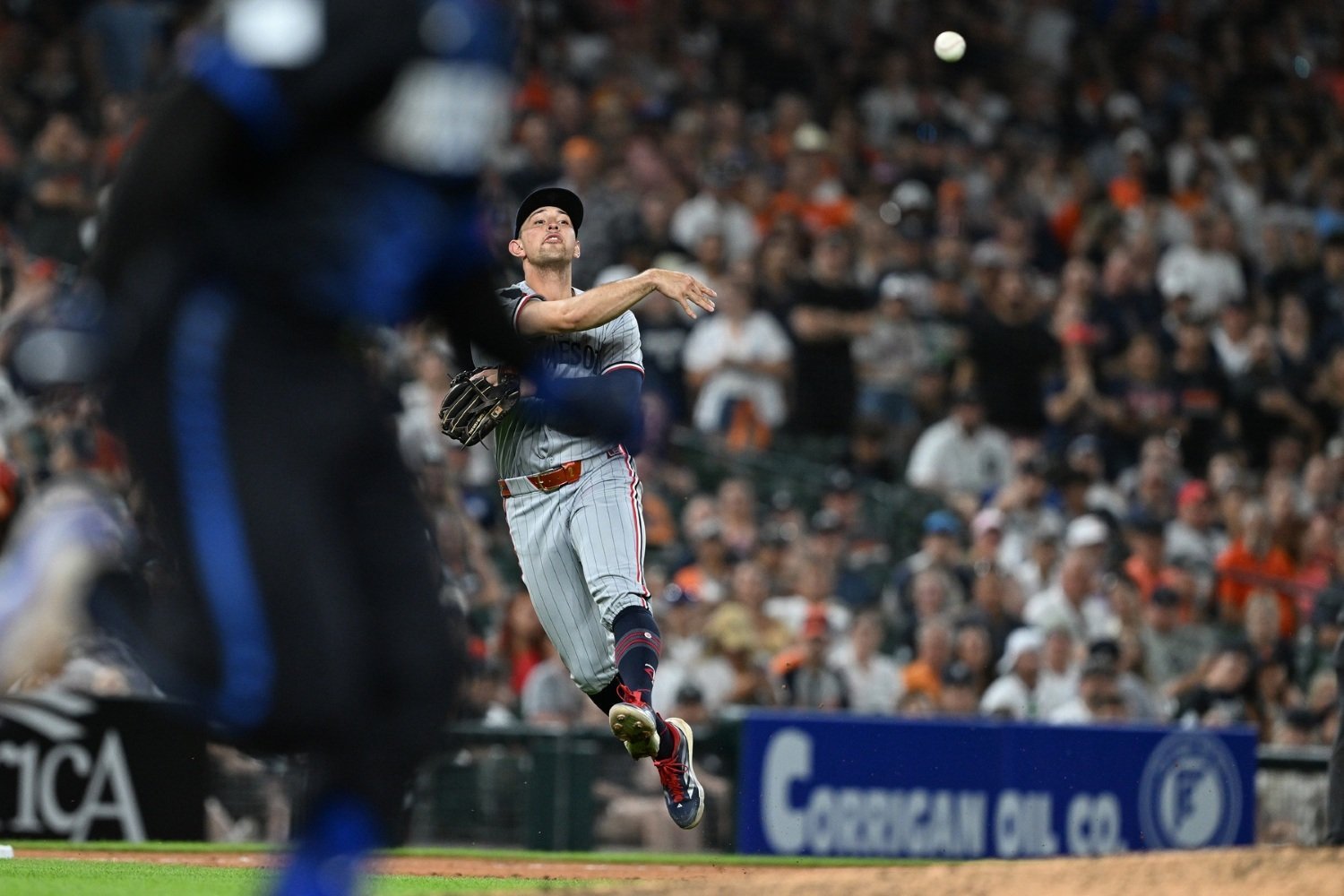
Defense has always been one of baseball’s most difficult elements to quantify, but that reality has changed dramatically in recent years. With the introduction and continued refinement of Statcast, teams and fans alike now have access to advanced metrics that provide a clearer picture of what is happening on the field. The Statcast Era, spanning (for the purposes of their defensive numbers, Outs Above Average and Fielding Run Value) 2018 through 2026, provides a meaningful sample to evaluate how the Minnesota Twins have performed defensively over time.
Across those nine seasons, the Twins have experienced both highs and lows in the field. Their best defensive performances came during the 2020 and 2021 campaigns. The 2021 club led the way. Fielding Run Value had them as 21 runs better than an average team, mainly due to standout performances: Andrelton Simmons contributed 16 OAA at shortstop, while Max Kepler and Byron Buxton added 8 and 7, respectively, in the outfield. In the shortened 2020 season, the Twins posted 7 FRV, led by Buxton in center field and by versatile contributions from Marwin Gonzalez, Jake Cave, and Ehire Adrianza in various positions.
At the other end of the spectrum sits the 2025 season, which marked Minnesota’s worst defensive showing of the Statcast era. The team combined for -22 FRV, with several players struggling significantly. Edouard Julien posted -8 Outs Above Average, while Willi Castro finished at -6. Trevor Larnach, Brooks Lee, and Matt Wallner each contributed -4 OAA. (Yes, OAA and FRV are on different scales, but directionally, you can see how so many defenders collecting fewer outs than expected led to the team preventing fewer runs.) Notably, half of the 10 worst defenders from that roster are no longer in the organization, including Julien, Castro, Jose Miranda, Carlos Correa, and Carson McCusker.
Despite that turnover, the early signs in 2026 suggest the problem has not been solved. Through 10 games, Minnesota is already tied for the worst FRV in baseball, at -7. While it’s a small sample, the underlying issues look familiar. The left side of the infield has been particularly problematic, with Royce Lewis posting -4 Outs Above Average at third base and Brooks Lee at -2 while handling shortstop duties.
Lewis showed legitimate progress defensively last season and finished with a positive mark, offering some hope that his current struggles could be temporary. Lee, however, remains a more complicated situation. He graded as one of the team’s weakest defenders a year ago, but the Twins have committed to giving him extended run at shortstop. At this point, the metrics suggest he’s stretched beyond his defensive capabilities at the position.
The lack of clear alternatives only complicates matters. At Triple-A, Kaelen Culpepper is one of the more intriguing internal options. He has shown some improvement at shortstop, but evaluators still view him as a below-average defender there. His arm strength could make him a better fit at third base in the long term, but he can’t play shortstop and third base at the same time.
Other potential reinforcements include minor-league veterans like Orlando Arcia and Ryan Kreidler. Both offer experience, but neither profiles as a meaningful defensive upgrade. In other words, there is no obvious solution waiting in the wings.
That reality leaves the Twins in a difficult position. Defensive struggles can compound quickly, putting additional pressure on pitching staffs and forcing lineups to play from behind consistently. While it’s far too early to draw definitive conclusions, the trends are concerning, especially when viewed alongside last season’s results.
If these issues persist, the 2026 Twins may find themselves cementing a place in franchise history for all the wrong reasons. In an era where run prevention is increasingly driven by data and defensive precision, Minnesota’s inability to convert balls in play into outs could define its season.
What has stood out about the team’s defense so far? Leave a comment and start the discussion.