
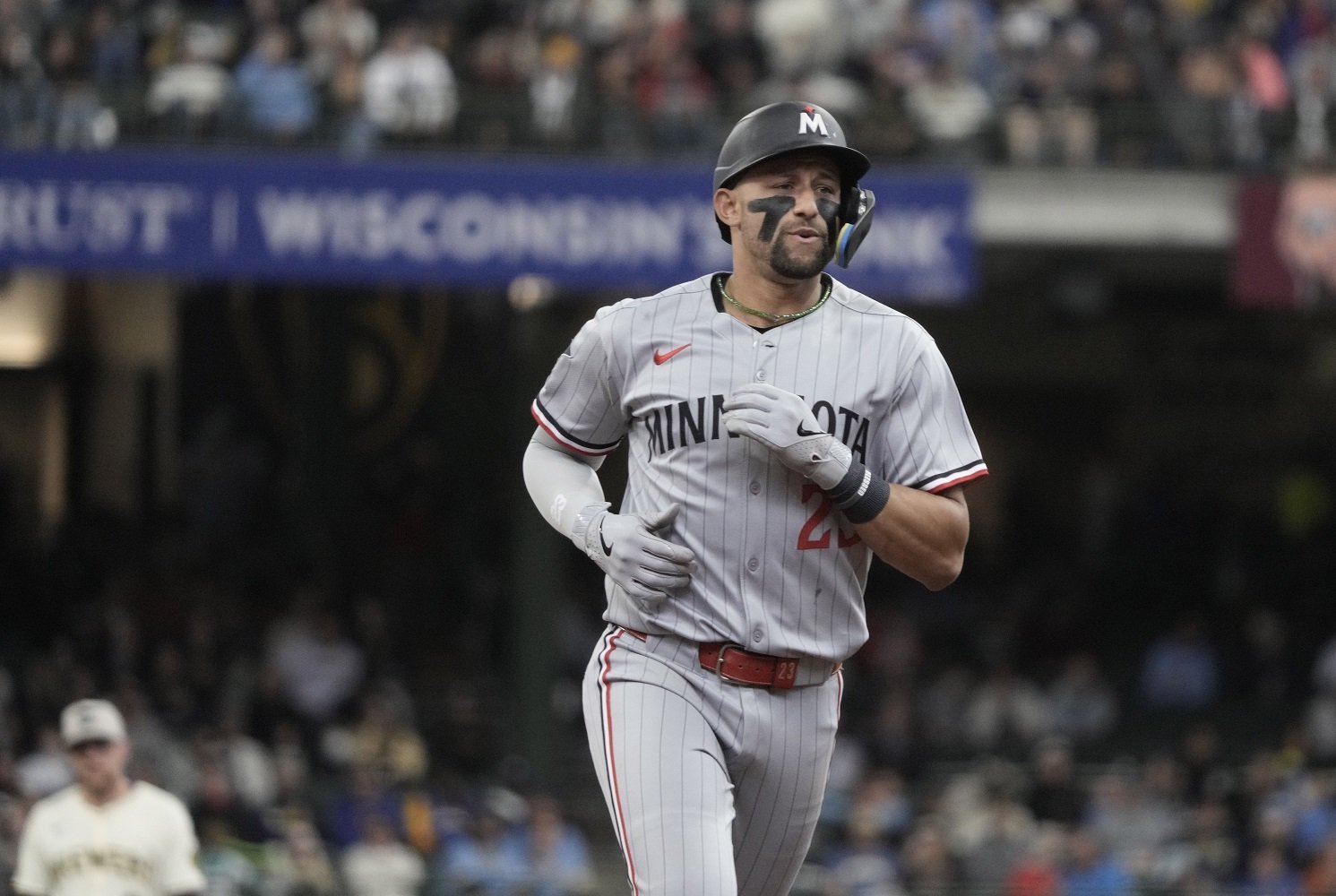
Over the past few weeks, the conversation around the Minnesota Twins has drifted toward the future and who might be locked into it. Names like Walker Jenkins continue to surface, despite the fact that he has yet to make his big-league debut. Other teams around the league are locking up players of a similar caliber, and it’s fun to dream about the future.
Twins ownership also seems to be open to extensions with other young players. During a recent media session, Tom Pohlad pointed to a trio of intriguing talents in Luke Keaschall, Taj Bradley, and Mick Abel as players the organization could consider approaching about long-term deals.
On paper, those are the types of players teams try to secure early: young, controllable, and brimming with upside. It is a strategy that has worked across the league, buying out arbitration years and (sometimes) a slice of free agency at a discounted rate. But it’s also a strategy that can backfire.
As easy as it is to identify the next extension candidate, it’s just as important to remember the players who once looked like obvious choices themselves. In recent seasons, the Twins have had multiple opportunities to make those bets and, whether by design or circumstance, they may have avoided some costly mistakes.
Royce Lewis
Stock High Point: 2023 Season
Few players have embodied both the promise and volatility of a top prospect like Royce Lewis. As the first overall pick in the 2017 MLB Draft, he represented the future of the franchise from the moment his name was called. That future appeared to arrive in full during the 2023 season.
Lewis was electric, posting a 149 OPS+ across 58 games while providing a spark the Twins desperately needed. His impact extended into October, where he delivered two massive home runs against the Toronto Blue Jays, helping secure the franchise’s first playoff series victory in two decades. In that moment, an extension would have felt not only reasonable, but necessary.
Since then, the picture has shifted. Lewis has struggled to recapture that level of production, posting a 95 OPS+ while continuing to search for consistency defensively at third base. Injuries have remained part of the equation, and the once-clear trajectory toward superstardom now feels far less certain. With two years of team control remaining, the Twins still have flexibility—something that would not be the case had they acted at his peak.
Jose Miranda
Stock High Point: 2022 Season
The rise of Jose Miranda felt like one of the more stable bets in recent Twins history. After a dominant 2021 minor league campaign that included a .973 OPS and 30 home runs across Double- and Triple-A, Miranda carried that success into his rookie season.
In 2022, he posted a 114 OPS+ with 15 homers and 25 doubles over 125 games, showcasing elite bat-to-ball skills that suggested a long runway as a productive big league hitter. This was exactly the type of profile teams often look to extend early, prioritizing contact ability and offensive consistency.
Instead, his trajectory became anything but steady. A 55 OPS+ in 2023 was followed by a rebound to 112 OPS+ in 2024, but the inconsistency ultimately defined his tenure. By 2025, he was out of the organization entirely. Now in the San Diego system, Miranda is trying to regain his footing at Triple-A, far removed from the player who once looked like a lineup fixture for years to come.
Brooks Lee
Stock High Point: 2024 Season
The Brooks Lee case might be the most instructive for pre-debut or early-career extensions. Like Jenkins today, Lee entered his first full professional season with significant hype. The eighth overall pick in 2022, he was widely viewed as one of the safest hitters in his draft class.
By 2023, he had posted an .808 OPS in the upper minors and climbed to No. 18 on MLB Pipeline’s top 100 list. It would have been easy to envision a deal that bought out his arbitration years while giving the Twins option control over his early free-agency seasons.
That version of Lee has yet to appear consistently in the majors. Through his first 197 games, he owns a 74 OPS+ and has struggled to provide value defensively. At 25 years old, there is still time for adjustments, but the gap between expectation and production has been significant. An early extension here could have quickly become an anchor.
The Value of Patience
Extensions can sound great when viewed through the rose-colored glasses of a player’s best moments at the big-league level. The temptation is to lock in that version of the player before the price climbs any higher. But baseball has a way of humbling even the most promising trajectories.
Opponents adjust. Weaknesses are exposed. Performance ebbs and flows in ways that are often impossible to predict. By holding back on extensions for players like Lewis, Miranda, and Lee at their respective peaks, the Twins may have preserved both payroll flexibility and roster optionality.
That does not mean the strategy should be to avoid extensions altogether. It simply underscores the importance of timing and conviction. Betting on talent is part of the game, but so is recognizing when uncertainty outweighs the perceived discount.
In a league where one contract can shape a roster for years, sometimes the smartest move is the one not made.
What other players would have been extension candidates early in their careers? Leave a comment and start the discussion.