
Dan Johnson takes you through his preview, prediction, and best bet for today’s baseball game between the Minnesota Twins and the Detroit Tigers.
Target Field in early April means low-40s at first pitch, dipping into the 30s, with heavy air that punishes lift and rewards pitchers who can control contact. That matters tonight because this series has already leaned toward tighter, lower-event baseball. The Detroit Tigers are 5–6 and have scored just five total runs across the first two games of this set, while the Minnesota Twins, now 4–6, have taken both with opportunistic innings rather than sustained offense. Below is my preview, prediction, and pick for today’s baseball game between the Minnesota Twins and the Detroit Tigers.
Here’s how I’ll play it. I’ll be pumping out these predictions for individual games all season, with plenty of coverage here on DraftKings Network. Follow my handle @dansby_edits for more betting plays.
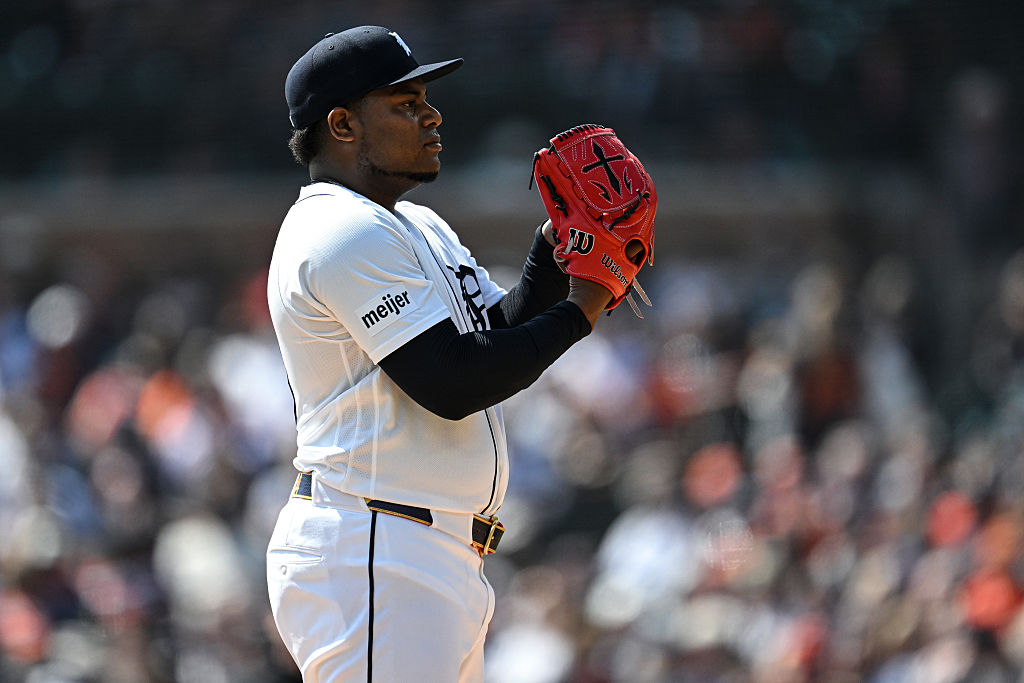
Framber Valdez has opened with a 0.75 ERA, 2.42 xERA, .252 wOBA allowed, and just a 2.8% barrel rate, which is elite contact suppression in any environment and even more valuable in cold conditions. Bailey Ober, meanwhile, sits at a 6.75 ERA, 4.65 FIP, and .346 wOBA allowed, but the bigger issue is the shape—his average launch angle allowed is 28.2 degrees with a 37.0% sweet-spot rate, meaning hitters are consistently getting the ball in the air. That’s dangerous even in cold weather, but especially against a Detroit lineup that doesn’t need ten hits—it needs one or two elevated mistakes. The gap here is not just run prevention—it’s how repeatable that prevention is.
Colt Keith has been the steadiest bat at .353/.389/.500 with a 159 wRC+, while Kevin McGonigle is at .302/.388/.465 with a 150 wRC+ and just drove in both runs Tuesday. Dillon Dingler adds power with a .241 ISO, giving Detroit enough lift threats to punish Ober’s profile. Minnesota’s core is live—Josh Bell (172 wRC+), Trevor Larnach (181 wRC%), and Royce Lewis (136 wRC+)—but the lineup has been more inning-dependent than consistent, relying on sequences like Tuesday’s four-run fifth built off walks and clustered hits. Detroit’s bats don’t overwhelm, but they’re more stable pitch-to-pitch, and in this environment, that matters.
Tigers vs. Twins pick, best bet
Through this opening stretch, the Tigers are sitting on a sub-.300 OBP with a team ISO hovering in the mid-.130s, and they’ve produced just five total runs across the first two games of this series. Even within the lineup, the production has been uneven—Riley Greene is sitting below a 70 wRC+, and Detroit’s team strikeout rate is pushing into the mid-20% range, which creates empty innings against a pitcher like Bailey Ober who still owns a 20%+ strikeout rate despite the poor surface results. Minnesota, meanwhile, has shown it can manufacture runs without overwhelming contact—Tuesday’s four-run inning came with two walks and three singles, and on the season the Twins are running a double-digit walk rate (~10–11%), which gives them a path to create traffic even without sustained slug. If Ober simply trims the damage—keeps the ball in the park after allowing a 37.0% sweet-spot rate—this easily profiles as a 2–2 or 3–2 game through five.
But that’s exactly why the bet shape matters more than the side. This isn’t about Detroit clearing a full-game margin—it’s about isolating the one statistical edge that is both real and repeatable. Framber Valdez’s 2.8% barrel rate and .252 wOBA allowed are paired with a ground-ball-heavy profile that suppresses damage in cold environments, and that matters against a Minnesota lineup that, despite recent success, still sits around a .346 team slugging percentage. Ober’s issue is not just runs—it’s quality of contact: a .346 wOBA allowed, .348 xwOBA, and elevated launch angle profile (28.2°) that invites early extra-base damage even if it stabilizes later. Once this game moves past the starters, Detroit’s offense becomes less trustworthy for separation, but in the first five, the statistical gap between Valdez’s contact suppression and Ober’s air-contact vulnerability is the cleanest edge on the board.
Best bet: Tigers F5 -0.5 (-115). This isolates a matchup where Detroit holds the advantage in barrel suppression, expected contact quality, and early run prevention, without asking its inconsistent offense to carry a full-game margin. The way it dies is Ober limiting the elevated contact just enough to strand early traffic, but the underlying contact profiles and current form still point toward Detroit leading at the halfway mark.
Final score: Tigers 4, Twins 2 (Detroit leads 2–1 after five).
Best bet: Tigers F5 -0.5 (-115) at Twins
Tail it with me in the DKN Betting Group here!