
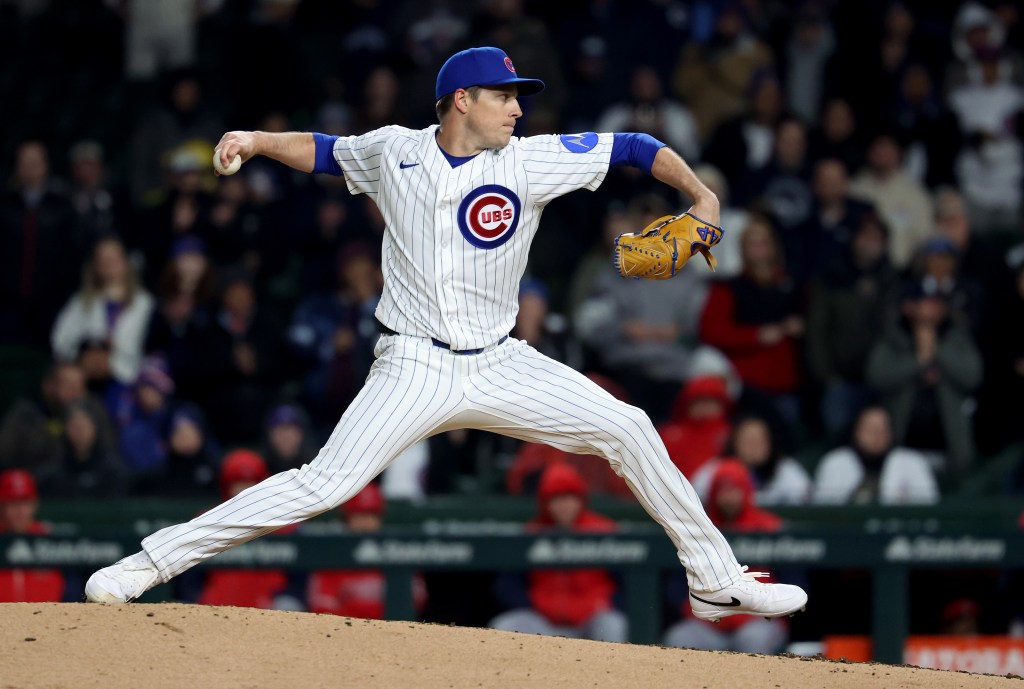
ST. PETERSBURG, Fla. — Phil Maton sat at his locker postgame Tuesday, watching video of himself on his iPad.
Coming off back-to-back rough outings against the Tampa Bay Rays, the Chicago Cubs’ veteran reliever delved into the why behind how out of whack he’s felt on the mound through the first two weeks of the season. He turned to video, both of his last two outings and old footage from previous seasons when he was at his best, to search for answers.
Maton acknowledged that, speaking within this moment pregame Wednesday in the clubhouse, his confidence is at about a zero, but “I think most of us in here do a great job of you get on the game mound you think you’re the greatest pitcher alive.” Even Tuesday, when he entered the game in the eighth with a seven-run lead, Maton thought his delivery was in a good spot.
Then he caught his cutter velocity on the Tropicana Field scoreboard when checking for pitch shape data.
“I’m like, ‘Man, I’m throwing 87 (mph) right now,’” Maton said Wednesday. “Even when things aren’t going well, there’s a ton of confidence when you’re on the mound that I can get anybody out, I can do it. But when you do come in the clubhouse after, being real with yourself, like, I know there are changes that need to be made, I need to get better so I can actually go out there and get guys out.”
Maton, who signed a two-year, $14.5 million deal with the Cubs in the offseason, knows he hasn’t been good enough in his first five outings this season. He’s allowed six runs, six hits, five walks, struck out four and hit two batters in four innings. Maton said he went into the offseason looking for ways to improve, eager to increase his velocity, improve pitch shapes and move more efficiently within his delivery.
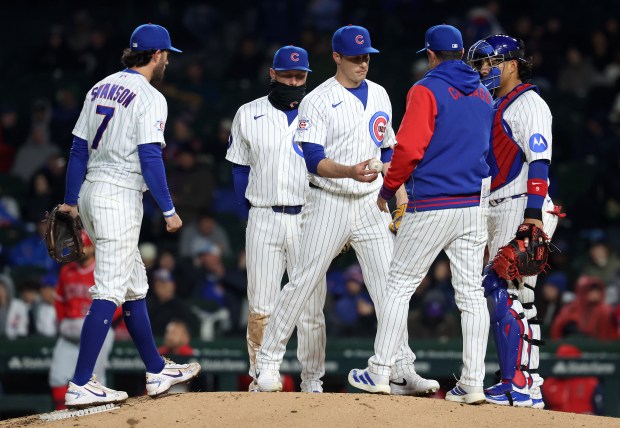 Chicago Cubs relief pitcher Phil Maton is pulled from the game in the sixth inning against the Los Angeles Angels at Wrigley Field in Chicago on March 31, 2026. (Chris Sweda/Chicago Tribune)
“I feel like all those avenues I pursued this offseason were not the right way, and I’m kind of paying the price right now,” Maton said. “Just really trying to simplify my delivery and just kind of getting back to where I was last year, for most of the year when I was feeling really good with my delivery, efficient down the mound, getting into my legs, and right now I’m just not doing that.
“‘It’s extremely frustrating, trying to kind of get my delivery back where it needs to be and doing that while still trying to throw meaningful innings for us has been difficult. So it’s one of those things I need to really clean that up soon and get back to where I am as a pitcher.”
Part of Maton’s frustration stems from feeling really good during spring training. Typically spring training is when a player wants these types of delivery and arm action issues to pop up because there is ample opportunity to correct them. He wishes everything had fallen apart in Arizona so he wouldn’t be going through these problems now. Maton is appreciative of pitching coach Tommy Hottovy and assistant pitching coach Casey Jacobson for poring over video and looking at everything, “stuff that I don’t even understand,” to help clean things up and get through this hiccup.
Maton explained there’s no one cause for the problems. Simply put, everything from his lower half to his arm path to his overall timing within his delivery isn’t flowing together.
“It’s one of those things where there’s four or five things that are off right now and trying to clean them all up simultaneously results in runs in games,” Maton said.
Working with weighted plyo balls typically has helped Maton clean up his arm path because they inherently make it shorter and more compact. It’s always been a beneficial part of his routine, and the Cubs have tweaked his drill work to try to get him out of his rut. Those adjustments include Jacobson introducing drop step drills to help Maton with his posture and get his body moving toward the plate better, rather than being so rotational.
Manager Craig Counsell said he wants to make sure he’s getting Maton into more games and ideally giving him a chance to get into a rhythm.
“I think it’s easy to lose trust and relievers really fast, so I’m very fortunate you have a guy that, one, played and kind of gets it, but, two, has confidence to get me out there,” Maton said of Counsell. “It’s my job to actually instill some real confidence in him so that he feels good in games whenever they need me to get outs.”
Maton knows he is creating too much movement on his cutter right now, getting seven inches of horizontal movement when it’s typically at most around two inches. That is costing him velocity with the pitch, after averaging 90.6 mph last year. The loss of velocity comes from struggling to stay behind the baseball, which is also affecting his curveball’s effectiveness by not being able to stay on top of it as he gets to the release point.
Hottovy attributes a lot of Maton’s delivery issues to his back leg and how his tempo and rhythm are not allowing him to stay through the ball.
“We have to fix some of the things that we’re seeing upstream and when fatigue sets in, you’re throwing a lot, you’re trying to work on things, the lower body is what goes first,” Hottovy told the Tribune on Wednesday. “So it’s a difficult thing at times to get ironed out perfectly in-season because you’re trying to be ready for games and also work on things at the same time. But I think for him, he knows what he wants to work on with the back leg and the drive leg to be a little more aggressive. That’s going to lead to some of the things that he wants to do at ball release.”
For the bullpen to function as the Cubs envision, especially for the backend, they need Maton to get back to his old self, the version that put up a 2.79 ERA in 63 games last year.
The Cubs believe the 33-year-old will get there.
“Phil’s one of those guys that you’re going to count on an inning for in big innings, and we’re going to count on him to get right-handed hitters out,” Counsell said, “so we need that, absolutely.”