
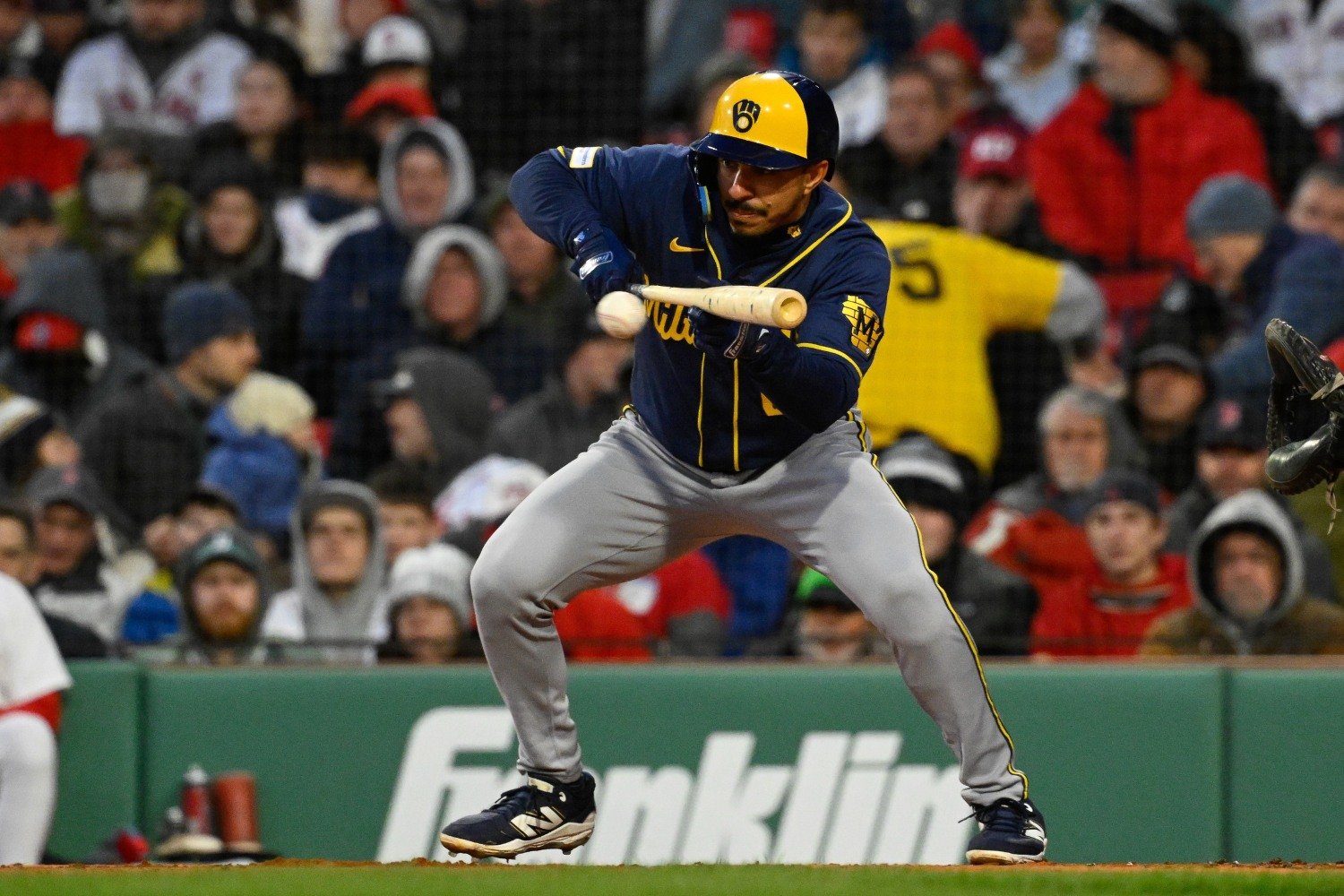
New Brewers infielder David Hamilton is a pest, once he’s on base. He’s dangerous there. He’s already stolen four bases this year, an extension of a long track record of aggressiveness in that department. The last thing you should ever want to do is put Hamilton on base for free. He doesn’t hit for much power, and he swings and misses a fair amount, so the thing to do is to just go right after him.
Fortunately for the Brewers, pitchers aren’t doing that this year. They used to do it; they did it all last season. But they’ve stopped.
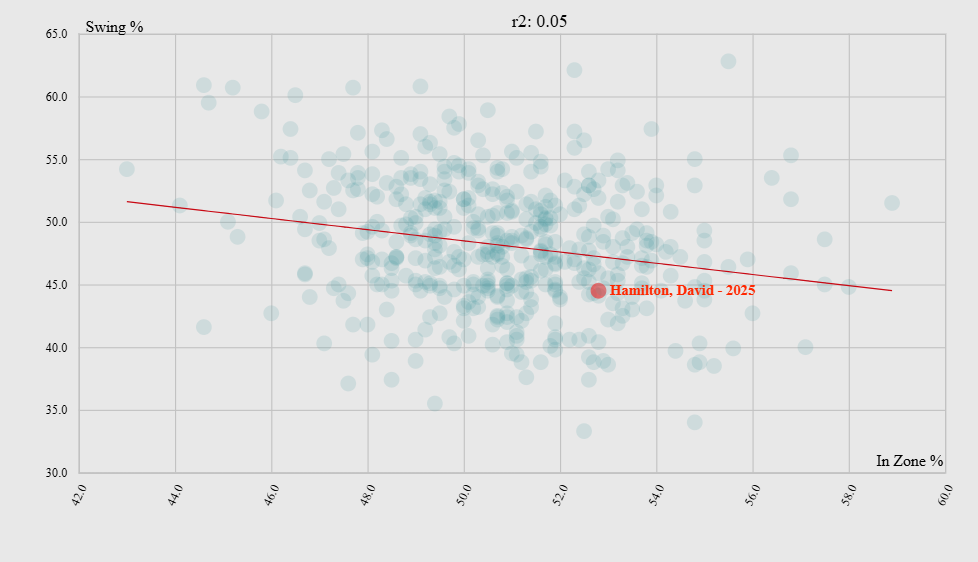
Here’s a scatter plot of hitters by the percentage of pitches seen that were in the strike zone and the rate at which they swung in 2025.
Here’s the same chart for 2026.
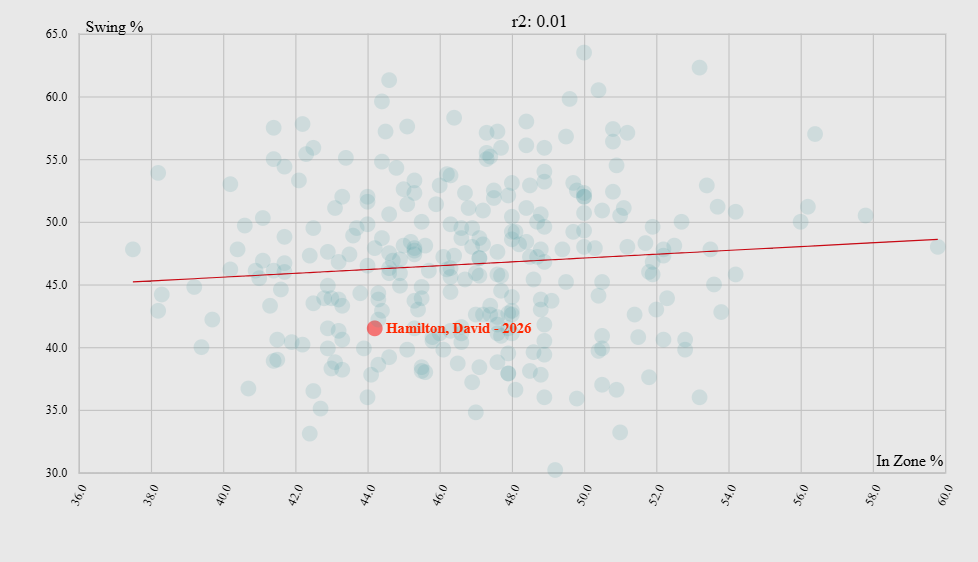
From 52% last year, the percentage of pitches that have been in the zone to Hamilton has plummeted to 44% so far in 2026. It’s a huge difference, and although he’s reduced his swing rate accordingly, he’s not being meaningfully more patient in the zone or any better at not chasing. He’s just had a lot more junk at which to not swing. As a result, in 36 plate appearances, he’s walked a whopping nine times. His on-base percentage is .485.
It’s hard to figure out why the league isn’t being more aggressive with Hamilton. He’s actually reduced his bat speed this year, and he’s letting the ball travel about 3 extra inches into the hitting zone. A deeper contact point makes him less likely to whiff, all else equal, and his slashing style and speed do make him feel a bit dangerous. Sixteen of his 36 plate appearances have come with runners on base, which somewhat reinforces the newish notion that protection—the influence of teammates on the way a given batter is pitched—comes from in front of you in the batting order, rather than behind you. On the other hand, Hamilton has already faced left-handed pitchers in 10 plate appearances. Last season, he only saw a southpaw 20 times, in 194 trips to the dish. If nothing else, you’d think a fellow lefty would be comfortable going right after Hamilton, both because he’s unlikely to punish you with power left-on-left and because a speed demon is a bit less of a threat once on base when the pitcher on the mound is able to stare right at them during their set.
Nonetheless, the numbers are right in front of us. The sample is tiny, but Hamilton is seeing a lot of pitches miss the zone, and he’s not helping hurlers out. They’ll have to show him, instead, that they can throw strikes, and once they do, he’s likely to punish them a bit more, after all. The Brewers have a dynamic offensive weapon on their hands, in the person of their versatile and lightning-fast utility infielder.