
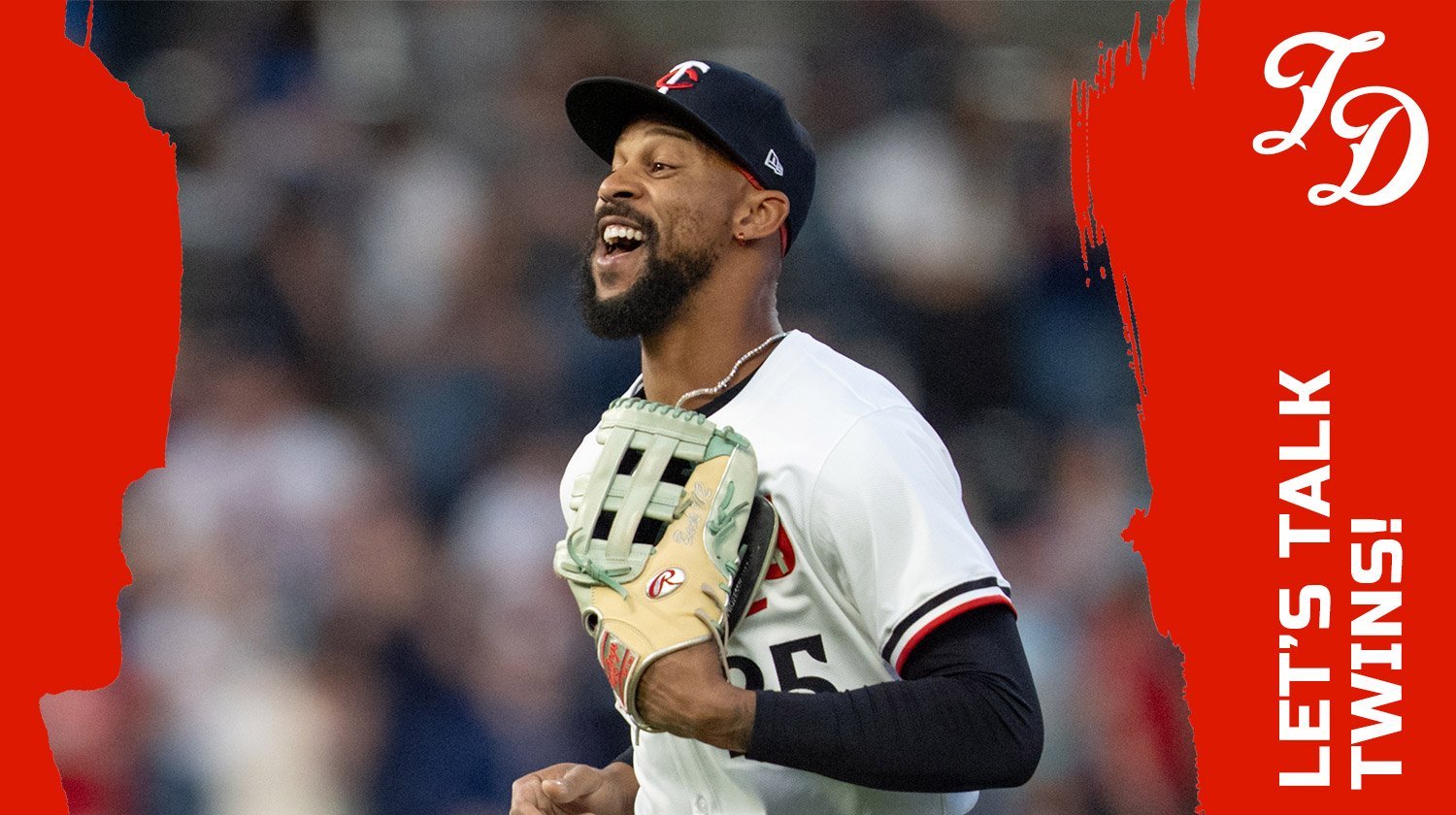
There was plenty for the Minnesota Twins to celebrate on Tuesday night at Target Field after a 6-0 win over the Boston Red Sox. Still, by the time the clubhouse doors opened and the postgame conversations began, the focus had shifted away from the box score.
The moment everyone wanted to talk about happened in the fifth inning, and it had nothing to do with a pitch or a swing.
As Boston’s Jarren Duran returned to the dugout following a groundout, he directed an obscene gesture toward a fan seated near the Twins’ dugout. The interaction quickly became the center of attention, especially after Duran explained what led to his reaction.
“Somebody just told me to kill myself,” Duran said. “I’m used to it at this point, you know? I mean, s— happens. I mean, I’m going to flip somebody off if they say something to me, but it is what it is. I shouldn’t react like that, but that kind of stuff is still kind of triggering.”
It is a jarring quote, and it reframes the moment immediately. What may have looked like a simple loss of composure becomes something far more complicated when placed in that context.
Duran has been open about his mental health journey, including severe depression and a past suicide attempt that he discussed publicly in a Netflix series released last year. That transparency has helped humanize a player often seen only through the lens of performance, but it has also opened the door to a darker side of fan interaction.
“Honestly, it’s my fault for talking about my mental health because I kind of brought in the haters. So I’ve just got to get used to it,” Duran said. “I was just trying to hold it in and not really bring that up to the team. I mean, we’re trying to win a game. I shouldn’t even bring that up to anybody. … It just happens.”
There is a lot to unpack in those words. The idea that speaking openly about mental health invites abuse is a troubling reflection of how conversations like these are still handled in public spaces. At the same time, Duran acknowledges that his reaction crossed a line, even if the comment that sparked it went far beyond anything acceptable.
Boston manager Alex Cora said he did not see the incident unfold and had not yet reviewed the video afterward, leaving the situation to be addressed more fully at a later time.
This is not the first time Duran has found himself in the spotlight for an interaction with a fan. In 2024, he served a two game suspension after directing an anti gay slur during a separate incident. That history adds another layer to how moments like this are perceived, both inside the game and across social media, where reactions were predictably split.
Some defended Duran’s response, arguing that players should not be expected to absorb deeply personal and harmful comments without reacting. Others pointed to the need for professionalism, regardless of circumstance, especially given his prior discipline. Both perspectives exist because this is not a simple issue.
What should be simple is the baseline expectation for fan behavior. There is a difference between heckling and crossing a line into something personal and dangerous. Players are public figures, but they are not immune to the impact of words that go well beyond the boundaries of the game.
But baseball does not exist in a vacuum. Moments like this serve as reminders that what happens in the stands can carry just as much weight as what happens between the lines.