
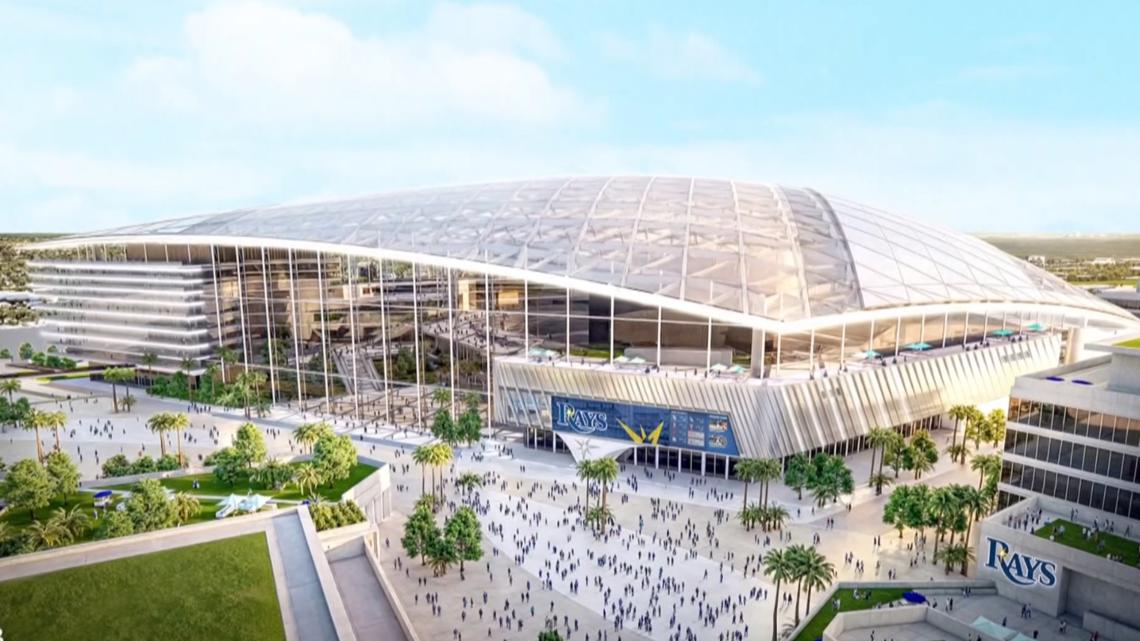
There’s still no deal for a new Rays stadium as leaders question the cost to taxpayers and an economist challenges projected benefits.
TAMPA, Fla. — A proposed billion-dollar deal for a new Tampa Bay Rays stadium remains unresolved, as county leaders say the team will have to make concessions and questions grow about the impact on taxpayers.
As negotiations continue, the central issue is the long-term financial burden of a plan that relies on more than $1 billion in public funding.
County leaders have already warned the request would be unprecedented.
“Over $1 billon and would exceed any comparable request from for professional sports facility by a local government that we are aware of,” County Administrator Bonnie Wise said.
Supporters point to an economic impact study projecting approximately $75 billion in economic output over 30 years. But even the consultants behind that analysis acknowledged limitations.
“Certainly if we were given more detail, there would be a greater level of accuracy in terms of what they’re planning, but those details are currently missing,” said Dillon Gilman of AECOM, which prepared the economic impact report.
That uncertainty is fueling skepticism from some economists.
“It is not credible whatsoever,” said J.C. Bradbury, an economist and vocal opponent of taxpayer-funded stadiums. “It doesn’t match any research. Economists have been studying economic impacts of stadiums for 50 years, and they consistently find sports events don’t generate large economic impact.”
He also questioned who would ultimately benefit financially.
“You might say, ‘Well aren’t we going to get a baseball stadium out of it?’ Well, yeah — but most of that money is going to be going to someone else and you’re going to be a lot poorer for it,” he said.
Others are raising concerns about the structure of the deal itself, particularly the risk to public funds if revenue tied to the project declines.
“So if the debt revenue goes down such as we enter a depression and we’re paying, we’ve already bound that money, then the existing projects that we already agreed to would no longer be able to be completed,” Hillsborough County Commissioner Joshua Wostal said.
Wostal is proposing an alternative funding model that would pay the Rays over time rather than upfront, using tourist development tax dollars.
“I basically offered them 100% of what they said they need from me, so I think there’s a path forward. We entered into an agreement with the Tampa Bay Lightning just a few weeks ago, and it’s the exact same deal except instead of 15 years, it’s 35 years and it’s a 50/50 handshake,” Wostal said. “It would simply be you pay the bill, show us the receipt and we’ll reimburse you for 50 percent.”
However, county leaders say the Rays have already rejected that type of approach.
“It is important to note the Rays have indicated they need the local public funding upfront, and by upfront we mean the construction period, the first three years, opening in 2029,” Deputy County Administrator Greg Horwedel said at Thursday’s county workshop.
Wostal told 10 Tampa Bay News he would like to put the issue to voters.
“In my opinion it needs to go to a vote. For the single-largest taxpayer funded initiative in the history of the county, the voters should just be able to say ‘Yes’ or ‘No’ in November,” Wostal said.
But the Rays have made it clear they are on a tight timeline, with a goal of opening the new stadium in 2029.
For now, negotiations are ongoing, with key decisions expected in early May.
Tampa City Council is set to hold a public workshop May 6, with the city and county potentially voting on a deal that same week.
10 Tampa Bay News reached out to the Rays for comment but they declined.