
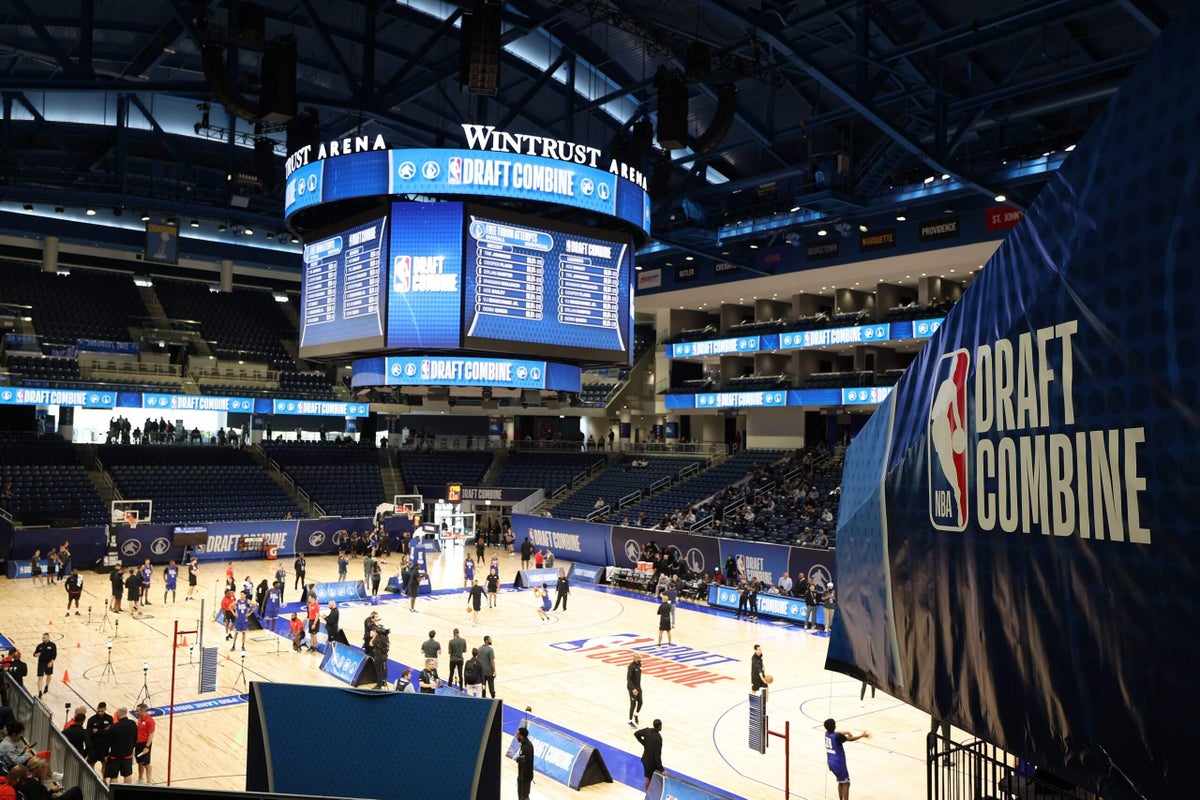
The NBA’s (occasionally) admirable attempts to bring the hammer to the scourge of tanking continue to ignore the tenacity and recalcitrance of nails.
The league is committed to trying to reduce the most egregious forms of tanking — the multi-year versions — in its attempts to get more of its teams to participate fully in actually trying to win games during the regular season. But its attempts to find perfection in potential solutions, to try and account for every contingency, continue to ignore the most salient problem it faces: There aren’t enough superstars to go around. And many of the league’s teams can’t get one, much less two.
So, if you’re committed to keeping the current draft/lottery format, the bigger issue isn’t teams tanking year after year. The bigger issue is that teams don’t see any other, better way to improve their rosters, either through free agency or trades. The whole point of the draft is to help the league’s worst-performing franchises get better, faster, by getting them access to the top prospects coming out of college or international basketball. But the latest proposal for lottery reform reportedly gaining traction will make it even harder for those teams to do so.
The league proposed three potential lottery reforms to its Board of Governors during a meeting late last month. The version of one currently supported by many — not all — teams would increase the number of lottery teams from the current 14, which includes the 10 teams that don’t make the Play-In round and the four teams that don’t get out of the Play-In round, to 18.
Under the league’s proposal, the 10 teams with the worst regular-season records — the teams that don’t make the Play-In round — would get equal 8 percent odds at getting the top pick in the draft, with the other eight teams in the lottery splitting the remaining 20 percent odds in decreasing percentages. Currently, the three teams with the worst regular-season records each have 14 percent odds of getting the top pick, with teams five through 14 having decreasing odds for the first selection.
The reasoning is straightforward enough. Under the proposed reform, if team Nos. 1 through 10 all had 8-percent odds at the first pick, there would no longer be any incentive to lose as much as possible in order to maximize a team’s chances at a top-three pick. Thus, rebuilding teams would be more inclined to try and win games rather than twisting themselves into roster/minutes pretzels to tank develop their young players.
In theory, this sounds like a reasonable solution. But it also leaves open the potential for unintended consequences.
The most obvious is that a team nearing the end of the season in Play-In contention would face the choice of going all-out for that Play-In berth, which would lead to lesser odds at the top prospects in the upcoming draft, with a not-great shot at going far in the playoffs — or deciding not to go for the Play-In at all and opt to tank down the stretch, to ensure a better chance at getting a potential star in the draft.
This isn’t theoretical. It’s already happened. The Dallas Mavericks did not seem to mind much at all the $750,000 fine the league imposed on them in 2023 for deliberately resting healthy starters; Dereck Lively II, the player they took in the 2023 draft by blowing off their chances at a Play-In berth a few weeks earlier, helped them get to the NBA Finals the following season.
Or, look at it from the other end of the telescope.
This year’s Play-In round losers were the LA Clippers, Miami Heat, Golden State Warriors and Charlotte Hornets. None of them, whether because of age or injury or position deficiency, is a real contender in their current forms.
But.
The Clippers have Kawhi Leonard, Darius Garland and Bennedict Mathurin to build around, play in the country’s No. 2 media market, in a $2 billion arena, and are owned by the 15th-richest person on Earth. The Heat have won three NBA titles since 2006 and have made the playoffs 18 times in the last 23 seasons and have made their disdain for tanking clear. Golden State is at the end of its run as the league’s most recent dynasty, with four championships since 2015, but still has one of the two most prominent faces of the league in Stephen Curry firing away.
Charlotte’s new to the postseason after years in the wilderness but has righted its ship not only through bringing in a strong front office and coaching staff, but by nailing recent drafts, most recently with 2025 first-round pick Kon Knueppel. With LaMelo Ball, Brandon Miller, Knueppel, Moussa Diabaté and the newly acquired Coby White among their core, the Hornets are in business.
Just ask yourself what the reaction would be if the new proposed reforms were in place this year, and, say, the Warriors, with flattened lottery odds, just happened to jump over Utah and Washington and Indiana for the top pick, snagging a brand-new superstar like AJ Dybantsa, who could seamlessly replace Curry’s wattage in the Bay for a generation? Or, if the Clippers could conveniently slide into Darryn Peterson’s DMs and sell out the Intuit Dome for the next decade? Or Miami, which doesn’t have much trouble being linked to free agents, got itself a blue-chip partner for Bam Adebayo and Tyler Herro like Cameron Boozer, locked in at rookie-scale rates for five years?
I’m not at all implying the lottery is, or would be, rigged in these cases. But even if we all agreed it was conducted on the level, what would fans around the league think about outcomes like those?
I’m not sure it registers in Olympic Tower that this is the corrosion that is a greater threat to the league than tanking: the increasing certainty with which entire fan bases believe their teams will never get an elite prospect.
If we’re hellbent on keeping the lottery and draft, how does making it even harder for bad teams to access the best prospects, while significantly increasing the chances that teams that don’t really need more young talent can get it, make the league better? We can call this the “Uh, the Spurs just drafted Victor Wembanyama and Stephon Castle; shouldn’t we make it a little harder for them to get Dylan Harper, too?” amendment.
The advantages big-market teams have in the modern NBA, with the reach of global brands extending everywhere — yes, even to Oklahoma City — aren’t nearly as great as the Eeyores on social media would have you believe. But, they do have some. Among the biggest is that they don’t need the draft to add difference-making talent.
I could be wrong. But if and when Giannis Antetokounmpo officially asks to be traded from the Bucks, for example, it’s not likely his list of preferred destinations, no matter his love for mid-market Milwaukee, will include the likes of Indiana, Memphis or Sacramento. That’s baked into the calculus whenever a superstar becomes available via trade: 80 percent of the league is shut out of the discussion from the jump.
In addition, free agency is withering on the vine, with more teams and players more interested in locking in big contracts and at least some measure of cost certainty by giving players extensions well before they ever hit the market. The second-apron payroll threshold and other financial penalties designed to create some semblance of financial parity among teams have also made trades more difficult to pull off than ever.
Teams that amass huge cap space now find it makes much more sense to trade existing big contracts into those spaces rather than waiting in vain for star players to reach unrestricted free agency — what many around the league now call “pre-agency.” This was the call the Wizards made in making deals for Trae Young and Anthony Davis before the trade deadline, rather than overpay for middling free agent talent this summer.
That leaves the draft as the one place, imperfect though it is, where most struggling teams can still add promising young talent. (Again: I’d get rid of it. But I know that’s not going to happen.) And, thus, tanking remains a viable method to have the best chance to secure that talent, no matter how much you flatten the odds.
Teams have tanked for decades. Penalties from the league, whether fines or taking away future draft picks, are still well worth the gamble if you get a true superstar high in the draft. Because, really, what is Anthony Edwards’ worth to the Timberwolves? Or Cade Cunningham’s to the Pistons?
“You can get someone (in the draft) who has a $300 million valuation,” one GM noted.
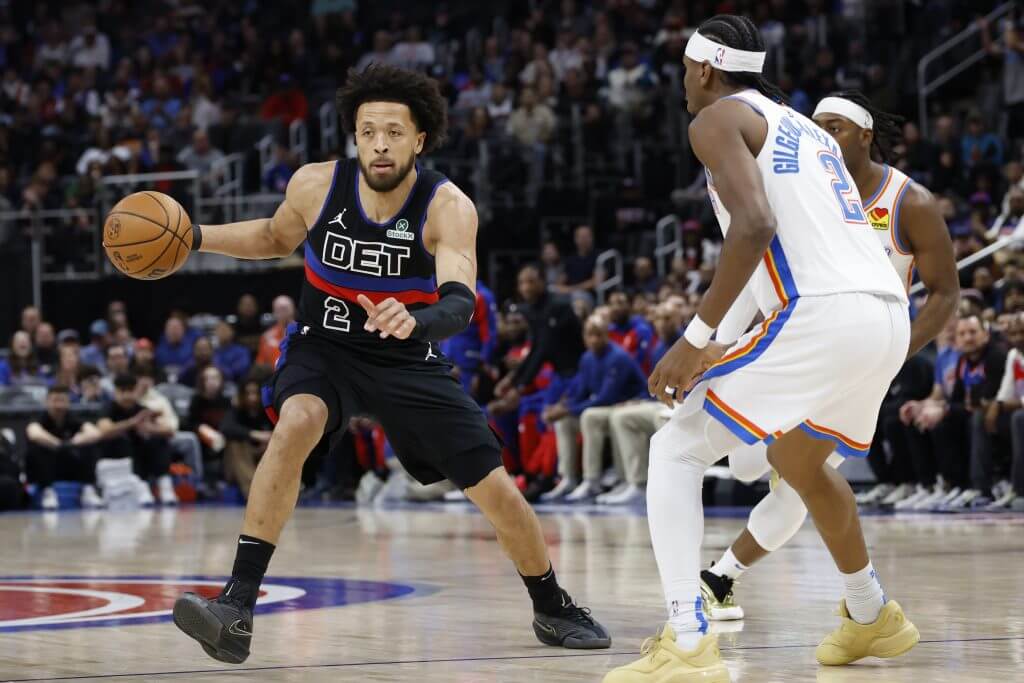
Cade Cunningham, the top pick in the 2021 draft, led the Pistons to 60 wins and the top record in the East this season. (Rick Osentoski / Imagn Images)
So, why is it hard to understand why teams like Utah, Brooklyn and Washington want their own young rising superstars, around whom they can optimally build contending teams? And why is it hard to understand that their fan bases are beyond apoplectic when they see Dallas, a team that was in the 2024 NBA Finals, replace their former superstar in Luka Dončić with another one in Cooper Flagg within six months, or see the Spurs — it’s not their fault, but still — add Wemby and two more blue-chip prospects in three straight drafts? While their teams are left with no choice but to, again, burn another season?
If the Board of Governors codified this current proposal, Dallas’ stroke of good fortune in getting Flagg would likely be repeated. And, the new system would also bake in advantages for teams that have built up massive draft caches.
Oklahoma City already has a 2027 pick swap with the Clippers and a 2028 first-round swap with the Mavericks in its back pocket. San Antonio has Atlanta’s 2027 first outright, the most favorable first-round pick in 2030 between itself, Dallas or Minnesota (protected only for the first pick overall) and a 2031 first-round swap with Sacramento. Under this proposed system, the chances of either the Thunder or Spurs winning an NBA title in the next few years, then cashing in days later with the first pick in the draft via a pick swap or outright ownership of another team’s pick, are not only not zero, but quite plausible.
If we have to keep the draft, let’s at least go back to the old system before the implementation of the lottery in 1985: draft in inverse order of regular-season record, as the NFL still does. (You notice that no one who loves the NFL cares much at all that the Las Vegas Raiders tanked at the end of last season to be able to take Indiana quarterback Fernando Mendoza first overall in last week’s draft? Or that a half-dozen baseball teams are out of playoff contention before the Fourth of July?)
Under a reverse-order-draft-again system, Utah would have gotten Flagg last year with the first pick, and Washington would have taken Harper second. And, guess what? Utah and Washington would have gotten off the tanking merry-go-round this past season. Maybe not forever, but certainly for a while. It would be someone else’s turn to pin their hopes of a turnaround on getting one of Dybantsa or Peterson or Boozer at the top of the draft.
Or, at least, the NBA could implement a version of MLB’s draft rules, which are connected to teams that receive funds from other clubs via revenue sharing. If you’re a tax recipient in baseball, you can’t get a lottery pick in three consecutive drafts. If you’re a tax-paying team at the top of the second competitive-balance tax threshold, such as the Dodgers, Mets or Yankees, you can’t pick in the top six in back-to-back years. And a team that gets the first pick in a draft, no matter its financial standing, can’t pick higher than 10th in the following year’s draft.
On the field, baseball tried to logic its way to idealized outcomes, with its teams leaning all the way into analytics to come up with defensive strategies like the shift. And, it made sense; batting averages dropped to almost nothing, and with far fewer people on base, stolen bases slowed to a trickle. Pitchers, knowing half of the field was now taken away, dominated hitters. You didn’t need a dynamic offensive team to compete night in and night out, just a couple of guys who could hit bombs.
Yet MLB found out that many of its fans still liked bunts and steals and singles to right field, and nuked almost all versions of the excitement-killing shift a couple of years ago, along with implementing a pitch clock to speed up its game times. Baseball followed the numbers to their logical conclusion, saw people didn’t want the game engineered into stasis, and made changes to make the game more exciting for its fans and teams while keeping the guys around who could hit bombs. Win-win.
Similarly, the NBA can keep seeking lottery perfection, or realize that none of its solutions address the bigger underlying problem of how elite talent, the lifeblood of every league — but especially this one — gets distributed.
Get the worst teams the best young prospects, and non-stop tanking will ebb. The practice will go back to being a bug, not a feature, of the NBA ecosystem.