
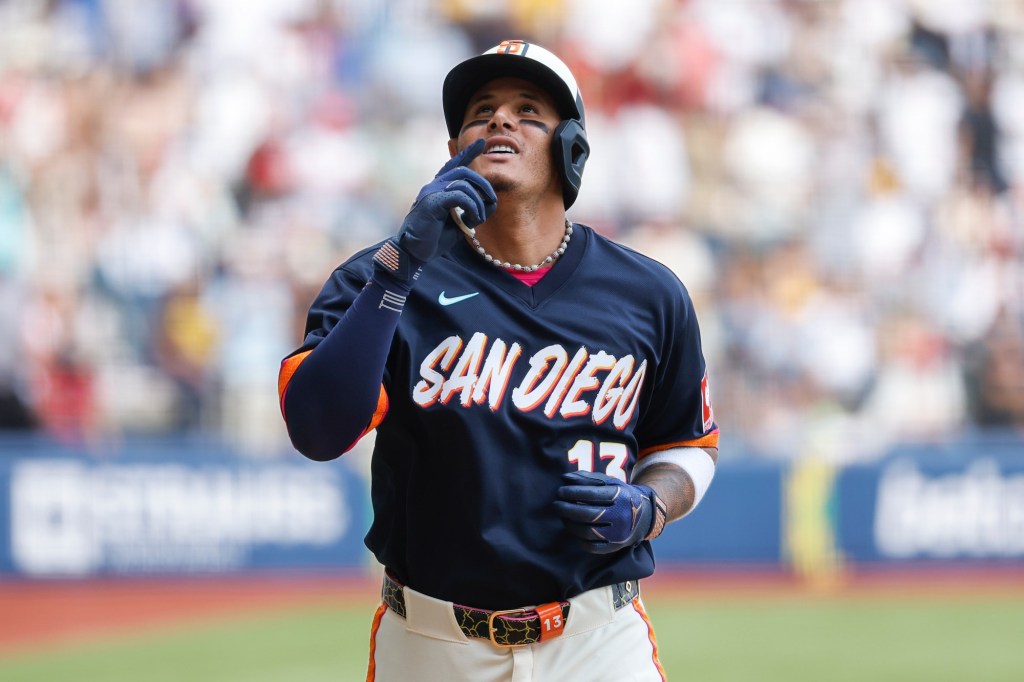
The San Diego Padres are nearing a sale that values the team at $3.9 billion and has sent shockwaves throughout the entire sports world, not just baseball.
The Padres are considered a small-market team, with limited TV revenue and in competition with other close baseball clubs in Southern California. The current MLB sale record is held by the New York Mets, purchased for $2.4 billion in 2020.
Some financial analysts who have studied professional sports have argued for years that small market teams are undervalued, as are MLB teams as a whole. They say the potential sale is proof of what they have been saying.
However, others have argued the potential San Diego sale is more of a function of the Padres being the city’s only team in the four major sports leagues in a major metropolitan area. It has a strong fan base with record attendance and an ownership group that has spent large amounts on players — something other small market teams don’t often do.
Question: Does the potential Padres sale indicate other MLB teams are undervalued?
Economists
Kelly Cunningham, San Diego Institute for Economic Research
YES: Since value is highly subjective, determined by preferences existing in the mind of buyers, the potential price for MLB teams may be much higher than previously realized. Value of major league teams apparently held by owners is based on personal desires, preferences and judgments for their usefulness. Few major league teams exist among popular professional sports, greatly enhancing their value as highly scarce resources. Valuations invariably change, but for now prices are what they are.
David Ely, San Diego State University
NO: The offer exceeds Forbes’ $3.1 billion valuation of the Padres in their 2026 ranking of MLB teams. As a result, valuations of other MLB teams may rise, but those in smaller media markets will see more modest gains. The Padres do not compete against local NFL, NBA or NHL franchises for fans. The Padres spent heavily on talent, leading to high attendance and revenue growth and their status as a strong playoff contender.
Ray Major, economist
YES: The valuation of the Padres strongly suggests that other franchises are undervalued. Valuation is in part based on scarcity, with only 30 teams available, and also relative value to other franchises. So, if the Padres sell for $3.9 billion, other franchises in comparison will be worth more. The pitch clock and ABS challenge system may have boosted attendance, and there’s potential upside from the 2029 media rights cycle, so both will likely increase valuation across the whole league.
Caroline Freund, UC San Diego School of Global Policy and Strategy
YES: The potential Padres sale offers a rare pricing signal in a market where MLB teams almost never change hands. Because transactions are so scarce, valuations are estimated from old, incomplete data. A fresh deal would clarify what buyers are actually willing to pay today for a team. And, of course, the Padres are also a great team with an amazing stadium and engaged fan base.
Alan Gin, University of San Diego
YES: The Padres are in a strong situation with a great ballpark, being located in desirable San Diego, and a strong fan base. The latter is due to ownership spending to put a winning team on the field, and also because they are the only major sports franchise in town. These would suggest a higher valuation than other small-market teams, but it is shocking that their price is higher than the bigger market Mets. This suggests that MLB teams in general may have been undervalued.
James Hamilton, UC San Diego
NO: I do not expect another baseball franchise to sell for this high a price any time soon. The stock market is at an all-time high and looks to me to be overvalued. The sky-high stock market gives investors both the cash and the incentive to bid up the price of alternative assets like sports franchises. Petco Park also generates year-round revenue from other events like concerts, which adds several hundred million dollars to the value of the San Diego franchise.
Norm Miller, University of San Diego
NO: Buying and valuing a professional franchise resembles buying cryptocurrency: you’re betting on future franchise appreciation rather than current returns, which are less than T‑bond yields. Franchise values also hinge on public subsidies, especially discounted facility rent — here under 1% of asset value — and city‑funded infrastructure. Most cities offer similar support, and greater subsidies translate into higher franchise values. In this case, value may also be supported by the absence of football, ice hockey or basketball.
Executives
Jamie Moraga, Franklin Revere
NO: Like many businesses navigating a merger or acquisition, each valuation is unique to the business, in this case, the team. Buyers assess a mix of factors like financials, assets, market size, brand strength and comparable transactions. In the San Diego Padres case, a smaller market and limited TV reach are balanced by a strong fan base, no competing major teams, and buyer-specific motivations that can justify the offered price. Every team and every buyer is unique.
Mark Kersey, San Diego County Taxpayers Assoc.
YES: Thanks in large measure to Peter Seidler’s vision, the Padres have become a unicorn franchise with a passionate fan base, the best ballpark in America, and no local competition from the NFL, NBA or NHL. Most other mid-market teams likely wouldn’t command $3.9 billion. However, baseball is rising in popularity, particularly among Gen Z, which suggests past team valuations are low relative to current market trends. A new national TV model would only enhance team values.
Gary London, London Moeder Advisors
YES: By MLB standards, the Padres are a “small market” team, principally based on TV revenues, despite the 3 million full-house attendance, and the combined fan base of San Diego and Tijuana. Embedded in their value is that the Padres are now the only game in town, literally, which engenders fan support. We can be certain that this sale will be the basis for future baseball team sales. All the valuations will go higher.
Bob Rauch, R.A. Rauch & Associates
YES: The Padres sale is a strong signal that MLB franchises have been broadly undervalued, especially given low revenue multiples, surging investor demand, and the market’s reaction. But the Padres benefited from unique structural advantages, including market exclusivity, California scarcity, and diversified revenue streams that not every team can match. Generally, MLB team values are rising sharply, and the Padres’ sale resets the floor, but not every team will see a Padres‑level valuation.
Austin Neudecker, Weave Growth
NO: The Padres’ valuation reflects unique local dynamics more than it represents a broad mispricing. San Diego has a large, affluent metro, no NFL or NBA competition, strong attendance and a modern ballpark that drives ancillary revenue. The outgoing owners proved their willingness to spend, which boosts value and potential upside. Those conditions are not easily replicable. This sale should be viewed as a premium asset trading at an above-market price, not evidence that teams are broadly undervalued.
Chris Van Gorder, Scripps Health
YES: While I love our Padres, this valuation indicates that other big market teams are likely undervalued, and if the sale goes through, we will see a re-evaluation of the entire market. Unfortunately, that is likely to increase ticket costs and other costs, making professional sports less affordable and continuing to push in-person attendance out of range for even more fans.
Phil Blair, Manpower
YES: Padres have great game attendance numbers but a much smaller media market, where the real money comes from. Can’t imagine what the next team will sell for.
Have an idea for an Econometer question? Email me at phillip.molnar@sduniontribune.com. Follow me on Threads: @phillip020