
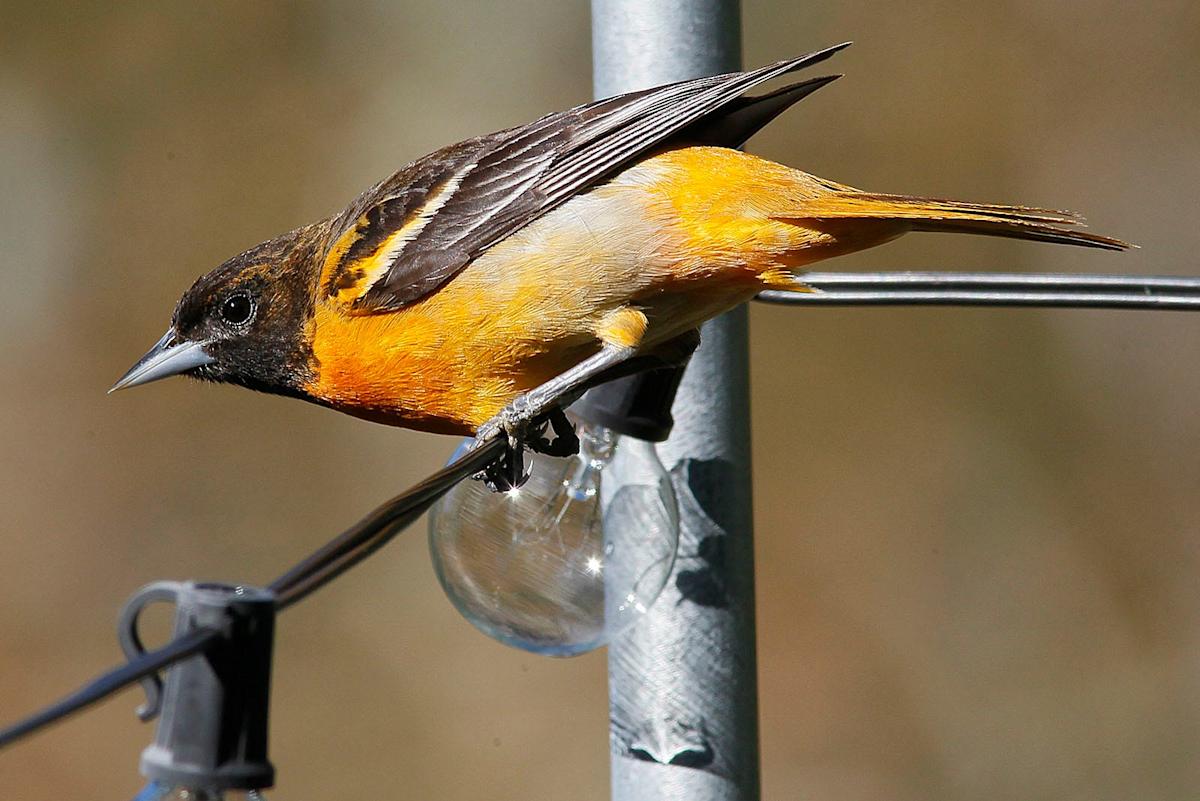
With their bright colors and unusual nests, Orioles have always been bird watching favorites.
The Baltimore Oriole is known for its striking orange plumage, whistling song and unique hanging nests. And there have been multiple sightings of the Baltimore Oriole in Massachusetts, including in Hudson.
The orioles arrive in the area to breed from early April to late May, so now is the perfect time to set up your bird feeders with some fruit, such as oranges, some grape jelly and nectar, the preferred snack of these brightly colored birds.
New England actually plays host to two species of orioles, the Baltimore Oriole being the more common and well known. Its rarer and less flashy cousin, the Orchard Oriole is smaller with a more understated plumage of rich chestnut.
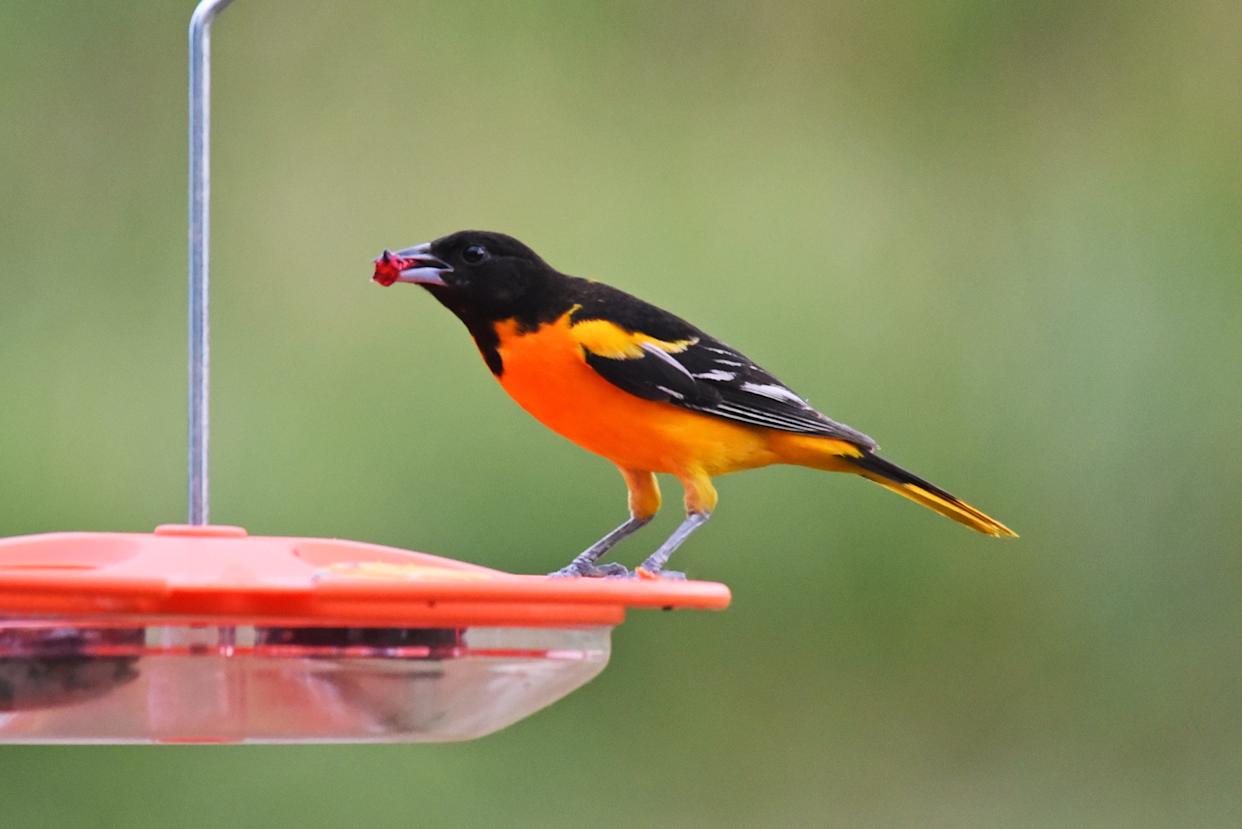
A Baltimore oriole perched on a feeder eats jelly. The birds are named after Lord Baltimore.
Baltimore Oriole Migration Tracker 2026
Similar to the hummingbird map, avian enthusiasts can track migrations and sightings and in real-time, while also contributing their own data using Journey North — a site that tracks the migrations of a number of different species, from monarch butterflies to bald eagles and everything in between.
There have been five sightings of the Baltimore Oriole in Massachusetts as of April 28, according to the migration map. The following Bay State communities had a sighting: South Hadley, Hudson, Burlington, Taunton, and Falmouth.
You can see the 2026 oriole map at the Journey North website.
How do I attract Baltimore orioles to my feeder? What do orioles eat?
Ripe fruit is a favorite of orioles, so cutting oranges in half and hanging them from trees is a reliable strategy. Special oriole feeders filled with sugar water supplement the flower nectar that Baltimore orioles gather as well as small amounts of jelly — with an emphasis on small to avoid soiling their feathers.
They are also known for preferring dark-colored fruit, and will seek out the darkest mulberries, the reddest cherries, and the deepest-purple grapes, and will ignore green grapes and yellow cherries even if they are ripe, according to All About Birds.
Birders with a green thumb can plant bright fruits and nectar-bearing flowers, such as raspberries, crab apples, and trumpet vines, all of which Baltimore Orioles will find difficult to resist.
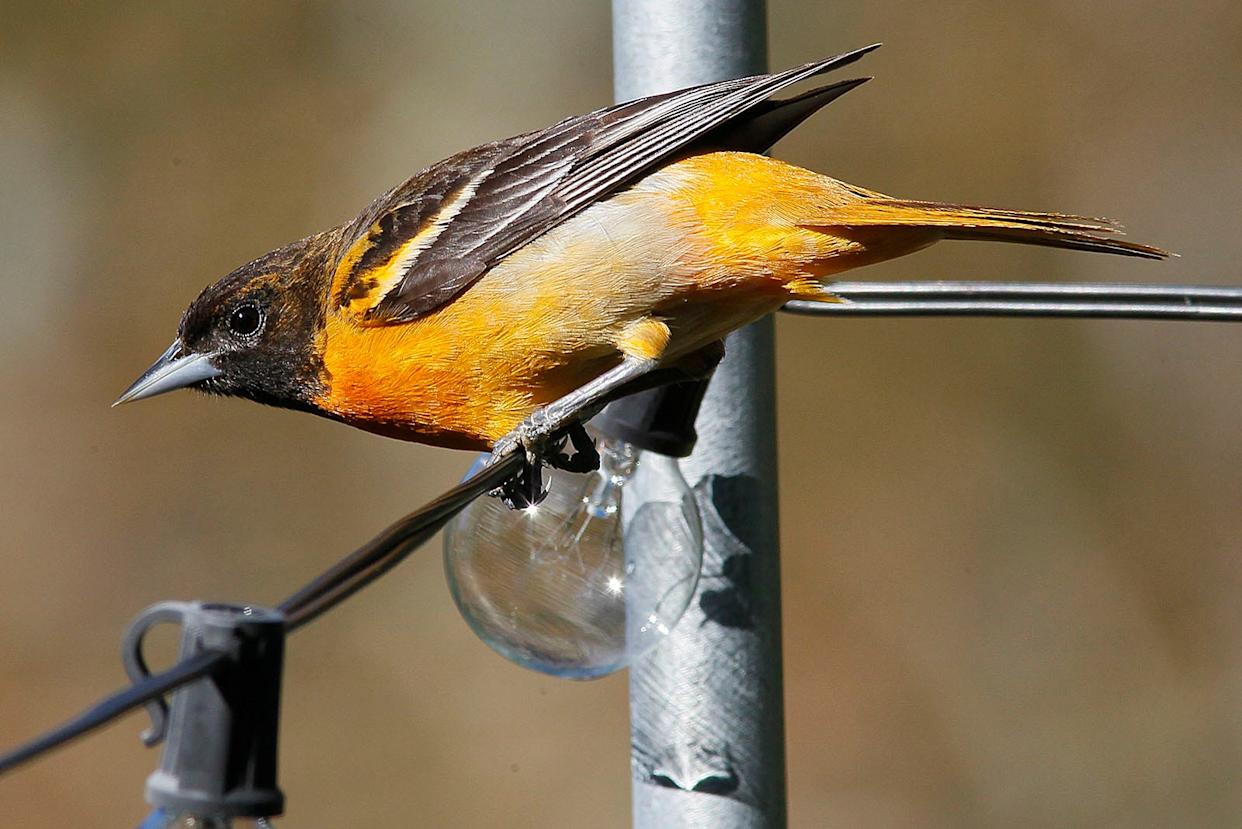
The female Baltimore oriole who weaves a basket nest high in the trees from string and long grass.Spending more time at home can be entertaining, all you need is birdseed and a little patients. These colorful birds are all daily visitors to a Marshfield feeder on Sunday May 9, 2021 Greg Derr/The Patriot Ledger
How long do orioles stay around?
Typically, until the end of summer.
Some Baltimore orioles start to migrate back south as early as July if they’re hatchlings for the year are ready for the trip, but the peak of the migration is in August and September, according to Journey North. By October, most birds have made it to their wintering grounds.
Baltimore orioles winter in Florida, the Caribbean, Central America, and the northern tip of South America, according to All About Birds.
How did the Baltimore oriole get its name?
The Baltimore oriole was not named after the city, though it certainly can be seen in Maryland. The orange and black plumage bore the same colors as the heraldic crest of England’s Baltimore family, whom the city was named after as well.
When looking for this bird, keep your eyes up, as they prefer to perch on treetops and upper foliage.
This article originally appeared on wickedlocal.com: How to attract newly returning Baltimore orioles to your yard