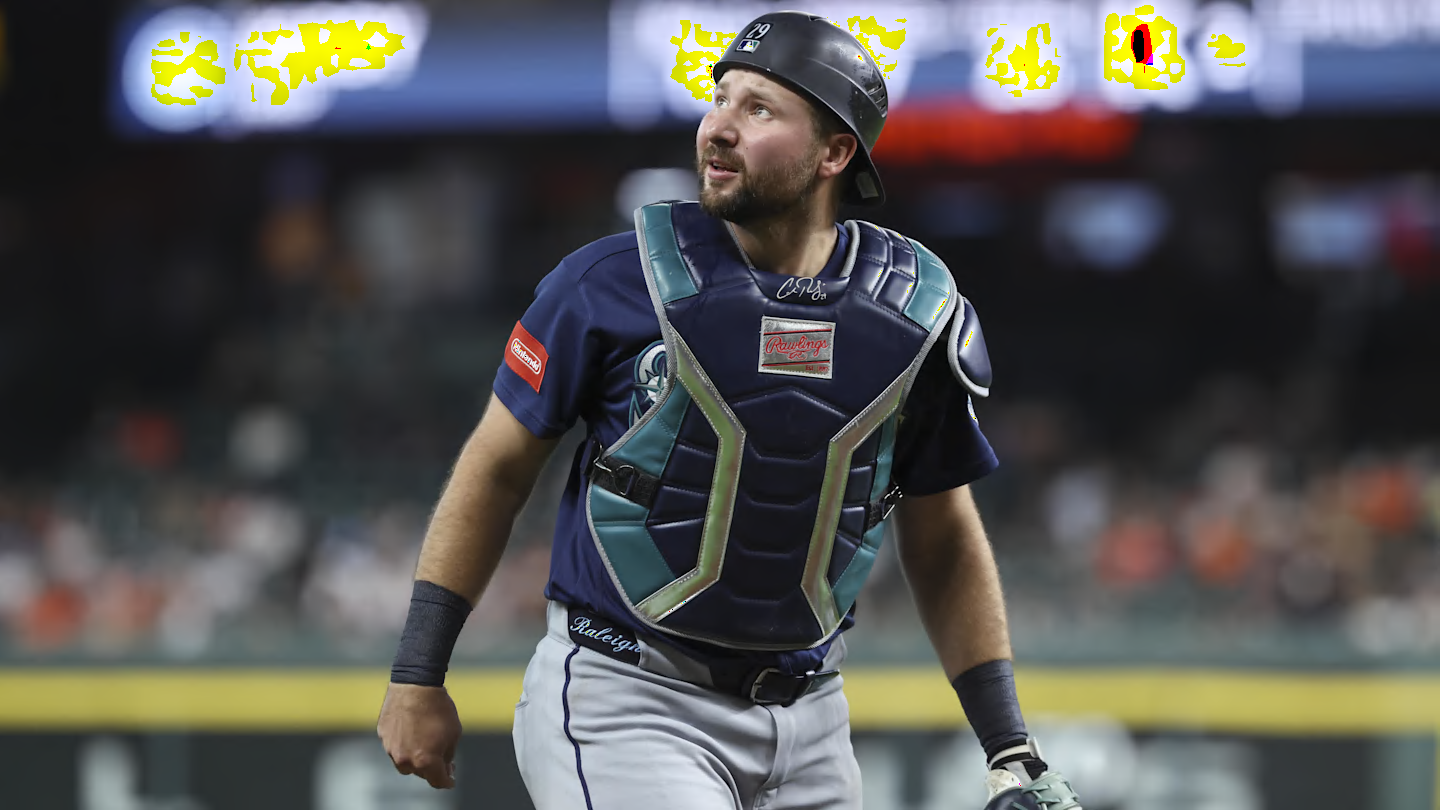
Seattle placed Cal Raleigh on the 10-day injured list with a right oblique strain and recalled Jhonny Pereda from Triple-A Tacoma, which solves the immediate roster issue and not much else. The Mariners needed another catcher. What they can’t easily replace is Raleigh’s presence. And with this marking the first injured-list stint of his big league career, the move carries a little more weight than usual.
The easy version is to say the Mariners lost their star catcher. The better way to look at this is that Raleigh’s injured list stint may finally explain why one of the ugliest offensive stretches of his career looked so broken in real time.
Raleigh had just two hits in his past 49 trips to the plate, dragging his season line down to .161/.243/.317. For a player who was last season’s American League MVP runner-up after hitting 60 home runs, this was the kind of stretch that made every at-bat feel heavier than the one before it.
Now we know, officially, there was more going on than a hitter losing his timing.
Raleigh had been dealing with side discomfort earlier in May, missed time, returned to the lineup and then exited Wednesday’s game against the Astros after the issue resurfaced. Mariners manager Dan Wilson described the move as precautionary at first, saying Raleigh came up awkwardly on a defensive play, but the next step was the IL.
Cal Raleigh’s Slump May Have Been Telling The Mariners The Truth Before The IL Move Did
There is no way to dress up Raleigh’s production and call it fine. The numbers were bad. But an oblique injury changes how we read the wreckage.
Raleigh’s value as a hitter is built on violence. He’s not up there trying to slap singles through the six-hole to politely move traffic. Take away even a slice of his power, and the whole thing can look broken.
Raleigh’s slump was already sounding alarms because the Mariners cannot afford for one of their few true game-flipping bats to disappear. But if he was trying to hit through oblique pain for more than two weeks, those empty at-bats start looking more like his body telling the story before the roster did.
Raleigh had been struggling before the IL move, and the Mariners still have to care about what his timing, approach and swing path look like when he returns. But it does offer a more reasonable explanation than the idea that Raleigh’s power suddenly vanished without warning, which always felt a little too simple anyway.
The Mariners’ problem now is that even a compromised Raleigh was still central to how this team is supposed to function. He gives Seattle the possibility of instant damage from both sides of the plate. He gives the pitching staff familiarity behind the plate, and the clubhouse one of its clearest identity pieces.
Mitch Garver can take on more catching responsibility. Pereda gives the Mariners a fresh body and a contact-oriented option from Tacoma. Now the Mariners have to survive without Raleigh while also hoping the time away proves useful.
The best-case scenario is obvious. Raleigh rests, gets the evaluation he needs, lets the oblique calm down and returns looking more like the hitter Seattle has built so much of its offensive identity around. In that version, the IL stint is more than just bad news. It’s the necessary pause that explains the last two weeks and stops the damage from snowballing.
The scarier version is the one the Mariners cannot ignore. Oblique injuries can linger, especially for a switch-hitting catcher whose job already asks his body to absorb so much. There’s nothing casual about that workload.
 Add us as a preferred source on GoogleFollow