
We had an idea for this week’s mailbag, but some of the questions took our theme and in a slightly unexpected direction, which forced us to actually break some news in this edition.
Initially, we asked for your favorite “what if” about this season. What if the Boston Red Sox had re-signed Alex Bregman? What if the St. Louis Cardinals hadn’t traded everyone? What if the Toronto Blue Jays were healthy? What if the Washington Nationals had some pitching?
That was the concept: hypotheticals that might have shifted the tone of these past two months. Some of our readers stayed in that lane. It also became clear from the questions that a different sort of uncertainty is inescapable at the moment: the collective bargaining agreement that expires this winter. The CBA has been in the news lately, and it’s clearly on your minds.
So, this week’s mailbag keeps the what-if theme, but it ranges from granular roster moves to much broader questions about the state of the industry. We’ll start with one of those broader questions, and we’ll get some outside help to answer it.
What if the team owners opened their books? Would small-market fans still think that capping big-market teams is the right thing to do? — Al U.
Good timing!
Last week at the bargaining table with the owners, the Major League Baseball Players Association actually proposed partially opening the books to the public — cracking them open just a few pages, if you will.
“Owners who complain about their supposed inability to compete should be willing to open their books for the fans,” interim union head Bruce Meyer said in a statement.
The union homed in on three areas it wants the league to agree that the public should have access to:
Local revenue sharing, the main system that redistributes the money big-market teams earn to smaller markets. The union wants the total transfer each team receives to be publicized. Some teams receive an estimated $70 million or so.
“The Supplemental Commissioner’s Discretionary Fund,” which is more interesting than it sounds. When a high-payroll team pays luxury tax — like the $169 million the Los Angeles Dodgers paid in overages for 2025 — half of the money is distributed back to different teams through that fund.
The “competitive incentive fund,” something the union wants to newly create during this round of bargaining.
Now, as a matter of speculation: the league is unlikely to bite on any of these, and the union probably won’t carry this specific fight very far. The players have big economic fish to fry. But if nothing else, by bringing disclosures up at the table, the union is underscoring a point it has long argued: fans would find it eye-opening to know how much owners make.
MLB declined comment.
One important note on this topic: the public and the union are in different boats.
The league already provides some financial information regularly to the union, including audited financial statements from each team, and a list of other things outlined in the collective bargaining agreement. The union also has the right to ask for an audit of a given team.
But, per the CBA, the union can’t share that information publicly, so owner earnings stay out of sight — even though player salaries are widely known.
The Atlanta Braves are an exception as a publicly traded team. They have to provide regular public updates, and reported about $732 million in revenues for 2025.
One interesting wrinkle: a salary cap, which the owners want, would lead the league to share more financial information with the union than it does today. In that setup, the sides would agree on a formal split of industry revenue, and they’d need to agree on what’s included and what’s not.
The union is opposed to a cap, though. And even if the players changed their tune, the owners still wouldn’t want to share financial information publicly.
What if the World Series matchup is Guardians vs Nationals — two teams at the bottom of the payroll curve? Does it upend the CBA narrative? — Random R.
Upending the narrative is one thing. Upending the CBA is another.
A World Series matchup of low-payroll teams might help the players’ anti-cap argument with the public, but I’m not sure it would change anything about the factors being discussed behind closed doors. Owners still wouldn’t like extreme salaries or the fact that different teams treat free agency — and revenue sharing — in such different ways. It’s not like the Guardians would say: “We won! We don’t need a cap after all!” Players, meanwhile, still would want to reach free agency sooner and generally earn a higher share of the sport’s revenue.
The issues are what they are, and upending a Dodgers dynasty for a year wouldn’t change them. But if there’s a lockout coming, a low-revenue World Series would certainly play into the players’ narrative more than the owners. As Ken Rosenthal wrote last week:
“A World Series between, say, the Brewers and Rays, would lay waste to the owners’ cries for greater parity, which — based on the revenue disparity that exists within the sport — are not entirely without merit. But let’s be real: The primary motivation for the owners in pursuing a cap is to establish fixed costs that would enhance their franchise values.”
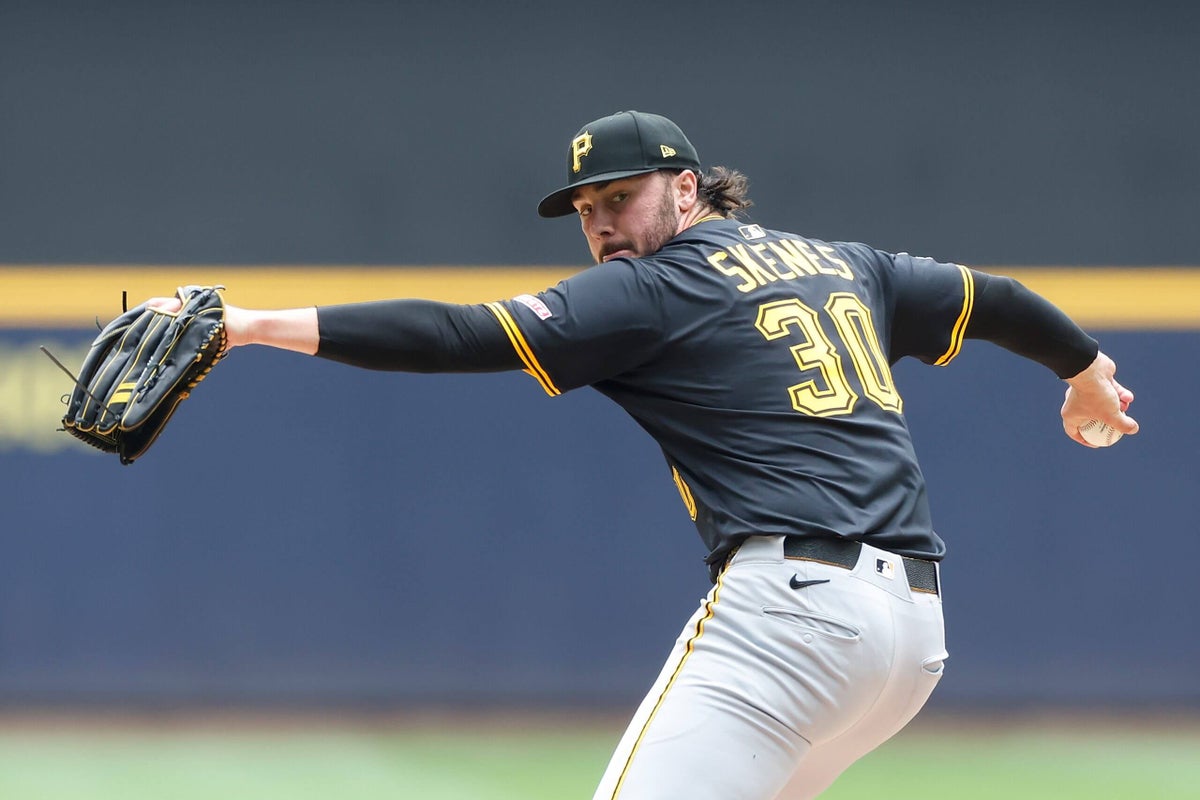
What if the Pirates hadn’t hung up the phone on the Yankees’ proposed Paul Skenes offer? Cam Schlittler would be crushing it in Pittsburgh. Spencer Jones would be duking it out with Oneil Cruz for both the strikeout record and the first to 30 home runs. And George Lombard Jr. would likely be taking reps at 3B in AAA to soon join the MLB club and have the youngest and highest upside right side of the infield, arguably, in the NL. It’s hard not to dream on that as a Pirates fan. — MA S.
Honestly, this is the kind of question we were expecting.
If you’re confused by the premise of this hypothetical, it comes from a report in the New York Post saying the New York Yankees “were prepared to offer four top prospects last July” in a potential deal for Pittsburgh Pirates ace Paul Skenes. The prospects involved were not identified, but the report did note that Cam Schlittler, Spencer Jones, George Lombard Jr., and Carlos Lagrange might have been the best prospect package the Yankees could have put together at that time.
It’s a fascinating “what if” for this season, because Schlittler and Skenes have been remarkably similar this year. Heading into Tuesday night’s start, Schlitter’s strikeout rate, walk rate and WHIP were almost identical to Skenes’. Schlittler had the better ERA, but Skenes had a better expected ERA.
One-for-one, I imagine every executive would still prefer Skenes over Schlittler, but in the short term, the hypothetical trade also would have sent some high-upside bats to the Pirates — would Jones have replaced Marcell Ozuna at DH by now? — and given Schlittler’s incredible start to the season, the Pirates might not have skipped a beat in the rotation. Can’t blame Pirates fans, especially those who assume Skenes is going to leave eventually, for actually finding a Skenes trade they might have liked.
Of course, Skenes-to-the-Bronx also would have brought back some of that we-get-whoever-we-want swagger to the Yankees, and who knows how Skenes would have reacted and performed on that stage? Would having Skenes (and a thinner farm system) have pushed the Yankees to spend differently this winter? Would it have given that team an aura of inevitability, like the Los Angeles Dodgers? It’s the kind of blockbuster that ripples, even when it’s hypothetical.
Probably an obvious one … what if the Mets don’t swoop in and sign Bo Bichette out from under Dave Dombrowski’s nose? Does he struggle in Philly like he has in New York? — Anonymous U.
An unusual “what if” in which each side might prefer to take a chance on the alternative universe. For the Mets, Bichette has been a high-profile piece of a high-priced debacle. By fWAR, Bichette is one of the 20 worst-qualified players in baseball. Also in the bottom 20: Mets second baseman Marcus Semien and first baseman Mark Vientos, while Francisco Lindor and Jorge Polanco have been hurt, all of which perhaps made things harder on Bichette (both in terms of expectations and the way he’s attacked).
But the Phillies have a similar — albeit cheaper — third base problem with Alec Bohm on pace for a career-worst season in which second baseman Bryson Stott and shortstop Trea Turner have also struggled and offseason addition Adolis Garcia is hitting below .200 with little power.
The Phillies have done a better job than the Mets of turning things around after a slow start to the year. Would something about that atmosphere — with Kyle Schwarber’s voice in the clubhouse and a managerial shakeup right out of the gate — have brought out the best in Bichette?
We know this much: nothing has brought out the best in him in New York. The Mets were better in May than they were in April, but Bichette’s OPS actually went down in the second month of the season.
What if any star free agent (Shohei Ohtani, Aaron Judge, Bryce Harper) other than Willy Adames (who is/was not a star) had signed with the Giants? Would they still find a way to be mediocre/boring at best, or awful at worst? — David F.
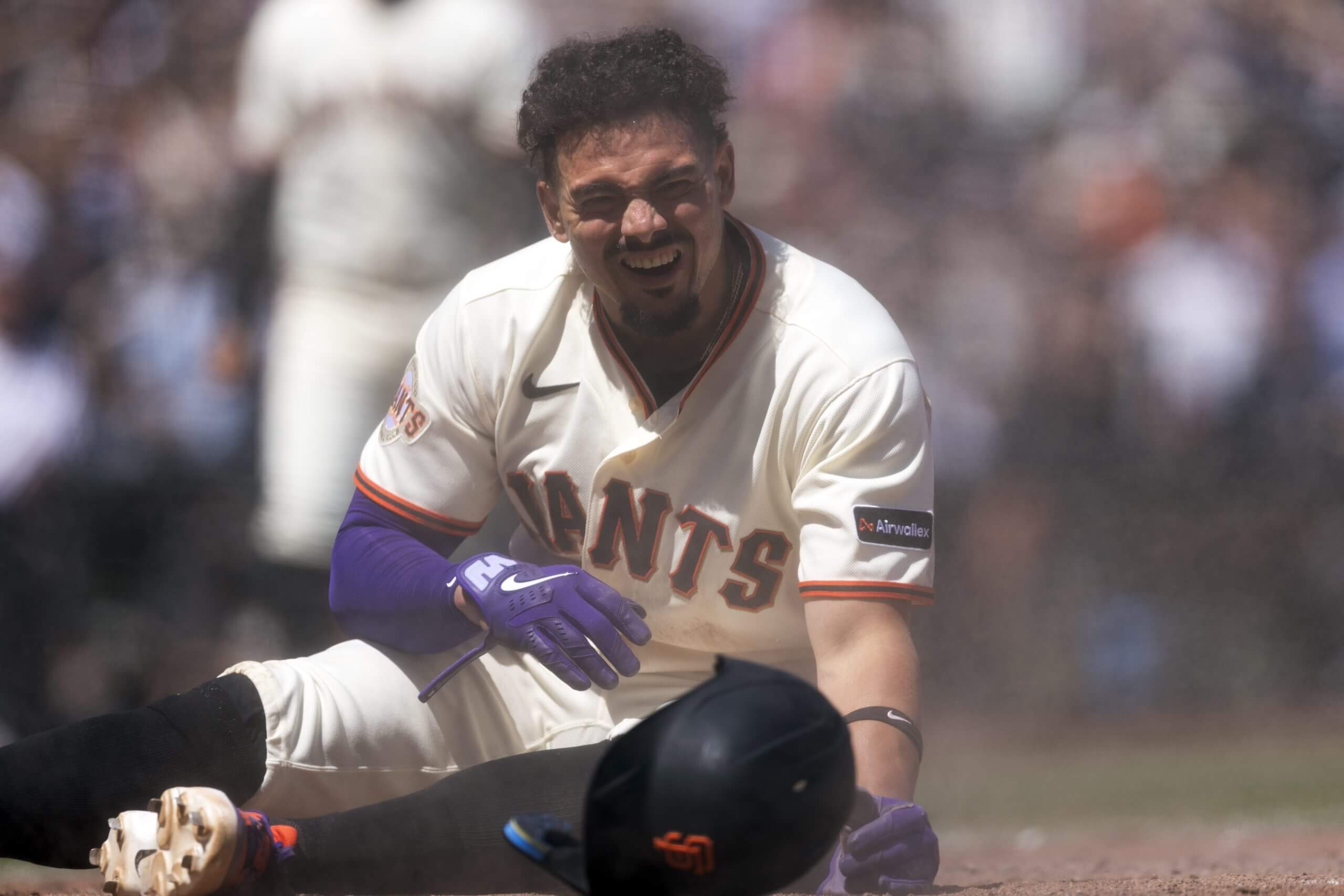
Willy Adames is one of the few marquee free agents to sign in San Francisco of late, and his presence hasn’t helped much. (D. Ross Cameron / Imagn Images)
The San Francisco Giants spend a decent amount of money — just over $200 million according to Roster Resource, basically in line with the Boston Red Sox, San Diego Padres, and Detroit Tigers — and they’ve been linked to some of the biggest free agents in the sport (most notably Aaron Judge in December of 2022). But let’s look at the biggest names the Giants have actually acquired in recent years:
Jung Hoo Lee — December 2023
Robbie Ray — January 2024
Matt Chapman — March 2024
Willy Adames — December 2024
Rafael Devers — June 2025
Justin Verlander — January 2025
Luis Arraez — January 2026
All but Verlander are still on the roster. Care to guess how many have been worth at least 1.0 fWAR this season? The answer is one: Arraez. Devers is somehow barely a league-average hitter, Adames has been right at replacement level, and Ray has a 4.45 ERA (with a 5.15 xERA). No surprise, the Giants have been neither good nor particularly exciting.
So, I asked Giants beat writer Andrew Baggarly: Would a marquee name make a difference?
“Absolutely, Judge or Ohtani would have made a difference,” Baggarly said. “Bryce Harper, too, if you care to go back a bit further. Then again, ‘difference’ can go either way. Is Carlos Correa a marquee name? Because if you want to play the other side of the what-if coin, the Giants had an announcement ready to go on a $350 million contract in December of 2022. And obviously, that deal would’ve been an even bigger disaster if Correa’s ankle had passed a physical. Right now, the Giants are an unfocused mess of a team and the farm system hasn’t done enough to augment their free-agent investments, which, as you note, have not provided the anticipated returns this season. They have to get their own house in order and that takes time. It’ll take even longer if they undergo another regime change.”
What if the “historical best” players (sluggers, hitters and pitchers) played with ABS in use? Which pitchers “always” got reputation strikes? (eg. Greg Maddux) Which batters were “always” squeezed? (e.g early Aaron Judge) Which hitters would have averaged “much higher”? Ted Williams? Wade Boggs? etc. — Ted G.
This isn’t exactly the kind of 2026 “what if” we had in mind, but it does touch on the least avoidable storyline of this season: the introduction of an automated strike zone. My assumption had always been — based on various conversations with coaches and executives — that offense would improve with robo-umps. Hitters would know the strike zone even better than they already do, which would make it harder for pitchers to convince them to chase. Give George Brett or Wade Boggs or Tony Gwynn a defined strike zone, and they’d hit .400.
And maybe that’s going to be the case eventually as hitters get more time with this system, but it hasn’t happened. Here are some league-wide numbers for the past six seasons (the 2026 numbers are through Monday).
MLB hitting statistics 2021-2026
YearBABABIPBB/K
2026
.241
.287
.42
2025
.245
.291
.38
2024
.243
.291
.36
2023
.248
.297
.38
2022
.243
.290
.36
2021
.244
.292
.37
There’s no perfect data available to know for sure which hitters and pitchers from previous eras would have been most affected, but I think it’s also important to note that the ABS system hasn’t occurred in a vacuum. Some of the developments and technologies that led to ABS in the first place have already changed the way hitters hit and the way pitchers pitch. Today’s game would give George Brett a defined strike, but it wouldn’t let him feast on any middle relievers throwing 88 mph. Banning the shift was also supposed to bring back batting averages, and that hasn’t happened.
Turns out, sometimes things don’t work out exactly the way you’re expecting.