

For most of this decade, the Red Sox have been mired in mediocrity. Outside of playoff appearances in 2021 and 2025, the club has largely been stuck in the mud, finishing at or near .500 while failing to distinguish themselves in any meaningful way.
But this year? The Red Sox have been flat out bad.
When the Red Sox returned to Fenway Park for the start of this weekend’s three-game series against the Texas Rangers, the club stood at 27-39, a season-worst 12 games under .500 and last in the AL East.
Even after a 10-run outburst on Friday night, the offense still ranked second-worst in MLB in runs scored (268) and home runs (55), and near the bottom of the league in walks (194, third-worst), slugging percentage (.382, tied for fifth-worst) and OPS (.696, seventh-worst) entering Saturday.
While there is still plenty of baseball left to be played, if the club continues on its current trajectory this could go down as one of the worst seasons in franchise history.
Generationally bad
Entering Saturday, the Red Sox had a win percentage of .418, which would equate to a 68-94 record over a full 162-game season.
If that comes to pass, it would go down as the 15th-worst season by win percentage in the 126-season history of the franchise.
It’s been a long time since Red Sox fans have had to endure anything like this.
Of the 14 Red Sox teams that finished with a worse win percentage, only one came within the last 60 years. That was 2020, when the Red Sox went 24-36 (.400) in the pandemic-shortened 60-game season.
Obviously there was a lot going on in the world that summer, and dark as that season was for Red Sox fans at least it was over quickly.
Before that you have to go all the way back to 1965, when the Red Sox went 62-100 (.383) to record the club’s worst-ever record over a 162-game season. The 1966 team wasn’t great either (72-90), but since the 1967 Impossible Dream season Red Sox fans have usually been able to count on a certain baseline of competence.
For the majority of the club’s worst seasons you have to go back almost 100 years. All of the club’s worst seasons prior to 1965 took place from 1932 and before. The 1932 campaign stands as the all-time low, when the Red Sox went 43-111 to record a franchise-worst .279 win percentage.
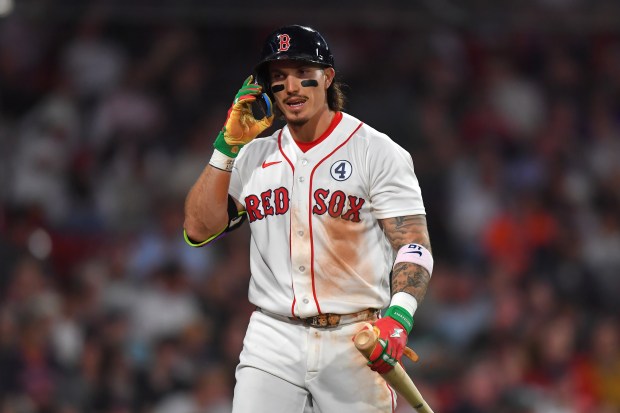 This year’s Red Sox offense has been among the least productive in recent franchise history. (AP Photo/Steven Senne)
Offensive offense
What’s particularly striking about this year’s Red Sox team is the performance of the offense. Usually bad Red Sox teams tend to have good to mediocre lineups and poor pitching and defense. This year the reverse has been true.
Prior to their 10-1 win Friday night, the 2026 Red Sox came into the weekend averaging 3.9 runs per game, which was tied with several other clubs for the 17th lowest average in franchise history. Overall there have been 23 seasons in Red Sox history where the club has averaged fewer than four runs per game, the worst coming in 1906 and 1907 when the Red Sox averaged 3.0 runs per game.
This year’s club entered Saturday on pace to score 648 runs, which would rank as the franchise’s fourth-lowest mark over a 162-game season. The three Red Sox offenses with fewer runs since the AL expanded in 1961 came in 1992 (599, 3.7 per game), 1968 (614, 3.8) and 2014 (634, 3.9).
The 2026 Red Sox were also on pace to hit 132 home runs, which would rank 11th-worst over a 162-game season.
Even the other worst Red Sox offense had some measure of star power.
That 1992 offense, which stands as the club’s modern offensive nadir, included Wade Boggs and a young Mo Vaughn, but also nobody with more than 15 home runs. The 1968 lineup was incredibly top-heavy with peak Carl Yastrzemski and a 35-homer season by Ken Harrelson, and the 2014 club featured David Ortiz, Dustin Pedroia and rookie Mookie Betts, even though many of the heroes of the 2013 World Series team wound up taking big steps back.
This year the Red Sox have gotten productive seasons out of Willson Contreras, Wilyer Abreu and Ceddanne Rafaela, but otherwise no other regular has rated as better than a league average performer.
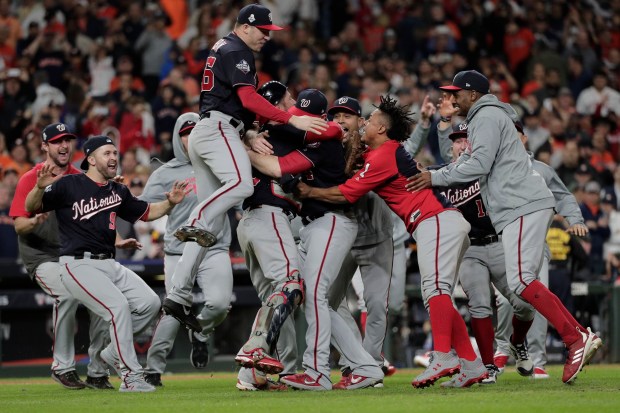 The 2019 Washington Nationals at one point faced a similar deficit in the standings as the Red Sox do now. That Nationals club went on to turn things around and win the World Series. (AP Photo/David J. Phillip, File)
Reasons for hope
The good news for the Red Sox is that no matter how badly things have gone, there is still time to turn things around.
They wouldn’t be the first club in MLB history to overcome a horrible start to salvage their season.
Four years ago the 2022 Seattle Mariners were in a similar spot as Boston is now, sitting 10 games under .500 (29-39) on June 19, but the club recovered to finish 90-72, making the playoffs as a Wild Card club and ending the franchise’s 21-year postseason drought.
The 2019 Washington Nationals also at one point fell 12 games under .500, though a little earlier in the season at 19-31 on May 23. They wound up finishing 93-69 to win a Wild Card berth and went on to win the franchise’s first World Series title.
The 2013 Los Angeles Dodgers were 12 games under (30-42) on June 21 and finished 92-70, earning a Wild Card spot and reaching the National League Championship Series. The 2009 Colorado Rockies, led by Red Sox interim manger Chad Tracy’s father Jim Tracy, went from 12 games under (20-32) on June 3 to a Wild Card berth. The 2005 Houston Astros at one point were 15 games under on May 27 and still 10 games under (25-35) as late as June 12 before finishing 89-73 to win the Wild Card and eventually reach the World Series.
Go back further and two other notable turnarounds include the 1974 Pittsburgh Pirates, who were 14 games under (18-32) on June 7 before finishing 88-74 to win the NL East, and the 1973 New York Mets, who were 13 games under (53-66) as late as Aug. 17 before going 29-13 down the stretch to win the NL East despite a 82-79 record. The Mets went on to reach the World Series, losing in seven games to the Oakland Athletics.
The most dramatic midseason turnaround in MLB history probably belongs to the 1914 Boston Braves, who were 16 games under (12-28) on June 8 and went on to finish 94-59-5 to win the NL pennant. They swept the A’s to win their first World Series title.
 Last year’s Red Sox pulled off the biggest turnaround by an eventual playoff qualifier in franchise history, going from five games under .500 in June to reach the postseason as a Wild Card team. (Matt Stone/Boston Herald)
Uncharted waters
If the Red Sox pulled off something similar, it would be unprecedented in franchise history.
The closest the Red Sox have come to engineering such a dramatic turnaround came in 1955 when the Red Sox sat 10 games under (20-30) on June 5 before going 60-26 over their next 86 games. That put them at 80-56 on Sept. 7, three games back of first in the American League, but the club faded down the stretch and finished 4-14 to wind up 84-70 and miss the playoffs.
This was the only time in franchise history the Red Sox have gone from 10 games under to 10 games over .500 in the same season.
Among Red Sox teams that made the playoffs, the biggest comeback came last year when Boston went from five games under (30-35) on June 6 to finish 89-73 and earn the second Wild Card spot. The 2009 club came back from four games under in April, but no other Red Sox playoff team ever fell more than three games under .500, most of those coming early in the season.
None of Boston’s nine eventual World Series winners ever fell more than two games under either.
All of this is to say the Red Sox have dug themselves a deep hole, and there’s little evidence to suggest this year’s club is capable of climbing out. Anything is possible and more unlikely turnarounds have happened, but if the Red Sox don’t figure something out soon they may earn themselves a place in franchise infamy that even some of the club’s recent last-place clubs never touched.