
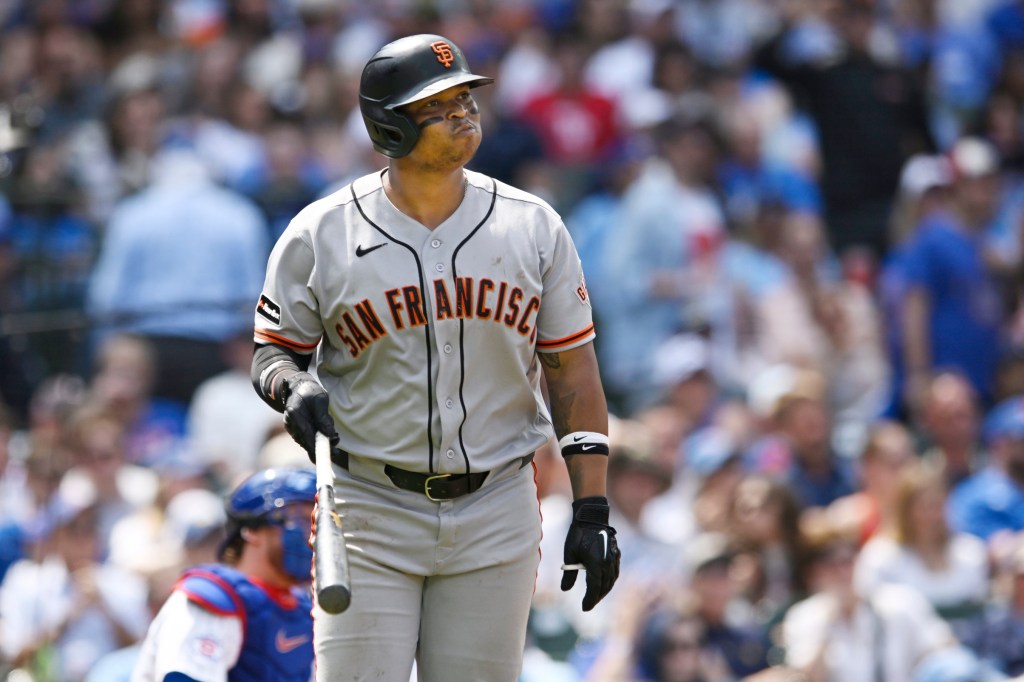
Monday marked one year since the Boston Red Sox completed a trade to send Rafael Devers to the San Francisco Giants as he sat on the team plane waiting to take off for a 10-day road trip that included a series in San Francisco (in which Devers led the Giants to victory with a home run).
I drafted my first column of the post-Devers era that night: “Devers trade only creates new messes for chaotic Red Sox.” Aside from my concern that the trade might prevent the team from making the postseason, it’s aged painfully well.
“What the Red Sox either fail to realize, or are unbothered by, however, is that the aftermath of this decision will be messier still,” I wrote at the time.
Now armed with 365 days’ worth of hindsight, let’s revisit this trade and assess the mess.
1. Is the one-year mark too soon to declare the Red Sox lost the Rafael Devers trade?
“Even if this proves to be a good move someday,” I wrote in the aforementioned column, “right now, it is only this: The best player in Boston is gone. Again.”
The ripple effect will continue for years to come, but the initial wavelets aren’t promising.
The Red Sox convinced the Giants to take over a contract remainder of approximately $250 million over eight and a half years. All the Red Sox had to do in return was give up their only true power hitter and last remaining World Series champion, which would further erode their already deeply self-sabotaged reputation in the baseball world and relationship with their fan base, and have far-reaching negative implications for years to come.
Even the most “baseball is a business” minds would question that cost-benefit analysis.
2. Was the trade Devers’ fault?
Devers sounded like a petulant child when he answered “no” to half a dozen questions about positional changes during his first media availability of spring training in February 2025. And there were shades of pettiness as he told reporters in San Francisco he was willing to learn first base for the Giants and eager to do anything he could to help his new team. That was two days after a trade heavily influenced by his unwillingness to learn a new position midseason and complaints about being asked to try in the first place barely a month prior.
Could he have spoken more maturely and professionally throughout this months-long saga, and been more of a team player? Of course.
Devers and the Red Sox each made certain choices, but he was the respondent, not the initiator. Which is not an excuse on his behalf, but crucial context. He wasn’t the villain in this story, but the villain they made him.
3. How bad are the numbers post-Devers, really?
The Red Sox were 37-36 when they dealt Devers away, and went 52-37 through the remainder of the 2025 season, including a 10-game win streak leading up to the All-Star break during which then-manager Alex Cora strongly alluded to them being a better team post-trade.
It was a small sample size in the grand scheme of the remainder of Devers’ contract, though. So is a one-year anniversary, but numbers don’t lie. The Red Sox entered Monday’s off-day with a 29-40 last-place in the American League East record this season. The offense ranks below league average in hits and both on-base and slugging percentage, and 29th out of 30 MLB teams in runs scored, walks and home runs (one round-tripper ahead of the Tampa Bay Rays’ 57).
Devers’ absence from the lineup is certainly felt. Tangibly so during Boston’s first postseason appearance since 2021 last fall. Devers wasn’t quite on David Ortiz’s level of Yankee killer, but he certainly proved a worthy successor with a .270/.348/.533 line, 120 hits, 31 home runs, 79 runs, 78 RBI, 48 walks and 116 strikeouts in 119 games. Eighteen of those homers came at Yankee Stadium, where the Red Sox slashed .198/.280/260 with one home run (Trevor Story) in last year’s wild-card series. The Sox tallied six runs over the first two games and were shut out in the deciding Game 3.
4. Where is the power coming from instead?
The Red Sox already needed more power in their lineup before they dealt away Devers, and he would almost certainly make them a better offensive team this year. He slashed .272/.401/.504 with 18 doubles, 15 homers, 56 walks and 76 strikeouts in 73 games before the trade, including his 215th career home run for his 500th career extra-base on the day in question.
Fast-forward back to the present where the Red Sox are getting stellar offense from Willson Contreras, who hit his team-leading 16th home run Sunday, but not nearly enough from anyone else.
5. How did Devers trade impact the narrative about how the Sox handle homegrown talent?
Between Jon Lester, Mookie Betts and Xander Bogaerts, the Red Sox developed quite a pattern of undervaluing proven homegrown stars and over-valuing unproven free agents in the 2010s and early 2020s.
Devers was the proof that they had finally broken that pattern. And then he wasn’t. So the short answer is, it’s worse now.
The Red Sox have been more proactive about locking in homegrown players long-term – since March 2024 they have signed four young, homegrown players in Brayan Bello, Ceddanne Rafaela, Kristian Campbell and Roman Anthony – but have little to show for these commitments thus far.
6. How has the Devers trade impacted the Red Sox’s reputation around the league?
MLB has implemented measures in recent years to dissuade teams from tanking, but they can’t stop the Red Sox from tanking their own reputation. As one rival executive summed it up this offseason, the Red Sox are repeat poisoners of their own well.
The front office’s mishandling of Alex Bregman’s second free agency this winter was the cherry on top of the sundae. He wanted a no-trade clause – understandable given his front-row seat to the Devers debacle – and the Red Sox wouldn’t budge.
“Free agents were finally starting to choose Boston again,” I wrote in last year’s column. “Now, they’re all going to want no-trade clauses.”
7. Where do the Red Sox, and Devers, go from here?
“(The trade was) best for the organization and the vision and the beliefs and the culture we’re trying to create,” chief baseball officer Craig Breslow said in his first media availability after the trade. “We’re very deliberate about the environment that we’re creating.”
A year later, the vision seems even blurrier. Last season they looked like a club finally emerging from a half-decade rebuild; this year the atmosphere felt adrift and disjointed from the start of spring training. So where the Red Sox will go between now and the end of 2033, when Devers’ contract finally expires, is anyone’s guess at this point.
Meanwhile Red Sox Nation ricochets from frustration, to fury, to resignation like an endless game of pinball. “Sell the team” chants have become commonplace at Fenway, where the Red Sox are 12-22, tied with 1926 for the third-worst record through the first 34 home games in franchise history.
“The front office spent the last several years begging the Fenway Faithful for patience as they rebuilt the farm system. They promised this year would be different,” I wrote one year ago. “Instead, it is both the same and somehow might actually be worse.”
I ended said column by saying the damage was done, a nod to the slogan of the 2018 championship team, of which Devers had been the last vestige.
On that point, I now believe I was wrong. It seems the Red Sox are never done damaging themselves.