
Let’s start with a brief history of relief pitching. For the first 60ish years of this great sport, starting pitchers were expected to throw until their arms exploded into a fine pink mist. From there, relievers began gaining more acceptance in incremental bursts until 1969. That was the year the save was invented as a statistic, and with it came the relief pitcher as a respectable vocation.
The fireman was born in the fires that forged the save. They were not confined to just one inning, however; they pitched until their arms exploded into a fine pink mist, but at least they were older when it happened. According to SABR’s Gabriel Schechter, “[A] generation of relievers built their reputations as firemen who doused rallies as early as the sixth inning and pitched the rest of the way to record saves.” It’s Tony La Russa who is credited with the invention of the modern closer who enters in the ninth for one-inning saves.
What’s old is new again. There has been a recent movement against the closer and back to the old-school fireman. And I have to say … it makes sense? The highest leverage situation in a baseball game isn’t always the ninth inning just because it’s the last one. What’s a higher leverage situation: a three-run lead at the beginning of the ninth inning, or a one-run margin in the seventh with two runners on base?
You can argue that a one-run margin in the ninth inning is the most important situation for a reliever. It’s not a bad argument, either! But you can’t just assume a game will be close in the ninth inning. If you’re a true contender, your offense should be blowing open late leads at least some of the time. (Tip for writers: italics make you seem smart.) Give that offense time to score runs by throwing your best arms at any embers that begin to smolder in the sixth, seventh or eighth innings before they erupt and engulf the game.
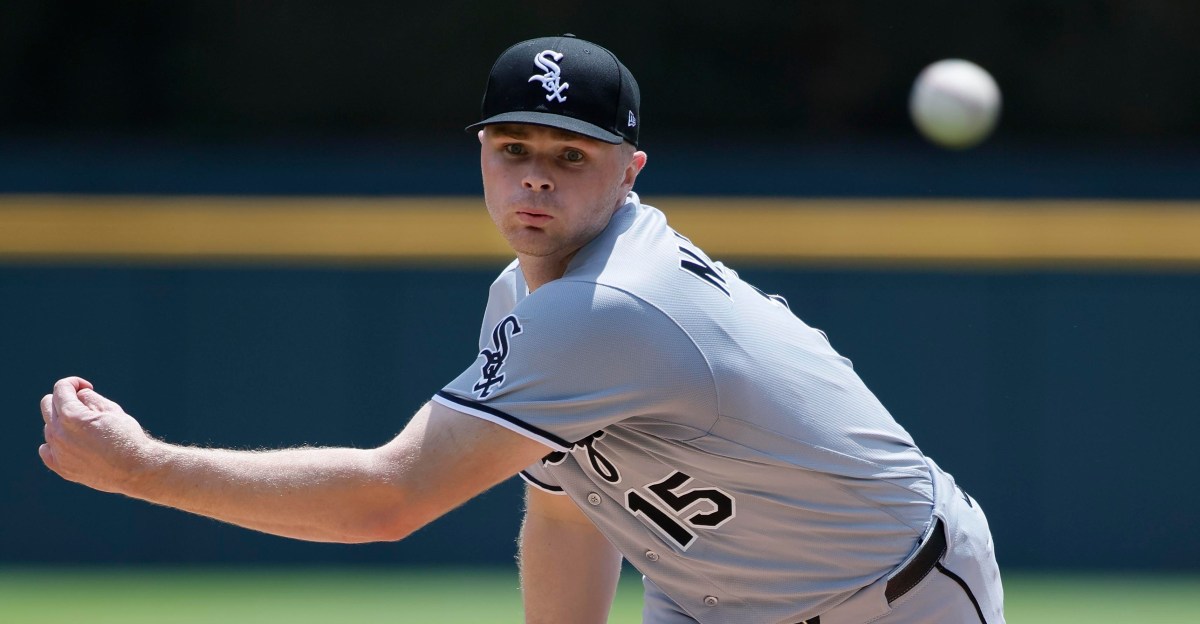
One of these scavengers picking over the stands at the bullpen strategy swap meet is White Sox manager Will Venable. You can’t blame the man. He has a three-headed fireman at his disposal: Sean Newcomb, Bryan Hudson and Grant Taylor. All three have taken on multi-inning workloads after entering in high-leverage situations.
Unfortunately, Venable hasn’t been able to deploy the full firepower of his firemen three thank to a pair of $10 million golden handcuffs. I refer to Seranthony Domínguez, the club’s anointed closer.
Chris Getz has guided the organization’s renewed player development operation, and I’m grateful to him for that, but he could have used that Luis Robert Jr. money better if he had strapped it to a cinder block and thrown it off the Dan Ryan overpass. In situations where a two- or three-inning save from Newcomb or Taylor would be the better plan, Venable has deferred to Getz’s golden handcuffs to nail down the ninth.
The basic numbers look pretty bleak already for Domínguez compared to the other three:

Leverage-based statistics are no kinder to Domínguez. Baseball-Reference has a useful stat for measuring the average amount of pressure on each reliever as they enter the game called average leverage index, or aLI, where 1.0 represents your ho-hum middle reliever. The closest to that baseline on the White Sox, for reference, is Jordan Hicks (1.104.)
Domínguez has the highest aLI in the current Pale Hose bullpen (as you’d expect from a closer), followed by Hudson. Taylor is third and Newcomb is the caboose. Compare that with their quantified win probability added (WPA). Domínguez is the only one of the four who has been a negative contributor, whereas Newcomb is the leader with 1.8. Divide their WPA by their aLI and you can argue that Will has been using them the four of them backwards:

The difference among the three firemen is negligible, in my opinion. All three of them have a WPA at or exceeding 1.0 in high usage. They’ve all won more games for the Sox than they’ve lost. How much longer will it be before Domínguez has to accept a demotion? Venable and Getz will have to both agree, when the time comes. The irony is that the latter gave the former a closer, when there were already three of them right under their noses, ready to lead Pope Leo’s White Sox through the Dog Days, when contenders separate themselves from pretenders.