
Welcome to Sliders, a weekly in-season MLB column that focuses on both the timely and timeless elements of the game.
PHILADELPHIA – Ken Griffey Jr. used to own the Home Run Derby. In a six-year stretch, he won it in Pittsburgh, Denver and Boston. He also hit the Camden Yards warehouse, in Baltimore, on the fly.
That all happened in the 1990s, when rosters looked very different than they do today. In that era, Griffey would have had no reason to say what Jordan Walker did after he won Monday’s derby at Citizens Bank Park in Philadelphia.
“I want more Black kids in baseball,” said Walker, the St. Louis Cardinals’ right fielder, adding that he considers himself a role model. “Hopefully this raises some awareness. I know a lot of them are playing the basketball, football route, but I want them to know the baseball route is open to them, too.”
In 1990, when Griffey played in his first All-Star Game, that would have gone without saying. There were five Black American players in the starting lineups at Wrigley Field that night, and seven others who came off the bench. Only four U.S.-born Black players appeared in Tuesday’s game in Philadelphia.
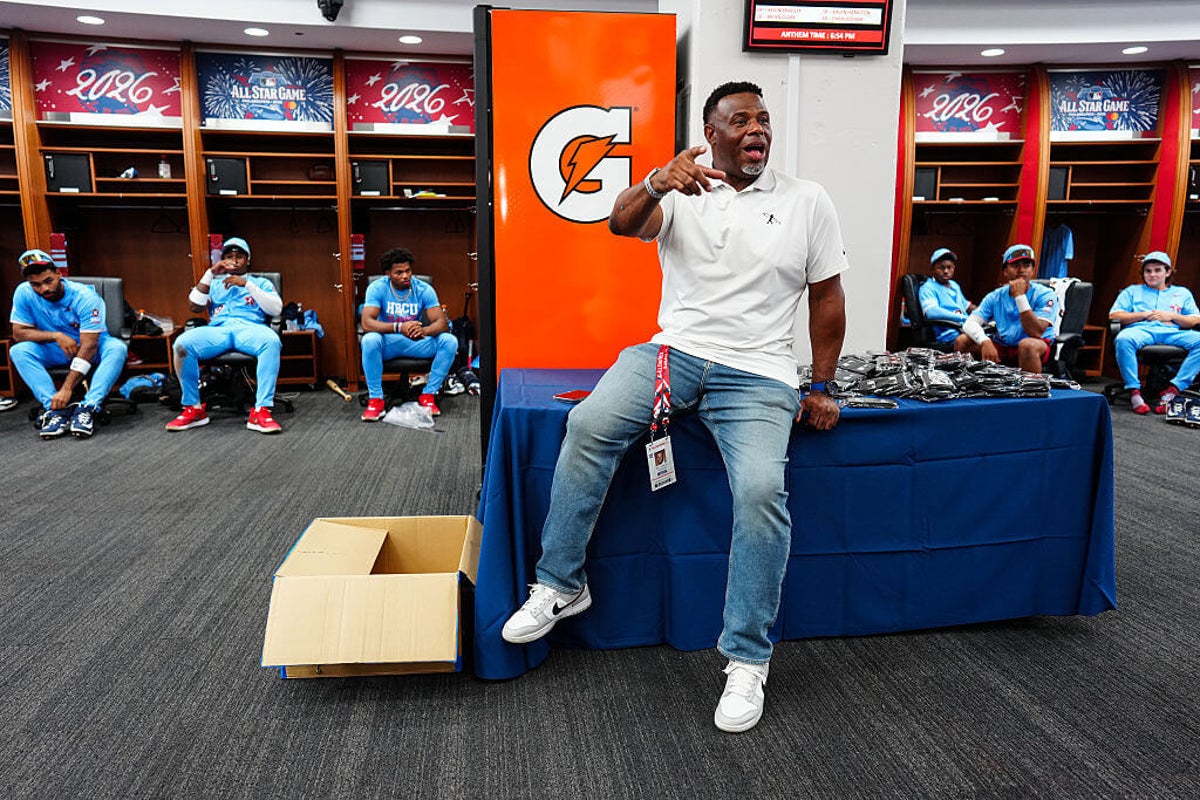
Griffey wants to do something about it. Last Friday, he hosted his fourth annual HBCU Swingman Classic, bringing together 50 of the best players from historically Black colleges and universities for a pre-All-Star showcase.
Griffey, 56, was drafted first overall from Cincinnati’s Moeller High School in 1987, reached the majors at age 19 and stayed until age 40. As the son of an MLB star, he recognizes that few prospects have the same chances that he did.
“I think it’s (important) to bring recognition to kids who don’t have that opportunity,” Griffey said. “I mean, I grew up in a locker room. I was able to go into the locker room and see a big-league facility. So when I got here, it wasn’t like I was in awe of everything. It was like, ‘All right, I’ve got a job to do.’”
From 1973, when Ken Sr. debuted, until 2016, when Ken Jr. was elected to the Hall of Game, the number of Black American players on MLB rosters fell from 17.4 percent to 6.7 percent, according to the Society of American Baseball Research. This year, according to MLB, it was 6.8 percent on Opening Day.
Harold Reynolds, a two-time All-Star, said the issue is a passion project for Griffey, a player he mentored with the Mariners.
“He is present,” Reynolds said. “This isn’t just, ‘Here’s my name, I hope this happens.’ He thought about it, he went to MLB about it, so he created this opportunity. He really is passionate about letting these kids be seen. He’s doing interviews — and you know he doesn’t (like to) do stuff like that — and he’s pouring himself into it.
“He sees these kids during the season. He’s invested. He spoke last night at the dinner, like, ‘Hey, in the house that I grew up in, my dad had everybody over, Willie Mays, you name it, he had all kinds of Black players.’ And he said, ‘I’d love to create an environment like that for you guys.’”
Two HBCU alums were selected in this year’s draft: pitcher Michael Lane, from Delaware State, and outfielder Michael Smith Jr., who played in the 2024 Swingman Classic while attending Prairie View A&M and was drafted from the University of Dayton. Lane went in the 16th round to the Detroit Tigers and Smith in the 13th round to the Los Angeles Dodgers.
Reynolds, who had nine Black teammates when he joined the Mariners in 1982, does not believe baseball rosters will ever include as many Black players as they did in his era. With the soaring cost of amateur baseball in the U.S. often steering young athletes to other sports, many teams have found it more efficient to focus elsewhere.
“They didn’t have all the Dominican academies like they do now, so the investment has kind of gone into that player,” Reynolds said. “I’d love to see it invested back. Plus, an American player costs so much now. We’ve cut (draft) rounds, but the expenses have gone up. So now when you’re competing to get drafted in this country, it’s hard. We have the RBI academies and things like that, but it’s not like the Dominican academies.”
The number of Black U.S.-born players on MLB rosters has actually grown in each of the last two years, up from 6 percent in 2024 and 6.2 percent last year. The league wants showcases like Griffey’s to be part of a groundswell of support that will eventually yield more talent.
“Look, this is one of those issues that you have to continue to invest, grind it out, do that kind of grassroots work to attract more people to the game, and then nurture them in a way that gets them into this elite pipeline,” MLB commissioner Rob Manfred said.
“One of the things we’re really focused on right now is to try to provide alternatives to sort of the pay-for-play, elite play, so that players who enter the system in that big funnel at the bottom — (and) who don’t have the economics to afford to be in that elite pay-for-play — have an opportunity to get discovered.”
For Griffey, the goal is not simply to feed more players to MLB rosters. It’s about promoting the notion that baseball should be for everyone, with plenty of opportunities beyond the field.
“So many times these kids get overlooked, but they’re great kids who can play baseball,” he said. “And whether they make it to the big leagues or not, they can still work in baseball. There’s some sort of job that they can do around the game that they love.”
The big winner in Philly: the Hamilton Huskies
Hamilton High School in Chandler, Ariz., is roughly 2,300 miles from Philadelphia. But no institution had a better showing at the All-Star festivities.
On Saturday, Hamilton alumnus Roch Cholowsky was the first overall pick of Saturday’s draft. On Tuesday, another alum, Cody Bellinger of the New York Yankees, was MVP of the All-Star Game.
“It’s great to see all their hard work pay off on a big stage,” Brett Palmer, the school’s athletic director, said by phone on Thursday. “We couldn’t be more proud of them or more excited to see their journeys unfold.”
The school was founded in 1998 and just won its tenth state championship under its only head coach, Mike Woods, who retired after the season. The All-Star achievements of Cholowsky and Bellinger made for a nice sendoff, said Palmer, who was athletic director when Cholowsky played for Hamilton (before enrolling at UCLA) and a teacher when Bellinger did.
“They’re high-character young men,” Palmer said. “They were high-character kids on campus; they did things the right way. Roch, during his celebration party, he went around and thanked every person for being there. It’s just little things like that that go a long way in making those kids who they are.
“Cody’s dad, Clay, has been on the staff and coached Roch when he was here. And Cody still comes out before the season starts and takes BP, hooks up the kids with some Nike stuff. Those kinds of things, giving back, make you proud.”
Three other Husky alums were drafted this year — Arizona State pitcher Kole Klecker (Minnesota Twins, 10th round), Northwestern shortstop Ryan Kucherak (San Diego Padres, 15th round) and San Diego State pitcher Rohan Lettow (Pittsburgh Pirates, 12th round) — and still more are active in the minors.
Five questions with…Texas Rangers All-Star closer Jacob Latz
Rangers lefty Jacob Latz began the season as a starter at Citizens Bank Park. He was filling in for another Jacob — deGrom, who had a stiff neck — and fired four scoreless, hitless innings against the Phillies. He returned for Tuesday’s All-Star Game, fanning Luis Arraez, an extreme contact hitter, on a 97-mph fastball to end the seventh inning.
Latz had been stretched out as a starter in spring training, but Kumar Rocker beat him out for a rotation spot. As effective as his four innings were in late March, Latz quickly switched to short relief. Soon he was the Rangers’ closer, converting 18 saves and blowing just one since moving into the role at the end of April.
Latz reached the break with a 1.61 ERA and a 0.672 WHIP, the lowest in the AL among pitchers with at least 40 innings. He was the only All-Star for a Rangers team that held a 1 ½-game lead in the AL West.

Jacob Latz pitches in the seventh inning of the 2026 MLB All-Star Game, where he struck out the one batter he faced. (Kyle Ross-Imagn Images)
What are you enjoying about being a closer? “I think it’s easier to do an all-out sprint. Starting, you build yourself up mentally to sustain seven innings, which I built up to in spring. So then moving to that closer role, it just feels easier to try to get three outs, or in some cases more than that. But I got a little taste of it in the minor leagues and honestly I was just addicted to the feeling of being in the highest stakes of the game. And then at the big-league level, it’s even more intense. So the adrenaline rush of increasing your focus seems to be a good balance for me.”
You have four pitches. Have we moved past the old theory that a reliever needs only two? There’s days where a certain pitch doesn’t feel as good as another one, so I might lean on the one that just feels more on command. So that helps me and luckily my fastball has been there this year and that’s something I’ve leaned on. But I think guys get themselves into a corner when they have two pitches and one doesn’t feel right. It allows me to be, or at least try to be, split neutral. But I’m still getting righties out more than lefties, so I think that helps neutralize some of the better left-handers in the game and then get the righties out. So I personally feel like four pitches going both directions helps a lot.
Now that you’re an All-Star, what’s your entrance like in Texas? So they just started at this last homestand. I walk out to “Shook Ones” by Mobb Deep, so ’90s rap, and they kind of made an entrance that plays off that theme. They did an album cover where it says like ‘parental advisory’ on it, and then it said ‘Lights Out,’ because they were calling me like ‘Lights Out Latz’ so they kind ran with that. It’s sweet. It’s cool. I love it. The first time out there it was nerve-wracking because you want to deliver in that moment, but it’s gotten easier since then.
You were born in 1996. How’d you get into ’90s rap? I don’t know. It’s just something I always gravitated towards. I watched “Straight Outta Compton” and a few movies growing up where they had ’90s music in it, and it just resonated with me.
What’s been going right for the Rangers lately? We had 15 games in a row — 12 of them on the road — and we won all those series. That carried into our homestand where we took two out of three from the Astros and the Angels. Early on we played a lot of tough teams and we still have had some bad luck with injuries, but I think we’re just finding ways to win whereas last year and the year before, we were kind of just stubborn in our approach. Now we’re kind of (using) different ways to try to get runs across and ultimately hold leads. So the chemistry is really good this year. Skip’s brought a different angle. I think we’re just peaking at a better time as opposed to last year when we just never found our gear.
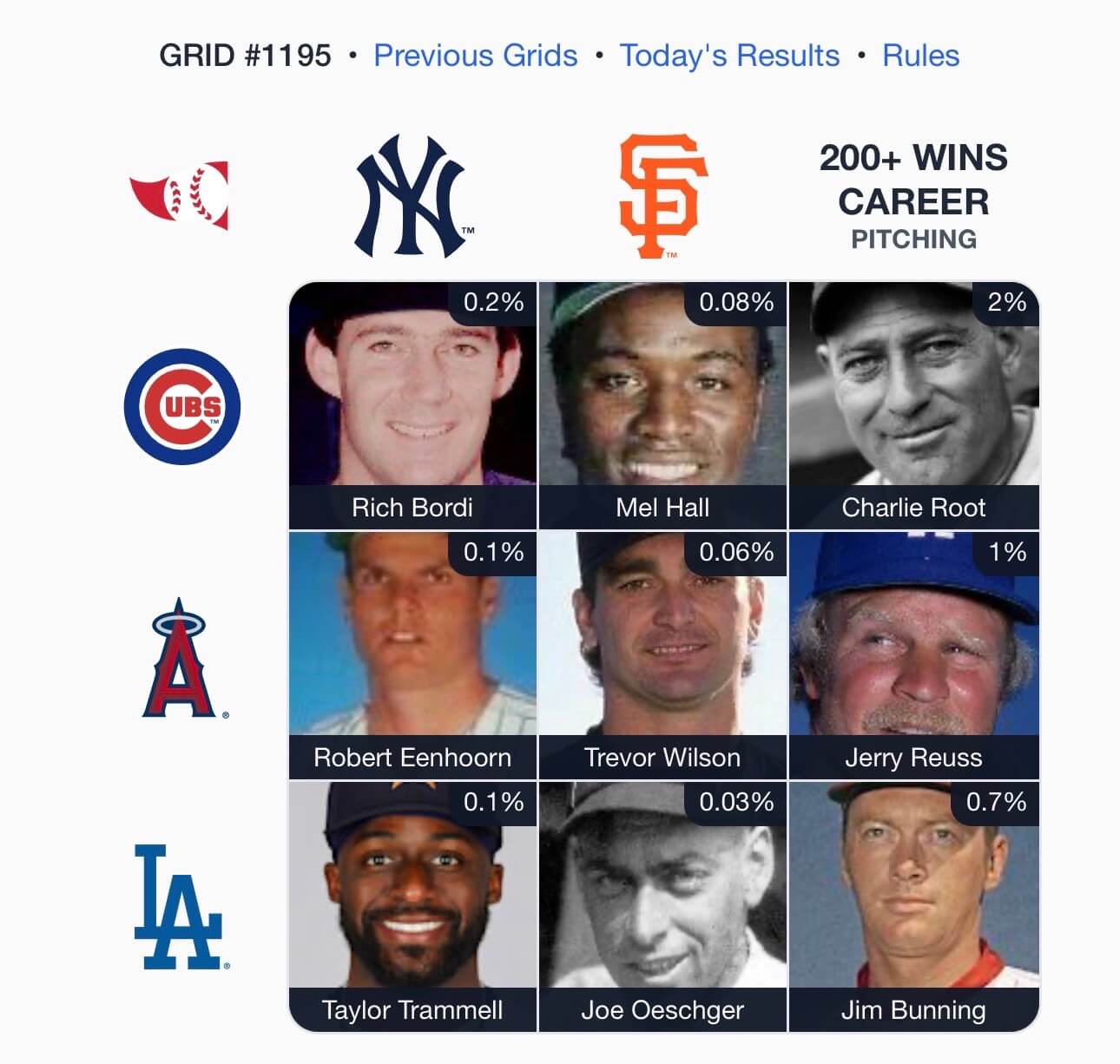
Off the GridJoe Oeschger, Dodgers and Giants
At Tuesday’s All-Star Game, Dan Baker introduced Kevin McGonigle’s name to the crowd at Citizens Bank Park. Baker, 79, is a Phillies institution, the team’s public-address announcer since 1972. McGonigle, a local kid from Delco, was the youngest All-Star at just 21.
It’s mind-bending to think that the same man has announced the names of major leaguers born in 1892, as Joe Oeschger was, and 2004, as McGonigle was. Oeschger, who played for the Phillies’ first pennant winner in 1915, threw out the first pitch of Game 3 of the 1983 World Series at Veterans Stadium. You can hear Baker introduce him here:
Oeschger died in 1986 at age 94. He played a dozen seasons in the majors for the Phillies, Braves, Giants and Dodgers, going 82-116 — a record that omits a remarkable no-decision.
On May 1, 1920, Oeschger worked all 26 innings at Braves Field in Boston. Incredibly, his opponent for Brooklyn, Leon Cadore, matched him. Cadore gave up 15 hits, Oeschger only nine. The game ended in a 1-1 tie.
“It was one of the greatest games ever played,” The Boston Globe wrote the next day, while noting that just 4,000 fans attended because of bad weather. “They saw the most wonderful pitching stunt ever performed, and some classy playing in thrilling situations, such as one sees only once in a lifetime.”
Indeed, the pitchers both set a record for innings in a single game. Nobody before had thrown more than 24 innings in a game, nobody since has thrown more than 22 — and it’s a safe bet that nobody in the future will ever come close.
Classic clipDodgers and Yankees, “Spy Vs. Spy” uniforms, 2019
Baseball has done a good job lately in reversing the unforced errors of its visual presentation. They corrected the fiasco of the 2024 jerseys (made of flimsy material, with tiny names on the back). They restored regular uniforms to the All-Star Game. And they finally had the good sense to do away with the silliness you see below.
The Los Angeles Dodgers visit the New York Yankees this weekend, and the sight of those uniforms on the same field always evokes history. Which is why their 2019 meeting at Dodger Stadium was so … unfortunate. Remember “Spy vs. Spy” in Mad magazine, with one spy dressed all in white and another dressed all in black? That’s what this looked like — with cringey nicknames (Fordy!) on the back, too.
This clip offers another reminder of a logical correction to an issue that never made sense. The late John Sterling, in his inimitable style, remarks on the tedium of watching Pedro Baez verrrryyy slowwwlyyy do his job. It makes you wonder why MLB put up for so long with all that standing around.
“If you’re wondering, you could knit a sweater between pitches,” Sterling says. “Baez takes a long time.”
The pitch clock solved that problem. And while the uniforms aren’t perfect — the tacky ad patches, the bizarre City Connect outfits, the Cleveland Guardians’ flying-G logo — we’ve sure come a long way in a short time.