
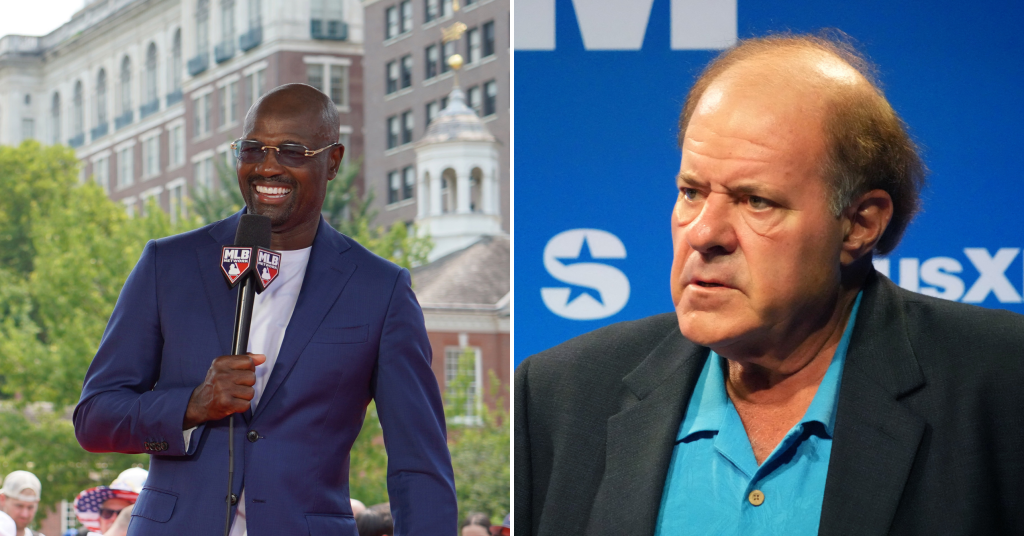
Harold Reynolds was not yet two episodes of Baseball Tonight into his TV career when Chris Berman told him the first one had been unwatchable. Thirty seconds before their second broadcast together went live, Berman gave him the one piece of advice Reynolds, one of MLB Network’s original hires, still points to more than 30 years later.
Karl Ravech gets separate credit, in Reynolds’ telling, for teaching him the mechanics of television early on, the “ins and outs,” and when to shut up and let a broadcast partner talk. But the thing that actually shaped how Reynolds carries himself on camera came from Berman, and only Berman.
Reynolds’ first broadcast had gone poorly, in his own telling, as he shared during a recent appearance on All The Smoke Baseball, because he’d followed every technical note he’d been handed about enunciation and delivery to the letter. He followed the notes and came out sounding like a robot reading cue cards.
“That show yesterday, you did terrible,” Berman told him. “Terrible.”
Berman then turned toward the camera, pointed straight at “the tube,” and handed Reynolds a completely different way of thinking about what would become his second career, all in a single sentence.
“It’s me, you, and the boys in the bar,” Berman said, according to Reynolds. “That’s it. Don’t worry about all that other crap they’re telling you.”
Then, without any transition, Berman spun straight into the broadcast, launching into a highlight call — “No, Mo, say it isn’t so” — while Reynolds sat next to him, certain his new colleague was about to trip over the next play. Berman never did. He got through the highlight just fine, moved on as if nothing happened, and that was the whole point. Reynolds said the lesson stuck, and it’s shaped how he’s approached television for close to three decades since.
“Be yourself was his message,” Reynolds said. “Do not do anything else. Be who you are, and it will take care of itself. And that’s, anybody ask me, what do you do on TV? How do you do all this stuff? Be yourself. It’s authentic. It’s real. People will love it. And if you try to be somebody else, it shows. That camera did not lie.”