
A rough couple of weeks sent the Rangers’ stock into free fall as the deadline approached. And ownership, the biggest investor, shut its wallet. That can bring a market to a standstill.
But after a 2-1 series win against a depleted San Francisco team to kick off a stretch of 19 straight games against clubs with losing records, the Rangers once again held a playoff position as the No. 3 wild card. That said, there were five teams within two games of the Rangers in a jumbled wild card race, including Baltimore (now one game back), which comes to Arlington for a weekend series. Here’s your report on how selected Rangers holdings are performing:
Cody Bradford: After 679 days away due to injury, surgery, rest and rehab, the lefty returned to the mound on Wednesday with 4 ⅓ shutout innings against San Francisco. Including his last three rehab outings, Bradford has 13 ⅓ consecutive scoreless innings. Since the start of 2024, when he moved primarily to starting, Bradford has a 2.87 ERA as a starter and a 5-to-1 strikeout-to-walk ratio. Hard to make too much of one start, but it was encouraging and, dare we say, necessary. The Rangers need some reinforcements for the rotation this year and options for 2027.
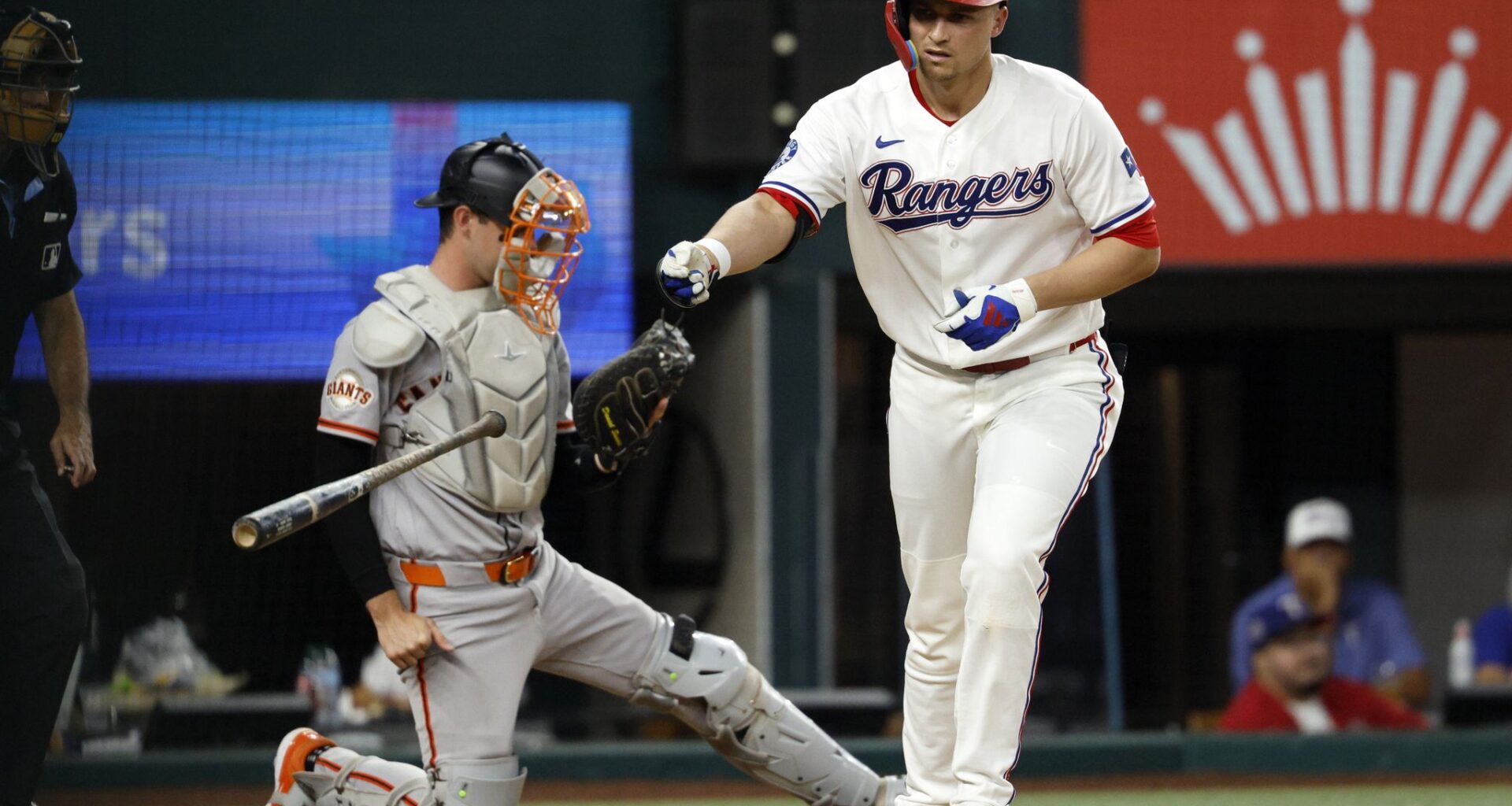
Corey Seager: Since his most recent return from the IL, Seager is hitting .412/.500/.471/.971 in nine games. Expand the sample to June, when he first returned from the IL, and the slash line reads .271/.386/.479/.865. Those are very nice numbers. Also, they are right in line with his slash line for the previous two seasons when there were no questions about his bat. In 2024-25, he slashed .275/.372/.501/.863. The point: Forget the first two months of the season. If Seager is back in line with his recent career numbers, he’s the most dangerous hitter among the deadline additions any team made. The next step: Power. In his most recent return, Seager has just one extra-base hit in nine games.
Brandon Nimmo: When the Rangers slumped as the deadline approached, Nimmo took accountability. But he doesn’t deserve much of the blame. Over his last 15 games, he’s slashed .364/.426/.618/1.044. That surge has pushed his batting average to .274 and his OPS to .787, their highest levels since just before Memorial Day.
Investing: It was hard for fans to believe that the club would cut $45 million from payroll after an 81-81 season and still find a way to compete. But there was an assumption that if the Rangers were competitive, there would at least be an ability to boost payroll at the trade deadline. With the Rangers wanting to hold onto their minor league talent after three years of skimming from it to push deadline deals, taking on a significant portion of the remaining salaries for rental players seemed to be the easiest, most efficient way of adding. That would have reduced the prospect capital necessary to swing a deal. Alas, ownership did not make any dollars available. And the club essentially stood pat. With that message, it’s hard for fans — or players — to see actions from ownership that indicate genuine belief in the team.
Nicky Lopez: During the Rangers’ six-game losing streak that included a horrendous road trip to Tampa Bay and Houston, nobody fared worse than Lopez, which was unfortunate considering he’s been the team’s spark plug since he arrived. But Lopez endured a stretch of 22 at-bats without a hit — though he did draw four walks in that span — before singling on Tuesday. Lopez isn’t expected to hit for much power, but he doesn’t have an extra-base hit over his last 21 games (65 at-bats). When Jung comes back, Ezequiel Duran will probably become the primary second baseman. Lopez could still get some starts against right-handers when the Rangers have to manage the workloads of Jung and Seager.