
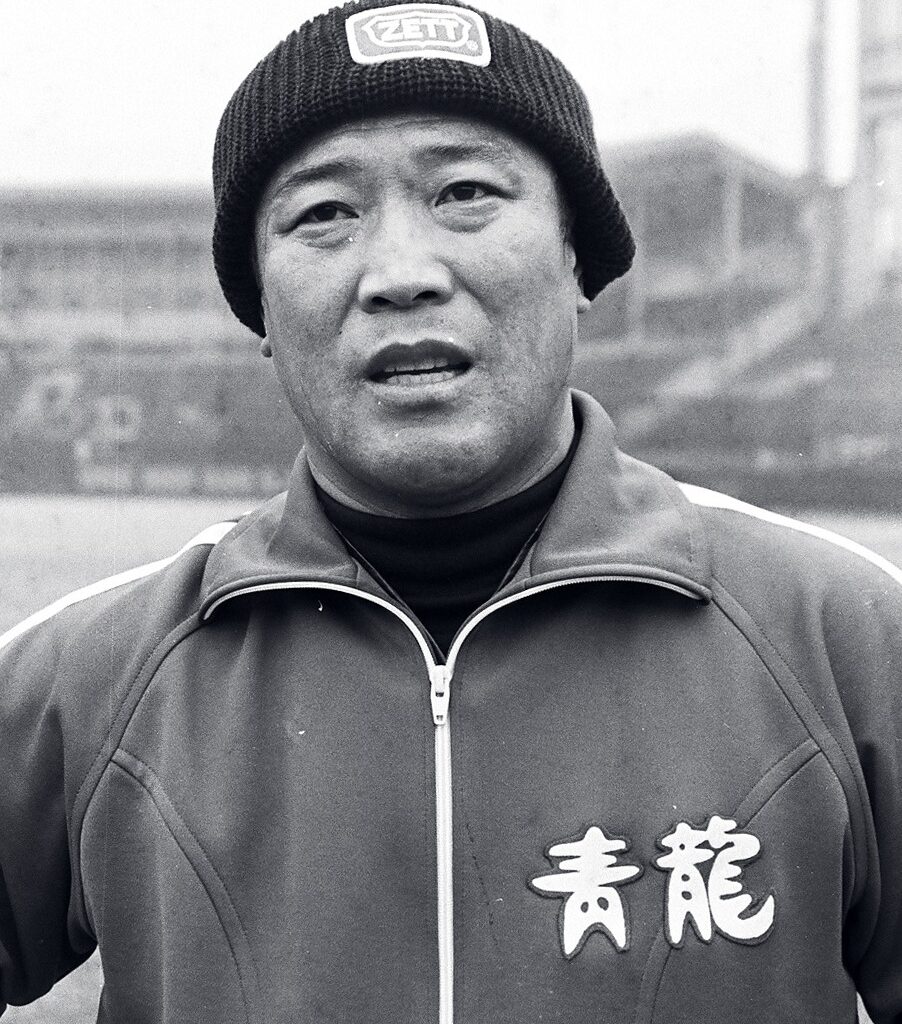

Baek In-chun, the record-setting hitter and championship-winning manager whose career spanned professional baseball in both Japan and South Korea, died on August 15, 2026, in Cheonan, South Korea, at the age of 83, after being found in cardiac arrest at his home the previous day.
Born in Wuxi, China, to an ethnic Korean family, Baek emigrated to Japan as a youth and attended Tokyo High School before joining Nippon Professional Baseball in 1962 as a 19-year-old catcher for the Toei Flyers. He was among the first Koreans to play professional baseball in Japan, following the path of Isao Harimoto, who had joined the same franchise a few years earlier. In his rookie season, the Flyers won the franchise’s only Japan Series championship. Baek spent 13 seasons with the club through its various names, eventually converting from catcher to a speedy, power-hitting outfielder.
After leaving the Fighters following the 1974 season, Baek continued playing in Japan for seven more years across stints with the Taiheiyo Club Lions, Lotte Orions, and Kintetsu Buffaloes, winning the 1975 Pacific League batting title with a .319 average and posting one of his best seasons in 1979 at age 35, hitting .340 with 18 home runs. Over his NPB career, Baek hit 209 home runs and stole 212 bases.
In 1982, Baek returned to his ethnic homeland to become player-manager of MBC Chungyong as South Korea launched the newly formed KBO League. At age 38, he led the league in hitting with a .412 batting average, a mark that remains the KBO’s all-time single-season record, while also topping the league in runs, hits, doubles, and slugging percentage that year. He played through 1984 before retiring as a player.
Baek returned to the KBO as a full-time manager in 1989, leading the Chungyong, soon renamed the LG Twins, to the franchise’s first KBO championship in 1990 with a Korean Series win over the Samsung Lions, a season that earned him KBO Manager of the Year honours. He went on to manage the Samsung Lions from 1995 to 1997 and the Lotte Giants from 2002 to 2003, along with coaching stints with the Hanwha Eagles and SK Wyverns.
Baek is remembered as one of the defining figures of early KBO history, a player whose Japanese professional experience helped shape the young league and whose .412 season remains an untouched benchmark in Korean baseball more than four decades later.