
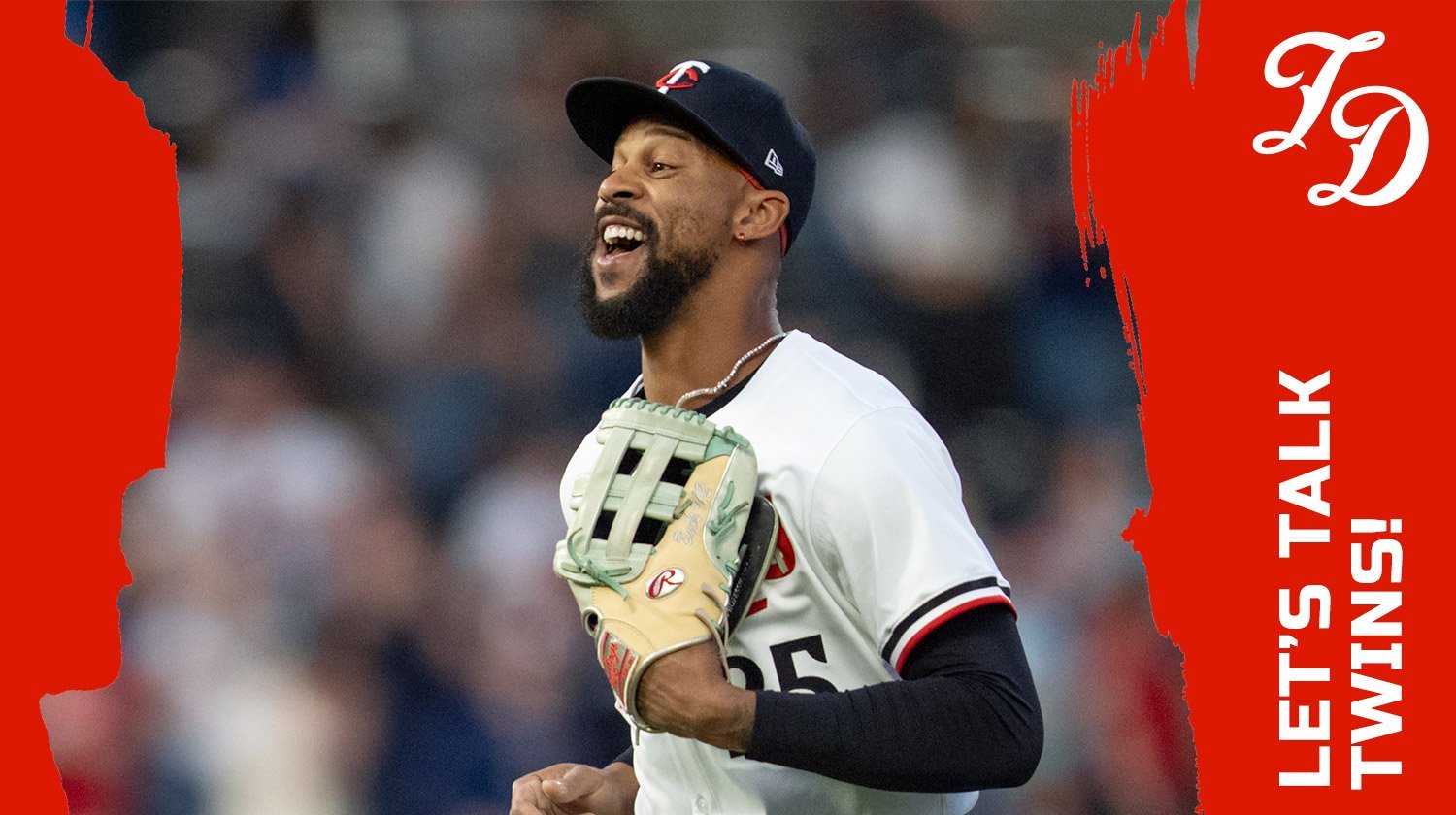
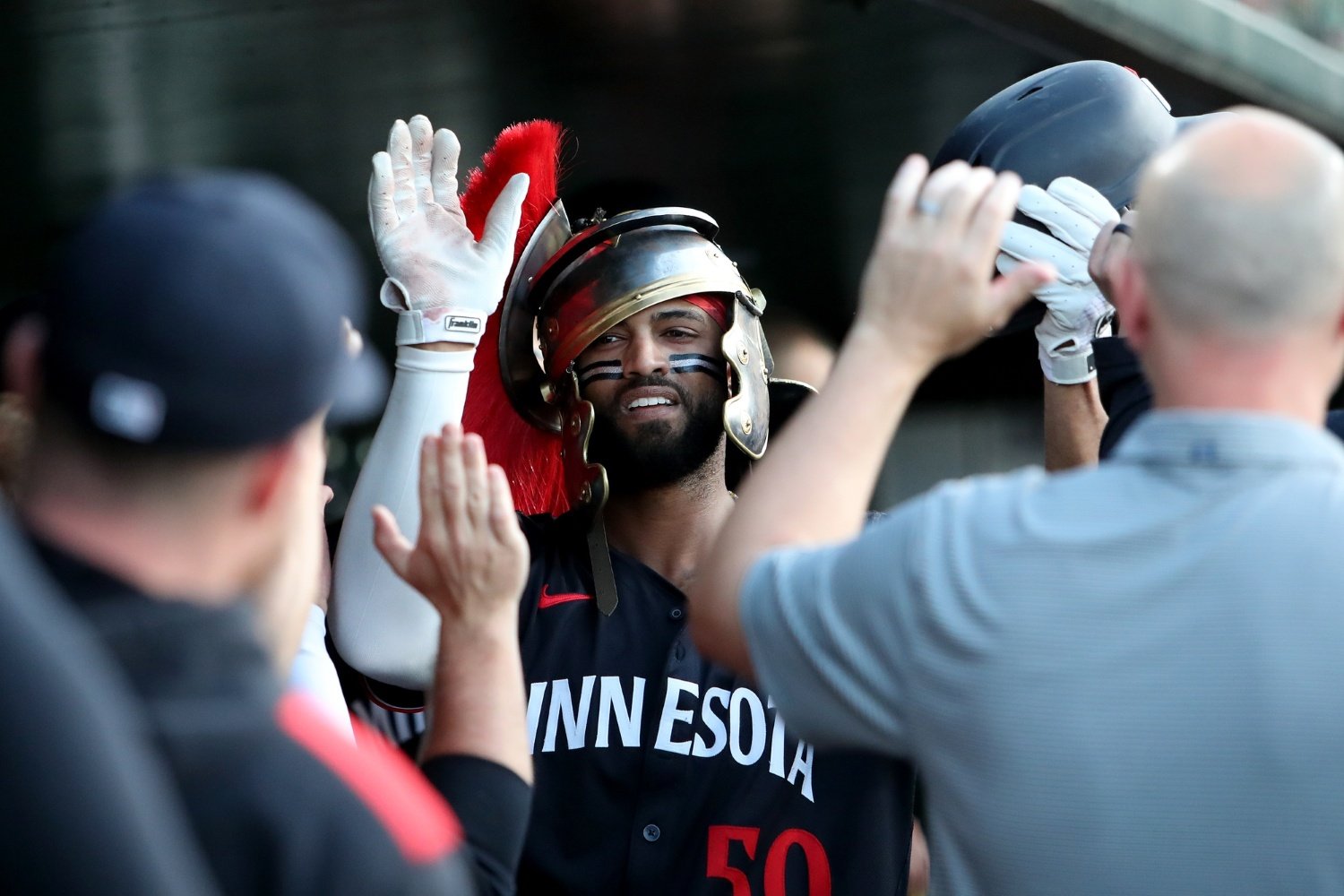
Image courtesy of © Dennis Lee-Imagn Images
I’ll be the first to say it: I was skeptical of Willi Castro. He slowed down in the second half of 2024 after his All-Star selection to the tune of a .627 OPS (about 25% below league average), then struggled early in 2025, battling injury and carrying a .600 OPS through the first quarter of the season.
Since May 14, though, he’s slashed .327/.435/.673, bringing his season total to a .803 OPS, about 30% better than average. His season is back on track, and although he won’t keep up this Kody Clemens pace, it’s easier to see him as a consistent cog in the 2025 Twins machine. A few weeks ago, this discussion would be far darker.
Since 2023, Castro has been a consistent piece of the lineup, playing in 124 games that year and 158 in 2024. He’s played everywhere except catcher and first base (though he did work out at first a bit this year, during spring training). He’s been valuable beyond his numbers, being the team’s primary backup at shortstop and center field last year and enabling any Rocco Baldelli in-game move with his flexibility.
However, unlike last season, Castro isn’t relied on to be the primary backup at those most critical defensive positions right now. He’s stretched in those spots, but the 2024 team needed him there because the other options were suboptimal. Manuel Margot—once a near-Gold Glove defender in center field—saw his defensive ability plummet in his late 20s, and by the time he reached Minnesota, he was no longer a viable option. Kyle Farmer slowed in his early 30s, relegating the utility infielder to more of a second base/third base role in his second year in Minnesota.
Thus, Castro saw 56 games at shortstop and 30 games in center field—ranking second and third, respectively, on the team in time at the spots. That’s in addition to his 40 games at second, 34 in left, 27 at third, and two pitching appearances. The flexibility is a blessing, but the team would probably prefer not to rely on Castro so much at those positions.
Enter Brooks Lee and Harrison Bader. Thus far in 2025, Castro has been called on at shortstop just five times, and taken up a place in center once. As certain defensive upgrades over Farmer and Margot, Lee plays solid defense at shortstop, and Bader is an excellent center fielder. These upgrades protect the team from locking Castro in at these positions at which he’s stretched.
Although he may find himself there through in-game moves, the presence of a designated backup infielder and outfielder allows the team to revert to playing Castro according to maximal positive impact, rather than being forced into each choice on the basis of desperate necessity. He can be a free space on the lineup card, sliding in wherever there is a need on a day-to-day basis, and they aren’t forced to keep him in a single spot all game because there are no other center fielders or shortstops on the active roster. Many of you just shuddered; Rocco Baldelli’s micromanaging is once again enabled.
There’s a second factor at play here—health. Castro saw extended time at short, center, and third because of injuries to Carlos Correa, Byron Buxton, and Royce Lewis in 2024, and—at least for right now—all spots on the field are covered by a primary player (thank you, Kody Clemens). For Castro, this means no long-term stays at any one spot.
Truthfully, even with one injury to the current starting fielders, Lee and Bader might be the names called to fill in for weeks at a time. This depth just adds to the flexibility Castro can bring. He might even become a pinch-running option again, if he’s not forced to start every single day—a practice that may have worn him down in the second half of 2024.
The Twins do not currently have a consistent designated hitter. In addition to Castro, Lee, and Bader, they also have backup catcher Christian Vázquez and (in case you forgot) Jonah Bride sitting most days. As such, there’s plenty of time for all three of the primary backups to play, giving regulars days off or half-days at DH. And that’s probably exactly how Baldelli and the Twins prefer to go. By increasing the alternatives to Castro, the team has (perhaps paradoxically) far more flexibility to do whatever the heck they want with him.
It’s a good thing he started hitting, though, because those other options might have squeezed him out of a spot. And if his bat slows back down, the team isn’t forced to continue playing him.