

With the 2023 Major League Baseball First-Year Player Draft — we’re just going to go with “the draft” for short — now in the books, here’s my look at each team’s draft class. I focus on the top-10 rounds, since those are the picks that count toward each team’s bonus pool; players taken after the 10th round may be paid up to $150,000 without counting against the bonus pool, so the best prospects taken in rounds 11 through 20 rarely end up signing.
The number in parentheses after each player’s name indicates the round in which he was taken; the letter A indicates that it was a supplemental pick between rounds, either for losing a free agent or from the competitive balance lottery. I do assume that all players taken in the top-10 rounds will sign, although each year there are roughly two to five players who don’t for various reasons. I also skipped over college seniors who were probably selected as money-saver picks, agreeing to bonuses under their slot figures so their teams can go over slot for other players.
Finally, I don’t grade drafts. I think that whole idea is absurd. The best I can offer is to tell you that I think teams did well or not well based on what I know about the players available at those picks.
The Orioles went for one of the best defensive players in the draft, possibly the best right now, in Vanderbilt center fielder Enrique Bradfield Jr. (1), an 80 runner and at least a 70 defender who has bat speed but probably needs a complete overhaul at the plate. He’s tall and slender, so he doesn’t make much hard contact, although an exaggerated stance where he starts very wide and doesn’t sync up his hips and his hands at all may be contributing to the lower exit velocities and lack of power. He’s very athletic and has quick wrists, with 14 homers the last two years for the Commodores, so it’s reasonable to think the Orioles — who have done so well developing hitters recently — can get him to 40-45 power and make that hit tool really play. The floor is high, but there’s ceiling here.
GO DEEPER
Law: Scouting the top prospects I saw at the Arizona Fall League
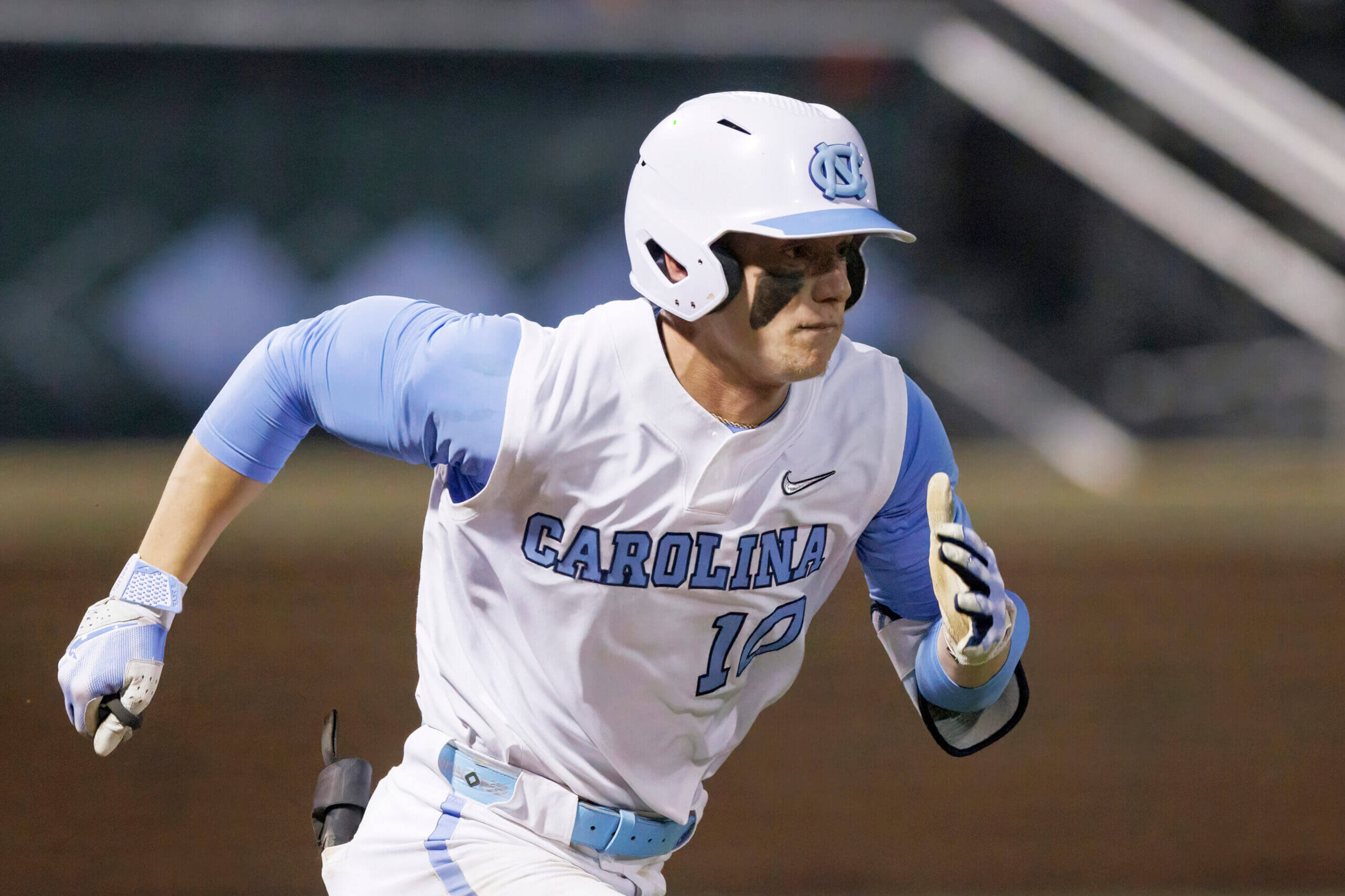
Mac Horvath (Ben McKeown / AP Photo)
UNC outfielder Mac Horvath (2) has a great swing that puts the ball in the air a ton, with plus power and generally hard contact, but a high strikeout rate kept him from first-round consideration. He has no two-strike approach, which is easily rectified, and a lot of his strikeouts came from taking strikes rather than whiffing. He’s probably a 55 defender in right. Right-hander Jackson Baumeister (2A) had a very disappointing year at Florida State and probably would have done better signing out of high school. He’s 92-95 mph with riding life up, and has an average curveball and probably a 45 changeup, struggling with command and control all spring. There’s starter upside here, though, and maybe just getting out of Tallahassee into a pro system will help. Right-hander Kiefer Lord (3) is one of the best stories in the draft, going from 78-80 in 2020 to the mid-90s this year by going online during the pandemic and looking for ways to increase his velocity. He topped out at 99 this year with high spin rates on the fastball and two breaking balls, but ran out of gas at the end of the season, torching his overall stat line. I think he offers first-round upside, especially since he’s had very little help from coaching staffs as he’s developed this arsenal of pitches.
Tavian Josenberger (3) transferred from Kansas to Arkansas this year but failed to hit .300 for the second year in a row, although he did go from 2 homers for the Jayhawks to 10 for the Razorbacks. His swing works and he puts the ball in the air enough to at least have extra-base power, although he also needs help with his two-strike approach as he expands the zone too often. He’s probably an extra outfielder in the end thanks to his plus speed, although I could see some upside here. Right-hander Levi Wells (4) comes right over the top with an 89-94 mph fastball and has two breaking balls that are mostly vertical, so he can pitch north-south but struggles to work east-west. As is, he’s probably a bulk guy, neither a starter nor a pure reliever.
UNC-Charlotte outfielder Jake Cunningham (5) had a tough spring while coming off an ankle injury, but shows easy power and has a very athletic build and projectable frame. He struggled even just tracking fastballs this year, but I think he’s a better hitter than what he showed in 2023 and offers upside in the hit and power departments. Samford right-hander Jacob Cravey (6) is 6-6 with three pitches around average or fringe-average, getting on top of the fastball well, and might end up a back-end starter if he throws more strikes. Coastal Carolina reliever Teddy Sharkey (7) is up to 97 with a slider that drops right off the table and is up to 90 mph; opposing hitters are going to need a bigger boat. Southern Miss outfielder Matthew Etzel (10) is off-the-charts when it comes to athleticism, with incredible force-plates measurements and at least 70 speed. He’s 6-3, 220 pounds, but hits small, with a slappier swing that produces a lot of contact but not much power. He can definitely handle center, though, and the Orioles have to think they can unlock some harder contact here.
The Red Sox landed my sixth-ranked prospect at pick 14 with catcher Kyle Teel (1), far and away the best college catcher in the draft class. Teel’s a very athletic hitter who could probably play a number of different positions, but he’s a solid-average or better defender at catcher now and should have no trouble staying there. He’s got great bat speed and makes excellent contact against right-handers, with softer contact quality versus lefties, where he doesn’t whiff much but also hits them for no power. I think he’s an above-average regular and could be one for a very long time because he’s such a good athlete.
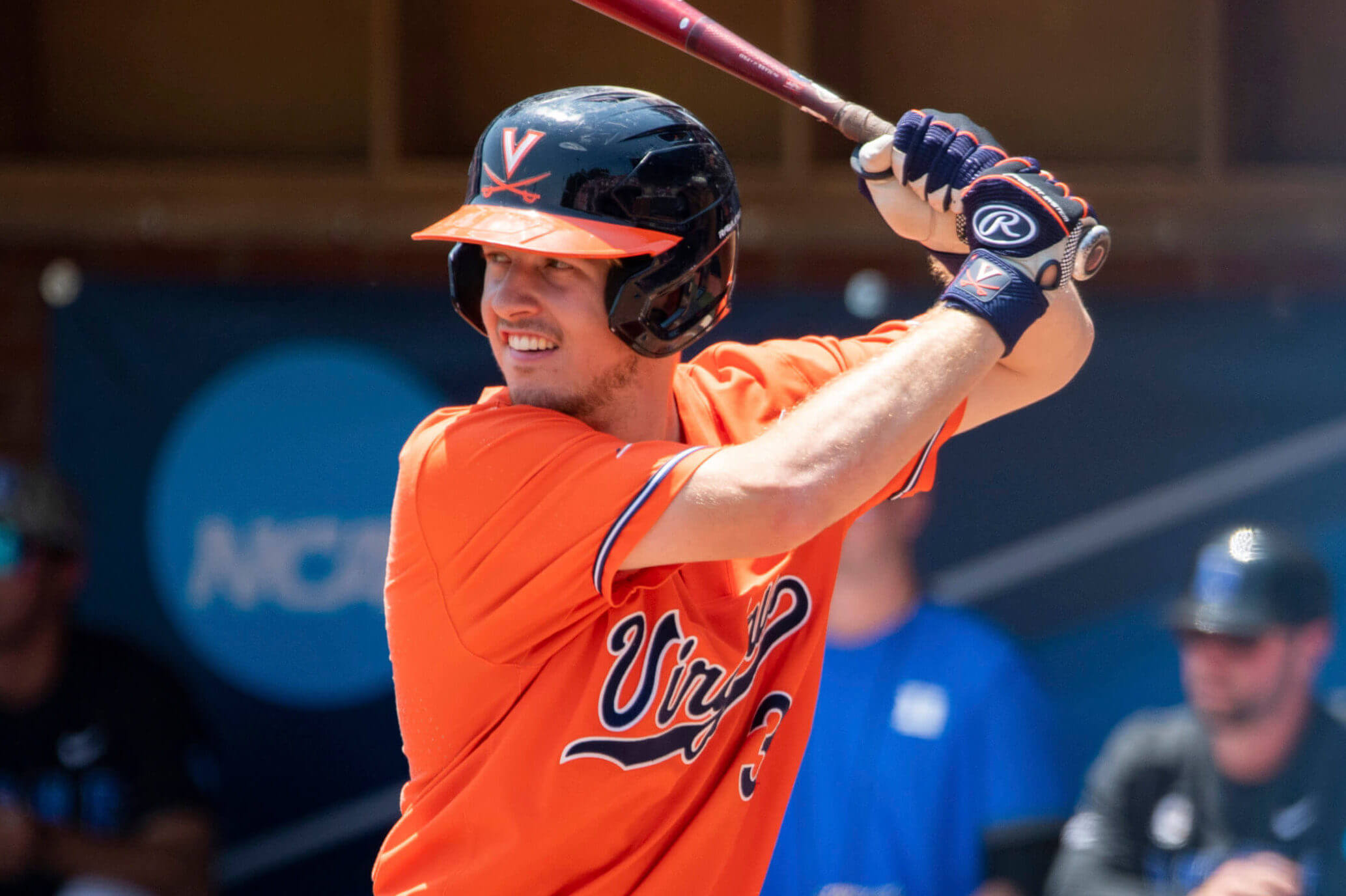
Kyle Teel (Mike Caudill / AP Photo)
Shortstop Nazzan Zanetello (2) is a superb athlete, a very fast-twitch, projectable kid who has explosive actions on both sides of the ball. He has excellent bat speed, although he had some trouble with fastballs in the zone last summer, more a matter of timing than an inability to catch up to them. He stays at shortstop and I think there’s huge upside with the bat. He was also the best-dressed of the kids who attended the draft in person, in my expert opinion. Shortstop Antonio Anderson (3) is a switch-hitter with a loose left-handed swing where he loads way too deeply, and he’s a 45 runner who probably moves to second or third. He’s not very advanced as a hitter, and had real trouble with offspeed stuff last summer. I thought he might end up at Georgia Tech because he didn’t seem to be a top-three rounds talent.
Matt Duffy (4), who as far as I know isn’t related to that Matt Duffy or the other Matt Duffy, is a Canadian right-hander from Canisius College in upstate New York. He’s a feel-to-pitch guy, with an 88-92 mph fastball that has some ride, a hard downer curveball in the mid-70s, and a fringe-average changeup. He pronates his arm really late, which I don’t love. He does command the fastball and I could see him being very interesting if the Red Sox can boost his velocity. Shortstop Kristian Campbell (4A) is a redshirt freshman from Georgia Tech who played just one year but was draft-eligible because he’s 21. He was very tough to strike out, whiffing just under 8 percent of the time this year, but hits the ball on the ground way too often and has a short swing that isn’t conducive to harder contact. He’s 6-3, 210 pounds, so he shouldn’t be this kind of hitter, and he’s obviously inexperienced for his age, making him an interesting upside play from the college ranks. He’s not a shortstop, lacking the arm, and his transfer on throws is so slow he might need to take his plus speed to center.
Wright State infielder Justin Riemer (4A) missed almost the whole year after injuring his knee, but when healthy he’s an extremely good contact hitter who doesn’t miss fastballs at all, even better ones the rare times he’s seen them, and showed a little pop this spring before the injury. Lefty Connelly Early (5) is like Duffy, a fringy fastball guy who has life on the pitch and great feel, also showing two good secondaries in a 55 slider and average changeup. He’s a finesse guy but misses bats with what he has because he’s tough to pick up, and this year he cut his walk rate by nearly half. I like him in this spot.
The White Sox took Jacob Gonzalez (1) with the 15th pick, choosing the Mississippi shortstop after he’d come into the season with top-5 buzz. He’s a solid player who doesn’t seem to offer a ton of upside, with some feel to hit, some power, some defensive value, but nothing clearly plus. I could see him getting to Double A quickly, and I do think he stays at shortstop long term. Grant Taylor (2) missed the year after he had Tommy John surgery in February. Before that, the LSU right-hander was awful as a freshman reliever for the Tigers in 2022, then incredible as a starter in the Cape Cod League, where he was 92-94 mph and had a hammer curveball, throwing both pitches for strikes. He needs a third pitch and of course has to come back healthy.
Jacob Gonzalez (Dylan Widger / USA Today)
Wake Forest righty Seth Keener (3) moved to the Deacons’ rotation as the spring went on, showing three average pitches with the changeup as his best weapon, and throwing a ton of strikes despite a rough delivery that has some effort to it. I know scouts who see him as a potential starter long-term, but I’d bet on a bulk role or a short relief role. Catcher Calvin Harris (4) doesn’t throw well for the position but has power from the left side and can receive well enough to stay back there. He’s more likely a backup than a regular, but in the fourth round, even getting a guy to the major leagues is what you came for. Lefty Christian Oppor (5) was a draft-and-follow last year for Oakland, but declined to sign with them after his velocity jumped to 95-98 mp this spring, with huge life on the pitch. He has a slider and changeup but both are a work in progress. I love this kind of shot at upside in a round this late. Texas lefty Lucas Gordon (6) was 90-92 early but slid to 88-90 later in the year, with a solid-average to 55 changeup and a fringy upper-70s curveball. It’s funny that the White Sox took him, because when I saw him in February I wrote in my notebook: “6-1, looks smaller, Jim Parque build.”
The White Sox went for upside again with George Wolkow (7), a local kid and possibly the youngest player in the class after he reclassified from 2024; he won’t turn 18 until January. He’s 6-7, 240 pounds, and has the power to match, taking huge hacks and missing pitches in the zone more than a high school hitter should. The easy comp is Joey Gallo, since they’re both left-handed hitters, although Gallo is a better athlete and Wolko is two inches taller. Stanford left fielder Eddie Park (8) has very strong bat-to-ball skills with just a 7.8 percent strikeout rate this year, even with an inefficient swing that gets his hands very deep and then pulls through the zone without much help from his lower half. He’s a plus runner but his arm limits him to left. Right-hander Jake Peppers (9) has a very long arm action that’s tough to repeat, but his slider breaks very hard straight down and does so late enough that it gets a lot of whiffs. He’s pitched in both roles but this looks like a reliever’s delivery.
The two names most connected to the Guardians this spring, Arjun Nimmala and Colt Emerson, went in the three picks before Cleveland came up; whether those were really their targets or not, they took high school catcher Ralphy Velazquez (1) with their actual pick, a bat-first receiver who’ll need some work to stay behind the plate. He’s a hitter first and can flash power and hard contact, although his wide setup often sees him drift out front so he doesn’t drive the ball the way he should. He did work a ton on his body last offseason to give himself a chance to go out as a catcher, a great sign for his work ethic. Lefty Alex Clemmey (2) has one of the best pure arms among southpaws in the high school or college ranks, touching 100 and sitting 94-98 with enough of a curveball and changeup to project him to have three average or better pitches. The delivery is rough and he can’t repeat it yet, so the command and control are firmly below-average, although Cleveland has had a lot of success with pitching development and I bet he looks different next March.
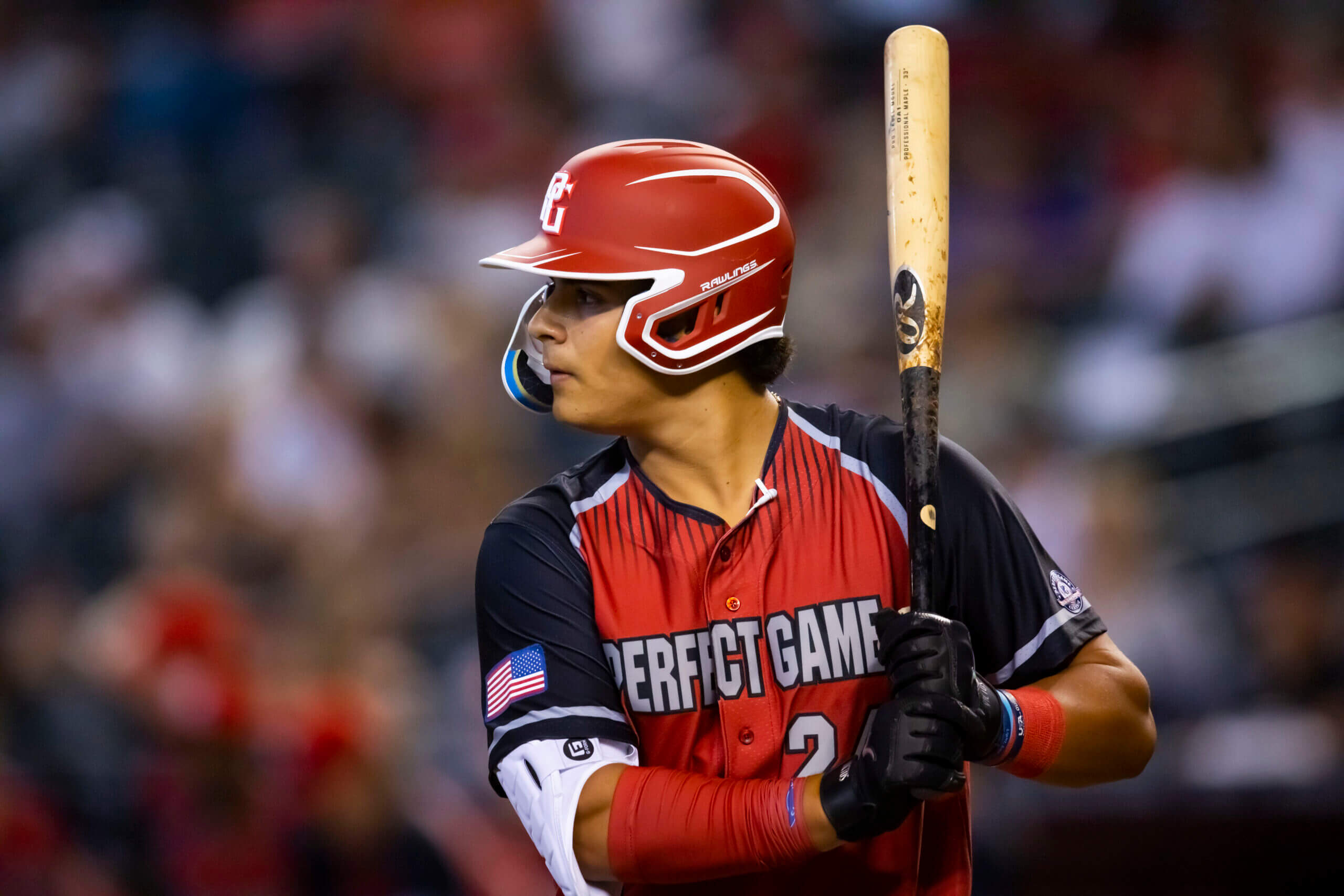
Ralphy Velazquez (Mark J. Rebilas / USA Today)
Right-hander Andrew Walters (2A) is a pure reliever from the University of Miami, where he punched out 42 percent of hitters this year while walking just 4 percent. He does it mostly with his fastball, throwing it almost 80 percent of the time, working 94-98 mph with good ride and some deception from a lower arm slot; his slider is nothing special and only serves to help decoy hitters. He’s a senior, so this is probably an under-slot pick. Miami first baseman C.J. Kayfus (3) is extremely patient, even taking a lot of strikes early in counts, and this year started making much harder contact, enough so that you can see an everyday ceiling here even though he offers very little projection. The patience doesn’t seem to be passivity, as he doesn’t whiff a ton and with two strikes he makes a clear adjustment. There’s plus power in here but I worry that just average bat speed may mean he struggles when he gets to the high minors and sees better velocity from guys who can locate it. Cleveland’s love of contact hitters without power was very apparent after the third round.
Cooper Ingle (4) struck out just barely under 10 percent of the time this year. He has a quick, slashing swing that’s close to flat and produces a lot of groundballs and a lot of contact the other way. Cleveland announced him as a catcher, where he’s played part-time for Clemson and would be a project as a receiver and thrower. Shortstop Christian Knapczyk (5) is listed at 5-9, 165 pounds, and rolls his top hand over in a way that makes it impossible for him to hit the ball hard anywhere except on the ground. He connected with over 90 percent of the fastballs he swung at this spring, though. In three years at Louisville, he hit three homers, and his ISO this year was .077. He’s also going to have to move off shortstop, and if he can’t play second base there’s no place else for someone his size. Wake Forest’s Tommy Hawke (6) is just 5-8 and almost never misses a fastball either, but struck out 51 times this year (15.6 percent). He does make harder contact than either of the previous two guys, though, and swings like he means it rather than just trying to get bat to ball. With that name, he should obviously be nicknamed … Youngblood.
Shortstop Alex Mooney (7) is great value in the seventh round; he’s another very high-contact hitter who shows great instincts on both sides of the ball, projecting to stay at short even though he’s a fringe-average runner, but he’s not that strong and doesn’t let his lower half help him generate better contact quality. He may have slid as a draft-eligible sophomore out of Duke who could be/has been a tougher sign. Outfielder Jonah Advincula (8) is yet another high-contact, low-power guy, but at least he’s a 70 runner who should be able to play in center field. He transferred to Washington State for his senior year after three years at the University of the Redlands. I would love to see if getting rid of his showy leg kick nets any improvement with the bat. Right-hander Jay Driver (9) is a sidearmer whose slider is very effective against right-handed batters but who has nothing to get lefties out. I only mention him because he went to the Best University in the World.
Detroit Tigers
The Tigers went for the high schooler at the third overall pick, taking Indiana outfielder Max Clark (1). Clark is the closest thing to a five-tool player we had in this draft, and if he hits in pro ball as expected he’ll be a star. He’s a plus-plus runner, makes hard and often loud contact, and can really play center field. He may also currently lead the Tigers organization in Instagram followers. They went back to the prep position player pool with Kevin McGonigle (1A), a shortstop from outside of Philadelphia who has one of the top hit tools in this year’s high school class. His left-handed swing is clean and simple, while he’s demonstrated an advanced command of the strike zone for his age so far. He’s going to have to move to second base, and there’s a split camp on whether there’s much more power to come from his 5-10 frame, but he should continue to hit even as the pitching improves.
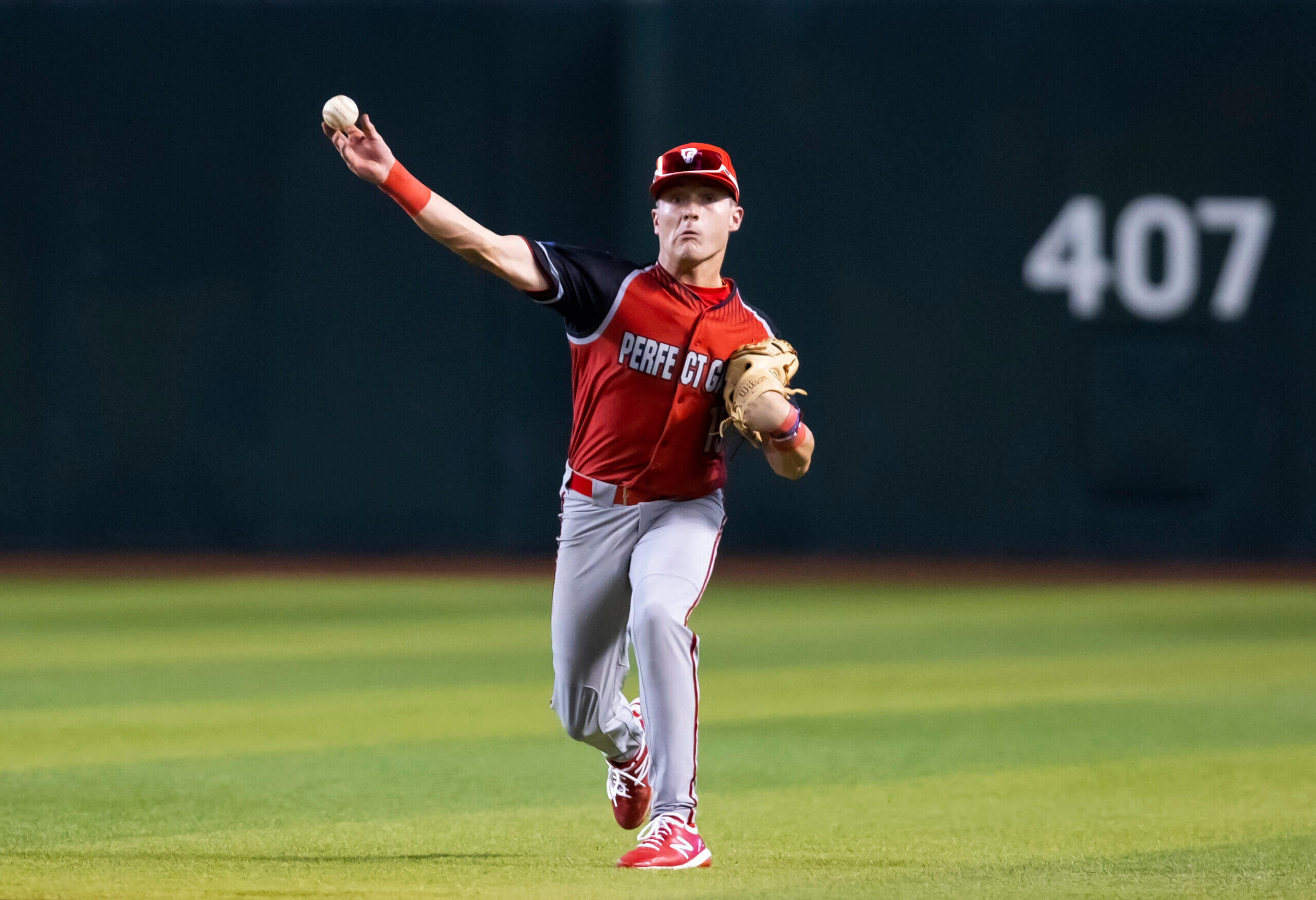
Kevin McGonigle (Mark J. Rebilas / USA Today)
Nebraska infielder Max Anderson (2) looks like he can just flat-out hit, showing more power this year, hitting good velocity, working the count, and ranking among the leaders in the Big 10 in most offensive categories. He’s going to start out at second base and will have to work some to stay there, with the only other spot for him in left field. I buy the bat, though. Lefty Paul Wilson (3) is the son of Trevor Wilson, who pitched for the Giants too recently in my mind for him to have a draft-eligible son. He’s got a plus fastball with good riding life to it, throwing two distinct breaking balls without great feel for either pitch yet. He’s had some consistency issues in the delivery, but did improve his control this past spring and should get over-slot money to buy him away from Oregon State. He’s a good projection high school arm, the kind of pitcher teams who want high school pitching should target after the first round.
Tennessee commit Carson Rucker (4) has a great right-handed swing that produces some power already and has the loft to lead to plus or better power down the road, especially given his frame. The Tigers announced him as a third baseman, moving him immediately off shortstop. Right-hander Jaden Hamm (5) comes straight over the top like an Iron Mike pitching machine, working 90-95 mph with a very vertical-breaking curveball and a surprisingly solid changeup given his arm slot. The Middle Tennessee State starter had a 5.31 ERA this year, in part because he walked too many guys (10.4 percent) but also because he doesn’t work that well to the outer or inner edges of the zone. Wake Forest catcher Bennett Lee (6), a transfer this spring from Tulane, makes a fair amount of contact but without any power; he’s a good enough receiver to maybe end up a backup. Pepperdine shortstop John Peck (7) doesn’t turn 21 until next week, but had a miserable spring, hitting just .272/.353/.441 after an atrocious summer on the Cape in 2022. He’s got a big leak after his stride, which may be why he doesn’t hit any kind of offspeed stuff, although he’s never shown great pitch or ball-strike recognition.
This was an uninspiring draft for a team that just hired a highly respected evaluator, Dana Brown, as its GM; they landed just one player from my top 100 and overdrafted him by a round. That player is Nebraska infielder Brice Matthews (1), 57th on my board but taken at pick 28, a shortstop with plus speed who might be able to move to center if short doesn’t work out. Matthews has power from a dead-pull approach that’s left him very vulnerable to fastballs up, and if he works to close that off I don’t think he’ll have the same kind of power production given his build and swing.
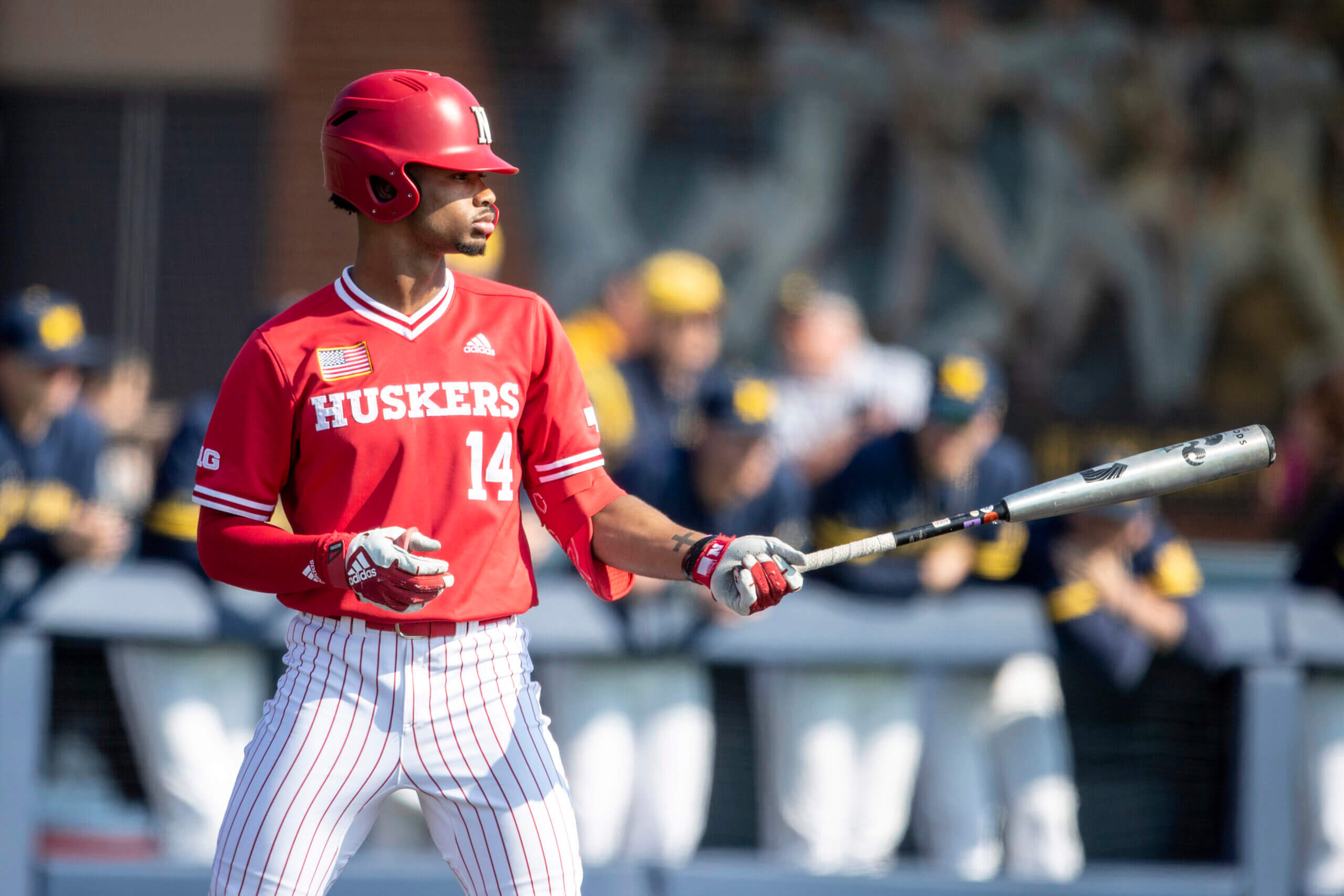
Brice Matthews (Andrew Woolley / Four Seam Images via AP)
UCLA right-hander Alonzo Tredwell (2) didn’t pitch after an injury to his “back and ribs” ended his season in late April; before that, he’d shown three average to grade-55 pitches, led by his slider, and threw everything for strikes, but had nothing for lefties and showed a wide platoon split. Georgetown right-hander Jake Bloss (3) was a fourth-year graduate student, having finished his bachelor’s in three years at Lafayette. His velocity jumped this year by about 2.5 mph, and he shows four pitches, with the breaking balls pretty similar beyond their velocity. I would definitely send him out as a starter.
Outfielder Cam Fisher (4) hit 30 homers for UNC-Charlotte this year, but punched out 63 times (21 percent) against middling competition, and struggled against breaking stuff and better velocity. Colorado prep infielder Chase Jaworsky (5) is very athletic and has good hands at the plate, while he’s a plus runner who should be able to stay up the middle. His lower half isn’t always synced up with his swing, but when it all works together it looks like a professional swing. The main worry here is just that Colorado hitters don’t see a lot of quality breaking stuff. I like the athleticism and bat speed.
Right-hander Ethan Pecko (6) is a sinker/slider guy who generates a ton of groundballs with the former and gets enough swings and misses on the latter to see him as a big-league reliever. The delivery’s fine for a starter, which was his role at Towson, although he needs a changeup that finishes more down in the zone and generally has to throw more strikes. Stanford righty Joey Dixon (7) has a good changeup and a loopy little curveball that both got some whiffs this spring, helping his low-90s fastball play up, although he’s probably a reliever in the end.
The Royals were supposedly after a catcher, and they got one in Blake Mitchell (1), passing on a college backstop (Kyle Teel) to take a high school guy with more power but of course more risk. Mitchell has plus power and a plus arm, with the potential to end up a solid or better defender behind the plate, while his hit tool lags behind the rest of the package and he had some trouble hitting better quality stuff last summer. There’s above-average regular upside here, but high school catchers as a category are about as high-risk as high school pitchers in the first round. Right-hander Blake Wolters (2) has been up to 97 with an above-average slider, coming from a high slot that gives some extra ride to the heater. He’s already a big, physical kid, and looks built for mid-rotation work. He needs to develop a third pitch and I’d like to see him use his lower half more to maintain or even improve his velocity.
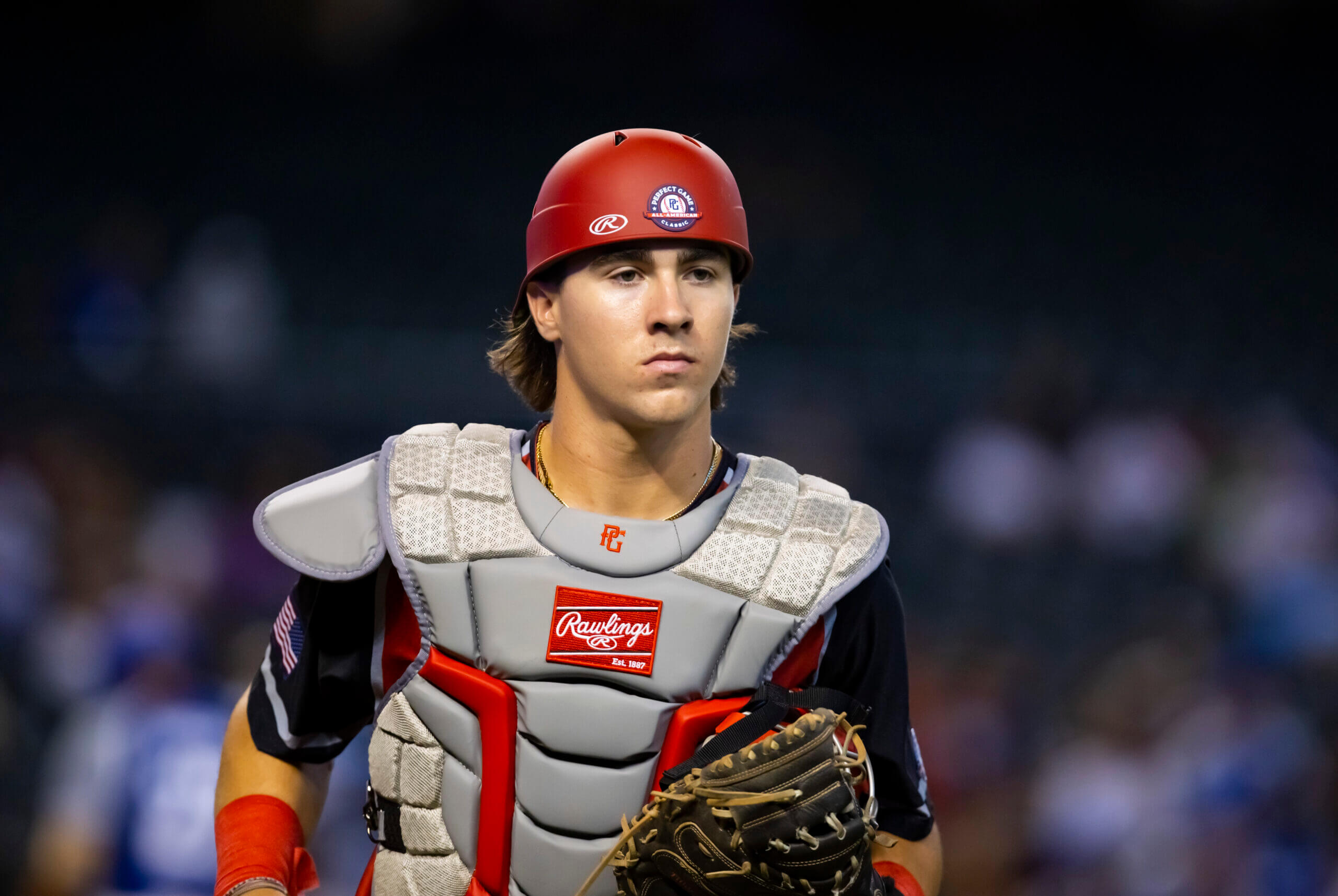
Blake Mitchell (Mark J. Rebilas / USA Today)
Carson Roccaforte (2A) was a bizarre pick — he struck out 54 times (19 percent) in the mid-major Sun Belt, expanding the zone significantly with two strikes. I don’t see great bat speed here and his hands are really disconnected from his hips in his swing, producing a flat swing that’s going to make weaker contact and put the ball on the ground too often. He’s a 55-60 runner who has a chance to play center, but was only successful on 65 percent of stolen base attempts this year. Right-hander Hiro Wyatt (3) was a pop-up guy this spring when his velocity jumped; the Connecticut high schooler, who is committed to USC, started bumping 97 from a low 3/4 slot with a tight-spinning slurve that’s his best pitch. It’s below-average command and he needs to develop a third pitch to help get lefties out.
Vanderbilt lefty Hunter Owen (4) looked like he might get into the first round at one point this spring, but two different stints on the shelf with a “tired arm” knocked him down here to the fifth. When healthy, he’s 92-95 mph with a plus curveball, a good delivery, and above-average control. He’s built for starting, but I wonder if running him from just 26 innings in 2022, mostly in relief, in just half a season to having him work as a starter was too much, too soon. He’s 6-6, 260 pounds, though, so I hope the Royals can build him up carefully and get him to that mid-rotation ceiling. Spencer Nivens (5) is a smaller guy but makes hard contact and whacks fastballs. The Missouri State outfielder has a chance to stay in center, although it’s going to take some work, and his arm won’t play in left. He rarely strikes out and there’s enough power there to make him a regular if he stays up the middle. These both feel like excellent values for the round.
Bryant University right-hander Coleman Picard (6) missed time this spring with a sore shoulder and threw just 42 innings across 10 starts. He works in the low 90s and can clearly spin the ball, with potential in both the slider and curveball, while his changeup is too firm right now and blends with his fastball. I wonder if his ID card says “Roger Clyne.” Lefty Jacob Widener (9) is a sidearming reliever who struck out 37.7 percent of batters he faced for Oral Roberts this year, working with an upper-80s fastball and a slider that should continue to be an out-pitch against lefties. Jared Dickey (11) only played the outfield for Tennessee but has caught in the past. He has bat speed but it’s a flat swing that doesn’t loft the ball and he goes out of zone too often. He’s a left-handed hitter who’s shown some platoon split as well.
The Angels went for a quick-to-the-majors guy again in the first round, taking FAU first baseman Nolan Schanuel (1) with the 11th pick, betting that his tremendous performance this spring will help him move as quickly as their 2022 first-rounder Zach Neto did. Schanuel can definitely hit and he showed power this spring, although his batted-ball data was more very good than elite and he may not have the same kind of power with wood bats against better pitching. His plate discipline is exemplary, though, and that should speed him to the majors.
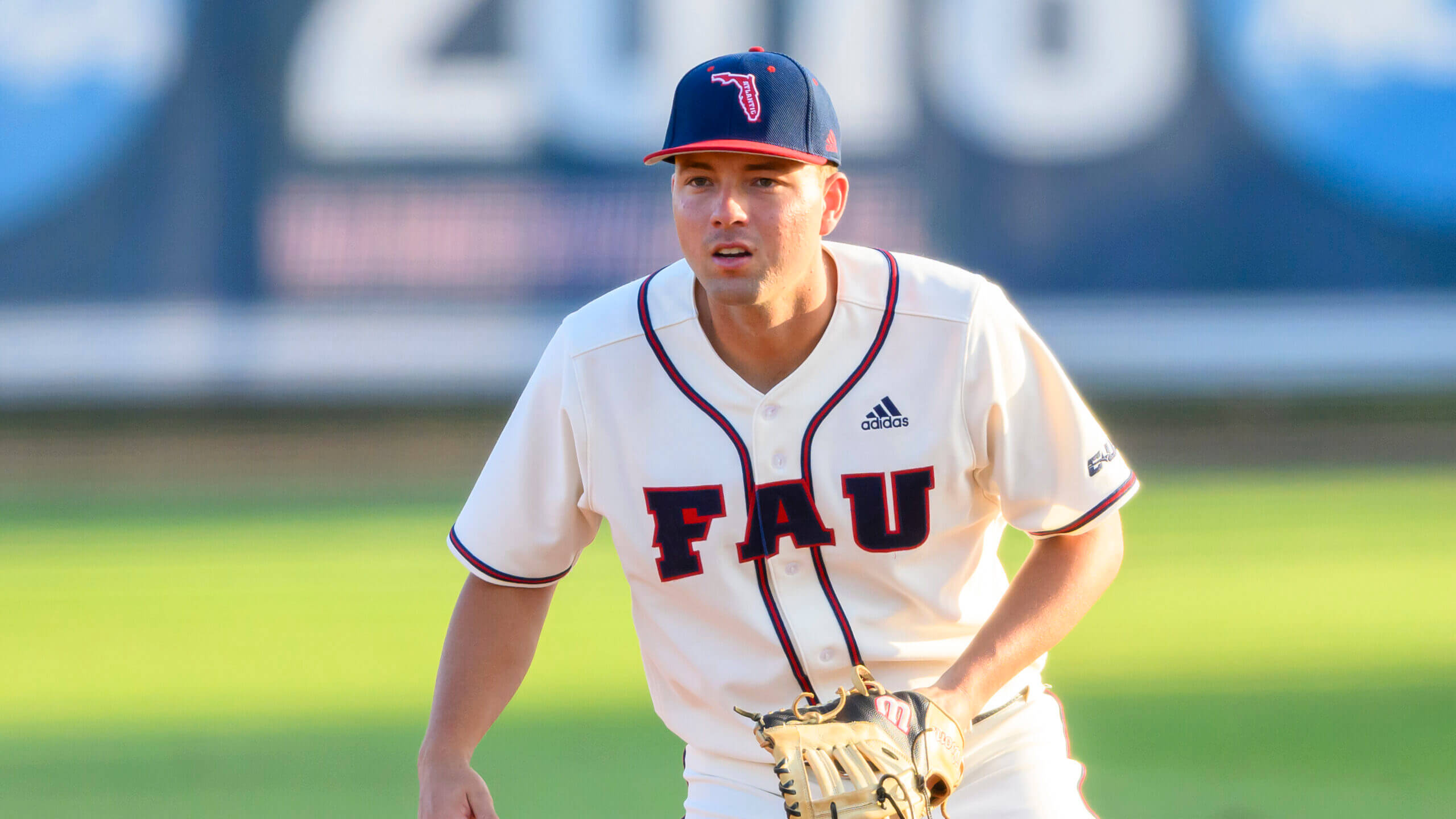
Nolan Schanuel (Doug Murray / AP Photo)
Alberto Rios (3) had all of eight plate appearances in his first two years at Stanford, but broke out this year with a .384/.405/.707 line, leading the team in doubles and homers — even more than first-rounder Tommy Troy hit. He doesn’t chase, has bat speed, and hits good fastballs. The rub is that he’s in search of a position — he’s caught a little bit, and maybe could have stuck there with work, and played left field with below-average range, but the Angels announced him as a third baseman. I have no confidence that’ll work. Outfielder Joe Redfield (4) is the son of the former Angels outfielder of the same name, a transfer from JUCO to Sam Houston State who hit .402/.485/.683 for the Bearkats this spring. He has a very wide stance and has no stride, but his hands are quick and he’s short to the ball, which should produce contact, perhaps without that much power. The Angels could try to give him a stride and more of a weight transfer to see if he can start to drive the ball. I like the bat speed and pitch recognition here.
Right-hander Chris Clark (5) pahks his cah in the yahd, but the Crimson starter had a near-5 ERA this spring with too many walks and a lot of hard contact. He’s mostly fastball/slider and either could be a 55, although his max-effort delivery inhibits his command. Wake Forest right-hander Camden Minacci (6) was the Deacons’ closer this year, working 94-97 with a plus slider and throwing both for strikes. He didn’t show a third pitch but I think the delivery would allow him to be more than a one-inning guy if he has one for lefties.
TCU’s Cole Fontenelle (7) had a great year for the Frogs, hammering fastballs in his first year there after transferring from a junior college, but he doesn’t hit offspeed stuff well and played mostly first base in college, although the Angels also announced him as a third baseman, which appears to be some sort of new market inefficiency. Right-hander Barrett Kent (8) is a sinker/slider guy with a very mechanical delivery where he falls off hard to the first base side after release. He’s 91-94 mph and the slider is just okay, although he’s definitely projectable. He’s an Arkansas commit and I assume a big over-slot guy in this spot.
The Twins had the fifth pick in a draft with five elite players, and they didn’t get cute, taking the one available to them in outfielder Walker Jenkins (1), who’s often compared to a young Larry Walker for his athleticism and swing. Jenkins can hit and he’s going to come into plus power pretty soon, while he already shows some feel for the strike zone. He’s going to be a very large adult, probably moving from center to right, but he moves and runs well for his size and should be a plus defender in a corner and still add value on the bases. He could easily end up the best guy in the draft class, even though he went in the No. 5 spot.
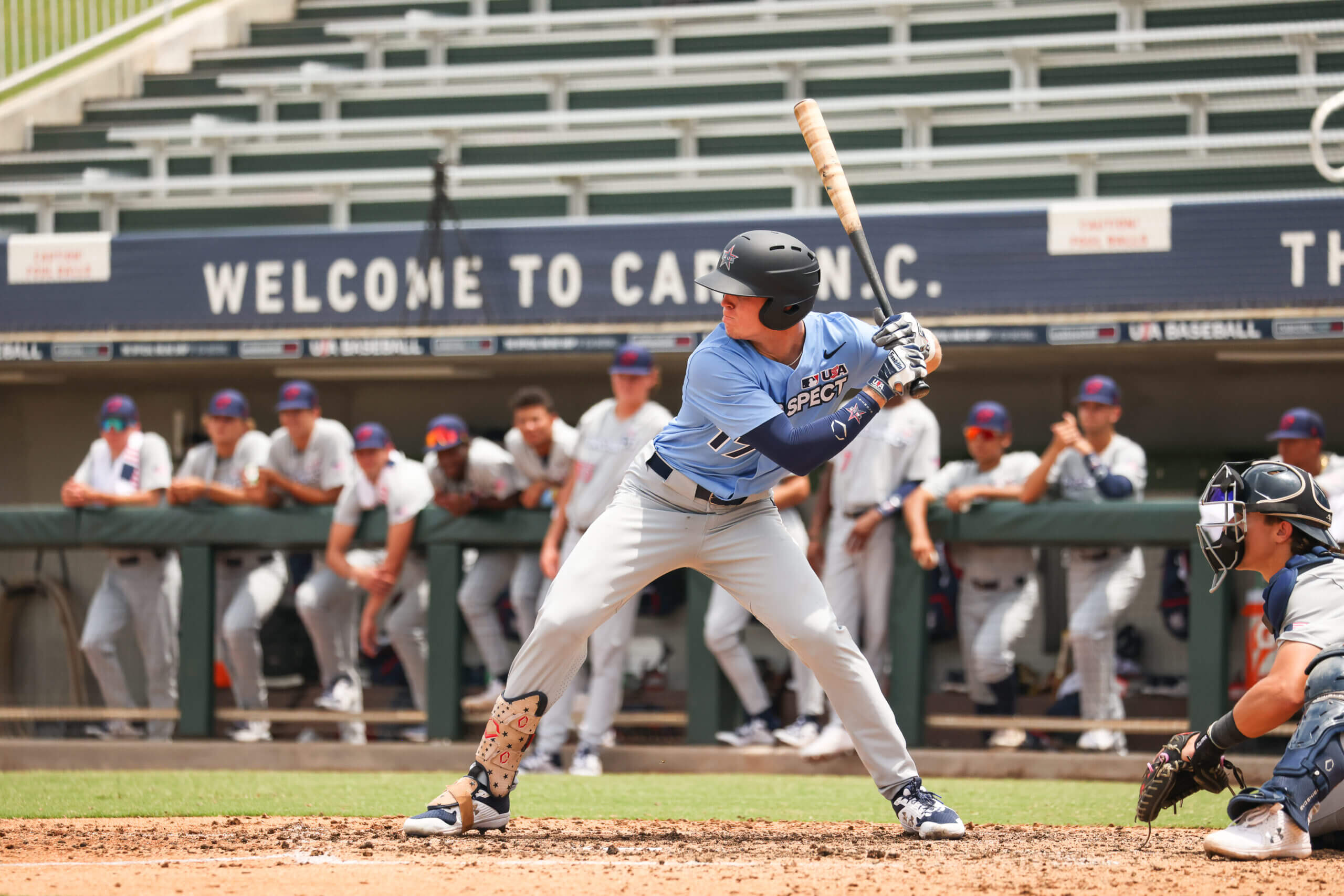
Walker Jenkins (Courtesy of Team USA Baseball)
They went with high school right-hander Charlee Soto (1A) with their next pick, taking the guy who might have had the best current arsenal of any high schooler in the draft, with three pitches that are all 60s on the right day. He’s up to 98 mph already with some life to it and has a split-change that’s an out pitch with hard, late fade to it. He won’t turn 18 until late August. The Twins do love younger players, so it’s unsurprising that they took Arizona State second baseman Luke Keaschall (2), since he won’t turn 21 for another month. Keaschall had a tremendous year at the plate for the Sun Devils, showing patience and some power, although he glides over his front side and is going to lose some of that power in pro ball unless that’s addressed. He’s an above-average to plus runner who might be able to handle center.
Brandon Winokur (3) has huge raw power, but the California high schooler already swings and misses too often due to poor pitch recognition and his sheer size. He’s got a cannon arm and should be very good in right field, but he’s got a lot of work to do at the plate. Southern Miss right-hander Tanner Hall (4) was badly overworked in the Golden Eagles’ postseason run, coming back on two days’ rest to start a second game in the regionals, because hey, once the season’s over, he’s someone else’s problem, right? He came back again on short rest and had his worst start of the season, so there’s that. Hall has a plus changeup and a low-effort delivery that he repeats well for command, but it’s a 45 fastball and 40 slider.
Wisconsin prep righty Dylan Questad (5) is 92-94 mph and can spin a solid-average curveball with 11/5 break, while at least flashing two other pitches, but his arm is late and he’s got a violent head-whack at release. Here’s hoping one day Questad wins Rookie of the Year and the Cy Young and can go on an award tour. Oregon righty Jace Stoffal (8) is 90-92 with a 55 changeup, showing fringy command due to a delivery that’s not very fluid. He won’t turn 21 until just over a week after the draft. Mississippi right-hander Jack Dougherty (9) is 90-93, touching 95, with a decent curveball, but barely uses a changeup and lefties destroyed him this year. Lefty Ross Dunn (10) transferred from Florida State to Arizona State this year and walked 44 guys in 65 1/3 innings (14 percent) while allowing 50 (!) runs. He has a 55/60 changeup, though, and he’s left-handed, so I completely understand taking him in the 10th round to see if you can help him throw more strikes.
The Yankees went for some upside with their first pick, high school shortstop George Lombard Jr. (1). The son of the former Atlanta outfielder, Lombard Jr. should stay at shortstop, and he offers a simple, clean swing with good loft in his finish to get to plus power as he fills out his 6-3 frame. He did have some trouble with better velocity as an amateur and may be a little slower to move through the system than the last high schooler they took in the first round, 2019’s Anthony Volpe. Lombard was the only player they got from my top 100.
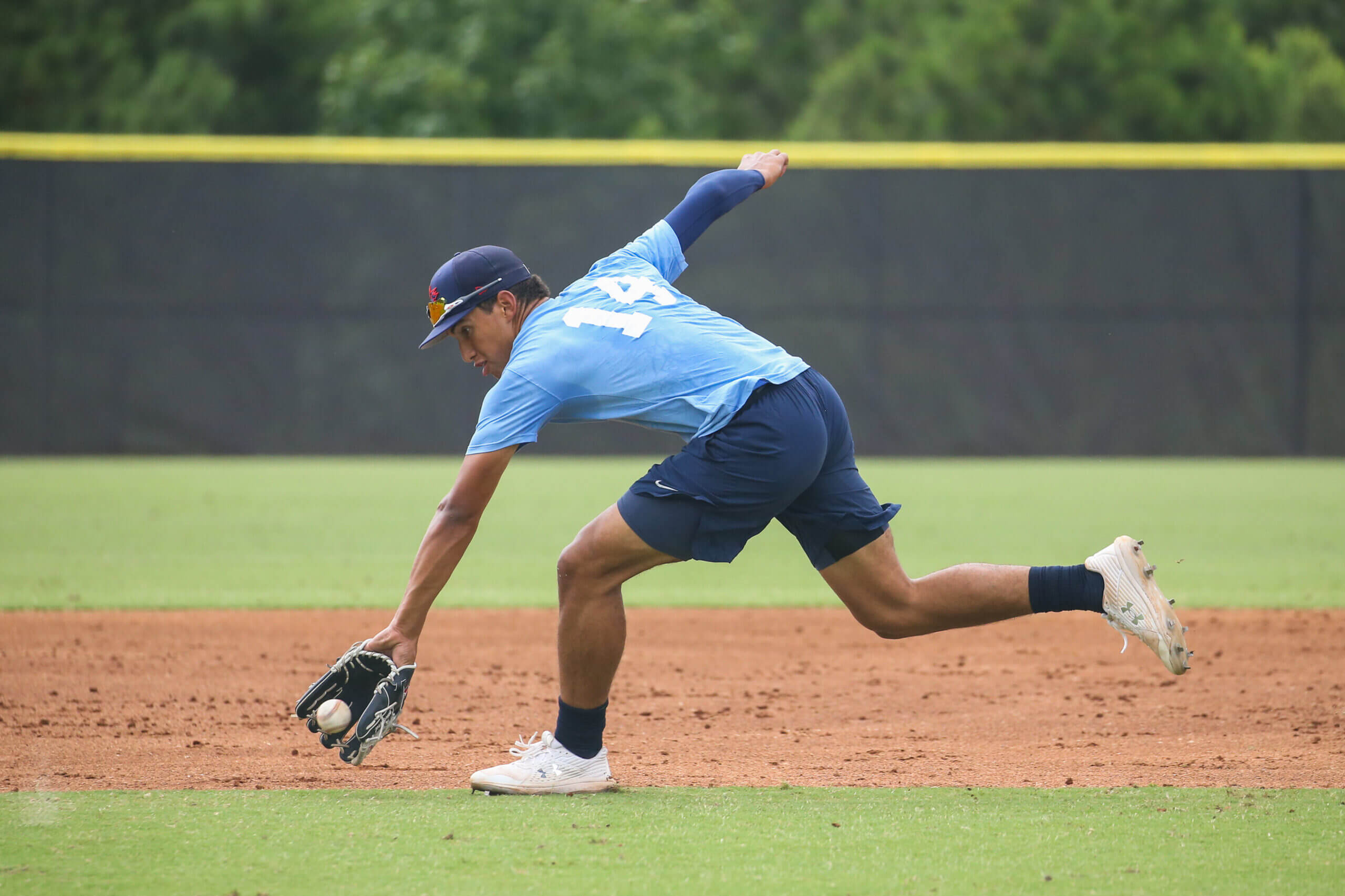
George Lombard Jr. (Courtesy of Team USA Baseball)
Lefty Kyle Carr (3) transferred to two-year Palomar College from the University of San Diego this year, and was dominant for the Comets, with 111 strikeouts and just 19 walks in 78 innings. He comes from a high 3/4 slot and both his low- to mid-90s fastball and sweepy slider can show above-average to plus, and he’s a good athlete who can even swing the bat a little, hitting .500 in 42 at-bats for the Comets this spring. Roc Riggio (4) is a very undersized second baseman who was age-eligible this year as a sophomore at Oklahoma State. He had a great season, hitting .335/.461/.679 with 17 doubles, 3 triples, and 18 homers. It’s a very pull-oriented approach, however, and he has a lot of holes at the plate — fastballs up, sliders down and away, sliders in, changeups away. Scouts love the work ethic and the way he plays, which isn’t nothing, but he has to tighten up the approach.
Right-hander Cade Smith (6) walked 14.3 percent of batters he faced this year for Mississippi State, but he’s still very interesting, with a fastball up to 94-95 and a plus slider in the upper 80s. Lefties killed him even though he can flash a decent changeup. I’d put him in the pen and see if the two pitches are enough. Arizona outfielder Kiko Romero (7) hit 21 homers for the Wildcats, but 15 came at home (elevation 2,400 feet) and he had big trouble with anything with a wiggle. Jared Wegner (9) was a graduate student at Arkansas who posted some huge exit velocities after transferring from Creighton and hit 15 homers, although he was 23 years old and the rest of his line isn’t as impressive. I said back in February someone should take a chance on the bat given how hard he hits the ball and I’m glad someone did.
Oakland A’s
The A’s reached for shortstop Jacob Wilson (1) with the sixth pick, taking the light-hitting infielder for his defense and exceptional contact skills. Wilson, whose father Jack played for the Pirates, Mariners, and Atlanta in a 12-year major-league career, struck out just 12 times in his last two seasons for Grand Canyon. He’s got a short swing that puts the bat on the ball without impact, and he’s not very physical, with just some projection on a narrow 6-3 frame. He’s probably a plus defender at shortstop right now even though he’s not a runner or terribly athletic. His exit velocities were quite low for a first-rounder and his launch angle was right around zero degrees, so getting more offense out of him will be a real challenge. They also reached for Myles Naylor (1A), who wasn’t on my top 100 at all. The third Naylor brother to be drafted in the top-40 picks (Josh and Bo went in the first-round proper), Myles is a right-handed hitter with power but less feel to hit than either of his brothers, and he’s moving to third base where he’ll have to hit to profile as a regular.
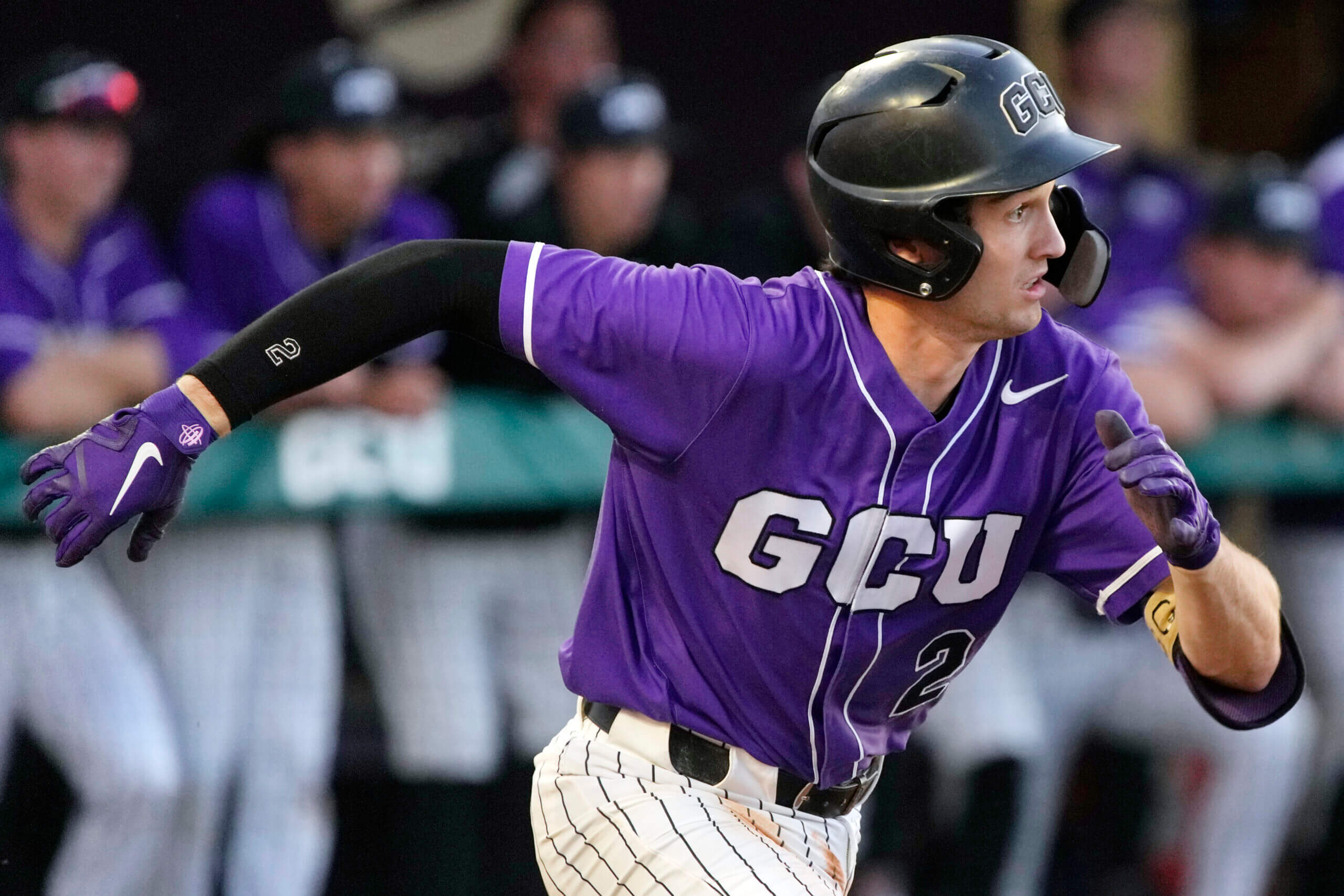
Jacob Wilson (Rick Scuteri / AP Photo)
Rutgers center fielder Ryan Lasko (2) has outstanding bat-to-ball skills and bat speed, needing some mechanical adjustments to get to more game power with wood bats. He’s a plus runner who projects to stay in center, and could easily be a regular there even without additional juice, although I like the potential for an above-average or better regular if he gets there. Right-hander Steven Echavarria (3) saw his velocity jump this spring to where he topped out at 97 mph and sat 90-95, while he already had a solid-average curveball in place. He’s still projectable and offers a starter’s delivery already, plus he won’t turn 18 until August, so there’s real upside here, offering more than any other Oakland pick this year.
Right-hander Cole Miller (4) is huge at 6-6 and probably heading for 250+ pounds when he fills out, with a low-90s fastball and very hard-breaking slider. His arm is whippy and loose and he seems to maintain his arm speed well on a changeup. He’s another upside play like Echavarria, and the two of them should make A’s fans feel better about the class as a whole. Nathan Dettmer (5) has three pitches and size, just lacking the whole “strikes” thing that we like to see in pitchers. He’s 94-96 with a short-breaking slider and changeup that has big tumbling action, and he’s built like a mid-rotation guy. He walked 12.4 percent of batters this year — but that was double his walk rate from 2022, so perhaps there’s an adjustment the A’s can make to get him back to where he was as a sophomore.
Jonah Cox (6) transferred from Eastern Oklahoma State College to Oral Roberts this year and had a superficially strong season, hitting .412/.470/.646 with 28 steals. He didn’t have an extra-base hit on a fastball of 92 or better all season and he expands the zone way too much for a low-power guy. He’s a 55 or 60 runner who should stick in center field. Right-hander Corey Avant (9) is listed at 6-4, 225 pounds, but looks taller than that, and the Wingate University pitcher gets on top of a 92-94 mph fastball and hard slurve. He walked 18 percent of batters he faced even pitching in Division II, and it’s a high-effort delivery. Right-hander Tom Reisinger III (10) is also a DII product, out of East Stroudsburg University, and looks like he can really spin the ball, with a better delivery and maybe 45 control. He’s only 88-93 and doesn’t have much of a changeup or other pitch for lefties. Drew Conover (11) walked 15% of guys he faced this year for Rutgers, too much for anyone but worse for a sidearmer who’s destined for the pen. He sits 92-93 with a slider and cutter that are both pretty tight, so there’s definitely upside for him if the A’s get him in the zone.
Seattle Mariners
The Mariners swung very big with their three first-round and comp-round picks, taking a trio of high-ceiling high school position players at 22, 29, and 30. Colt Emerson (1) was their first pick, a high school infielder with an advanced feel to hit, and he won’t turn 18 until next month. He’s a shortstop now but moves to second or third in pro ball. Jonny Farmelo (1A) is one of the best pure athletes in the class, a 70 runner with great bat speed and hand-eye but a terrible swing that needs a fair bit of help from start to finish. Yet he also showed he could get to good velocity, showing well against fellow first-rounder Bryce Eldridge’s 91-95 mph fastball. Tai Peete (1A) is the least polished of the three, a high school shortstop with a ton of projection and plus speed already who needs work on pitch recognition and strike zone judgment.
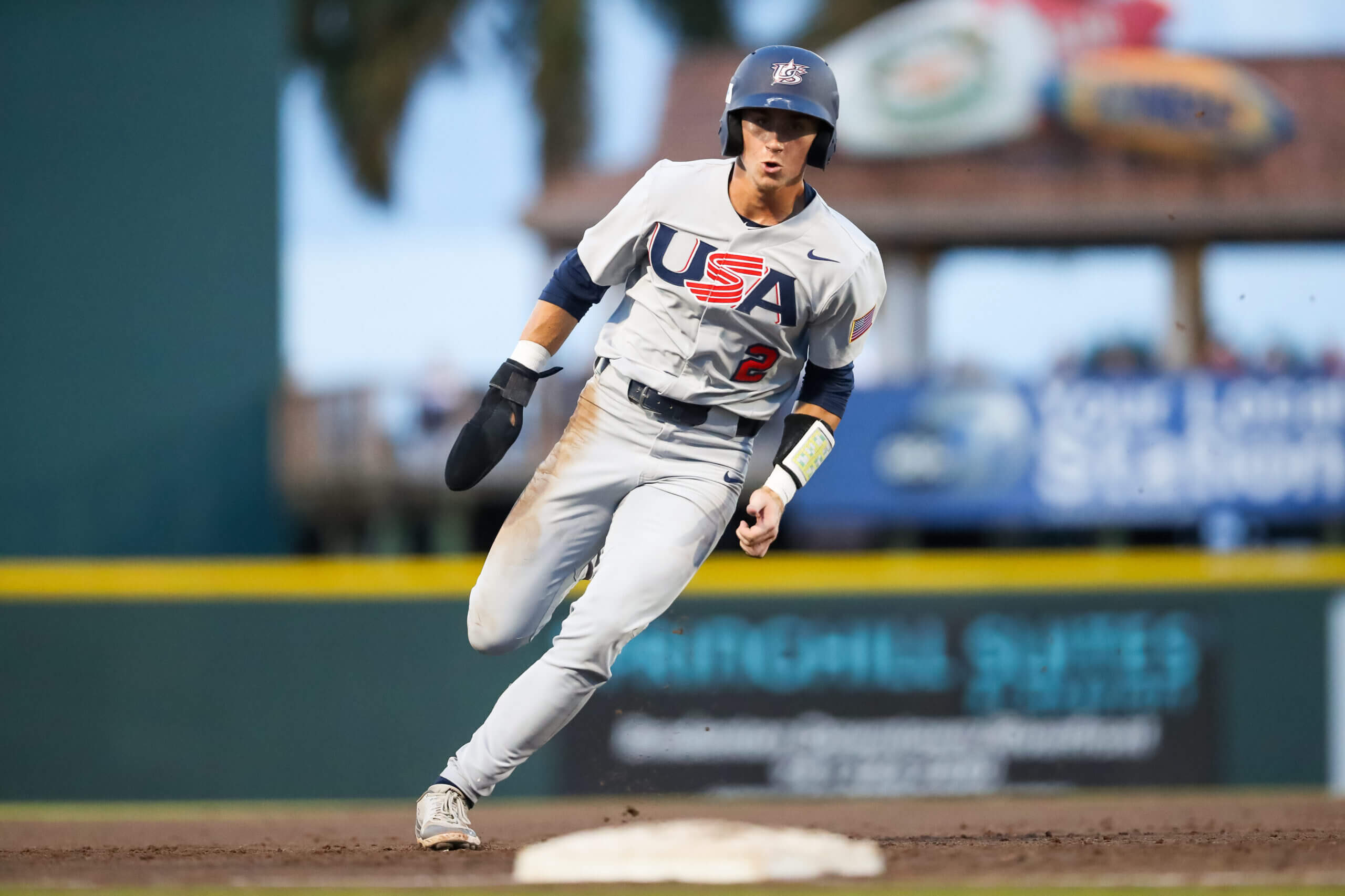
Colt Emerson (Courtesy of Team USA Baseball)
Ben Williamson (2) was a senior sign from William & Mary, obviously to save money to help pay for the top three picks; he had a strong season for the Tribe but it’s not a good swing, with his hands so high that he comes down at the ball and has to lift his elbow way up to get to anything inside. Right-hander Teddy McGraw (3) would have been a first-rounder had he not had a second elbow surgery to add a brace to the same joint that required Tommy John a few years prior. In 2022, he was 93-96 with a venomous slider that would have been among the best breaking pitches in this whole class, while also showing an average changeup that helped the fastball play up. The two elbow surgeries aren’t a great sign, but for the third round, this is an outstanding pick.
Texas high schooler Aidan Smith (4) is a long and lean outfielder who bars his lead arm and has timing issues at the plate. When he squares it up, however, it’s hard contact, and he’s lanky enough to project a good 25+ pounds of muscle onto his 6-3, 190-pound frame. He’s a 55-60 runner who has a chance to stick in center. Brody Hopkins (6) was a two-way player for Winthrop this year, but wasn’t very good at either role, walking one of every six batters he faced (16.7 percent) as a pitcher. He sits 95 and has a silly slider that looks like he’s throwing a Wiffle ball, all from a long, hard-to-repeat arm action. Campbell righty Ty Cummings (7) is a pure reliever who sits 92-94 with at least a 60 slider, and the fastball gets enough groundballs to see him as a sinker/slider guy.
TCU third baseman Brayden Taylor (1) seemed like a top-10 pick coming into the spring, but a midseason slump crushed some of his overall numbers and raised questions about his hit tool. He did rally later in the year and finished with 23 homers and a .308/.430/.631 line, albeit with 60 punchouts and the highest strikeout rate of his three years in Fort Worth. He has a great left-handed swing that produces hard line-drive contact and he’s a solid-average defender at third who could end up a plus defender with some help. It’s a smart value pick. Shortstop Adrian Santana (1A) is a switch-hitter who won’t turn 18 until later in July and offers plus defense and plus running speed, but he’s very undersized and hasn’t shown he can make decent-quality contact. He’s got to get a lot stronger to end up a regular.
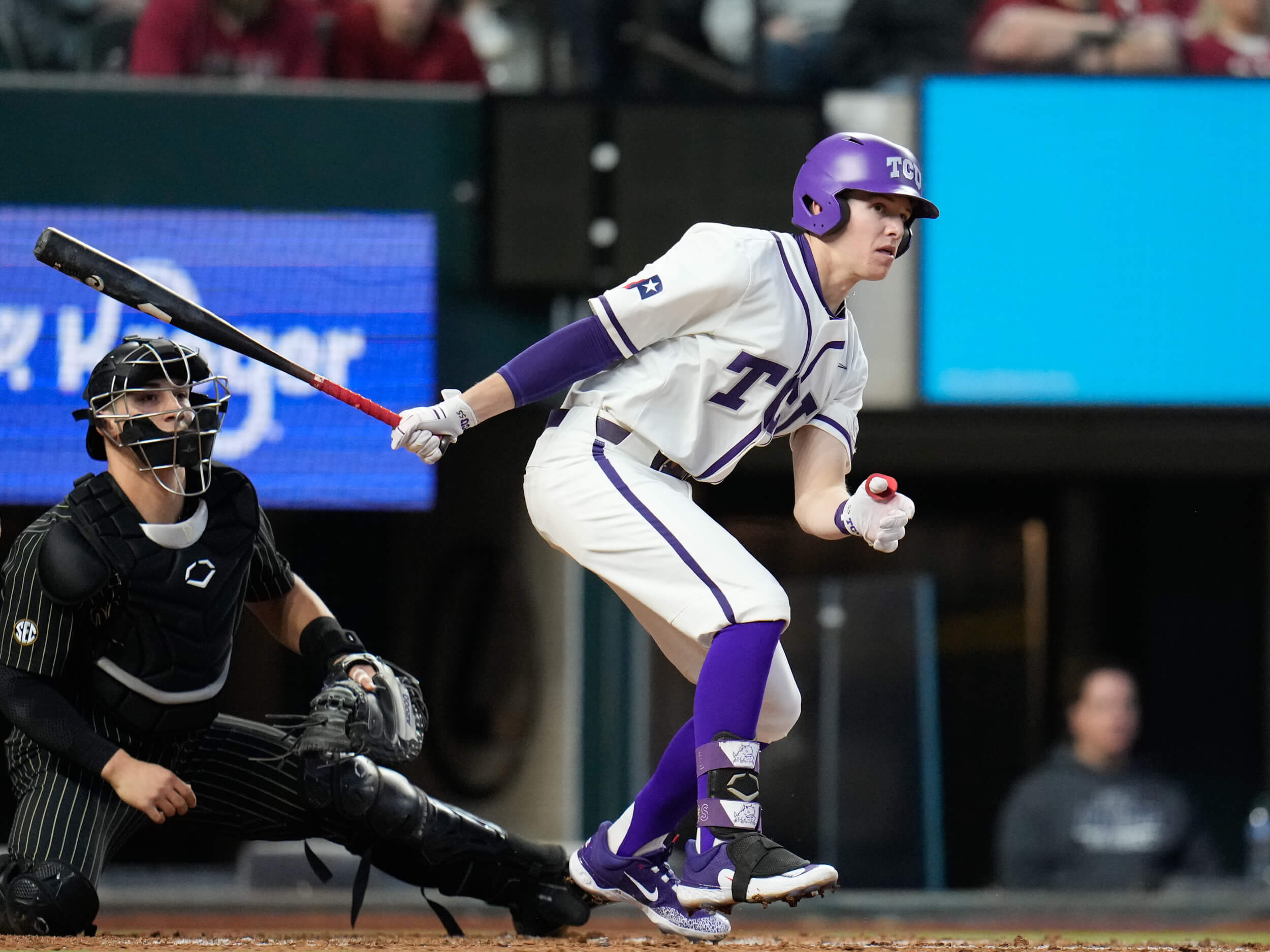
Brayden Taylor (Chris Jones / USA Today)
Colton Ledbetter (2) had a strong season for Mississippi State thanks to a smooth left-handed swing and strong plate discipline. He doesn’t make much hard contact, however, and was a good bit worse in the SEC, fattening up against non-conference competition. He’s a 55 defender in left field. I think he’s a fourth outfielder in the end but improving his contact quality gives him a path to be a solid regular. LSU’s Tre’ Morgan (3) is a plus defender at first base, but that’s his main selling point as he’s a slap hitter with high contact rates – he struck out less often than Dylan Crews did – yet without any power. Texas A&M infielder Hunter Haas (4) transferred to College Station after a lost year in Arizona State where he hit under .200 and spent most of the year on the bench, bouncing back for a .323/.447/.506 line with more walks than strikeouts. He has plenty of bat speed and can catch up to good velocity, but the approach is extremely pull-oriented – all nine of his homers that left the park this year were out to left. He played short for the Aggies but probably moves to second in pro ball, where he has an outside chance to be a regular.
Right-hander Trevor Harrison (5) has a good delivery and projectable frame, with promise to both the fastball and changeup, although he doesn’t spin the curveball very well and may need to go to a slider or even a cutter. Arizona right-hander T.J. Nichols (6) put 40 percent of men he faced on base this year, including 17 hit batsmen in just 57.2 innings, en route to posting an 8.27 ERA for the Wildcats. He also allowed 12 homers and walked 29 guys. It’s 95 with a grade-55 slider, but come on. Gonzaga right-hander Owen Wild (7) has an unusual, short, abrupt arm action, but the way he grips and stays on top of the fastball gives it some carry in the zone even at 89-92 mph, which he was this spring. He’s got a bucket of average pitches and 45 control, though, so he’s more likely to go to the pen.
Texas took Florida outfielder Wyatt Langford (1), second on my Big Board, with the fourth pick, and could easily have landed the best player in the draft. Langford hit .373/.498/.784 for the Gators with 21 homers after he hit 26 as a sophomore, and walked more (56) than he struck out (44), while facing the best pitching in the country in the SEC. He’s a 70 runner with an explosive bat that generates a ton of power and hard contact in the air. He played left field for Florida and hasn’t shown great reads or routes there, so despite his speed, it seems optimistic to hope he can move to center in pro ball.
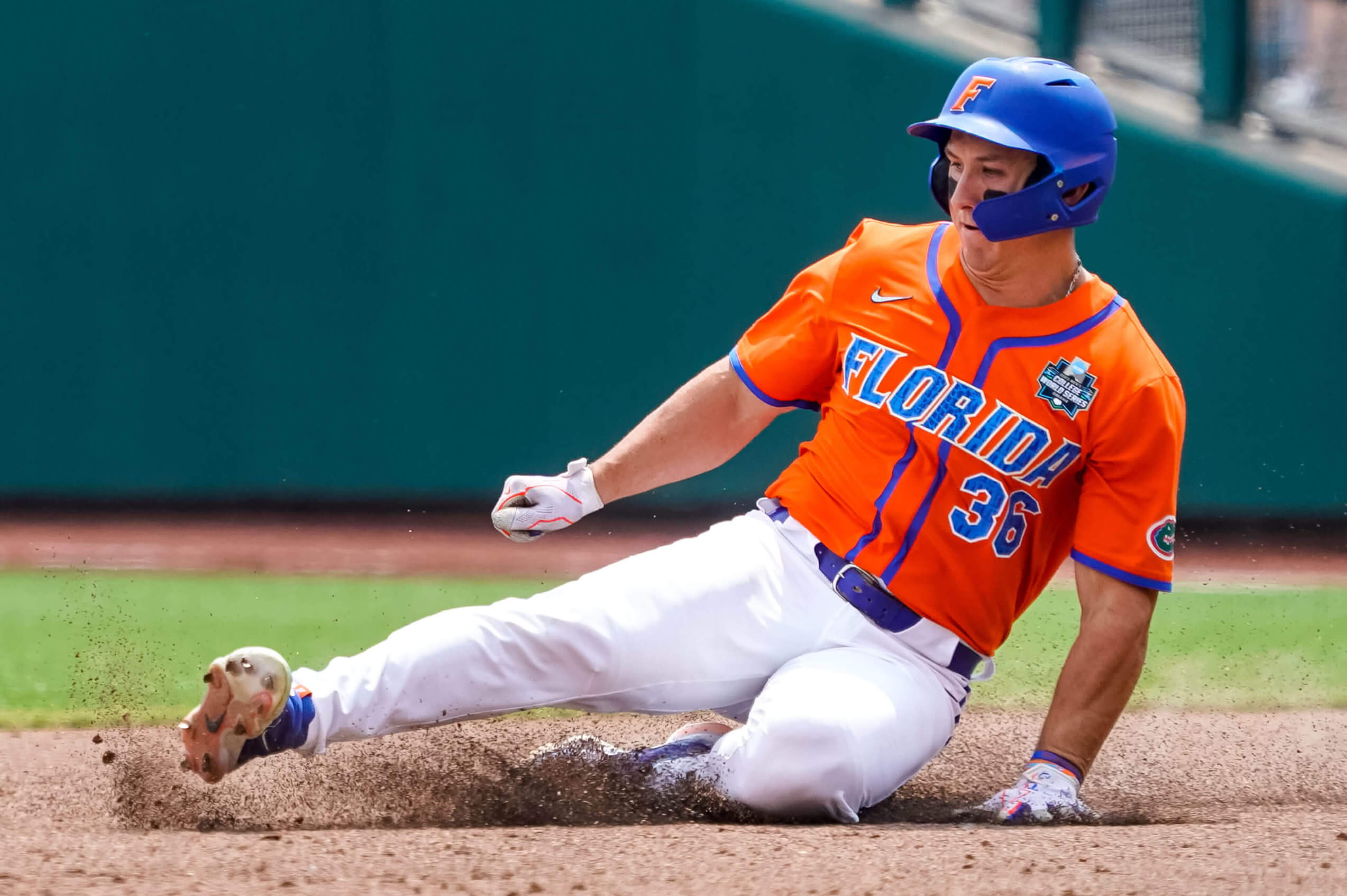
Wyatt Langford (Dylan Widger / USA Today)
The Rangers didn’t pick again until the fourth round because they signed Jacob deGrom and Nathan Eovaldi as free agents. Right-hander Skylar Hales (4) is a straight reliever from Santa Clara who sits 94-95 mph with a 55 slider that’s up to 88 mph, working with an extremely short arm action that’s deceptive but looks like it involves a lot of effort. Alejandro Rosario (5) had a 7.11 ERA this spring for Miami despite two above-average pitches in a 94-95 mph fastball and a plus changeup with hard, late fade to it. His slider/slurve finishes up in the zone too often and hitters crushed it, while he also didn’t throw nearly enough strikes. He’s slight at 6-foot-2, 182 pounds, with a very fast arm, but might be better suited to a bulk role where he can work primarily fastball/change.
Their one high school pick in the top 10 rounds was Florida right-hander Caden Scarborough (6), a projection guy who saw his velocity jump this spring and has shown some feel to spin the ball, although the delivery is unpolished and he’ll need help there to get to even average command. He’s at least interesting for this round and the lack of performance. Louisiana-Lafayette catcher Julian Brock (8) hit .315/.435/.559 this year, but his bat speed is just fair and he’s very vulnerable to sliders in zone or down and away. His hands start very high in his setup, which may be why the bat looked slow to the zone. His arm is a 50/55 and he receives well enough to stay there for now. Right-hander Case Matter (10) is 94-95 mph with what might be a plus slider, working mostly with the fastball, but he walked 22 guys in 25 innings this year in relief for Washington.
Shortstop Arjun Nimmala (1) was one of the youngest players in the draft and offers a ton of upside at the plate, producing very hard contact already and flashing plus power with a frame that’s going to allow him to get quite a bit stronger. It’s most likely that he stays at shortstop but there’s a chance he outgrows it and moves to third base. He absolutely should have gone higher than this, maybe 8-10 picks higher, which would have been a $1 million difference in his bonus.
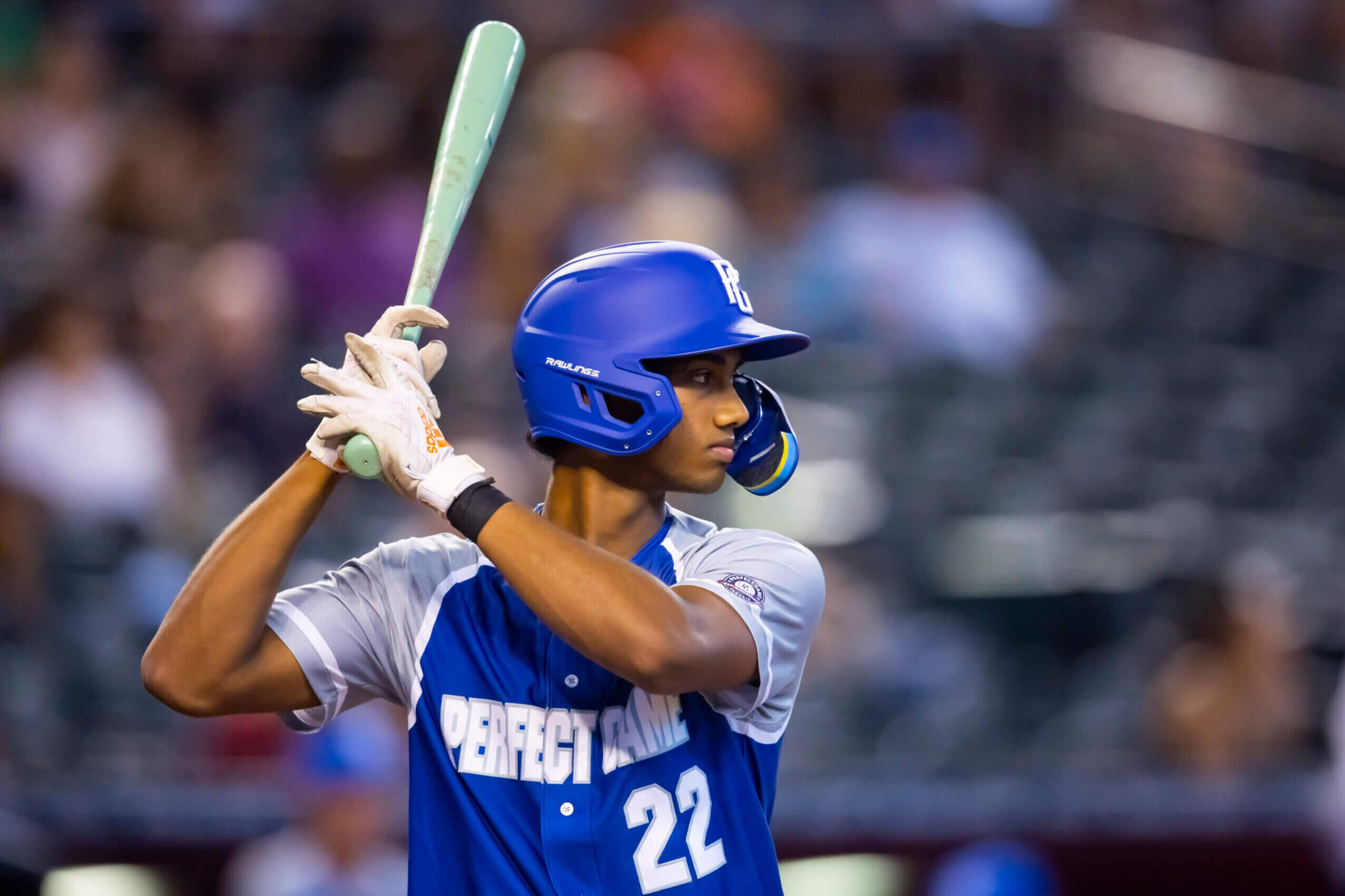
Arjun Nimmala (Mark J. Rebilas / USA Today)
Right-hander Juaron Watts-Brown (3) transferred from pitcher-friendly Long Beach State to Oklahoma State and went backward in velocity and performance. He’s got a slider that can flash plus when he throws it harder, getting power and tilt to the pitch, and he can use it in the zone for a called strike or go down and away to a righty for the whiff. His fastball is fringy at 91-93 mph and he barely used his changeup, although it’s not a bad pitch. Right now it’s a reliever profile but there is reason to think he can develop into a starter in a different system. Florida prep right-hander Landen Maroudis (4) has an extremely short action, working mostly with a 90-93 mph fastball and big action changeup that he can telegraph because he gets on the side of the ball in his delivery. His curveball is below-average and he’ll need to find a consistent breaking ball. He’s an NC State commit and was a two-way guy in high school, so we could see more improvement than the norm just from him going to the mound full-time.
Michigan lefty Connor O’Halloran (5) has excellent feel to pitch, working with an upper-80s fastball up to 93 mph and a 55 slider with very good tilt. I’d like to see him develop a true changeup given his style of pitching and present command, at which point I think he could end up a back-end starter, especially if the Jays can boost his velocity a little. Arkansas outfielder Jace Bohrofen (6) seems like a steal in this sixth round, a potential center fielder with 20-homer power, although he’s kind of a dead fastball hitter and has to learn to pick up offspeed pitches to be anything. Kansas State infielder Nick Goodwin (7) has very quick wrists and plus bat speed, but has never hit for average in college with chronically low BABIPs. He will take a walk, has a little power, and makes plenty of contact; my hypothesis is that his bat is in and out of the zone so quickly that he’s not making enough solid contact. The Jays selected him as a shortstop but he probably ends up at second base. Braden Barry (8) is an intriguing power-speed guy for a later pick, stealing 24 bags for West Virginia this spring with 19 doubles, but has to improve his contact ability and stop expanding so much with two strikes.
(Illustration: John Bradford / The Athletic; Photos: Team USA and Getty Images)