
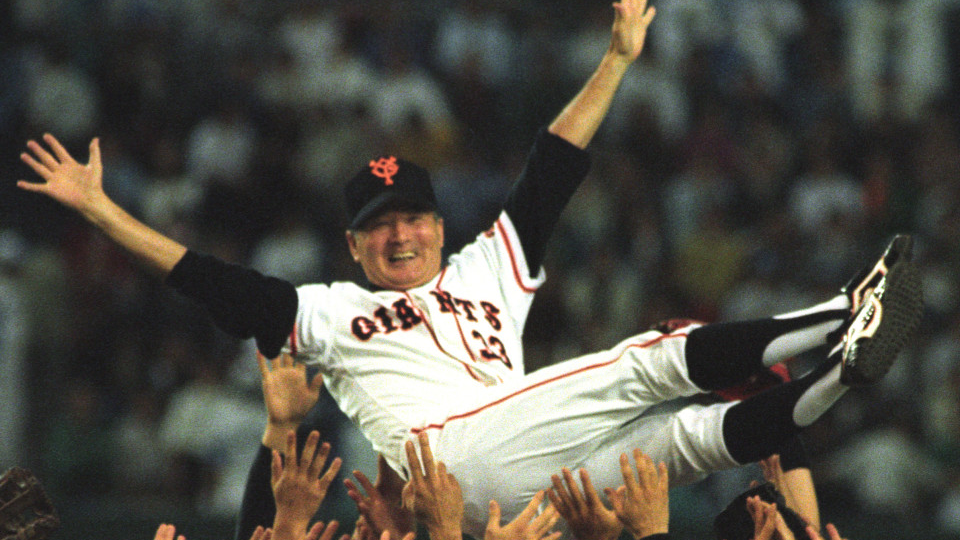
Japanese baseball legend Shigeo Nagashima, a People’s Honor Award recipient who rose to stardom for his on-field exploits during the country’s era of rapid economic growth in the 1960s and 1970s, died Tuesday due to pneumonia, the Yomiuri Giants said. He was 89.
Nagashima, who was a key player on the Giants team that won nine consecutive Central League and Japan Series titles from 1965 to 1973 and later managed the club, was a charismatic figure whose popularity transcended sports.
Together with teammate Sadaharu Oh, or “O-N” as the pair were nicknamed, Nagashima became a household name at a time when the country’s economy was booming and is fondly remembered by many middle-aged and older Japanese with nostalgia for those times.
His retirement from playing in 1974 made the year’s top 10 news stories, while the speech he gave at his retirement ceremony, in which he said “My Giants are forever immortal,” has become part of Japan’s popular lexicon.
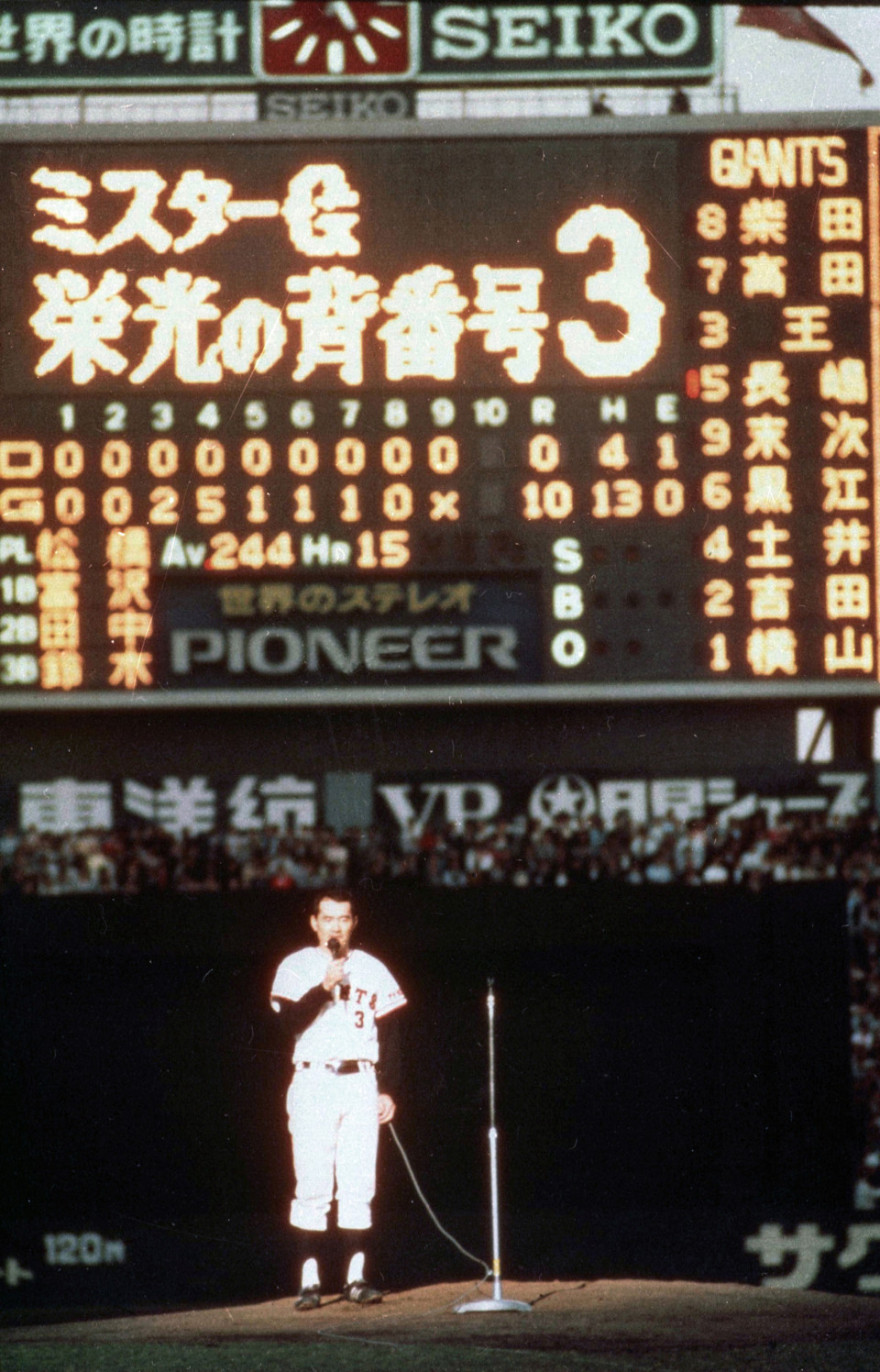
Shigeo Nagashima of the Yomiuri Giants speaks during a retirement ceremony at Korakuen Stadium in Tokyo on Oct. 14, 1974. (Kyodo)
Over his 17-year playing career, Nagashima won the Central League batting title six times, was home run king twice and RBI leader five times. He was also a five-time CL MVP.
He played in 2,186 games during his storied career, with a .305 batting average, 2,471 hits, 1,522 RBIs and 444 home runs.
“I’m really shocked to hear the sudden obituary,” said the 85-year-old Oh, whose 868 home runs is the Nippon Professional Baseball record.
“I’m really disappointed that Mr. Nagashima, who shines brightly in the history of Japanese baseball, has departed after a long bout with illness. He taught me lots of things. I’m grateful to have been able to play with him.”
Known as “Mr. Giants” — often shortened to “Mister” — Nagashima was a flashy fielder with a flair for game-breaking batting heroics. His signature moment was his game-winning, sayonara home run in the first pro game attended by a Japanese emperor on June 25, 1959.
Nagashima is credited with helping pro ball surpass Japan’s traditional university game as the nation’s most popular brand of baseball.
When Yomiuri engineered his hiring as Japan’s manager for the 2004 Olympics, players flocked to his banner. Japan swept through Asian qualifying but he was scratched from Olympic duty when he was felled by a stroke in March 2004.
As Giants manager, he won five pennants, including two Japan Series titles, over 15 seasons. Although he was eventually named the Giants “Manager Emeritus,” Nagashima’s first tenure as manager was a rocky one.
When his offense hit the skids in 1974 and the Giants just missed out on a 10th straight CL pennant, Yomiuri management jettisoned the team’s most successful skipper ever, Tetsuharu Kawakami, to make room for Nagashima.
In 1975, the rookie skipper led the Giants to their only last-place finish. Nagashima won CL pennants in 1976 and 1977, but not the Japan Series and was fired after the 1980 season.
Nagashima returned as manager of the Giants in 1993, while a free agent system introduced at the time allowed the team to secure a steady flow of veteran front-line talent.
In 1994, he won his first Japan Series pennant with a team powered by his young batting disciple and now fellow Hall of Famer, Hideki Matsui, who later joined the New York Yankees.
Nagashima got the better of his old teammate Oh when the pair faced each other as managers in the 2000 Japan Series with Yomiuri prevailing 4-2 against the Pacific League-winning Daiei (now SoftBank) Hawks in the best-of-seven series.
Despite being better known for wacky phrases that caught the public’s attention than his communication skills, Nagashima still had a way of getting the best out of his players.
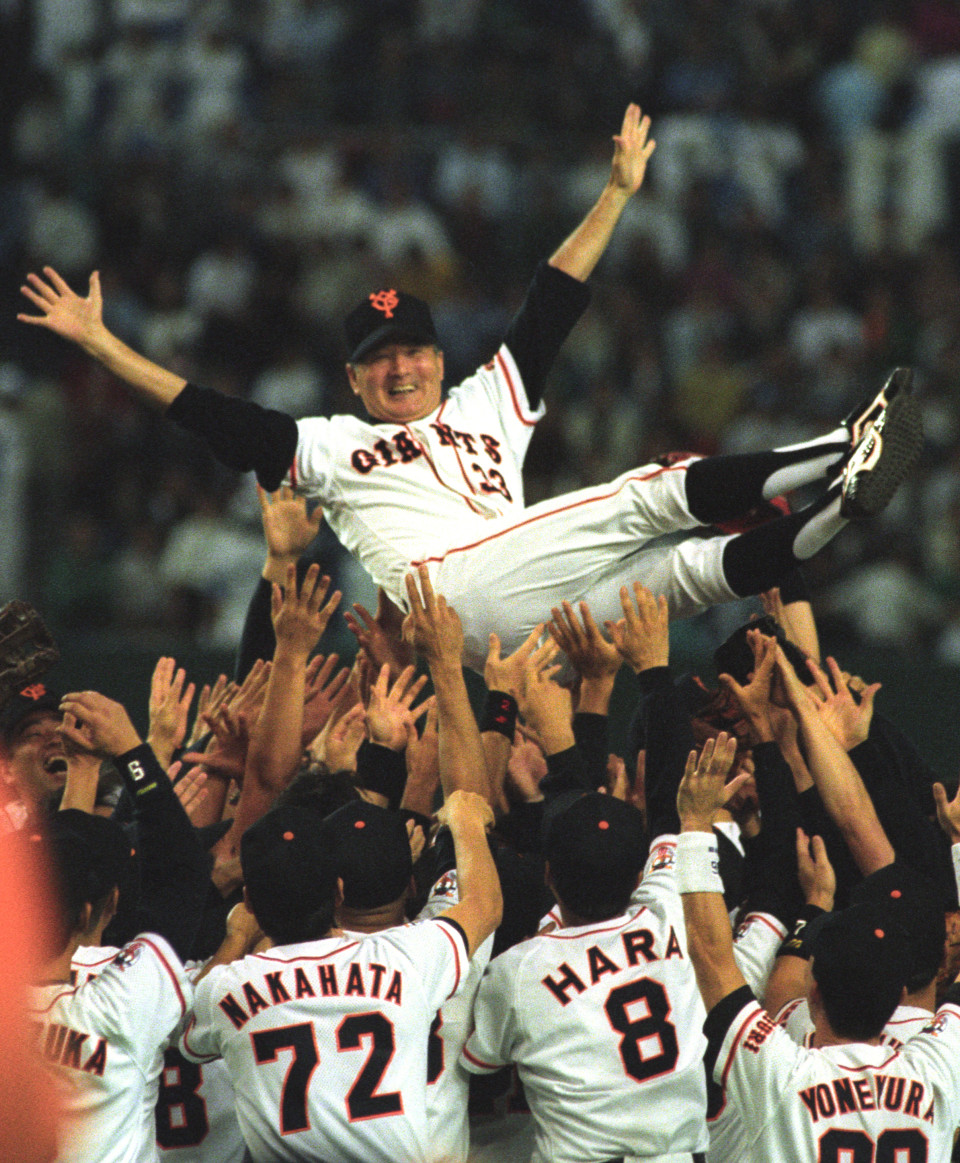
Yomiuri Giants manager Shigeo Nagashima is tossed in the air by team members at Tokyo Dome after the Central League baseball team won the Japan Series on Oct. 29, 1994. (Kyodo)
Known for his cheerful character, Nagashima often created his own Japanese-English expressions, including “make drama,” a phrase he used while he was Giants manager to encourage players not to give up winning even when it seemed impossible.
The phrase was selected as a buzzword of 1996 after the Giants achieved a dramatic upset victory in the Central League.
Born in Sakura, Chiba Prefecture near Tokyo, in 1936, Nagashima played for the Rikkyo University baseball team before joining the Giants in 1958. The CL’s 1958 rookie of the year, Nagashima was the winner of the league’s best nine award 17 times, the only player to win every season from his first to his last.
Nagashima was inducted into the Japanese Baseball Hall of Fame in 1988 and had his No. 3 retired by the Giants.
In 2013, he received the People’s Honor Award, along with Matsui. The award is bestowed by Japan’s prime minister for outstanding achievements in sports, entertainment and other fields.
Nagashima was hospitalized in 2018 for half a year to treat a gallstone and then frequently used a wheelchair. But after receiving an offer to take part in the Tokyo Olympics’ torch relay in 2021, he was determined to walk on his own feet and managed to do so with help from Oh and Matsui.
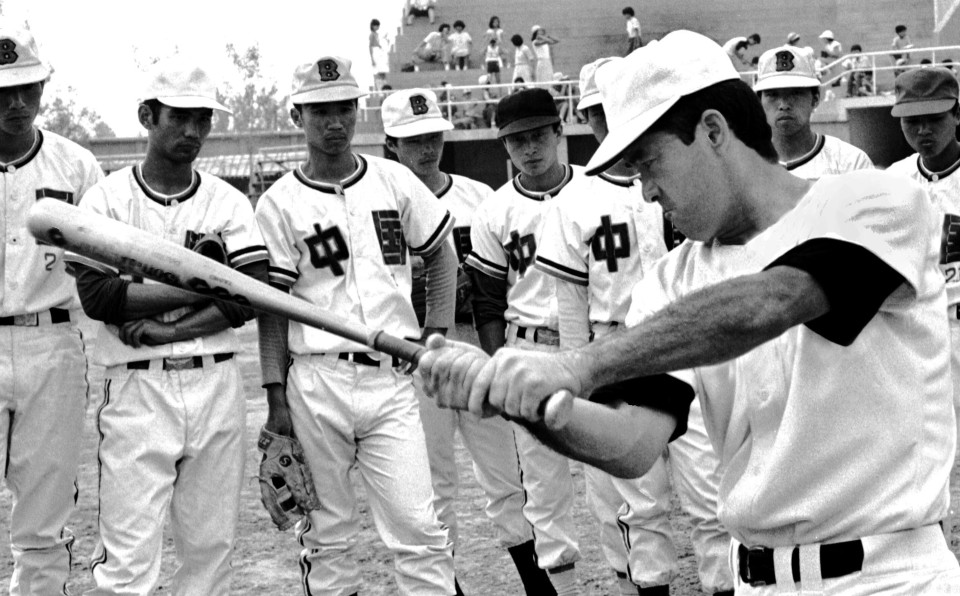
File photo taken in June 1981 shows former Yomiuri Giants star Shigeo Nagashima serving as a hitting instructor for China’s national baseball team in Beijing. (Kyodo)
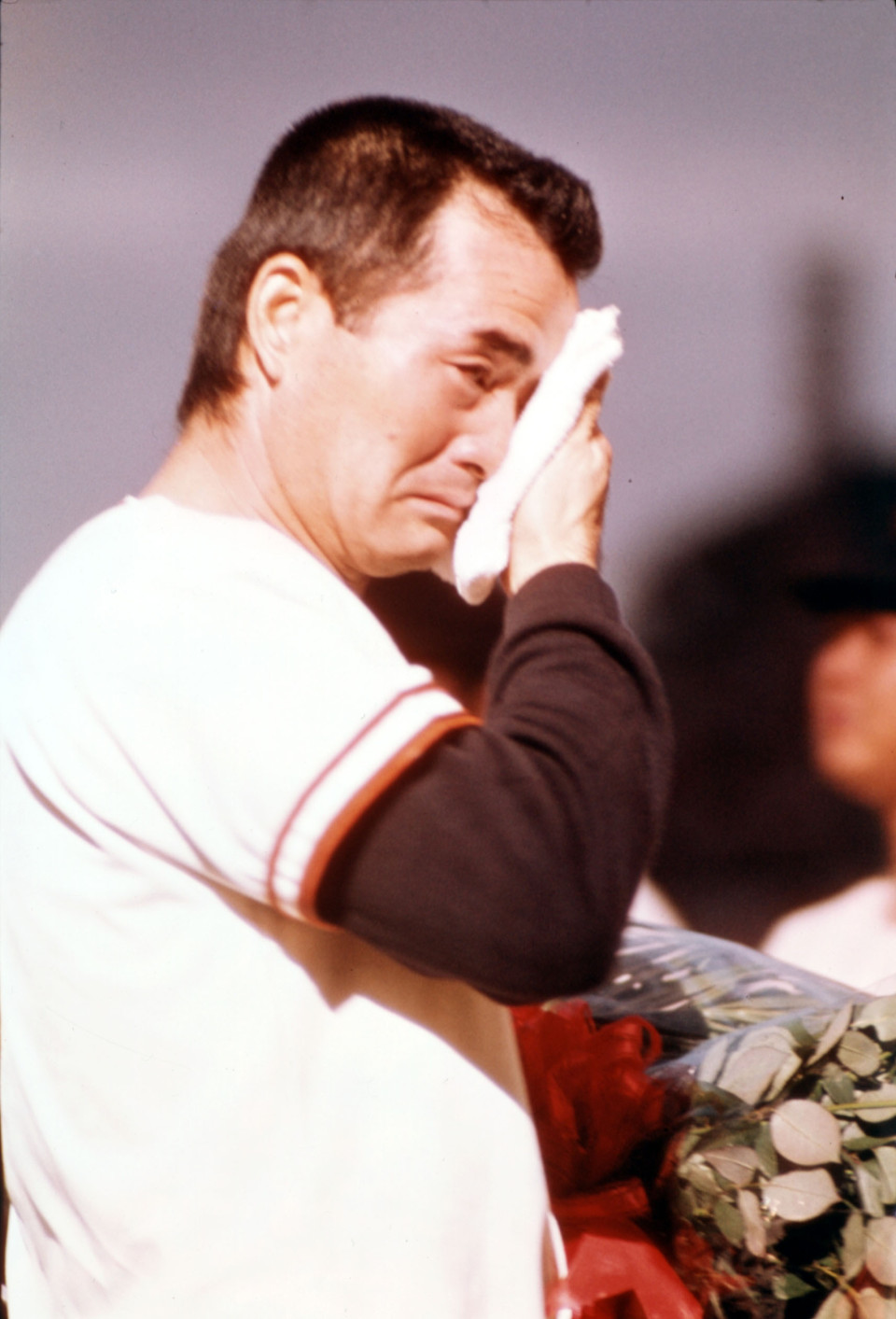
Yomiuri Giants player Shigeo Nagashima wipes tears away after his retirement ceremony at Tokyo’s Korakuen Stadium on Oct. 14, 1974. (Kyodo)
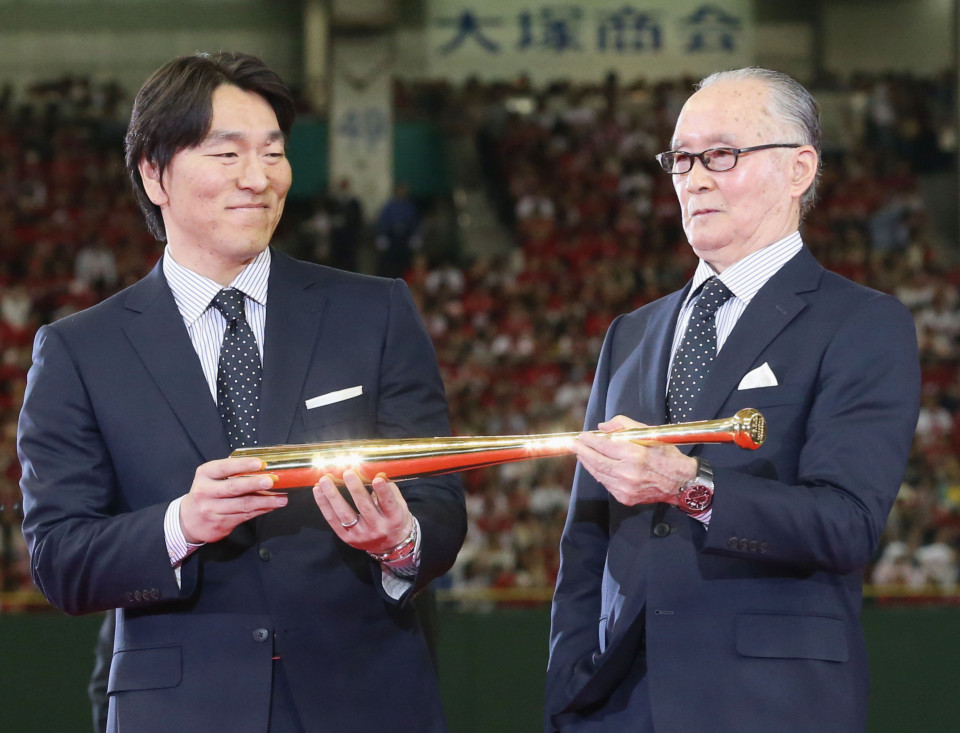
Former Yomiuri Giants player and manager Shigeo Nagashima (R) receives a gold-painted bat during a People’s Honor Award ceremony at Tokyo Dome on May 5, 2013. Standing next to him is former Giants and New York Yankees player Hideki Matsui. (Kyodo)
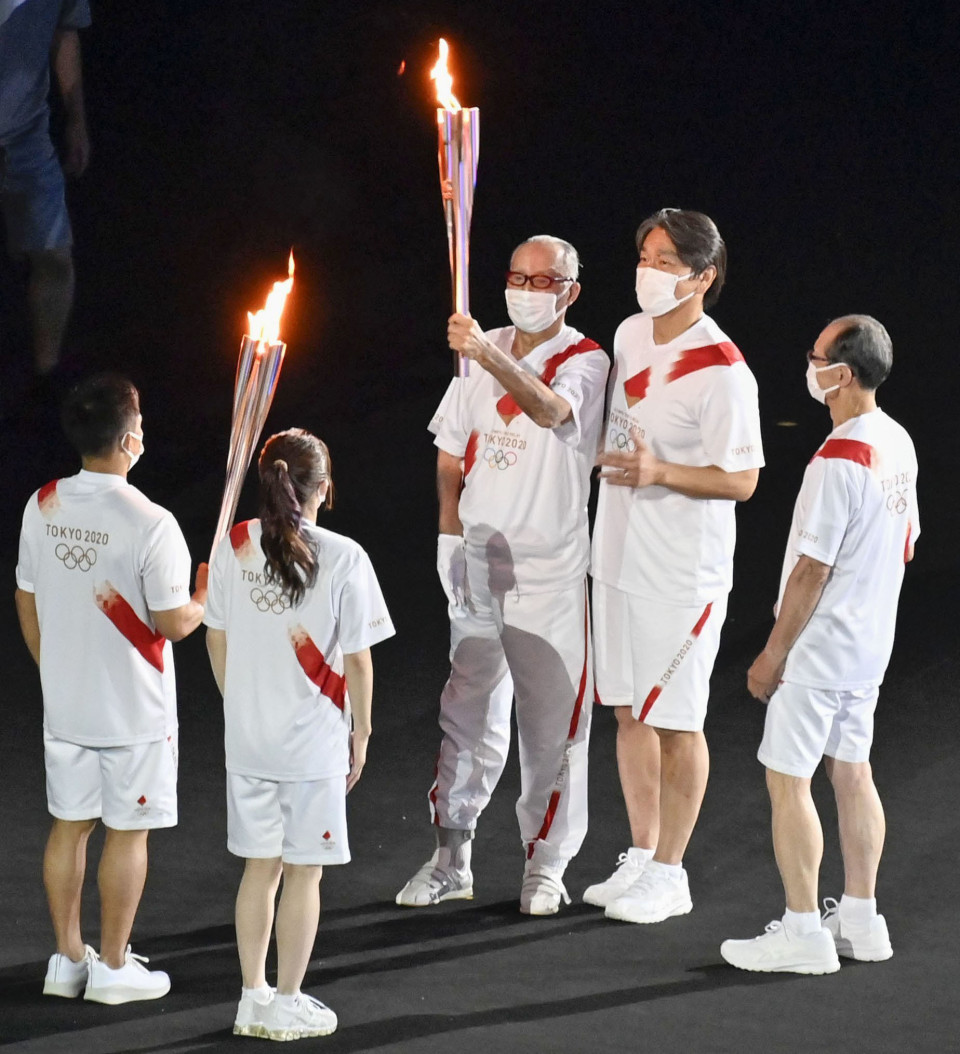
File photo taken July 23, 2021, shows former Yomiuri Giants players (from R) Sadaharu Oh, Hideki Matsui and Shigeo Nagashima serving as torch runners during the opening ceremony of the Tokyo Olympics at National Stadium. (Kyodo)
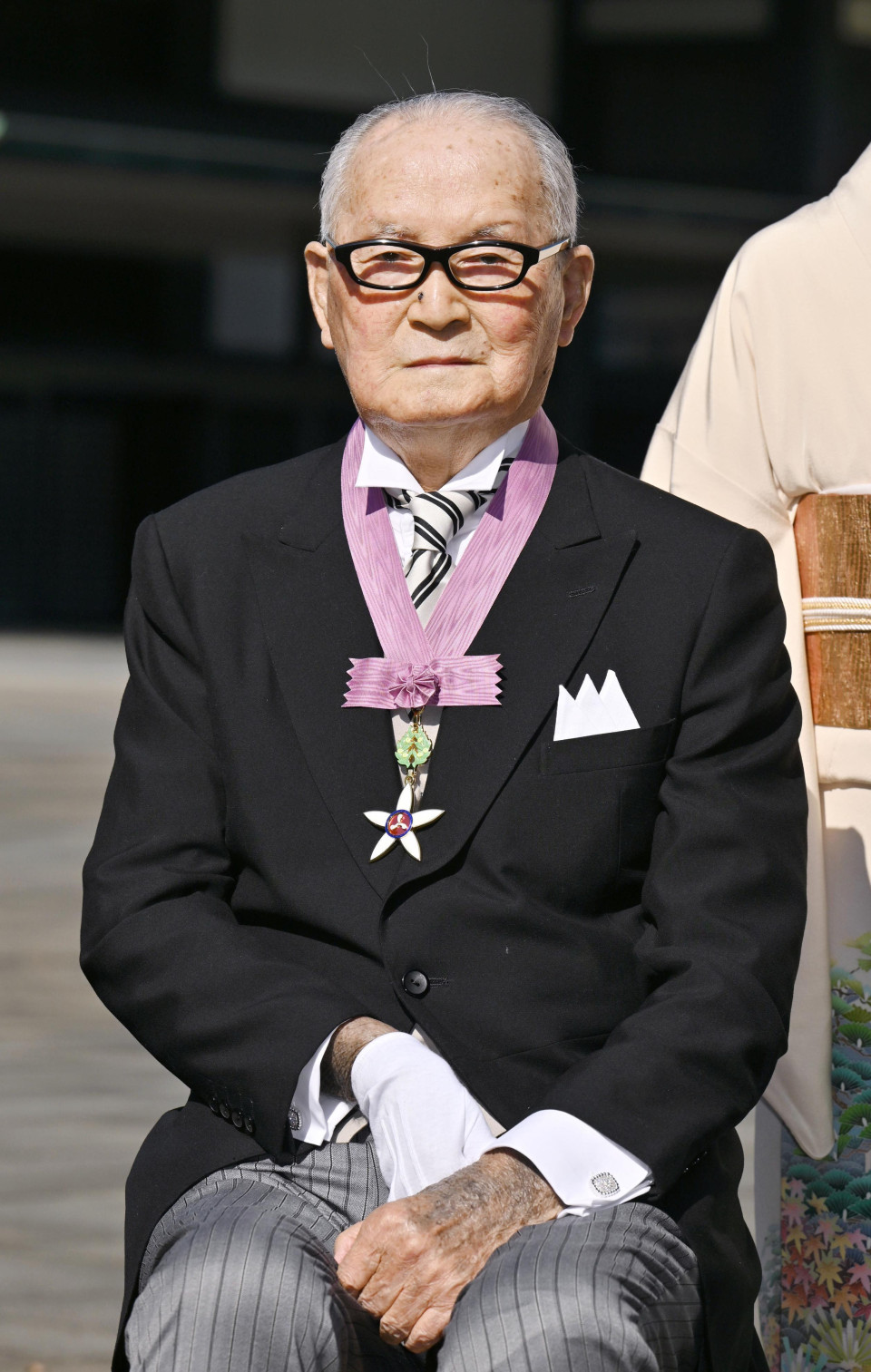
Former Yomiuri Giants player and manager Shigeo Nagashima poses for a photo after receiving the Order of Culture, Japan’s top cultural award, from Emperor Naruhito at the Imperial Palace in Tokyo on Nov. 3, 2021. (Kyodo)