
The Texas Rangers head into the offseason with the goal of being a playoff team in 2027. Many times, that requires spending money.
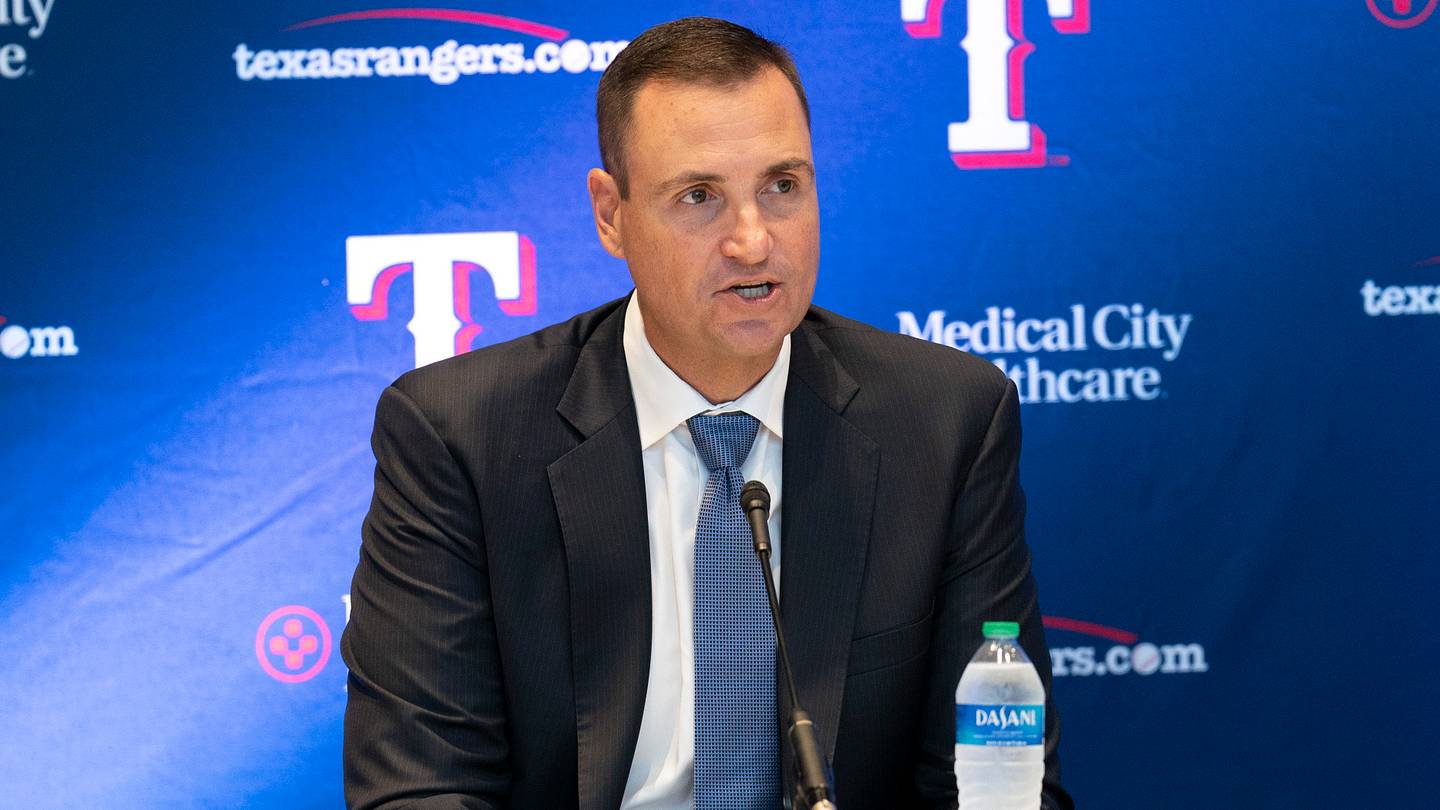
So, how much could the Rangers spend this offseason? Even president of baseball operations Chris Young isn’t sure.
“I can’t speak to that,” Young said earlier this week. “I don’t know what the payroll will be or what the decisions will be. Those are conversations that will come in the in the coming weeks.”
Young must consult with ownership. He has adopted a strategy in recent years of not trading off the Major League roster to win now. That strategy may need to be altered. He also said he’ll know what he can spend before free agency starts in November.
Young had a mandate last offseason — he had to trim payroll. How he did so last year may be instructive in terms of what he can spend this offseason.
How Rangers Spent Last Offseason?
Texas Rangers right fielder Brandon Nimmo. Credit: Richard Dizon-Imagn Images | IMAGN IMAGES via Reuters Connect
Young’s mandate last year came from owner Ray Davis, who had spent into the competitive balance tax system three years in a row but only had one World Series title to show for it. So he trimmed payroll. Per Spotrac, the Rangers had a total tax payroll of $238.9 million. They also had a projected cash payroll of $251.7 million.
In 2026 the numbers dropped to $210 million total tax and $205 million in projected cash. Young trimmed much of that payroll by letting free agents walk. Two trades added payroll. He flipped Marcus Semien to the New York Mets for outfielder Brandon Nimmo, a deal that saved Texas a bit of money long-term. The other was acquiring MacKenzie Gore, which required taking on his $5.6 million in arbitration.
As for free-agent signings that ended the season with the Rangers — either active or on the injured list — Young spent $17.5 million. Texas also carried approximately $10 million in dead money, which are players that were signed to MLB deals but later released.
Including in-season spending, he spent less than $30 million to augment the roster. Next, we need to know what payroll looks like for 2027.
The 2027 Payroll and Potential Spending
Texas Rangers pinch hitter Kyle Higashioka. Credit: Jerome Miron-Imagn Images | IMAGN IMAGES via Reuters Connect
The Rangers have $142.1 million in total tax and $118.75 million in projected cash committed to paying eight players for 2027. That includes three players with mutual options — Joc Pederson, Kyle Higashioka and Jakob Junis. If those three don’t return then the payroll drops to the cash committed number, which gives the Rangers more than $100 million to spend based on a $247 million competitive balance tax threshold.
That’s not all. Texas must pay arbitration-eligible players and its pre-arb players, the latter of which receive the league minimum based on experience. With MLB owners and the MLB Players Association are working on a new labor deal but it’s expected to lead to a lockout of players on Dec. 1 without an agreement. That new CBA may alter what Young has to pay in arbitration and in pre-arbitration.
There is potential for the Rangers to have plenty of cash on hand to spend. The real question is whether ownership will let him? When Young said he’s doesn’t know what can spend that may be the case for a variety of reasons. But Davis’ go-ahead will determine how active he can be, especially before Dec. 1.
Based on last offseason, the Rangers are unlikely to spend a lot of money. The good news is they are not operating under the CBT constraints of a year ago. That could allow Davis to allow Young to be more bullish than a year ago.
 Add us as a preferred source on GoogleFollow