
The Minnesota Twins found plenty of success with one of Major League Baseball’s biggest rule changes in 2026. In the first regular season to feature the automated ball-strike (ABS) challenge system, Minnesota led all 30 teams in overturned calls and ranked among the league’s best in several important statistical categories.
The Twins recorded 246 successful challenges, giving them the most overturned calls in baseball. Their ability to recognize borderline pitches and make timely challenges helped create advantages for both hitters and pitchers throughout the season.
Minnesota’s Hitters Made Their Challenges Count
The Twins’ offensive contributions stood out across the league. According to Statcast, Minnesota’s successful batter challenges generated a league-best 3.8 runs above average.
Those challenges also had a direct impact on plate appearances. Twins hitters successfully challenged calls that would have resulted in 20 strikeouts, while gaining an MLB-leading 22 walks. In a sport where individual plate appearances can influence the outcome of a game, those extra opportunities provided tangible value.
Luke Keaschall and Austin Martin were particularly effective at using the system to their advantage. Keaschall finished with an 18-15 record on his challenges, but his overall success rate only tells part of the story. He erased a league-high eight strikeouts and earned five walks through successful challenges, with the latter total also leading MLB. His willingness to challenge questionable calls helped him turn potential outs into opportunities to reach base.
Martin posted an 11-9 record on his challenges. While his overall numbers were not as eye-catching as Keaschall’s, Martin frequently used the system in high-leverage situations. The timing of a challenge can be just as important as the final success rate, particularly when a single pitch can change the direction of an inning.
Twins Catchers Excelled Behind the Plate
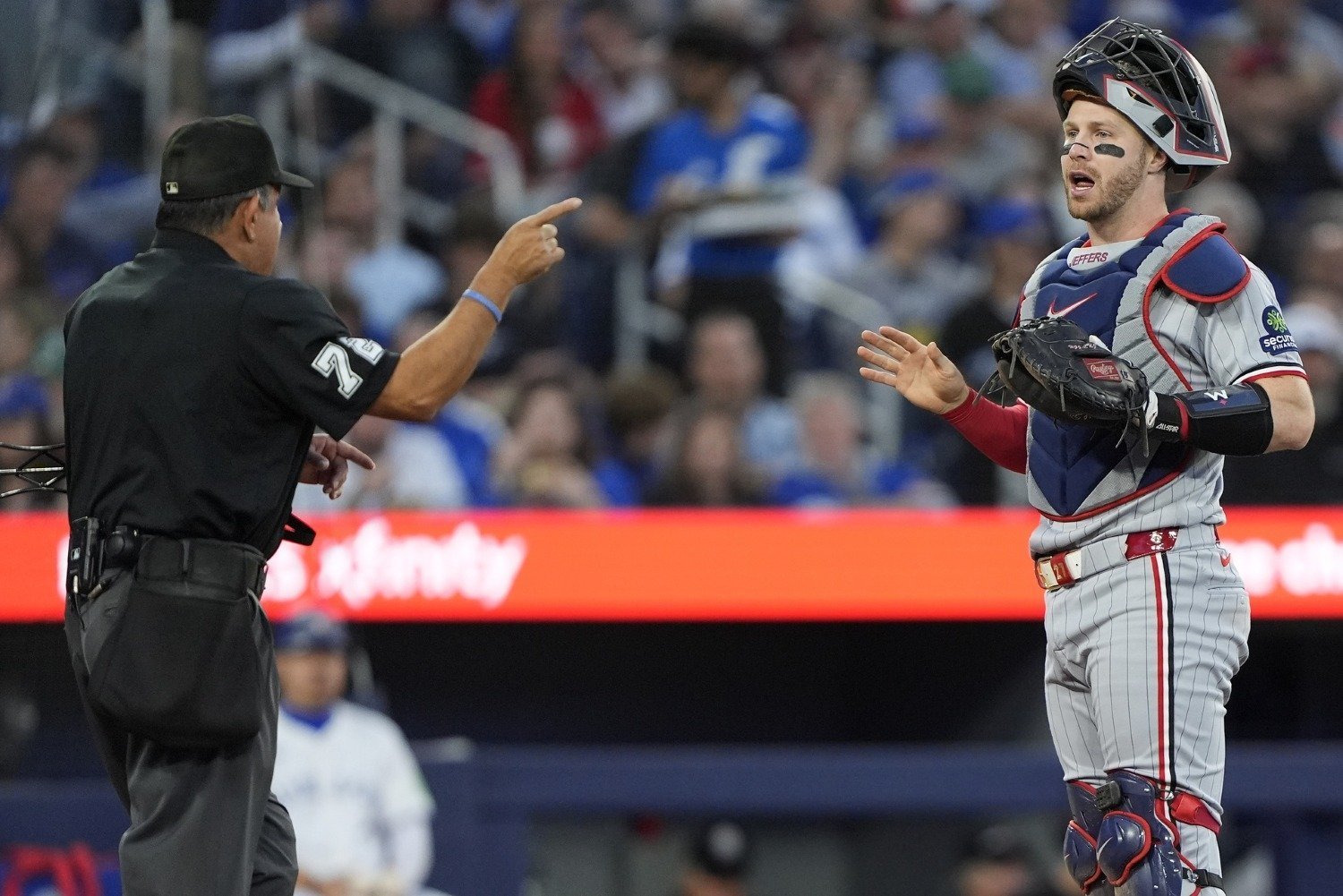
Minnesota’s success was not limited to its hitters. Ryan Jeffers and Victor Caratini established themselves as two of the league’s most effective catchers when it came to challenging ball-strike decisions. The Twins ranked second in MLB by generating 4.8 runs above average through catcher-initiated challenges. Those successful challenges resulted in 52 additional strikeouts for Minnesota pitchers while eliminating 21 walks for opposing hitters.
Jeffers recorded a 61% success rate across 108 challenges. He ranked sixth among MLB catchers by turning 23 at-bats that could have continued into strikeouts. He also tied for second among catchers by taking away 10 walks through successful challenges.
Caratini was even more active, making 127 challenges while posting a 59% success rate. His challenge total reflected a willingness to contest borderline pitches, giving Minnesota additional opportunities to reverse decisions that favored opposing hitters. Like Jeffers, Caratini turned 23 at-bats into strikeouts through successful challenges. He also eliminated seven walks, contributing to the Twins’ strong overall performance behind the plate.
Together, the two catchers demonstrated how the ABS system could become an important defensive tool. Catchers had to identify questionable calls quickly, decide whether a challenge was worthwhile, and make that decision before the opportunity disappeared. Minnesota’s results suggest Jeffers and Caratini handled those responsibilities effectively.
Not Every Challenge Worked in Minnesota’s Favor
Although the Twins excelled overall, their players did not enjoy the same success when challenging pitches as hitters. Jeffers finished 8-for-13 on his challenges at the plate, producing -0.5 runs above average. Caratini went 3-for-7, resulting in -0.4 runs above average.
Those figures created an interesting contrast. Both catchers were highly effective at challenging calls from behind the plate, but neither generated positive value when challenging pitches as a batter.
Their results also highlight an important distinction in evaluating the system. A player’s ability to recognize a questionable call while catching does not necessarily translate into the same success when standing in the batter’s box.
What MLB Learned From Year One
Across the league, 54% of challenges resulted in successful overturned calls during ABS’s inaugural regular season. Batters won 49% of their challenges, while fielders, primarily catchers, were successful 58% of the time.
The difference between those percentages suggests that catchers had an early advantage in identifying calls worth challenging. However, the system’s first season also provided hitters with a new way to contest decisions that previously would have stood without review.
For Minnesota, the results were especially encouraging. The Twins led MLB with 246 overturned calls, generated 3.8 runs above average through batter challenges, and ranked second with 4.8 runs above average through catcher challenges.
The challenge system was only one part of a long baseball season, but the Twins showed how effectively a team could use it to gain an edge. With Keaschall and Martin contributing at the plate and Jeffers and Caratini excelling behind it, Minnesota made ABS an important part of its on-field approach in the system’s first year.
What stood out in the MLB’s first year of ABS? Can Minnesota continue to find a tactical advantage next season? Leave a comment and start the discussion.