
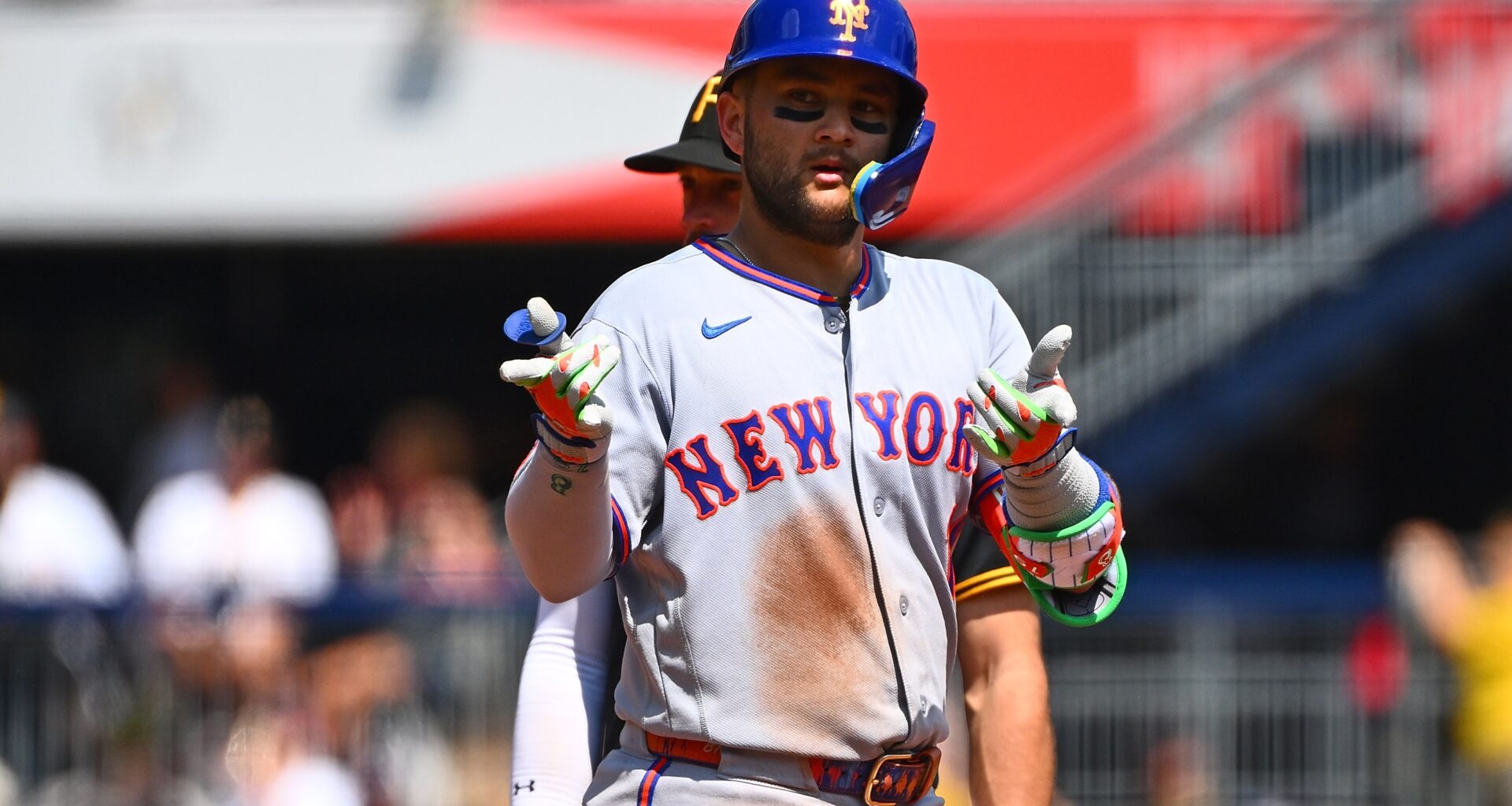
Bo Bichette is on the clock.
A total of 144 players became free agents this week, but not a single one for the Mets. That could change if Bichette opts out of his three-year, $126 million contract. The third baseman has five days to decide whether to return to the Mets in 2027 for $42 million, or opt out of his contract to become a free agent for the second year in a row.
It’s a key starting point for the Mets this offseason, so let’s look at reasons why Bichette might want to stay and reasons he might want to go.
CONTENTION
When Bichette signed his contract last winter, he was coming off of a World Series run with the Toronto Blue Jays. They lost devastatingly, falling to the Los Angeles Dodgers in extra innings in Game 7. Bichette was hungry to get back to the postseason and compete for a World Series again.
Then, the Mets failed spectacularly right out of the gate in 2026. Bichette struggled at the plate and struggled to adjust to third base immediately. The growing pains were evident to anyone who watched, and the veteran infielder put immense blame on himself.
“Every season has its own story. Unfortunately, for me and for the team, if I had played better early on, maybe it’d be a different situation,” Bichette told the Daily News in July. “But that’s in the past, so I’m just kind of let all that go and trying to be the best version of myself now.”
His season turned in June, and Bichette found his stride to finish strong.
Placing blame on himself shows his nature as a teammate; Bichette isn’t going to blame the people around him; he’s going to look at what he can do to help the team. But if he doesn’t think the team is capable of winning even with him, he might be inclined to opt out.
It’s worth noting he has praised the Mets’ young core. Bichette and A.J. Ewing grew somewhat close, with the young outfielder often seeking hitting tips from the two-time All-Star. Bichette admitted that it took longer than he expected to adjust to a new team and new surroundings, and it was a relief once he finally settled and grew comfortable.
If that’s the case, why start over again?
POSITION CHANGES
Third base has been a particularly difficult position for the team since David Wright began struggling with injuries a decade ago. Third base could also be a point of contention for the Mets and for Bichette. A career shortstop until coming to New York, Bichette might want to return to his natural spot in the middle infield. The Mets aren’t moving on from Francisco Lindor and Marcus Semien anytime soon, so a move to the middle isn’t going to happen in Queens.
Bichette played a capable third base, with 1 Out Above Average and a -2 run value. There is room for improvement, and he showed improvement throughout the season. After investing so much time and effort into learning a new position, he may want to continue playing it.
If you’re speculating, you can argue either way.
SECURITY
Coming up on his age-29 season, Bichette could opt out to get more money and more years on a contract. He reportedly sought a long-term deal with the Blue Jays before he became a free agent last winter, and was close to a long-term contract with the Philadelphia Phillies before choosing the high-dollar, short-term contract with the Mets that allows him to opt out this winter and next.
Bichette didn’t have the strongest season, relative to his history. In his age-28 season, Bichette hit .260 with a .702 OPS, 18 home runs, 78 RBI, two stolen bases, 49 walks, 127 strikeouts and 1.9 fWAR.
What could work in his favor is a thin free agent group. But with a lockout coming, there is no guarantee he’ll get a contract before Dec. 1. Would he want to be without a team throughout a lengthy work stoppage? He could want some certainty during an uncertain time.