
Image credit:
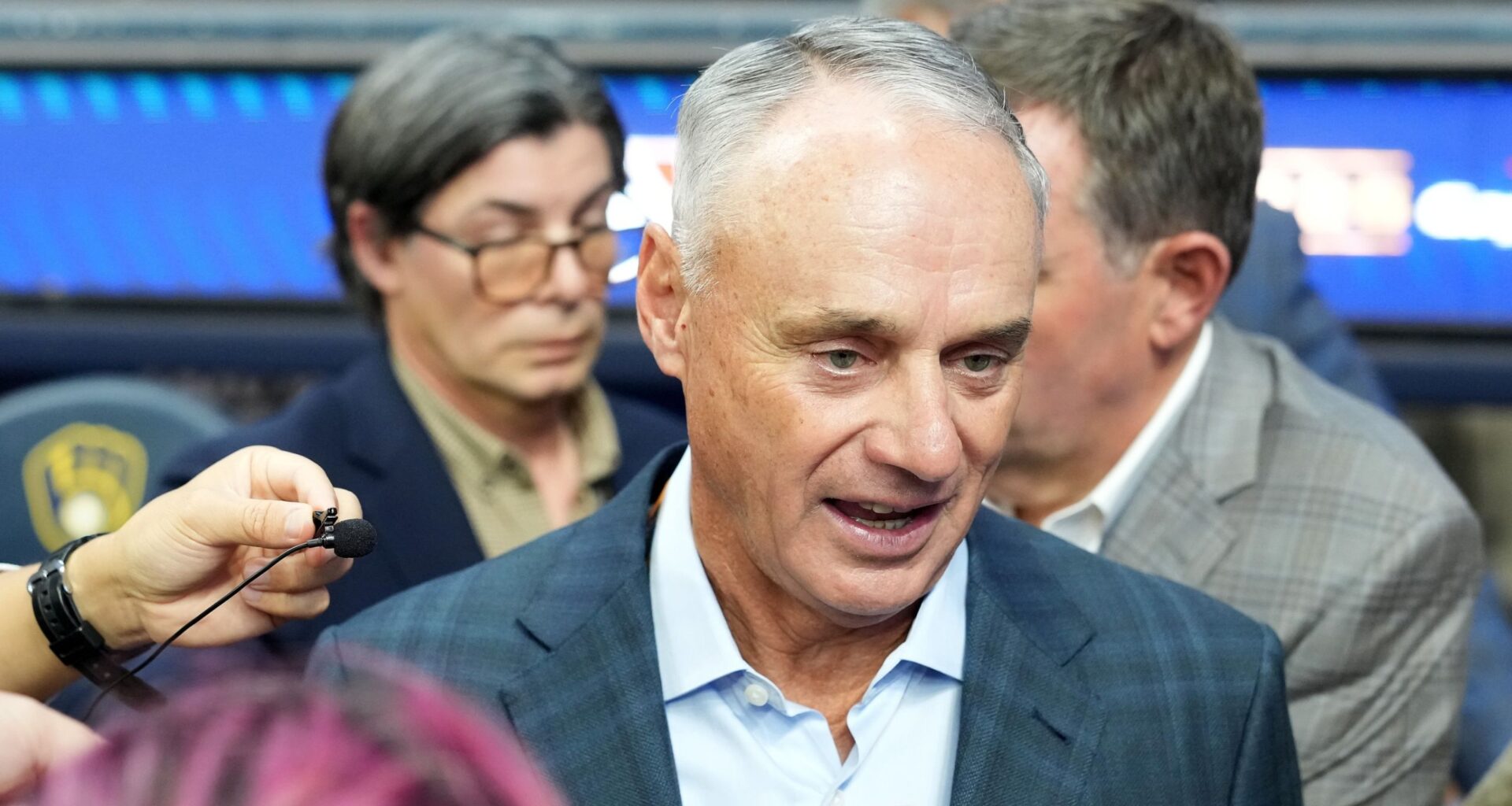
MLB commissioner Rob Manfred (Photo by John Fisher/Getty Images)
As negotiations continue between Major League Baseball owners and the Major League Baseball Players Association, MLB announced on Tuesday that, as part of its proposal, any salary cap and floor system implementation would be delayed until the 2028 season, ensuring that the current offseason would operate without a cap.
MLB free agency is currently underway, so even if the two sides agreed to a cap and floor system (which they have not), it would be quite difficult to go through contract negotiations to fit within a system that has not yet been implemented and is subject to changes.
MLB said it is proposing a salary cap of $258.2 million with a salary floor of $180.2 million. According to the league, 12 teams are currently below the proposed salary floor: Marlins, Guardians, Cardinals, Rays, Nationals, White Sox, Twins, Rockies, Pirates, Athletics, Reds and Brewers.
MLB also said that eight clubs are above the proposed salary ceiling: Dodgers, Mets, Yankees, Phillies, Blue Jays, Padres, Red Sox and Cubs.
MLB is proposing to use the current revenue-sharing plan and competitive balance tax for 2027 before transitioning to the new system for 2028. The proposal would take the players’ share of 2026 CBT proceeds and distribute it as a bonus to players based on service accrued. Here are some more points from the proposal:
MLB’s proposal would also raise the minimum salary to $900,000, while MLB players with two years of service time would get a minimum salary of $1 million. MLB players with under two years of service time who had a full season of MLB service time for that season (and spent less than half of the year on the injured list) would receive at least $100,000 from the pre-arbitration bonus pool to bring their salary up to $1 million, as well.
MLB says it would also increase the pre-arbitration bonus pool from $50 million in 2026 to $65 million in 2027 and eventually to $75 million over the length of the new CBA.
In the proposal, MLB said it would accept the MLBPA’s May 27 proposal to reduce the reserve period to five years for 30-year-old MLB players, subject to MLB teams being given the right to sign the player to a one-year contract with a salary equal to the average salary of the 125 highest-paid players. This would reduce the time to free agency for some players, although the team’s right to sign the player would keep it from being true free agency for some of those players.
MLB also detailed proposals to add PPI selections as part of its international draft proposal. Under such a system, teams could receive up to two picks (one in the domestic draft and one in the international draft) for prospects who reach significant milestones.
MLB also said it would accept the MLBPA’s proposal to exclude foreign professionals when determining if a prospect received a full year of service time for finishing first or second in Rookie of the Year voting. Under the proposal, an eligible player who finished third would receive a full year of service if one of the two higher finishers was classified as a foreign professional.
MLB’s proposal also would reduce the eligibility for the Rule 5 draft by one year (going back to what it was before 2007), although MLB’s previous proposals as far as when international players were eligible and eliminating high school player draft eligibility would push players to be eligible at older ages in some cases than before.
MLB has also proposed to allow teams selecting players in the MLB Rule 5 draft to option those players to the minor leagues.
The MLBPA released a statement in response to the league’s proposal, reiterating players’ opposition to the adoption of a salary cap system. The MLBPA’s statement noted that, in its view, the salary cap would reduce player compensation and player rights, including guaranteed contracts, and involve significant changes to the domestic and international amateur entry paths that, in the MLBPA’s words, would mean “replacement of market-based fundamentals with a zero-sum system that harms the middle class and pits player against player.”
The union noted that luxury tax thresholds would remain stagnant under MLB’s proposal, and that the proposed changes would reduce amateur signing bonuses by hundreds of millions of dollars.
According to the MLBPA statement, “Players stand ready to negotiate in good faith toward a new CBA that will capitalize on our sport’s unprecedented momentum and benefit players, clubs, and fans alike.”