
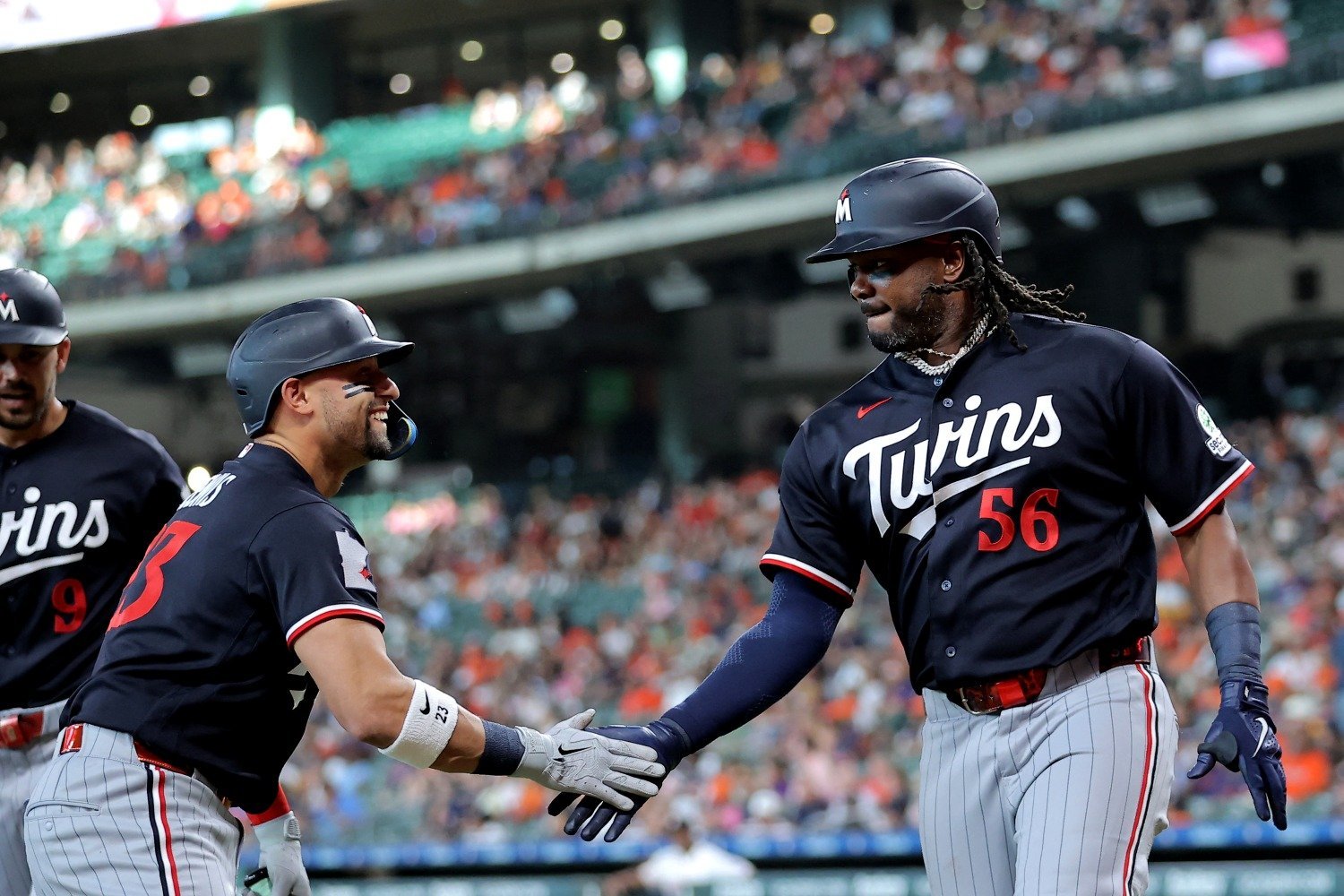
The Minnesota Twins have plenty of work to do this offseason, but improving the lineup appears to be one of the organization’s biggest priorities. General manager Jeremy Zoll recognizes that the club has some promising young hitters who could become bigger contributors next season. However, relying entirely on internal improvements might not be enough to make Minnesota competitive in the American League Central.
The Twins finished the 2026 campaign with 739 runs, tying the New York Yankees for the second-highest total in the American League. That production demonstrates that Minnesota has several pieces capable of creating offense. Still, the lineup experienced stretches of inconsistency, and the club needs another reliable power source in the middle of the order. They’re also losing two important contributors. Josh Bell and Ryan Jeffers are both free agents, leaving the Twins with some holes to address as they construct their 2027 roster.
The potential losses are significant when looking at what those two players provided. Bell appeared in 154 games, hitting .255/.319/.419 with 21 home runs and a team-leading 96 RBIs. Jeffers was productive behind the plate, posting a .256/.353/.461 slash line with 14 home runs in 92 games. His .814 OPS was among the best marks on the team. Replacing that production won’t be easy, particularly if (as is expected) Jeffers declines his qualifying offer and signs elsewhere. Minnesota could turn to internal options, but losing both players would create a noticeable gap in the middle of the batting order.
Zoll discussed the importance of addressing those potential departures, while also recognizing the organization’s young talent.
“I think between Ryan and Josh Bell becoming free agents, it’s on our minds that that’s a real loss to our offense,” he said. “Also, we have a number of young players that we think are going to take real steps forward to backfill a good chunk of that. But we want to find a way to continue to supplement the offense and put the position player group in the strongest position we can.”
Young Players Could Provide an Offensive Boost
Minnesota has several prospects who could become more important parts of the big-league lineup in 2027. Kaelen Culpepper, Walker Jenkins, and Emmanuel Rodriguez are among the players who could help provide some additional production.
Culpepper made his major-league debut in 2026, appearing in 33 games and hitting .274. He could become the club’s regular shortstop next season. FanGraphs projects him to produce 3.1 WAR in 2027, which would tie him with Byron Buxton for the second-highest projected total on the roster. Jenkins also received his first opportunity in the big leagues, appearing in 26 games and hitting .226. His brief introduction to the majors should provide valuable experience heading into his first potential full season. FanGraphs projects him for 2.2 WAR next year.
Rodriguez has also reached the major leagues, although injuries limited him to 13 games. He hit .178 during that stint, but his offensive ceiling remains intriguing. FanGraphs projects him for 0.7 WAR in 2027 as he continues adjusting to major league pitching.
The Twins will also need established young players to continue developing. Brooks Lee emerged as an important part of the lineup, finishing with 24 home runs and 83 RBIs while appearing in 156 games. Luke Keaschall provided another encouraging performance, batting .282/.374/.407 with 10 home runs, 52 RBIs, and 20 stolen bases across 152 games.
FanGraphs projects Lee for 2.9 WAR next season, while Keaschall leads the club with a projected 3.6 WAR. Those projections illustrate the potential of Minnesota’s young position-player group, but they also demonstrate why the organization cannot assume every player will immediately become a star.
Finding More Power Should Be a Priority
One area where Minnesota needs improvement is its ability to hit home runs. The Twins finished with 187 home runs in 2026, ranking 12th in baseball. Nobody on the roster reached the 30-homer mark.
Kody Clemens led the club with 27 home runs, while Buxton finished with 25 despite appearing in only 93 games. Lee added 24, and Bell contributed another 21. Those are respectable individual totals, but the lineup could benefit from having another established power hitter capable of consistently threatening opposing pitchers.
There are reasons to believe the offense can improve internally. Buxton has the ability to provide significant power when healthy, Lee is coming off a productive season, and Keaschall has demonstrated an ability to get on base and create opportunities. However, those improvements alone might not address the lineup’s biggest weakness.
Minnesota’s projected position-player group currently sits around 25.4 fWAR, placing it 10th in baseball alongside Baltimore. Within the division, Detroit (26.8) and Cleveland (26.3) project slightly ahead of the Twins. That leaves Minnesota with an opportunity to close the gap through offseason additions.
Zoll’s comments suggest the front office understands that internal development and outside additions aren’t mutually exclusive. Minnesota can give its young players opportunities, while also pursuing established major league talent.
The Twins have several intriguing pieces already in place. However, if the organization wants to return to contention in 2027, it cannot afford to assume those pieces will solve every problem. Adding another impact bat should remain near the top of the offseason checklist.
Who should the Twins target this winter? Leave a comment and start the discussion.
Want to play the role of Twins general manager? Check out our free-to-use “You’re The GM” offseason tool and build your own Twins roster!