
Image courtesy of © Matt Krohn-Imagn Images
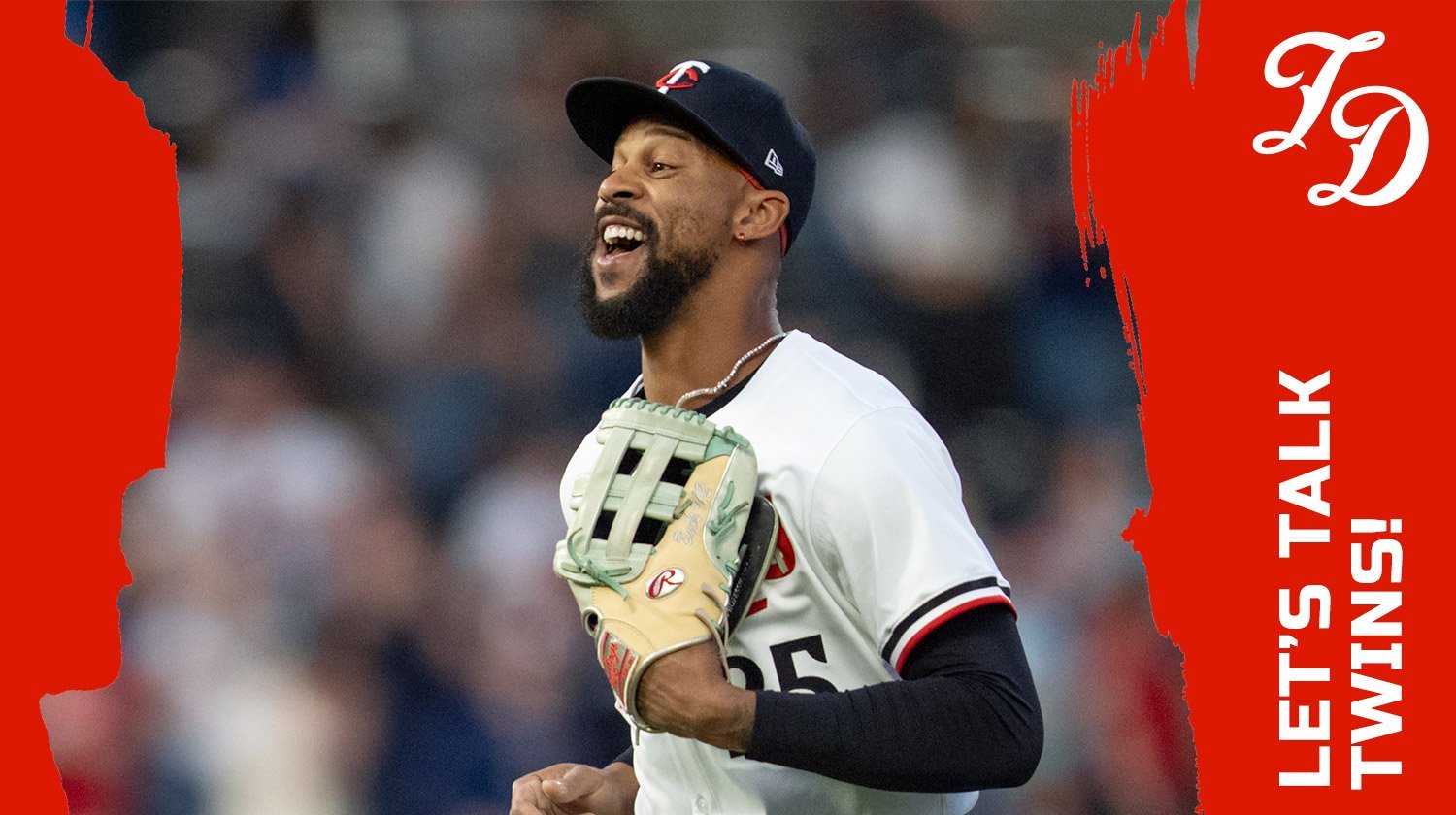
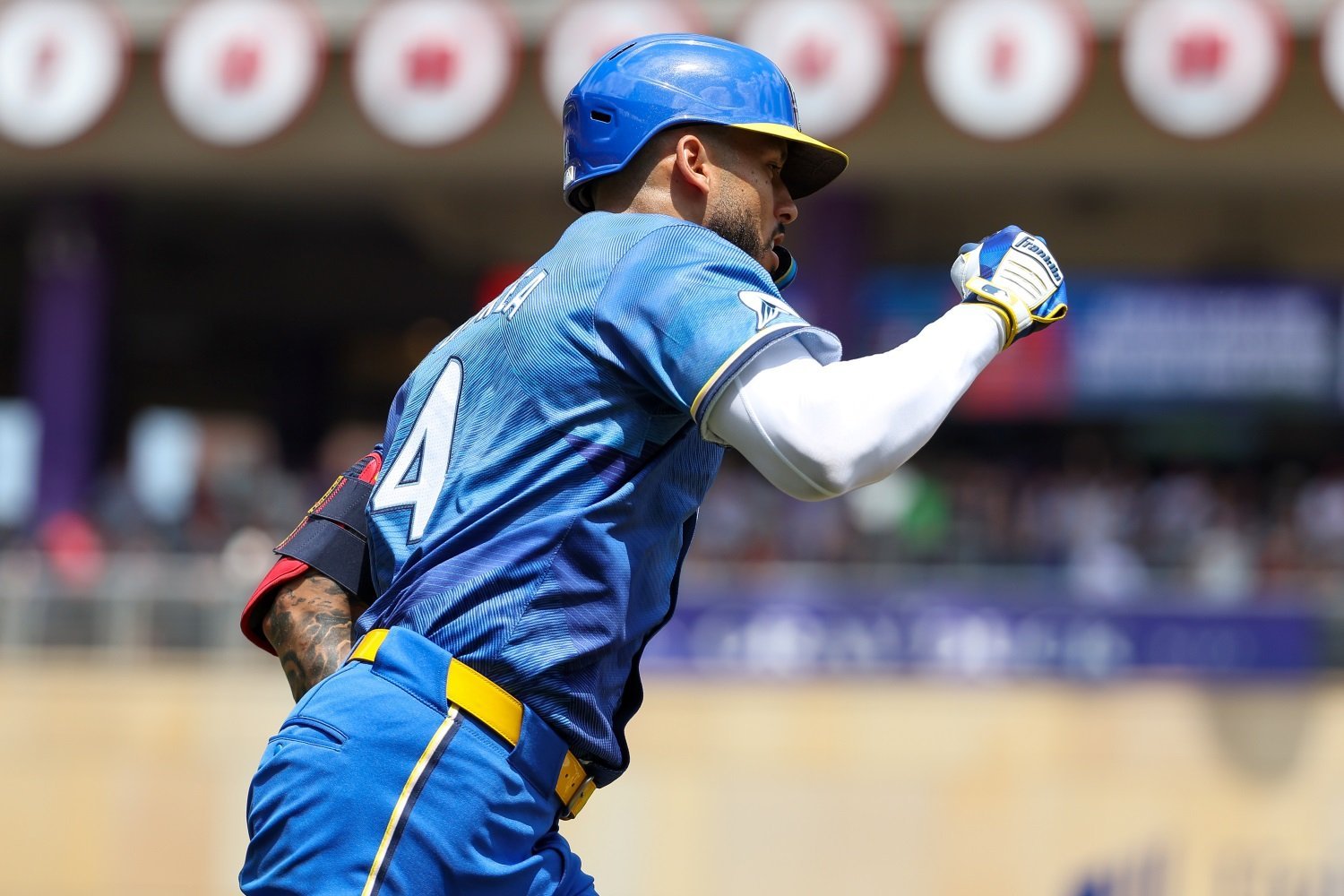
Twins fans have seen this story unfold in wildly different ways over the past few months: Byron Buxton appears to be a potential All-Star, the beating heart of the lineup, and one of the most productive center fielders in the American League. Meanwhile, Carlos Correa has taken his fair share of heat from fans and media alike, with murmurs swirling about whether his best days might already be behind him.
But here’s the twist: according to Statcast’s expected weighted on-base average (xwOBA), Buxton and Correa are producing precisely the same quality of contact. xwOBA estimates a player’s offensive performance by measuring the quality of contact (based on exit velocity and launch angle), while removing factors like defense and ballpark, to reflect what should have happened at the plate rather than what actually did. Each player holds a .318 xwOBA.
That’s a statistical tidbit that might surprise even the most tuned-in fans, considering how different the narrative around each has become. Buxton’s actual wOBA (which measures actual results) sits at .342, overperforming his expected mark by 24 points. Correa, on the other hand, owns a .293 wOBA, underperforming by nearly the same margin.
How did we get here? Let’s break it down.
Byron Buxton: Outperforming Expectations, Eyeing an All-Star Nod
After years of frustration with injuries and inconsistent roles, Buxton has returned to playing center field and has become a staple in Minnesota’s lineup. And fans have noticed. He leads the team in multiple offensive categories, he’s healthy, and he looks confident doing it. He’s also made a strong All-Star case, and not just because of the narrative boost.
Statcast backs up what the eye test shows: Buxton is absolutely punishing the baseball.
Barrel %: 84th percentile
Hard-Hit %: 89th percentile
Bat Speed: 89th percentile
Even if his xwOBA is identical to Correa’s, Buxton’s superior batted-ball metrics explain why he’s overperforming. He’s earned a bit of good luck because his contact is consistently among the hardest in the game.
Interestingly, some of his expected stats have dipped from last year. His xSLG has dropped from .502 in 2024 to .458 this season. His xwOBACON (expected wOBA on contact) has also declined slightly from .448 to .438. But those metrics don’t tell the whole story. Buxton’s Hard-Hit Rate (balls hit 95+ mph) is the second-highest of his career, showing he’s regularly making elite contact even if his launch angle or spray chart isn’t quite as optimized as last season.
So why the outperformance? Some of it could be strategic. Buxton may be focusing on pitches he can drive and keeping the ball off the ground more often than he has in the past. His swing decisions are leading to better overall results. It also helps that Buxton’s elite speed allows him to leg out extra bases or turn would-be outs into singles, an edge few hitters can match. That said, he’s also been one of baseball’s luckiest batters this season (see #18 below).
Carlos Correa: The Numbers Say He’s Better Than the Results
If Buxton is thriving on the margins, Correa is living on the wrong side of them. Despite producing the same expected offensive value as Buxton, Correa’s season has felt like a disappointment. He’s batting .241 with a .293 wOBA, but there are signs of life.
After a sluggish April, Correa has posted a .780 OPS with four home runs and three doubles since May 1, suggesting he’s trending in the right direction. There was also early-season speculation that a minor wrist issue was affecting his swing. If true, that could explain some of his underperformance.
Still, there are some troubling indicators. Correa’s Barrel % is down to 6.0%, well below his 9.1% career average. That’s a sign he’s not squaring the ball up as often, and his average launch angle has dropped from 10 degrees to just 5 degrees. That’s a red flag, as he’s hitting more balls into the ground, limiting his power output and overall production.
So, while he’s making contact at a decent clip and not chasing many pitches, the lack of lift and loud contact has led to weaker results. Unlike Buxton, Correa doesn’t have elite sprint speed to help him beat out grounders or stretch singles into doubles. His profile is more reliant on barreling the ball in the air, and so far, he’s not doing that often enough.
But with nearly 100 games left in the regular season, there’s still time for regression to work its magic. If Correa keeps making the kind of contact reflected in his .318 xwOBA, the hits should start falling. His track record suggests it’s only a matter of time.
Same Metrics, Different Mindsets
The Buxton-Correa comparison serves as a reminder of how much perception and context influence fan narratives.
Buxton’s power, speed, and defense have made him stand out, especially when healthy. His hot start has been a beacon of hope in a sometimes inconsistent offense.
Correa, burdened by a hefty contract and a slow April, is viewed more critically, even though his expected production is right in line with Buxton’s.
Beneath the surface, the Statcast numbers suggest the Twins’ two highest-paid position players might not be so far apart after all. There’s also this: if Correa returns to form and Buxton keeps mashing, the Twins could suddenly have a potent middle of the lineup anchored by two former top picks finally healthy and productive at the same time. That hasn’t happened often during their overlapping tenure in Minnesota, but the next 100 games could rewrite the story.
What do you think? Are the numbers deceiving us? Is Buxton really this good, or is Correa about to break out? Let us know in the comments below.