
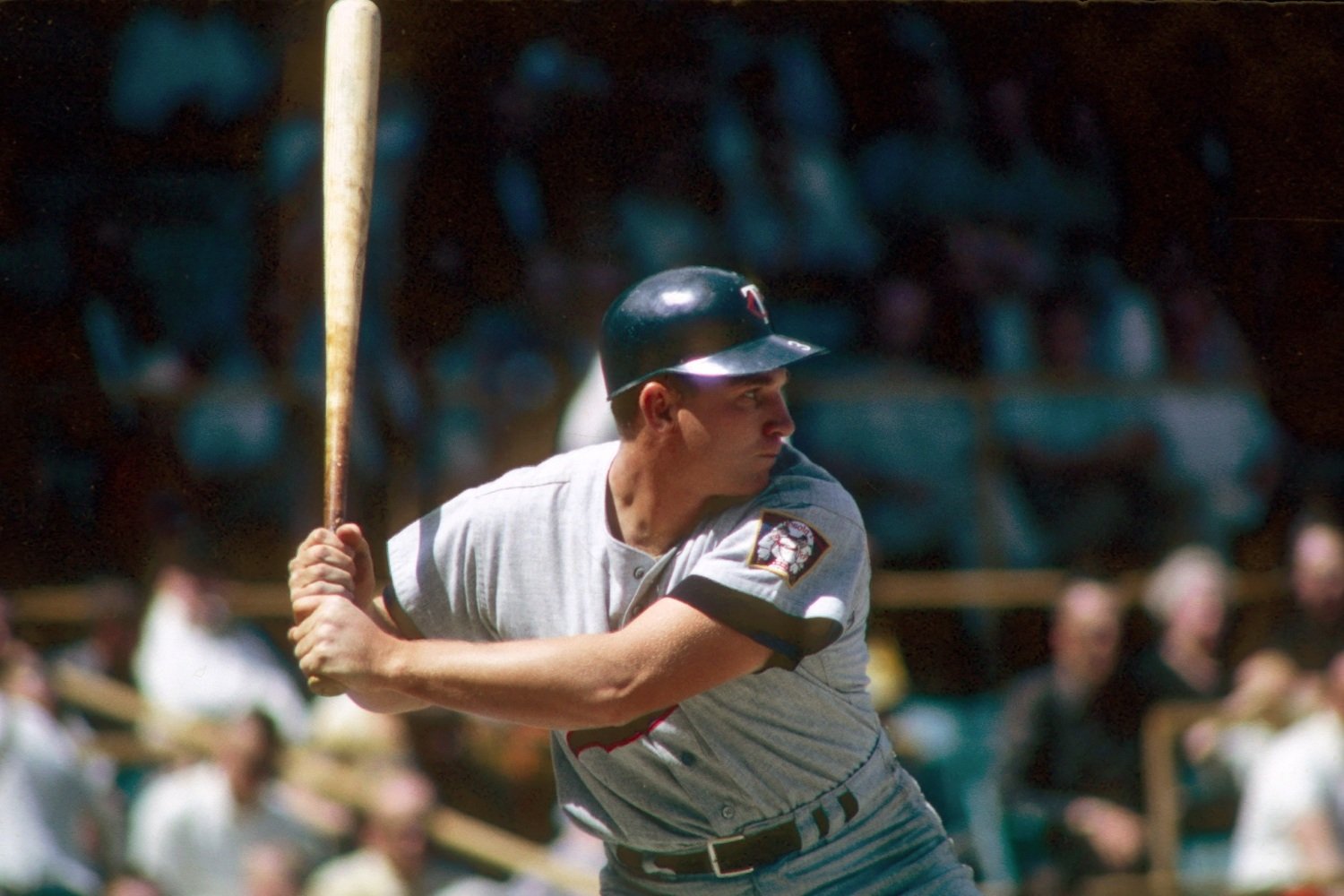
Harmon Killebrew hit the longest home run in Twins history on Jun. 3, 1967—a prodigious 522-foot blast off 40-year-old Angels pitcher Lew Burdette. Rod Carew had a heckuva perspective, leading off second base. The wallop continues to fascinate Twins fans to this day.
The Twins painted the spot on the bench seat that the ball crashed into bright orange, standing out in a sea of green as a testament to the legendary power of the Killer—and as a warning to opposing pitchers. Today, Mall of America sits on the site of Metropolitan Stadium. Visitors may notice a single chair mounted high on a wall overlooking the mall’s seven-acre indoor amusement park, marking the approximate spot in space where Killebrew’s home run landed.
For perspective, the giant bronze glove on Target Field Plaza outside Gate 34 is 522 feet from home plate.
The home run was originally announced at 435 feet—the distance of a straight line between home plate and the upper deck seat that the ball struck. Befuddled—and a little incredulous—Bob Allison called official scorer (and longtime Twins PR man) Tom Mee from the phone in the dugout, wanting to know how on Earth that home run could be measured at only 435 feet.
That same day, Mee phoned a University of Minnesota physics professor to recalculate the actual distance the home run would have traveled if Metropolitan Stadium hadn’t gotten in the way.
The next day, immediately after the revised distance of 522 feet was announced, Killebrew crushed another one over 500 feet. To this day, people swear the ball was still rising when it collided with the facing of the second deck at the old Met.
The only other player to ever hit one to the upper deck at Met Stadium was Bobby Darwin in 1972.
Are you interested in Twins history? Then check out the Minnesota Twins Players Project, a community-driven project to discover and collect great information on every player to wear a Twins uniform!