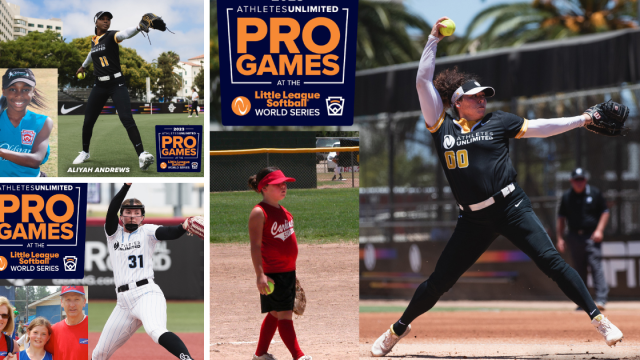
As college baseball’s best head to Omaha this weekend to play for the national title, data suggests that brands seeking players with the best marketing value may be watching the wrong College World Series.
Athlete media network Opendorse compiled data from TikTok, Instagram, and X from the Top 13 NCAA Division I baseball and softball teams based on rating percentage index (RPI) rankings from May 1, just before each sport’s College World Series. It found that softball not only has a marketing edge over baseball among younger demographics, but it’s drawing more attention on social media and bringing brands more value for their name, image, and likeness (NIL) sponsorship dollar.
“I truly believe, and the data backs us up, these female student athletes are the most effective media buy in sport right now,” said Opendorse CEO Steve Denton. “If I’m a marketer, I’m just not going to throw money at bad marketing. Their engagement metrics are higher, and viewership is growing.”
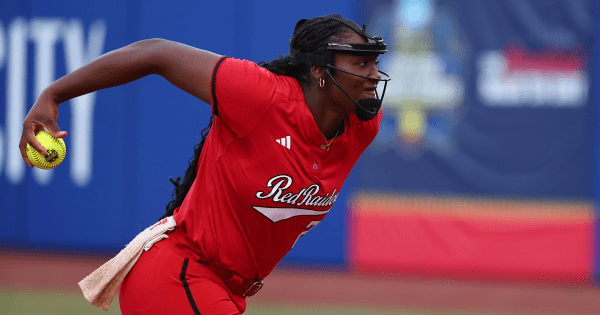
The total social media following for the top baseball teams still tilts in baseball’s direction, with its Top 13 teams drawing 2.3 million to softball’s 2.2 million. However, Louisiana State University softball tops all programs at 445,000 followers, ahead of LSU Baseball (342,000) and the heavy hitters at Arkansas (351,000). Other softball programs outpacing their baseball counterparts on social media included Tennessee (291,000) and Florida State (261,000).
The composition of those followers, meanwhile, varied wildly by sport. Opendorse found that 82% of softball’s social media followers were under 34, compared to 43% of baseball followers. Women make up 52% of softball’s followers, compared to just 17% for baseball.
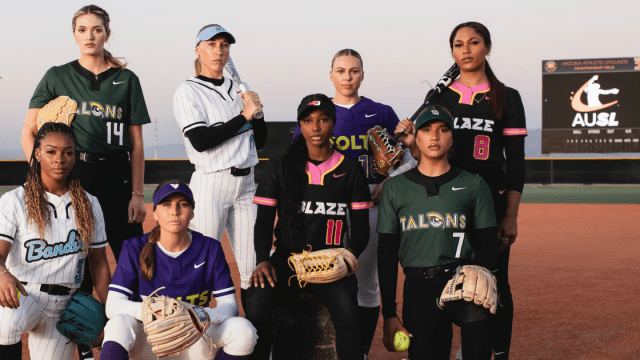
With social media data already showing softball players more engaged and effective than baseball players—and continuing into the professional ranks with such efficacy that Major League Baseball has invested in Athletes Unlimited’s new women’s softball league—Opendorse sees an opportunity for brands.
 NIL isn’t nothing
This data comes at a time when the divide between college baseball and softball broadcast audiences is narrowing, making softball an increasingly viable option for brands amid years of growth. With both softball and baseball College World Series shown on Disney channels including ESPN and ABC, softball saw its most-watched College World Series ever in 2025, averaging 1.3 million viewers per game—a 24% increase from a year earlier—including an average 2.4 million who tuned in to all three games of the final round.
Last year’s baseball College World Series averaged 1.56 million viewers, down from 1.65 million a year earlier. Baseball’s three-game final averaged 2.82 million viewers, also down 1% from the 2.86 million who watched the same round in 2023.
Opendorse noted that with broadcast reach at near parity, the increased content creation and audience engagement of softball players compared to their baseball counterparts matter more than ever.
The constantly evolving NIL landscape has now been divided into three tiers; College NIL paid directly through schools and capped at $20.5 million a year thanks to the House vs. NCAA settlement; collective NIL doled out through school booster groups and scrutinized for fair market value under the settlement; and commercial NIL from brands working with athletes directly.
Of the $2.2 billion paid to college athletes in NIL deals last year, $1.6 billion came from collectives, and roughly $400 million came directly from brands.
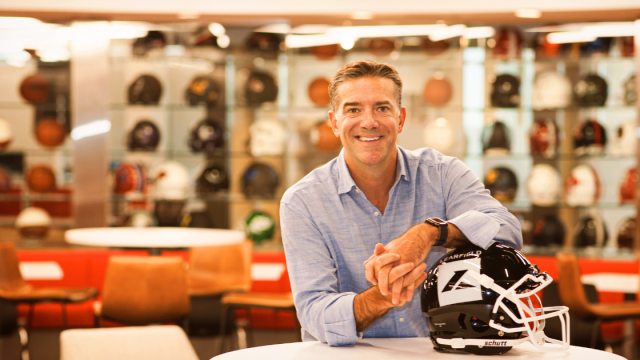
With college athletes receiving $400 million of a roughly $35 billion brand-driven creator economy, Denton said the 150,000 athletes on his platform stand to receive a greater premium for access to their 320 million social media followers, 68% of whom are between the ages of 18 and 24.
“These are the early days. These college athletes—specifically these female student athletes that have larger followings and higher engagement metrics—haven’t even taken their fair share yet,” Denton said. “It wouldn’t surprise me if that $400 million is a billion dollars in the next three years.”