
“You want to televise what?” then-Commissioner Pete Rozelle incredulously replied, when a fledgling network called ESPN brought their desire to broadcast the NFL Draft to league officials. The statement has become immortalized in football legend, but Rozelle had good reason for skepticism. At that pointm the draft was a conclave of middle-aged men, bespectacled and ringed with cigarette smoke, making calls and deciding team futures over glasses of brandy. It was conducted in the wood-lined walls of hotel rooms, and served as little more than an organized press release to inform the public which college stars would be going to what teams.
Nowadays, the draft is a spectacle unrivaled in pro sports.
Perhaps inspired by the ethos of a traveling circus—including the dazzling and melodramatic flourishes inherent in the event—the draft is now a three-day roaming event, taking over cities as it commands the attention and commerce of the local community. Great stages are sculpted and (just as quickly) torn down, all to highlight the young talent soon to become the league’s next corps of superstars.
In contrast with the events of yesteryear—the limited gatherings that made fans feel like outsiders gazing into a private convention—modern draft events are open for all. There’s live music; an embrace of local customs; and a bizarrely carnival-like atmosphere. Beloved players from past and present come in to make people feel like this draft is for them.
More than an in-person event, the draft has erupted in popularity because of its success as a TV affair. It provides the drama, stakes, and unexpected developments present in sporting events, but this time on an actual, literal stage. We usually know who’s going first overall. Everywhere else? A guess. And the How and When that create specific moments are often more juicy than the selections themselves. Months of speculation and theorizing from media and casual sports talk fail to hit on everything; an unpredictable trade or unforeseen choice will occur. The excitement keeps people watching and talking.
In this respect, the draft is unique: teams have a great deal of time to plan offseason moves in signings and trades, yet the endless scouting and debates for each player are turbo-driven by the clock and the potential for one night to change a franchise’s fortunes. Sure, maybe you’re reaching. But do you want to risk someone else nabbing the guy you like? Are you willing to put your job on the line for one transcendent yet troubled talent? Every year, we see the smartest executives struggle with these thoughts. Watching the rational become irrational is a rare moment in the modern, ultra-analytical sports environment.
Critically, these decisions have an almost immediate impact. Unlike, say, a bad player-for-player deal—which usually takes a few years to pan out—a bad pick or foolish trade-up becomes apparent almost immediately. Players are selected as mostly finished products. Rookies often can—and do—dominate the league. Time is unforgiving. One bad draft decision can quickly create dread in fans and executives alike.
Add in the popularity and familiarity casual fans have with college football, which makes stars like Travis Hunter and Abdul Carter household names, and the draft becomes a dazzling and personal spectacle. A solar system of dedicated prospect writers, “experts,” and fans of varying die-hardness fuel its success. It’s large—maybe a bit too large for its own good—and doesn’t seem to be losing momentum.
So, can MLB replicate this? Would it even be smart to try?
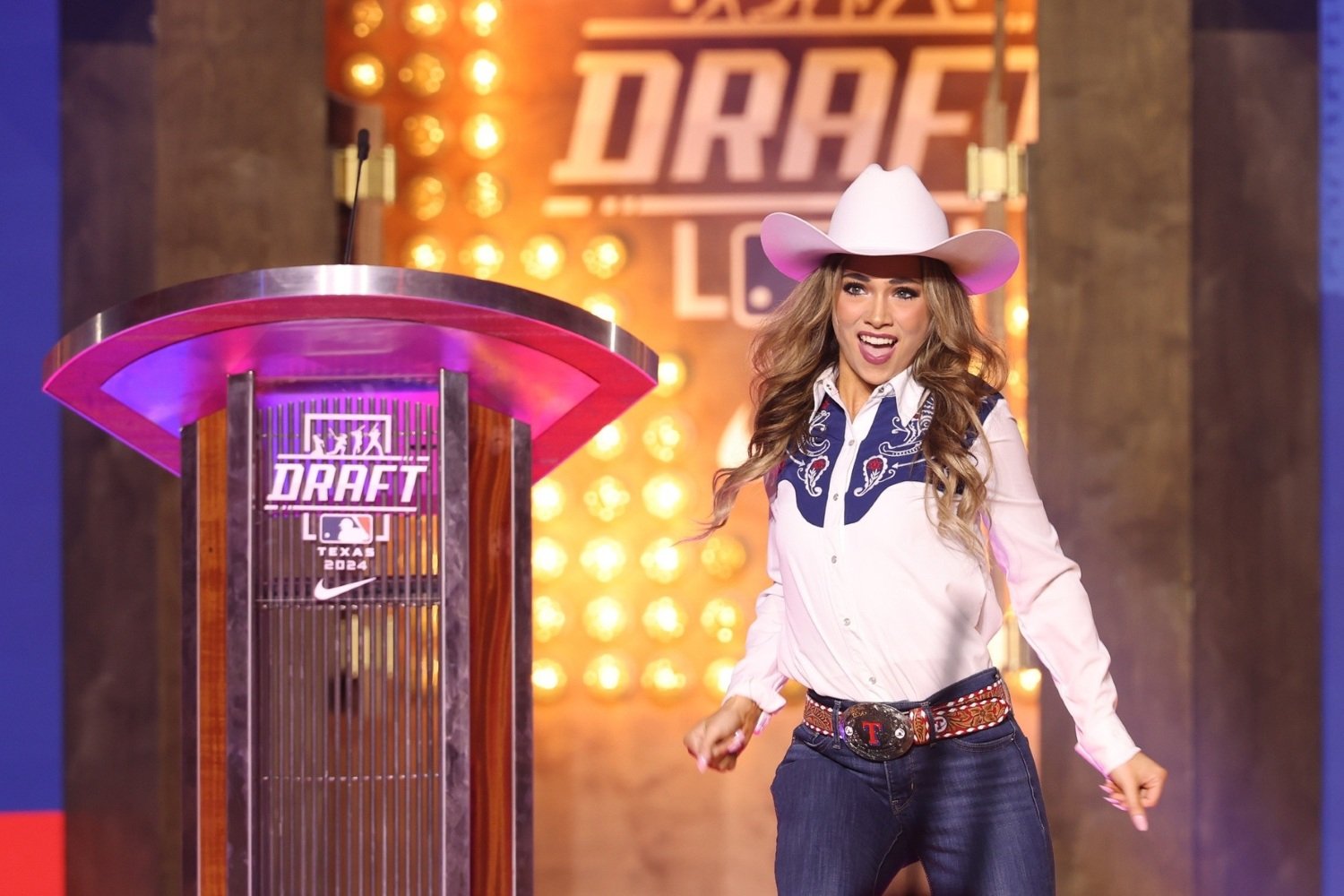
In recent years, baseball has taken steps to build buzz for their draft. Now tucked into All-Star weekend festivities, top youngsters, their families, and the MLB media apparatus pack the All-Star host stadium for an event not far off from the one the NFL offers. Everyone is dressed to the nines. Fans line the seats to see their newest young players. It’s come a long way since 2001, when the only evidence we had of Joe Mauer’s 1st overall selection was a wire announcement more reminiscent of military communication than a sports draft. Shoot, it’s come a long way since even 2009, when MLB Network broadcasted the 1st round for the first time, attracting only one player (Mike Trout, who lived in New Jersey, where the event was held) to show up at the studio for the festivities.
If you build it, they will come, of course.
Where the draft lacks, and where it will probably never touch football, is in the drama. Teams can trade competitive-balance picks, but that’s it. And there are no trades on the day of the draft. Even if there were, MLB’s slot system—allocating bonus money based on where a team selects—would make dealing picks a much more complicated affair. A team could “trade up” for a player who doesn’t even sign for them.
So, the only drama MLB has is garden-variety: who goes where? Every draft has that. They’ll need more than that to become a true spectacle.
Unlike those college football stars who often become Pro Bowl-caliber right away, baseball requires more development. Sure, that process has been accelerated in recent years, with teams like the Braves and Angels aggressively promoting college prospects, but only some players are suitable for moving so quickly. It’s an open question whether the strategy is wise, given that players like Nolan Schanuel have been merely ok so far as big leaguers. It’s simply hard to get excited about drafting someone who’s three to four years away from impacting the major-league roster.
As it currently operates, I don’t think the MLB Draft needs to change. They can take extra steps to improve the grandness of the operation—it’s just inherently a cool thing to give these talented young men a night to celebrate—but the league would risk worsening their system of player development if they move to be more like the NFL. The added drama wouldn’t be worth it. The point is the major-league product, after all. The league is fine keeping the status quo.
Plus, who actually liked hearing Mel Kiper talk about Shedeur Sanders for three days?