
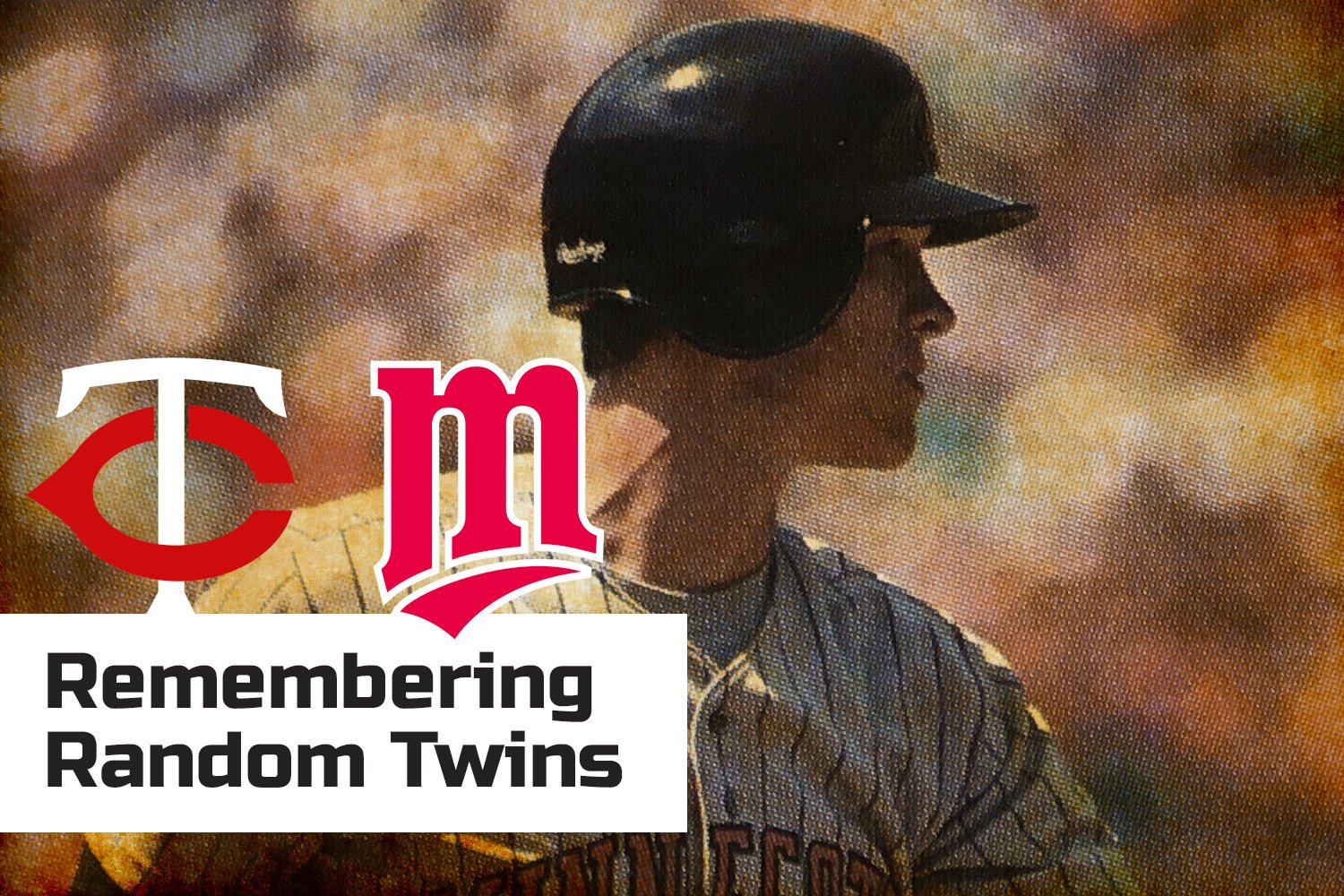
Kelvin Curtis Torve was born January 10, 1960, in our neighboring state to the west, South Dakota, specifically Rapid City. The Rapid City area has a long and storied tradition with American Legion Baseball. Kelvin Torve served as a bat boy for the local collegiate summer league and American Legion teams; he points to this time as when and where he was infected with the love of baseball. After considering playing at the University of North Carolina, then Wichita State, Torve ultimately decided to play collegiately at Oral Roberts University in Tulsa, Oklahoma. He arrived at Oral Roberts one year after their 1978 College World Series appearance.
After a successful collegiate career with the Golden Eagles, the left-handed hitting, right-handed throwing first baseman was drafted by the San Francisco Giants in the second round of the 1981 Major League Baseball Amateur Draft. Torve played four seasons in the Giants’ minor league system. The six-foot-three, 205-pound Torve batted between .260 and .305 with limited power, not your prototypical first baseman. In early April 1985, he was traded to Baltimore for a minor league pitcher. He played three seasons in the Orioles’ minor league system with comparable results.
Following the 1987 season, Torve signed as a minor league free agent with the World Champion Minnesota Twins as Triple-A depth, as they had Kent Hrbek at first base. He played in Triple-A Portland and minded his own business, but in June of 1988, Twins fan favorite Tommy Herr went on the disabled list, and Torve received his initial call to the big leagues to serve as a left-handed bat off the bench. Torve had an eventful month in MLB. In only 17 plate appearances, he had a home run against the Angels in June, then a run batted in against Hall of Fame closer Lee Smith to help the Twins overcome a 3-2 deficit to win a game against the Red Sox, 6-4. But after limited action in only 12 games, his Twins career was over. After one more season for Portland in 1989, he signed as a minor league free agent with the New York Mets prior to the 1990 season. It was with the New York Mets that the controversy noted in my headline ensued.
Once again, Torve started the season at Triple A. In August, he was recalled to the big leagues. For reasons unexplained, the Mets’ equipment manager assigned Torve uniform number 24 to wear. This, despite the original Mets owner saying after the 1973 season that nobody would ever again wear 24 in honor of Willie Mays, who had played for the ball club in 1972 and 1973. Once the error was discovered (or more accurately, the fans complained loudly enough), the Mets reassigned uniform number 39 to Torve. Mays, obviously one of the greatest players of all time, was deserving of an honor. But if you, as the team owner, thought so, why not retire just the number? Anyway, Torve was assigned 24, and fans voiced their opinion. In my opinion, the Mets should have retired the number after 1973 if their intent was that no other player should wear 24. Isn’t that the definition of why a team would retire a number – so that no other player would wear it? Not only did Torve wear the number for the Mets, but Rickey Henderson also wore it in 1999 and 2000, as well as Robinson Canó from 2019 to 2022. The Mets released Canó on May 8, 2022. The Mets finally corrected their oversight and retired number 24 in honor of Willie Mays on August 27, 2022.
With the number fiasco behind him, Torve stayed with the big club most of August, batting .289 with four doubles. He stayed in the Mets organization in 1991, playing most of the season at Triple A, but also received a brief call-up for about a month in June and July. This time, he had only eight plate appearances and did not reach base.
At this point, Torve was 31 years old, and his career appeared to be winding down. Torve could see the writing on the wall and chose to play in Japan in 1992 and 1993. Torve said it was an opportunity to make near-major-league money after having made little as a US minor leaguer. He and his wife viewed Japan as an adventure. Torve adapted and played well in Japan. In two seasons, he played 192 games and batted .271/.332/.411 with 20 home runs and 93 runs batted in. Torve also had the opportunity to play with an up-and-coming Hall of Famer – an 18-year-old Ichiro Suzuki, who Torve could see was something special.
Despite success in Japan, Torve retired from playing baseball after the 1993 season. His final MLB statistics, spanning 69 plate appearances, 42 games, and three seasons, were .226/.304/.339. He had a single home run and four runs batted in. He was the definition of triple-A depth.
Following his playing career, Torve reported that he didn’t want to immediately become a coach. He had played in the minor leagues for 11 seasons, and the thought of immediately returning to that grind of buses and travel did not appeal to him. So, he got a job outside of baseball in the packaging industry and worked there for 17 years in North Carolina, followed by three years as an administrator at a Christian school, where he also coached his kids and really enjoyed it. At that time, Rapid City Post 22 American Legion was seeking a new coach. They contacted Torve and offered him the job. Kelvin and his wife decided to return to South Dakota, and he became the new head coach for the American Legion team where he had played while in high school. Torve still has the job today and reports, “I have loved every minute of it.”
[I would encourage anyone wanting to know more about Kelvin Torve’s American Legion coaching to read the transcript of an interview he did with South Dakota Public Broadcasting.]
Kelvin Torve has had a life in baseball, and it has come full circle where he now serves as a coach and mentor to teenagers in his hometown. He may not have achieved the highest of highs in MLB, but he got a taste. Now he is helping a new era of kids to hopefully one day achieve their dreams.
I remember Kelvin Torve, but barely. Does anybody else? Please share your memories and thoughts below.
If you like looking back at the Twins’ past, check out my previous articles at Twins Daily History.
Sources include Baseball Reference, South Dakota Public Broadcast Radio, and Wikipedia.